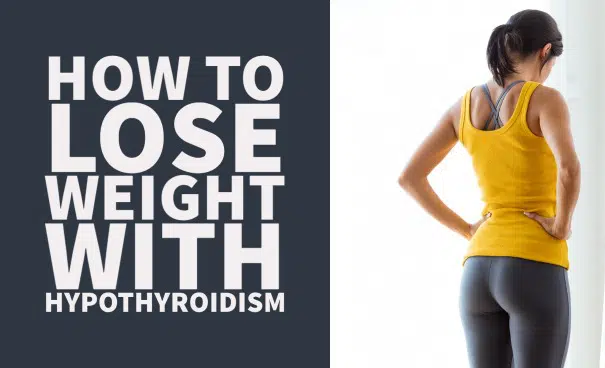
How to Lose Weight With Hypothyroidism (What’s Actually Making It So Hard)

Your thyroid isn’t an excuse — but it is a real obstacle. Here’s how to work around it.
If you have hypothyroidism and you’re struggling to lose weight, you’re dealing with a genuine metabolic disadvantage — not a lack of effort or willpower.
An underactive thyroid slows your metabolism, disrupts your hunger hormones, causes fatigue that makes exercise harder, promotes water retention, and creates hormonal conditions that favor fat storage over fat burning. Standard weight loss advice — eat less, move more — produces slower results when your thyroid isn’t functioning properly, and sometimes produces no results at all.

But slower doesn’t mean impossible. Understanding what’s happening and adjusting your approach accordingly makes a significant difference. Here’s what you need to know.
What Hypothyroidism Does to Your Metabolism
Your thyroid gland produces hormones — primarily T4 and T3 — that regulate metabolism across virtually every cell in your body. When thyroid hormone production is insufficient, metabolic rate drops across the board.
Specifically, hypothyroidism causes:
Reduced basal metabolic rate. The most direct effect — your body simply burns fewer calories at rest. Research suggests hypothyroidism can reduce BMR by 15–40% depending on severity. This means the same calorie intake that maintains or reduces weight in someone with normal thyroid function can cause weight gain in someone with hypothyroidism.
Impaired fat breakdown. Thyroid hormones are required for lipolysis — the breakdown of stored fat for energy. Low thyroid hormone levels mean fat is harder to mobilize and burn, even in a calorie deficit.
Water retention. Hypothyroidism causes the accumulation of compounds called glycosaminoglycans in tissues that draw in water, causing characteristic puffiness and weight gain that isn’t fat but still shows on the scale.
Fatigue and low energy. The exhaustion of hypothyroidism is real and significant. When you’re chronically fatigued, exercise feels harder, motivation drops, NEAT decreases unconsciously, and the energy needed for consistent healthy habits is simply harder to find.
Constipation and slow gut motility. Thyroid hormones regulate digestive speed. Low levels slow everything down, contributing to bloating, discomfort, and additional scale weight from slow transit.
Insulin resistance. Hypothyroidism impairs insulin sensitivity, creating a metabolic environment similar to — and often overlapping with — the challenges faced by people with PCOS or type 2 diabetes risk.
Disrupted hunger hormones. Low thyroid function affects leptin signaling, making it harder to feel satisfied after eating and easier to feel hungry when you shouldn’t be.
Step 1: Make Sure Your Treatment Is Optimized
This comes before any dietary or lifestyle strategy — because no amount of diet and exercise will fully compensate for undertreated hypothyroidism.
Many people with hypothyroidism are on levothyroxine (synthetic T4) and have TSH levels within the “normal” laboratory range — but still feel symptomatic and struggle to lose weight. There are several reasons this happens:
TSH normal range is broad. A TSH of 4.5 is technically within many labs’ normal range but may still represent suboptimal thyroid function for that individual. Many thyroid specialists aim for TSH between 1–2 for people who are symptomatic.
T4 to T3 conversion issues. Some people don’t efficiently convert T4 (the storage hormone) to T3 (the active hormone). They can have normal T4 and TSH levels but low free T3 — the form that actually drives metabolic rate. Standard testing doesn’t always check free T3.
Hashimoto’s thyroiditis. The most common cause of hypothyroidism is an autoimmune condition where the immune system attacks the thyroid. Managing the autoimmune component — through diet, stress reduction, and sometimes additional treatment — matters beyond just replacing thyroid hormone.
What to discuss with your doctor:
- Request full thyroid panel including free T3, free T4, TSH, and thyroid antibodies
- Ask about your optimal TSH target given your symptoms
- Discuss whether T3 supplementation (liothyronine) or combination T4/T3 therapy might be appropriate if conversion is a concern
- If on levothyroxine, ensure you’re taking it correctly — on an empty stomach, away from calcium, iron, and certain other medications that impair absorption
Getting your medication optimized is the single highest-leverage action you can take. Everything else builds on that foundation.
Strategy 1: Eat More Protein Than Standard Recommendations
Protein is the most important macronutrient for hypothyroid fat loss — even more so than for people with normal thyroid function.
Higher protein intake helps counteract several hypothyroid-specific challenges simultaneously:
- It maximally suppresses hunger despite the impaired leptin signaling
- It preserves muscle mass that hypothyroidism tends to erode
- It provides the highest thermic effect of any macronutrient, partially compensating for the reduced metabolic rate
- It supports thyroid hormone production — several amino acids are required for thyroid hormone synthesis
Aim for the higher end of protein recommendations — 1g per pound of bodyweight daily. For someone with hypothyroidism, this is not excessive — it’s appropriate given the metabolic context. Our full guide to how much protein you actually need per day covers exactly how to hit this practically.
Strategy 2: Support Your Thyroid Through Diet
Certain nutrients are essential for thyroid hormone production and conversion, and deficiencies in them can worsen hypothyroid symptoms even when medication is in place.
Iodine — thyroid hormones are literally made from iodine. Severe deficiency causes hypothyroidism. However, excessive iodine can also worsen autoimmune thyroid conditions like Hashimoto’s. Moderate dietary iodine from iodized salt and seafood is appropriate for most people — supplementing aggressively is not recommended without medical guidance.

Selenium — critical for the conversion of T4 to active T3. Deficiency impairs this conversion significantly. Brazil nuts (1–2 per day provides adequate selenium), seafood, and eggs are good sources. Selenium supplementation (200mcg) has shown benefits for people with Hashimoto’s in research.
Zinc — also required for T4 to T3 conversion. Found in meat, shellfish, legumes, and seeds. Deficiency is common in hypothyroidism.
Iron — iron deficiency impairs thyroid hormone synthesis. Women with hypothyroidism who also have low iron (common) often see improved thyroid function after correcting iron levels.
Vitamin D — deficiency is associated with autoimmune thyroid conditions and impairs overall metabolic function. As we cover in our supplement article, testing and correcting vitamin D deficiency is worthwhile for almost everyone.
Strategy 3: Be Cautious With Goitrogens — But Don’t Avoid Them Entirely
Goitrogens are compounds found in certain foods that can interfere with thyroid hormone production in very large amounts. They’re found primarily in cruciferous vegetables — broccoli, cauliflower, kale, cabbage, Brussels sprouts — as well as soy products and some other foods.
This has led to advice that people with hypothyroidism should avoid these foods, which is overcautious and nutritionally counterproductive. These are some of the most nutritious, high-fiber, fat-loss-supporting foods available.
The reality: goitrogenic effects are only relevant at very high raw consumption, are largely neutralized by cooking, and are not a concern for people with adequate iodine intake. Eating cooked cruciferous vegetables in normal dietary amounts is fine and beneficial for people with hypothyroidism.
The exception: large amounts of raw kale smoothies or raw cruciferous vegetables daily may be worth moderating if you have hypothyroidism. Cooked versions are not a concern.
Similarly, soy products in moderate amounts are fine for most people with hypothyroidism who are on medication — just avoid eating large amounts of soy around the time you take your thyroid medication, as it can impair absorption.
Strategy 4: Strength Train Consistently
Strength training is particularly important for hypothyroid fat loss for several reasons.
First, hypothyroidism accelerates muscle loss — and muscle is metabolically active tissue that raises resting metabolic rate. Protecting and building muscle through resistance training directly counters one of hypothyroidism’s primary metabolic effects.
Second, strength training improves insulin sensitivity — which is impaired in hypothyroidism. This creates a better hormonal environment for fat loss and reduces the fat storage tendency that insulin resistance creates.
Third, muscle tissue requires thyroid hormone to function properly — and having more metabolically active muscle increases the demand for thyroid hormone, which can actually improve thyroid function over time in some research.
Three sessions per week of compound movements is the minimum effective dose. As we cover in our guide to how to get rid of belly fat, this is the foundation of effective body composition change and applies with even greater force when thyroid function is impaired.
Strategy 5: Be Patient and Adjust Expectations
This is perhaps the most important strategy of all — and the hardest to accept.
Fat loss with hypothyroidism is genuinely slower than fat loss with normal thyroid function. Even with optimized medication, adequate protein, strength training, and good sleep, the pace of loss is typically slower than standard advice suggests.
Realistic expectations for well-managed hypothyroidism:
- 0.25–0.75 lbs per week is excellent progress
- Non-scale improvements — energy, reduced puffiness, better mood, improved strength — often precede scale changes
- Water weight fluctuations are larger and more frequent due to impaired fluid regulation
- Progress will be slower than friends or family without thyroid issues — comparison is not useful
Tracking multiple progress markers — measurements, energy levels, strength, how clothes fit — provides a more accurate and motivating picture than scale weight alone. As we cover in our article on how to break a weight loss plateau, the scale is an unreliable short-term indicator even for people without thyroid conditions.
Strategy 6: Prioritize Sleep
Sleep is important for everyone’s fat loss efforts — but for people with hypothyroidism it’s even more critical.
Poor sleep worsens insulin resistance, elevates cortisol, and impairs thyroid hormone conversion. Sleep deprivation can actually suppress thyroid function directly — creating a vicious cycle where hypothyroidism causes fatigue, fatigue disrupts sleep, and poor sleep worsens thyroid function.
Prioritizing 7–9 hours of quality sleep is non-negotiable for hypothyroid weight management. The full sleep optimization strategy is covered in our article on why sleep is the most underrated weight loss tool.
Strategy 7: Manage Stress Aggressively
Chronic stress suppresses thyroid function through multiple pathways — cortisol directly inhibits TSH secretion and T4 to T3 conversion. For people with hypothyroidism who may already have borderline thyroid function, chronic stress can push them into more significant symptoms.
Stress management isn’t optional for people with hypothyroidism — it’s a direct thyroid support intervention. Daily walking, adequate sleep, reducing unnecessary obligations, and breathing practices all contribute to lower cortisol and better thyroid function over time.
Strategy 8: Avoid Very Low Calorie Diets
This is critically important for hypothyroid individuals.
Severe calorie restriction — eating less than 1,200–1,400 calories daily — suppresses thyroid hormone production and T4 to T3 conversion directly. This is true for everyone, but the effect is amplified in people who already have impaired thyroid function.
Crash dieting with hypothyroidism can worsen thyroid function, slow metabolism further, and produce the paradoxical outcome of eating very little but losing almost nothing — or even gaining weight — as the body aggressively downregulates metabolic rate.
A moderate deficit of 300–500 calories below maintenance is the appropriate range. The approach to sustainable deficits we outline in our guide to how to lose 10 pounds in a month applies with particular force for hypothyroid individuals.
Foods That Support Thyroid Function
Beyond avoiding deficiencies, certain foods actively support thyroid health:
- Brazil nuts (1–2 per day): Best dietary source of selenium
- Seafood and fish: Iodine, selenium, omega-3s
- Eggs: Selenium, iodine, complete protein
- Seaweed (in moderation): Rich in iodine — but excessive intake can be problematic for Hashimoto’s
- Pumpkin seeds: Zinc and magnesium
- Legumes: Iron, zinc, fiber
- Berries: Antioxidants that reduce thyroid inflammation
Foods to Be Mindful Of
- Highly processed foods: Promote inflammation that worsens autoimmune thyroid conditions
- Excessive raw cruciferous vegetables: Fine cooked, worth moderating raw and in large amounts
- Gluten (for Hashimoto’s specifically): Some research suggests gluten sensitivity is more common in Hashimoto’s and that a gluten-free diet improves antibody levels in some patients — worth discussing with your doctor if you have Hashimoto’s
- Large amounts of soy: Fine in moderation, but avoid around medication timing
- Alcohol: Directly suppresses thyroid function and impairs T4 to T3 conversion
The Bottom Line
Losing weight with hypothyroidism is harder than losing weight with a healthy thyroid. The reduced metabolic rate, impaired fat breakdown, water retention, fatigue, and insulin resistance all create real obstacles that standard weight loss advice doesn’t account for.
But it’s absolutely achievable with the right approach:
- Get your medication optimized — this is the foundation
- Eat adequate protein — toward the higher end of recommendations
- Support thyroid function through selenium, iodine, zinc, and vitamin D
- Strength train consistently to preserve metabolism-boosting muscle
- Avoid severe calorie restriction that further suppresses thyroid function
- Prioritize sleep and manage stress — both directly affect thyroid hormone conversion
- Be patient with a slower pace of progress and track multiple markers beyond the scale
Work with your doctor as a partner — optimized thyroid treatment combined with targeted lifestyle strategies produces results that neither alone can achieve as effectively.
Do you have hypothyroidism and have found something that’s made a real difference to your weight management? Share in the comments — this is a topic where community experience is incredibly valuable.
Stop Wondering What to Eat This Week
Get my free 7-Day High-Protein Weight Loss Meal Plan delivered straight to your inbox — a simple week of satisfying, protein-focused meals designed to make healthy eating easier without complicated calorie tracking.
- 7 full days of breakfast, lunch, dinner & snacks
- One complete shopping list for the whole week
- A quick high-protein food cheat sheet
- Simple daily tips to help you stay on track
Free PDF • Delivered by email • Unsubscribe anytime
Check your inbox 💜
Your free 7-day high-protein meal plan is on its way.