How to Lose Weight With Sleep Apnea (Breaking the Cycle That Keeps You Stuck)

Sleep apnea and weight gain feed each other. Here’s how to break the cycle.
Sleep apnea and excess weight have one of the most frustrating relationships in metabolic health — each one makes the other worse.
Excess weight — particularly around the neck, throat, and abdomen — worsens sleep apnea by narrowing the airway. Sleep apnea causes fragmented, poor-quality sleep that raises cortisol, disrupts hunger hormones, impairs insulin sensitivity, and makes fat loss dramatically harder. The resulting weight gain further worsens the apnea. And round it goes.
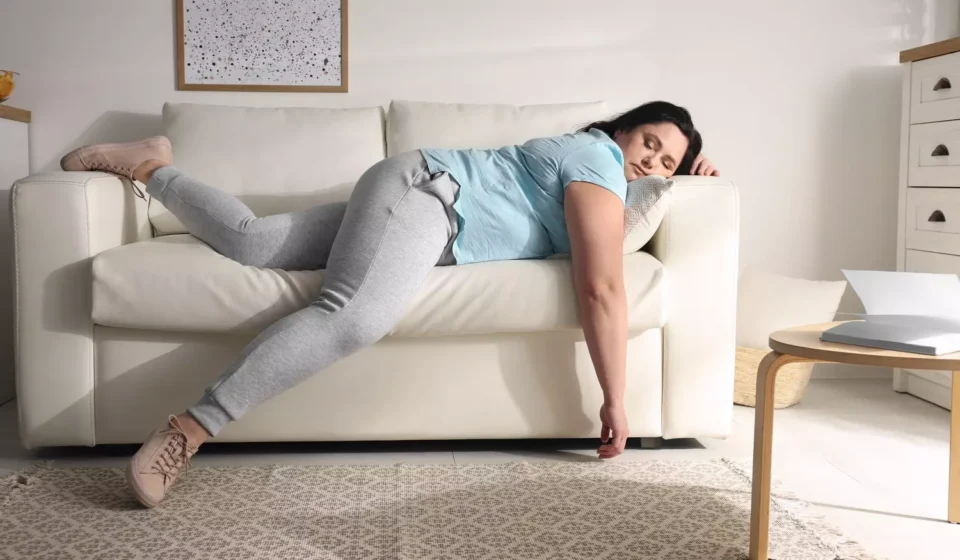
Breaking this cycle is one of the most impactful things someone with sleep apnea can do for their health — both because weight loss directly improves sleep apnea severity and because treating sleep apnea more effectively removes one of the primary obstacles to fat loss.
Here’s how to do both.
Understanding the Sleep Apnea — Weight Gain Cycle
Sleep apnea causes repeated interruptions to breathing during sleep — from partial airway collapse (hypopneas) to complete pauses in breathing (apneas) that can occur dozens or even hundreds of times per night. Each interruption causes a brief arousal from sleep, fragmenting sleep architecture even when the person has no conscious memory of waking.
The metabolic consequences of this fragmented sleep are severe and specific:
Cortisol stays elevated. The repeated stress of breathing interruptions and partial awakenings keeps the hypothalamic-pituitary-adrenal axis activated through the night. Chronically elevated cortisol promotes visceral fat storage, worsens insulin resistance, and drives cravings for calorie-dense foods.
Hunger hormones go haywire. Sleep apnea specifically disrupts ghrelin and leptin regulation — research has found that people with untreated sleep apnea have significantly higher ghrelin and lower leptin than people without, independent of body weight. The result is persistent hunger and reduced satiety that has a physiological basis, not just a willpower one.
Insulin sensitivity drops. The combination of cortisol elevation, sleep fragmentation, and intermittent hypoxia (low oxygen) from apnea events all worsen insulin sensitivity. This creates the metabolic environment that favors fat storage and makes fat loss harder regardless of calorie intake.
Daytime fatigue reduces NEAT. The exhaustion of poor-quality sleep reduces unconscious movement throughout the day — people with untreated sleep apnea move less, sit more, and have lower NEAT (non-exercise activity thermogenesis) than well-rested people. This can account for hundreds of calories per day in reduced calorie burn.
Exercise feels impossible. When you’re exhausted from non-restorative sleep, even the motivation to exercise is impaired — let alone the physical capacity to train effectively.
As we cover in detail in our article on why sleep is the most underrated weight loss tool, sleep quality is a foundational determinant of fat loss outcomes. Sleep apnea represents one of the most severe forms of sleep disruption — and its metabolic consequences are correspondingly significant.
Step 1: Treat the Sleep Apnea First
This cannot be overstated — treating sleep apnea is the prerequisite for effective fat loss, not the reward for it.
Many people with sleep apnea think they need to lose weight before they can sleep better. The reality is the opposite: treating sleep apnea improves the hormonal and metabolic environment enough to make weight loss significantly more achievable.
CPAP therapy remains the gold standard for moderate to severe sleep apnea. When used consistently and correctly, CPAP:
- Eliminates apnea events and restores sleep architecture
- Reduces overnight cortisol elevation
- Improves ghrelin and leptin balance within weeks
- Improves insulin sensitivity
- Reduces daytime fatigue, making exercise more accessible
- Research shows consistent CPAP users lose more weight than non-users with similar calorie deficits
The biggest barrier to CPAP benefit is non-compliance — many people find the mask uncomfortable and abandon it. If comfort is an issue, working with your sleep clinic to find the right mask type, pressure setting, or switching to an auto-CPAP is worth persistent effort. The metabolic benefits of CPAP compliance are substantial enough to make troubleshooting worthwhile.
Alternative treatments for those who can’t tolerate CPAP:
- Mandibular advancement devices (dental appliances) — effective for mild to moderate sleep apnea
- Positional therapy — for positional sleep apnea that occurs primarily when sleeping on the back
- Upper airway surgery — for specific anatomical causes
- Hypoglossal nerve stimulation (Inspire therapy) — for moderate to severe sleep apnea in people who can’t tolerate CPAP
Discuss options with your sleep physician — the key point is that some form of effective treatment is the foundation everything else is built on.
Strategy 1: Reduce Calories Moderately — Not Aggressively
For people with sleep apnea, severe calorie restriction is particularly counterproductive.
Extreme restriction raises cortisol — which is already elevated from sleep apnea. It causes muscle loss that slows metabolism. And it produces the rebound hunger and compensatory eating that undermines long-term results.
A moderate deficit of 400–500 calories per day produces steady fat loss of 0.5–1 lb per week without the cortisol and metabolic consequences of aggressive restriction. For someone with sleep apnea whose cortisol and hunger hormones are already disrupted, keeping the deficit moderate is not being timid — it’s being smart about the hormonal context.
Strategy 2: Prioritize Protein at Every Meal
The elevated ghrelin and suppressed leptin of untreated or partially treated sleep apnea creates persistent, hormonally-driven hunger that standard dietary advice doesn’t fully address.
Protein is the most powerful dietary tool for managing this hormonally-amplified hunger — it suppresses ghrelin more effectively than carbohydrates or fat, activates fullness hormones more strongly, and keeps you satisfied longer per calorie than any other macronutrient.
Building every meal around a protein source is the most practical, sustainable strategy for managing the excess hunger that comes with sleep apnea — without fighting biology through willpower alone.
Aim for 0.7–1g per pound of bodyweight daily. Our guide to how much protein you actually need per day covers practical food sources and strategies for hitting this target even when energy is low.
Strategy 3: Reduce Alcohol and Sedatives
This is particularly important for sleep apnea — and often significantly undertreated in lifestyle advice.
Alcohol is a muscle relaxant. It relaxes the muscles of the upper airway, worsening the airway collapse that causes apnea events. Even moderate alcohol consumption — one to two drinks in the evening — measurably worsens sleep apnea severity for several hours after consumption.
This means alcohol doesn’t just add empty calories and disrupt sleep quality (bad enough on its own) — it actively makes the underlying condition worse.
Similarly, sedatives, sleeping pills, and some antihistamines relax airway muscles and can worsen sleep apnea. Discuss any sleep aids with your doctor in the context of your sleep apnea diagnosis.
For people with sleep apnea trying to lose weight, reducing or eliminating alcohol is one of the highest-leverage changes available — it simultaneously reduces calories, reduces cortisol, improves sleep quality, and directly reduces apnea severity.
Strategy 4: Sleep Position Matters
For many people with sleep apnea — particularly those with positional sleep apnea — sleeping on the back (supine position) significantly worsens apnea severity compared to side sleeping. Gravity causes the tongue and soft tissues to collapse more completely into the airway when lying on the back.
Side sleeping reduces apnea events in positional sleep apnea by 50% or more in some people. Strategies for maintaining side sleeping:
- Body pillows to prevent rolling onto the back
- Positional alarms or wearable devices that vibrate when you roll supine
- Tennis ball sewn into the back of a sleep shirt (old-fashioned but effective)
- Specialized positional pillows designed to maintain lateral positioning
This won’t replace CPAP for moderate to severe sleep apnea but can meaningfully reduce the number of events and improve sleep quality — particularly combined with CPAP.
Strategy 5: Strength Train to Improve Airway Tone
This is less commonly discussed but has emerging evidence: resistance training — particularly exercises that strengthen the muscles of the upper body, neck, and core — can improve upper airway muscle tone and reduce sleep apnea severity.
More broadly, strength training is essential for sleep apnea weight management because it:
- Builds muscle that raises resting metabolic rate, compensating for the metabolic slowdown of sleep deprivation
- Improves insulin sensitivity directly
- Reduces visceral fat even without significant scale weight change
- Improves sleep quality — consistent exercisers with sleep apnea sleep better than sedentary counterparts
The fatigue of untreated or undertreated sleep apnea makes exercise feel genuinely difficult — which is another reason treating the apnea first makes everything else easier. Even when fatigue is significant, starting with short, manageable sessions (15–20 minutes) and building gradually is more productive than waiting until you feel better.
As we cover in our guide to how to get rid of belly fat, strength training is the foundation of effective body composition change — the benefits are amplified for people with sleep apnea given the metabolic context.
Strategy 6: Target Neck and Abdominal Fat Specifically
Fat distribution matters specifically for sleep apnea — fat around the neck and throat directly contributes to airway narrowing, and fat around the abdomen restricts diaphragm movement during sleep.
The strategies that most effectively reduce visceral abdominal fat — reduced added sugar, strength training, adequate sleep, stress management — are exactly the approaches that also improve sleep apnea severity through fat loss.
Even modest fat loss of 5–10% of body weight has been shown to meaningfully reduce sleep apnea severity (measured by AHI — apnea-hypopnea index). Some people with mild to moderate sleep apnea achieve remission with significant weight loss, though this varies substantially by individual anatomy.
The fat loss strategies throughout this blog — particularly our detailed breakdown of the best foods to eat to lose weight fast — apply fully to people with sleep apnea, with the additional motivation that every pound lost directly improves the underlying condition.
Strategy 7: Manage Stress and Cortisol
The cortisol elevation from sleep apnea is significant and chronic — and adding life stress on top of it compounds the fat storage and insulin resistance effects substantially.
Active stress management isn’t optional for people with sleep apnea trying to lose weight. It’s a direct counter to the cortisol load that the condition itself creates.
Daily walks — particularly outside in natural light — are one of the best interventions because they simultaneously reduce cortisol, improve mood, contribute to daily calorie burn, and improve sleep quality. For someone with sleep apnea who is fatigued, walking is accessible in a way that more intense exercise often isn’t, making it the ideal starting point for physical activity.
Our article on how to stop stress eating covers the full range of cortisol management strategies — particularly relevant given how strongly sleep apnea amplifies the stress eating cycle.
What Realistic Progress Looks Like
With treated sleep apnea and consistent lifestyle effort, weight loss follows a similar trajectory to the general population — 0.5–1 lb per week with a solid approach.
The important distinction: treated sleep apnea produces significantly better fat loss outcomes than untreated sleep apnea, even with identical diet and exercise. Research comparing weight loss outcomes between CPAP-compliant and non-compliant patients consistently shows this. Treating the apnea is not just good for health — it’s good for weight loss results.
Non-scale improvements that come with both better sleep apnea treatment and weight loss:
- Dramatically improved daytime energy
- Better mood and cognitive function
- Reduced cardiovascular risk markers
- Lower blood pressure
- Improved blood sugar regulation
- Reduced snoring (a social and relationship benefit worth noting)
A Note on Weight Loss Medications and Surgery
For people with severe obesity and sleep apnea who haven’t achieved adequate results with lifestyle intervention, GLP-1 agonists (like semaglutide/Ozempic and tirzepatide/Mounjaro) have shown remarkable efficacy for both weight loss and sleep apnea severity reduction in clinical trials. Bariatric surgery has similarly strong evidence for sleep apnea remission alongside weight loss.
These options are worth discussing with your doctor if lifestyle approaches have been genuinely and consistently applied without adequate results — not as first-line interventions, but as legitimate tools in specific situations.
The Bottom Line
Sleep apnea and weight gain form one of the most vicious cycles in metabolic health — each making the other worse in a loop that feels impossible to break from the inside.
The way out is to attack both simultaneously:
- Treat the sleep apnea effectively — CPAP compliance is the foundation
- Reduce alcohol, which directly worsens apnea severity
- Eat adequate protein to manage the hormonally-amplified hunger
- Use a moderate rather than aggressive calorie deficit
- Strength train to build metabolism-boosting muscle
- Walk daily to reduce cortisol and contribute to calorie burn
- Manage stress actively given the elevated cortisol baseline
- Be patient — weight loss improves sleep apnea, which improves weight loss capacity, which accelerates the process over time
The cycle can be broken. It just requires starting in the right place — with treatment — and building the lifestyle strategies on that foundation.
Do you have sleep apnea and have found strategies that helped break through the weight loss resistance? Share in the comments — your experience could genuinely help others stuck in the same cycle.
Stop Wondering What to Eat This Week
Get my free 7-Day High-Protein Weight Loss Meal Plan delivered straight to your inbox — a simple week of satisfying, protein-focused meals designed to make healthy eating easier without complicated calorie tracking.
- 7 full days of breakfast, lunch, dinner & snacks
- One complete shopping list for the whole week
- A quick high-protein food cheat sheet
- Simple daily tips to help you stay on track
Free PDF • Delivered by email • Unsubscribe anytime
Check your inbox 💜
Your free 7-day high-protein meal plan is on its way.