
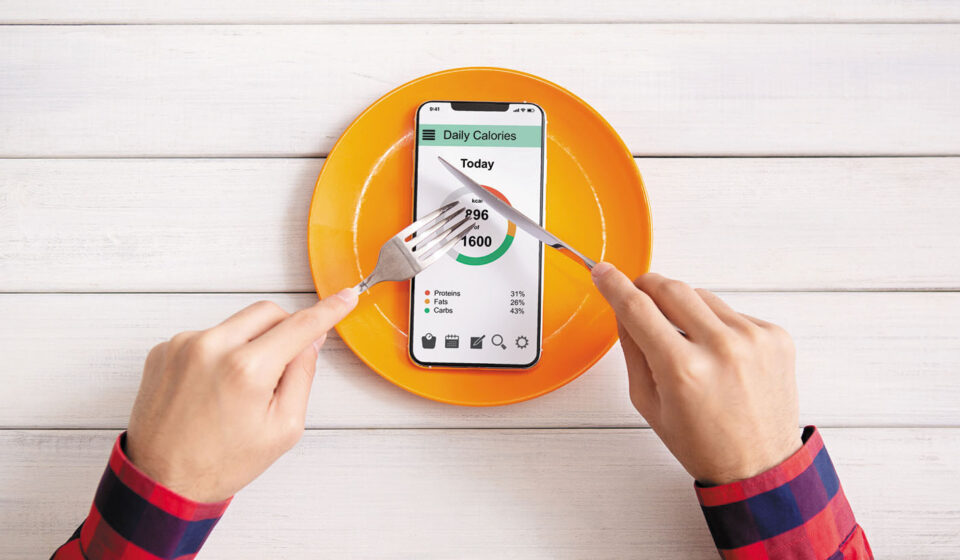

Yes, it’s possible. Here’s how to create a natural deficit without tracking every bite.

Calorie counting works. The science is clear on that. But for a lot of people, it’s also unsustainable, stressful, and has a way of turning every meal into a math problem that makes eating feel like a chore.
The good news: you don’t have to count calories to lose weight. What you do have to do is create a calorie deficit — and there are several reliable ways to do that without ever opening a tracking app.
The strategies below work by naturally reducing calorie intake, increasing satiety, and improving the hormonal environment that controls hunger — so you eat less without feeling deprived and without counting a single number.
Why Calorie Counting Isn’t Always the Answer
Before getting into the alternatives, it’s worth understanding why calorie counting fails so many people despite being technically sound.
It’s time-consuming and mentally draining. Weighing food, logging every ingredient, estimating portions at restaurants — for many people this level of attention to food becomes exhausting and obsessive quickly.
It’s often inaccurate anyway. Food labels have a legal margin of error of up to 20%. Restaurant meals are notoriously difficult to estimate. Calorie databases have inconsistencies. People consistently underestimate their intake by 20–40% even when tracking carefully.
It can damage your relationship with food. For some people, tracking every calorie creates anxiety around eating, guilt over “going over,” and a rigid all-or-nothing relationship with food that’s psychologically unhealthy and ultimately unsustainable.
It ignores food quality. 500 calories of chicken and vegetables produces a completely different hormonal and satiety response than 500 calories of cookies — but a calorie tracker treats them identically.
The alternatives below address what calorie counting misses: food quality, satiety, hormonal response, and sustainable long-term habits.
Strategy 1: Eat More Protein at Every Meal
If you only make one change, make it this.
Protein is the most satiating macronutrient — it suppresses hunger hormones, activates fullness hormones, and keeps you satisfied for significantly longer than the same calories from carbohydrates or fat. Research consistently shows that people who increase protein intake naturally eat 400–500 fewer calories per day without tracking or conscious restriction.
Protein also has a high thermic effect — your body burns 25–30% of protein calories just digesting it. This means that increasing protein simultaneously raises calorie burn and reduces calorie intake. Without counting a single number.
Practical application: Before building any meal, decide on your protein source first. Eggs, chicken, fish, Greek yogurt, cottage cheese, lentils, tofu — then build the rest of the meal around it. This one structural change transforms your diet without any tracking.
For full targets and food sources, our guide on how much protein you actually need per day has everything you need.
Strategy 2: Fill Half Your Plate With Vegetables
Vegetables are low in calories and high in fiber and water content — which means they take up significant space in your stomach for very few calories. A plate that’s half vegetables automatically reduces the calorie density of every meal without requiring any measurement.
This strategy works on a simple principle: volumetrics — eating a large volume of food for relatively few calories keeps you physically full while creating a calorie deficit naturally.
A 600-calorie meal that’s half vegetables feels and looks like much more food than a 600-calorie meal without them — and it is, in terms of volume and satiety. The practical result is that you feel full on fewer calories without tracking anything.
Practical application: At every meal, fill half your plate with non-starchy vegetables before adding anything else. Spinach, broccoli, cauliflower, zucchini, peppers, cucumber, leafy greens — any vegetables work. Then add your protein, then carbs and fats in whatever space remains.
Strategy 3: Eliminate Liquid Calories
This is the fastest, easiest calorie reduction available to most people — and it requires zero tracking.
Sugary drinks — soda, juice, sweetened coffee, energy drinks, alcohol — contribute hundreds of calories per day that register almost no satiety. You consume them and you’re just as hungry as before. Your brain simply doesn’t register liquid calories the same way it registers solid food.
For many people, liquid calories account for 300–600 calories of daily intake that they’ve never consciously acknowledged. Eliminating them creates a significant deficit without changing a single thing about what you eat.
Practical application: Switch all drinks to water, sparkling water, black coffee, or plain tea. That’s the entire strategy. No tracking required. The impact on both calorie intake and belly fat specifically is documented in detail in our article on what happens when you cut sugar for 30 days.
Strategy 4: Eat Slowly and Without Distractions
Your body has sophisticated fullness signaling — but it takes 15–20 minutes to kick in after you start eating. If you eat a full meal in 8 minutes, you’ve consumed far more than you needed before the satiety signal arrives.
Eating slowly, chewing thoroughly, and paying attention to your meal allows these signals to work properly. Studies consistently show that people who eat slowly consume significantly fewer calories per meal than fast eaters — without any intentional restriction.
Distraction compounds the problem. Eating in front of a screen disconnects you from the sensory experience of eating and delays satiety signals further. People eat more, enjoy it less, and feel hungry again sooner when eating distracted.
Practical application: Sit at a table, put the phone away, and eat without screens. Chew each bite thoroughly. Put your fork down between bites. Aim for meals to take at least 15–20 minutes. These simple habits can reduce meal calories by 15–20% without counting anything.
Strategy 5: Eat More Fiber
Fiber slows digestion, activates fullness hormones, feeds beneficial gut bacteria, and keeps blood sugar stable — all of which reduce overall calorie intake naturally.
The average Western diet contains 10–15g of fiber per day. The recommended minimum is 25–38g. People eating adequate fiber consistently eat less overall because they stay fuller between meals without fighting hunger.
High-fiber foods that help most:
- Lentils and beans (15–16g per cup)
- Avocado (10g per fruit)
- Raspberries and blackberries (8g per cup)
- Oats (4g per cup cooked)
- Broccoli and cauliflower (5g per cup)
- Chia seeds (10g per 2 tablespoons)
Practical application: Add one high-fiber food to every meal. A handful of berries at breakfast, a large salad at lunch, lentils or beans at dinner. Combined with the protein-first approach, this creates powerful satiety that naturally reduces calorie intake without any tracking.
Strategy 6: Use Smaller Plates and Bowls
This sounds too simple to work. It works.
Research on portion psychology — much of it from food psychologist Brian Wansink — shows that people consistently eat less when using smaller plates, bowls, and glasses, without feeling less satisfied. The visual cues that tell your brain “this is a full plate of food” operate somewhat independently of the actual quantity of food.
A full smaller plate signals abundance. A half-empty large plate signals scarcity, even if the calorie content is identical.
Practical application: Swap dinner plates for side plates. Use smaller bowls for cereal, pasta, and rice. This is a passive calorie reduction that requires zero ongoing effort once you’ve made the switch.
Strategy 7: Front-Load Your Day With Protein and Fiber
What you eat first thing in the morning sets the hormonal tone for your entire day’s appetite.
A high-protein, high-fiber breakfast suppresses ghrelin (the hunger hormone) for 4–6 hours, reducing total daily calorie intake significantly compared to a carbohydrate-heavy or skipped breakfast. Studies show that people who eat protein-rich breakfasts consume 400+ fewer calories across the rest of the day — automatically, without any tracking.
A sugary or refined-carb breakfast does the opposite — it spikes blood sugar, triggers an insulin response, and produces a blood sugar crash by mid-morning that drives intense hunger and cravings for calorie-dense foods.
Practical application: Eggs, Greek yogurt, cottage cheese with berries, or a protein smoothie are all fast, high-protein breakfast options. Getting 30–40g of protein at breakfast alone dramatically changes your appetite for the rest of the day. For more breakfast ideas specifically, our upcoming article on the best high-protein breakfast ideas for weight loss goes into detail.
Strategy 8: Control Your Food Environment
Most overeating isn’t driven by hunger — it’s driven by opportunity. Food that’s visible, accessible, and convenient gets eaten regardless of hunger level.
Changing your food environment is one of the most powerful and passive calorie reduction strategies available:
Remove tempting foods from your home. If chips, cookies, and ice cream aren’t in the house, you won’t eat them when motivation dips. This isn’t about willpower — it’s about engineering your environment so willpower is rarely needed.
Keep healthy food visible and accessible. A bowl of fruit on the counter, pre-portioned nuts at eye level in the fridge, cut vegetables ready to grab — visible healthy food gets eaten. Hidden healthy food doesn’t.
Don’t shop hungry. Grocery shopping when hungry leads to purchasing significantly more calorie-dense food than shopping on a full stomach. Eat before shopping — it’s one of the simplest passive calorie reduction strategies available.
Pre-portion snacks. Rather than eating directly from large bags or containers, portion snacks into smaller containers when you get home from shopping. This adds a friction step that meaningfully reduces mindless overeating.
Strategy 9: Time Your Eating Window
You don’t have to commit to formal intermittent fasting to benefit from eating within a defined window.
Simply having a consistent time when you stop eating in the evening — say, 8pm — eliminates the late-night snacking that adds hundreds of untracked calories to many people’s days. Late-night eating also tends to be the most mindless, least hunger-driven eating of the day — habit and boredom rather than genuine appetite.
A consistent eating window of 10–12 hours (for example, 8am to 8pm) is a gentle, sustainable form of time restriction that produces meaningful calorie reduction for most people without any tracking.
For people who want to explore this further, our article on whether intermittent fasting is worth it covers the full range of approaches and who they work best for.
Strategy 10: Sleep More
This might be the most unexpected entry on this list, but the evidence is unambiguous.
Sleep-deprived people eat an average of 300–400 more calories per day than well-rested people — driven by elevated ghrelin, suppressed leptin, and increased reward sensitivity to calorie-dense foods. They also make significantly worse food choices when they do eat.
Getting 7–9 hours of sleep per night is one of the most powerful passive calorie reduction strategies available — not through conscious restriction, but through restored hormonal balance that makes reasonable eating feel natural rather than effortful.
The full case for sleep as a fat loss tool is made in our article on why sleep is the most underrated weight loss tool — if you haven’t read it, it’s one of the most impactful things on this entire blog.
Putting It All Together
You don’t need all ten of these strategies simultaneously. Pick the two or three that feel most natural and impactful for your situation and start there.
A practical starting combination for most people:
- Protein first at every meal — the highest-leverage single change
- Eliminate liquid calories — fast, easy, significant impact
- Half plate vegetables — reduces calorie density passively
- Eat slowly without screens — lets satiety signals work properly
- Sleep 7–9 hours — restores hormonal appetite regulation
Implement these five consistently and most people create a natural deficit of 400–600 calories per day without counting a single number. That’s enough for steady, sustainable fat loss of 0.5–1 lb per week — adding up to 25–50 lbs over a year.
For more on why these strategies work together and how they address the root causes of fat accumulation, our comprehensive guide on how to get rid of belly fat ties everything together.
When Calorie Counting IS Worth Doing
To be fair — there are situations where tracking calories is genuinely useful, even temporarily:
- When you’ve hit a plateau and can’t figure out where your intake actually is
- When you want to understand your baseline before moving to intuitive eating
- When you’re very close to your goal and need precision
- When previous non-tracking approaches haven’t produced results
Even in these cases, tracking for 2–4 weeks to build awareness is usually enough — you don’t need to track forever. The goal is to develop an intuitive sense of portion sizes and calorie density that then allows you to eat by feel with accuracy.
The Bottom Line
Calorie counting is a tool — not a requirement. The strategies above achieve the same goal — a sustained calorie deficit — through food quality, satiety optimization, habit design, and hormonal balance rather than arithmetic.
Eat more protein. Fill up on vegetables and fiber. Cut liquid calories. Eat slowly. Sleep enough. Control your environment.
Done consistently, these strategies create a natural deficit that drives steady fat loss without the mental overhead of tracking every bite — and they’re sustainable in a way that obsessive calorie counting rarely is.
Do you count calories or eat by feel? What’s worked best for you? Share in the comments.