How to Lose Weight as a Vegetarian (Without Being Hungry All the Time)

Plant-based eating can absolutely support fat loss — if you avoid the common mistakes
Vegetarianism and weight loss should be a natural fit. Plant-based diets are typically high in fiber, rich in micronutrients, and built around whole foods that support health and satiety. And yet — many vegetarians struggle to lose weight, and some actually gain weight after cutting out meat.
The reason is almost always the same: replacing meat with the wrong things. Pasta, bread, cheese, processed vegetarian products, and sugary snacks aren’t health foods just because they don’t contain meat.
Done right, a vegetarian diet is one of the most effective approaches to sustainable fat loss. Here’s exactly how to do it right.
Why Some Vegetarians Struggle to Lose Weight
Before the strategies, it helps to understand the common pitfalls.
The Protein Gap
Meat is the easiest, most calorie-efficient source of complete protein in a conventional diet. Remove it and — unless you consciously replace it — protein intake drops significantly. Low protein means lower satiety, more hunger, more cravings, muscle loss during a deficit, and a slower metabolism over time.
This is the single most common reason vegetarians struggle with fat loss. They removed the meat but didn’t replace the protein. As we cover in our guide to how much protein you actually need per day, adequate protein is the foundation of effective fat loss regardless of dietary pattern.
Carbohydrate Overload
Many vegetarians — particularly new ones — fill the protein gap with extra carbohydrates. More bread, more pasta, more rice, more potatoes. While these aren’t inherently bad foods, an imbalanced diet heavy in refined carbohydrates and light in protein creates the blood sugar instability that drives hunger, cravings, and fat storage.
Processed Vegetarian Products
The vegetarian food industry has expanded dramatically, and much of what it produces is highly processed, high in refined carbs, high in sodium, and lower in protein than the meat it replaces. Vegetarian burgers, meatless sausages, plant-based nuggets — convenient, but not the foundation of a fat loss diet.
Calorie Density Blindness
Some vegetarians assume that plant-based automatically means low calorie. It doesn’t. Nuts, nut butters, avocado, olive oil, cheese, and full-fat dairy are all vegetarian and all calorie-dense. Eating large amounts of these without awareness can easily create a calorie surplus despite eating “healthily.”
Strategy 1: Make Protein Your Obsession
For vegetarian fat loss, protein requires more intentionality than it does for omnivores. You need to actively build every meal around a protein source rather than letting it happen incidentally.
The best vegetarian protein sources:
Complete proteins (contain all essential amino acids):
- Eggs — 6g per egg, cheap, versatile, one of the best fat loss foods available
- Greek yogurt (plain) — 15–20g per cup, high satiety
- Cottage cheese — 25g per cup, slow-digesting casein protein
- Quark — similar to Greek yogurt, very high protein
- Edamame — 17g per cup, one of the best plant-based complete proteins
- Tempeh — 19g per 100g, fermented soy with excellent protein density
- Quinoa — 8g per cup cooked, a complete protein grain
High-quality incomplete proteins (combine for complete amino acid profile):
- Lentils — 18g per cup cooked, also extraordinarily high in fiber
- Black beans, chickpeas, kidney beans — 15g per cup cooked
- Tofu (firm) — 10g per 100g, extremely versatile
- Seitan (wheat gluten) — 25g per 100g, highest protein density of plant proteins
- Hemp seeds — 10g per 3 tablespoons
- Pumpkin seeds — 9g per 28g serving
Dairy-based (for lacto-vegetarians):
- Low-fat cheese
- Skyr
- Milk and dairy in general
Aim for 0.7–1g of protein per pound of bodyweight daily — the same target as non-vegetarians. For a 150 lb person, that’s 105–150g per day. It requires planning on a vegetarian diet, but it’s absolutely achievable.
Strategy 2: Combine Protein Sources Strategically
Unlike animal proteins, most plant proteins are incomplete — they’re missing one or more essential amino acids. The solution is combining complementary sources throughout the day.
Classic combinations that create complete amino acid profiles:
- Rice and beans or lentils
- Hummus (chickpeas) with whole grain bread or pita
- Peanut butter on whole grain toast
- Lentil soup with a grain (barley, farro, quinoa)
- Bean tacos with corn tortillas
You don’t need to combine these at every meal — eating a variety of plant proteins throughout the day ensures you get all essential amino acids over the course of 24 hours. But being aware of the principle helps you build more nutritionally complete meals.
For vegetarians who eat eggs and dairy (lacto-ovo vegetarians), this is less of a concern since eggs and dairy are complete proteins that fill most gaps.
Strategy 3: Prioritize High-Fiber, High-Protein Carbohydrates
Not all carbohydrates are equal for fat loss — and vegetarians have strong reasons to favor those that deliver both fiber and protein simultaneously.
The best dual-purpose carbohydrates for vegetarian fat loss:
- Lentils — protein AND fiber powerhouse, extraordinarily filling
- Beans and chickpeas — similar profile, incredibly versatile
- Oats — decent protein, very high in beta-glucan fiber that promotes satiety
- Quinoa — complete protein grain with good fiber content
- Edamame — technically a legume but functions as both protein and carb
These foods do double duty — they fill the protein gap while also providing the fiber that keeps hunger under control. Building meals around these rather than refined grains is one of the most effective vegetarian fat loss strategies available.
The blood sugar and insulin stability provided by high-fiber carbohydrates is particularly important for vegetarians whose carbohydrate intake tends to be higher. Our article on what happens when you cut sugar for 30 days covers how carbohydrate quality affects fat storage and hunger — the principles apply equally to vegetarian diets.
Strategy 4: Don’t Fear Eggs and Dairy (If You Eat Them)
For lacto-ovo vegetarians, eggs and dairy are some of the most powerful fat loss tools available — and both have been unnecessarily demonized by nutritional trends over the years.
Eggs are one of the most satiating foods per calorie on the planet, provide complete protein with excellent bioavailability, and are versatile enough to appear at any meal. Three eggs at breakfast can set up your appetite for the entire day.
Greek yogurt and cottage cheese provide high amounts of slow-digesting protein, calcium that plays a role in fat metabolism, and probiotics that support gut health and reduce bloating. Making these staples of your vegetarian diet removes the protein gap almost entirely.
If you do eat dairy, choose full-fat versions where possible — they’re more satiating and the fear of dietary fat has been significantly overstated by research conducted in the past decade.
Strategy 5: Be Strategic About Nuts, Seeds, and Nut Butters
Nuts and seeds are excellent foods — high in healthy fats, fiber, minerals, and some protein. They’re also very calorie-dense, and portions matter more than most people realize.
A small handful of almonds (about 23 nuts) contains around 160 calories. Two tablespoons of peanut butter contains 190 calories. These are easy to eat quickly and mindlessly — and for vegetarians who eat them liberally as snack foods or protein sources, they can create a calorie surplus that stalls fat loss despite an otherwise good diet.
This doesn’t mean avoiding them — it means being intentional about portions. A measured serving of nuts or nut butter as part of a balanced meal is valuable. Eating straight from a large jar without measuring is where the calories accumulate without awareness.
Strategy 6: Limit Processed Vegetarian Meat Substitutes
Vegetarian burgers, sausages, nuggets, and deli slices have improved enormously in taste and texture — but most are still highly processed foods high in sodium, refined ingredients, and additives.
They’re not inherently off-limits, but they shouldn’t be the foundation of a vegetarian fat loss diet. Whole food protein sources — lentils, beans, tofu, tempeh, eggs, dairy — are nutritionally superior, more satiating, and for the most part, significantly cheaper.
Use meat substitutes occasionally for convenience or to satisfy a specific craving. Build your daily eating around the whole food list above.
Strategy 7: Load Up on Vegetables at Every Meal
This applies to all fat loss eating but deserves emphasis in a vegetarian context — because some vegetarians eat relatively few vegetables despite theoretically following a plant-based diet.
A vegetarian diet built around bread, pasta, cheese, and processed products can actually be lower in vegetables than an omnivore diet that includes salads, stir-fries, and roasted vegetables alongside protein.
Fill half your plate with non-starchy vegetables at every meal. The fiber, water content, and micronutrients in vegetables are essential for the gut health, hormonal balance, and metabolic function that support fat loss — and the volume they add to meals reduces calorie density naturally. Our article on the best foods to eat to lose weight fast covers the vegetables with the strongest fat loss evidence in detail.
A Sample Day of Vegetarian Fat Loss Eating
Here’s what a day built around the principles above actually looks like:
Breakfast: 3 scrambled eggs + 1 cup plain Greek yogurt with berries + black coffee Protein: ~45g
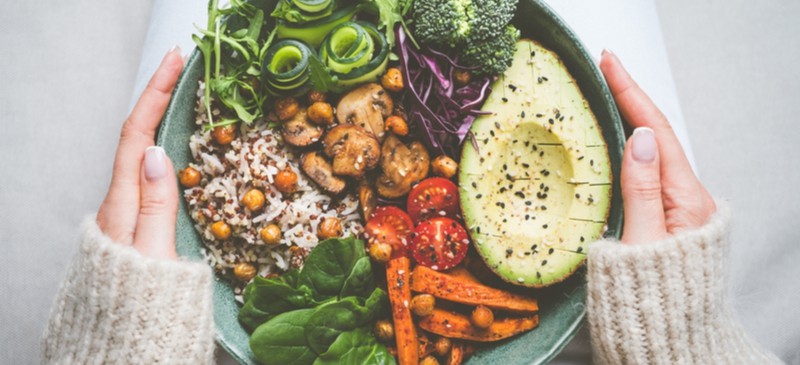
Lunch: Large spinach salad with 1 cup chickpeas, half avocado, cucumber, olive oil and lemon dressing Protein: ~20g, Fiber: ~15g
Snack: Cottage cheese with a handful of pumpkin seeds Protein: ~28g
Dinner: Lentil and vegetable curry with half cup quinoa Protein: ~25g, Fiber: ~18g
Daily totals: ~120g protein, ~45g fiber, minimal added sugar, zero liquid calories
This is a genuinely satisfying, nutritionally complete day that creates a natural calorie deficit for most people without tracking. It’s also largely based on cheap whole foods as covered in our guide to how to lose weight on a budget.
What About Vegan Fat Loss?
Everything above applies to vegans with one additional layer of complexity: removing eggs and dairy eliminates two of the most convenient high-protein foods in a vegetarian diet.
For vegans, hitting protein targets requires even more intentionality:
- Tempeh, tofu, and seitan become the primary protein anchors
- Protein powder (pea, rice, or hemp) becomes more practically necessary
- Combining protein sources at most meals becomes more important
- Tracking protein intake — at least initially — is worthwhile to ensure adequacy
The same fat loss principles apply — protein first, high fiber, minimal processed food, strength training, adequate sleep. The execution just requires more planning on a fully plant-based diet.
Supplements Worth Considering for Vegetarian Fat Loss
A few nutritional gaps are common in vegetarian and particularly vegan diets that are worth addressing through supplementation:
Vitamin B12 — found almost exclusively in animal products. Deficiency is common in vegetarians and causes fatigue and impaired metabolism among other issues. Supplement regardless.
Vitamin D — as covered in our supplement guide, deficiency is extremely common and impairs metabolic function. Most people benefit from supplementing regardless of diet, but vegetarians limiting fatty fish are at higher risk.
Omega-3 (algae-based for vegans) — DHA and EPA from fish can be obtained from algae supplements for vegetarians and vegans who don’t eat fish. These support inflammation reduction and metabolic health.
Iron — plant-based iron (non-heme) is less bioavailable than animal iron. Vegetarian women in particular are at risk of deficiency. Eating vitamin C-rich foods alongside iron-rich plant foods improves absorption significantly.
Zinc and calcium — also less bioavailable from plant sources. A broad-spectrum multivitamin covers these bases adequately for most vegetarians.
The Bottom Line
Losing weight as a vegetarian is absolutely achievable — but it requires addressing the protein gap that cutting out meat creates, choosing high-fiber carbohydrates over refined ones, and not assuming that plant-based automatically means calorie-controlled.
Build every meal around a protein source. Combine complementary plant proteins throughout the day. Fill half your plate with vegetables. Choose high-fiber carbohydrates. Be intentional with calorie-dense foods like nuts and oils. And prioritize whole foods over processed vegetarian products.
Done consistently, a well-constructed vegetarian diet is not just compatible with fat loss — it’s one of the most effective dietary patterns for long-term weight management and metabolic health.
For the complete fat loss framework that applies regardless of dietary pattern, our comprehensive guide to how to get rid of belly fat covers every key strategy in one place.
Are you vegetarian and have found a protein strategy that works well for you? Share it in the comments — the community is always looking for new ideas.