


You’ve tried everything, haven’t you?

Counted every calorie. Meal prepped on Sundays. Hit the gym at 5 AM. Cut out carbs, then sugar, then basically everything that tastes good. Downloaded the apps. Bought the programs. Followed the influencers.
And maybe you even lost weight. For a while.
But here you are again. The weight came back. The motivation disappeared. And now you’re wondering what’s wrong with YOU.
Here’s the truth nobody wants to tell you: It’s not you. It’s biology.
The “Eat Less, Move More” Lie
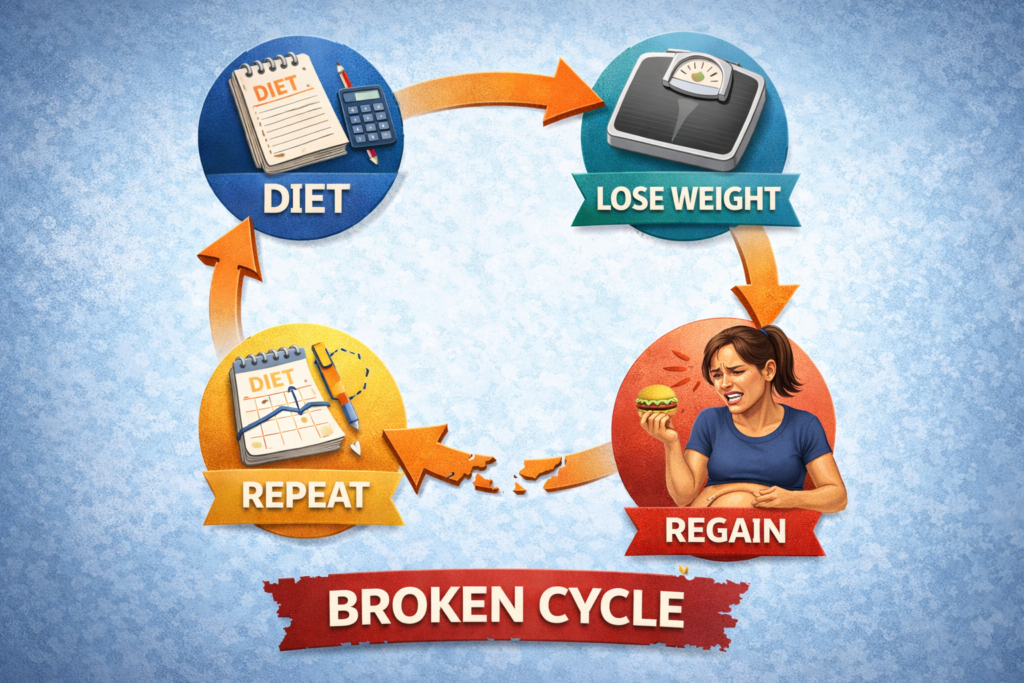
For decades, we’ve been told weight loss is simple math. Burn more calories than you eat. Just have willpower. Just try harder.
If it were that simple, we wouldn’t have an obesity epidemic. We’d all just… do it.
The reality? Your body is a complex biological system that FIGHTS weight loss at every turn. And when you try to lose weight the traditional way, here’s what actually happens:
Your metabolism slows down. Studies show people who lose significant weight burn 200-500 fewer calories per day than someone who’s always been that weight. Your body literally becomes more efficient at storing fat.
Your hunger hormones go haywire. Ghrelin (the hunger hormone) increases. Leptin (the fullness hormone) decreases. Translation: you’re hungrier and never feel satisfied.
Your body thinks you’re starving. Because in evolutionary terms, you ARE. Your biology doesn’t know you’re trying to fit into skinny jeans. It thinks there’s a famine, so it hangs onto every calorie for dear life.
This isn’t weakness. This is survival programming that worked great when food was scarce. Now? It’s working against you.
Why the Gym Isn’t Enough

“Just exercise more!” they say. If only it were that easy.
Here’s the brutal truth about exercise and weight loss:
You can’t out-exercise a bad diet. A intense hour at the gym might burn 400-600 calories. A single restaurant meal can easily be 1,500 calories. The math doesn’t work.
Exercise makes you hungry. Your body compensates. You burn 500 calories at the gym, then unconsciously eat 600 more throughout the day because your appetite increased.
Most people overestimate calories burned. That treadmill saying you burned 800 calories? It’s probably closer to 400. And you probably ate back those calories in your “post-workout snack.”
Don’t get me wrong—exercise is GREAT for your health. It improves your heart, your mood, your energy, your sleep. But as a primary weight loss tool? It’s not enough for most people.
The Willpower Myth
Let’s talk about the most damaging lie of all: that weight loss is about willpower.
Think about it this way: if someone’s body produces too little thyroid hormone, we don’t tell them to “just try harder” to have more energy. We give them medication.
If someone’s pancreas doesn’t make enough insulin, we don’t shame them for lack of discipline. We treat the condition.
But with weight? Suddenly it’s all about personal responsibility and character.

Here’s what’s actually happening in your brain when you try to diet:
Your brain has a “set point” for your weight. It defends this number aggressively. When you drop below it, your brain:
- Increases obsessive thoughts about food
- Makes food look and smell more appealing
- Reduces your energy (so you move less)
- Cranks up hunger signals
- Turns down fullness signals
You’re not failing because you’re weak. You’re failing because your biology is literally fighting against you 24/7.
Why “Just Eat Healthy” Doesn’t Work

The advice sounds so simple: “Just eat whole foods. Just cook at home. Just meal prep.”
But if you’ve tried this, you know the reality:
Week 1: You’re motivated! Grocery shopping, meal prepping, feeling amazing.
Week 2: You’re still hanging in there. It’s harder than you thought. You’re hungry a lot. But you’re committed.
Week 3: You’re exhausted from all the cooking. You had a stressful day and really want comfort food. You’re thinking about food constantly.
Week 4: You “broke” the diet at a birthday party. Now you feel like you failed. Might as well eat normally again. You’ll start over Monday.
Sound familiar?
This isn’t a personal failure. This is your hunger hormones screaming at you, your metabolism slowing down, and your brain doing everything in its power to get you back to your set point weight.
The Real Reason Diets Fail
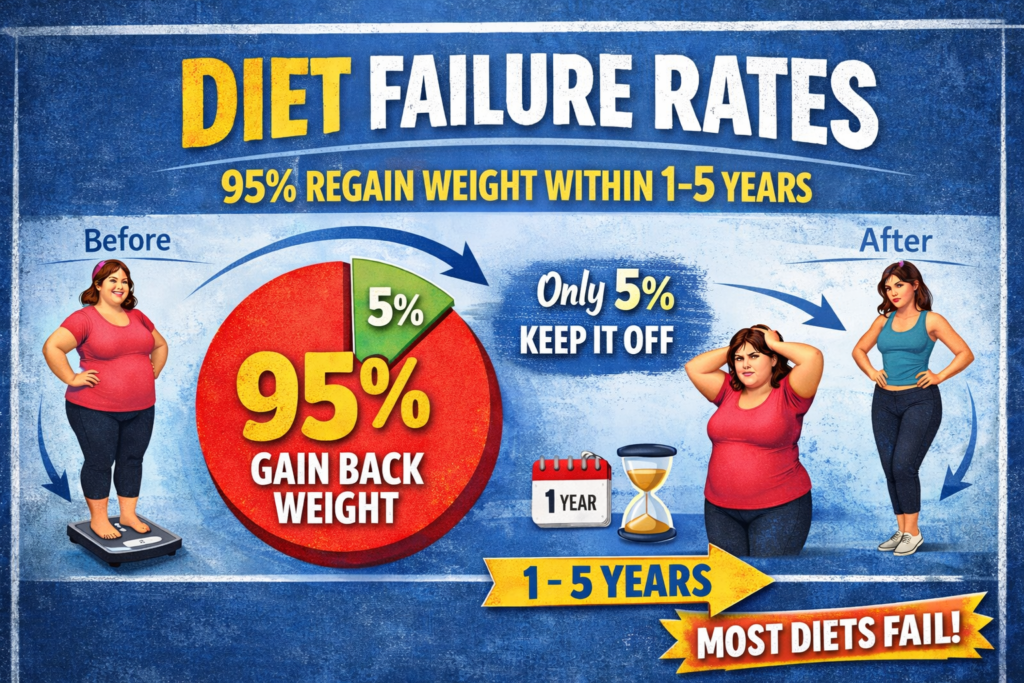
Studies show that 95% of people who lose weight through dieting alone regain it within 1-5 years. Most regain MORE than they lost.
Why? Because traditional weight loss methods treat the symptom (excess weight) but not the underlying biological problem (dysregulated hunger hormones and metabolism).
It’s like trying to bail water out of a boat without fixing the leak. You might succeed temporarily, but you’re exhausted, and eventually, the boat’s filling up again.
What Actually Works: Treating the Biology
Here’s what the research is now showing: for many people, obesity is a medical condition that requires medical treatment.
Not moral failure. Not lack of discipline. A medical condition.
Just like:
- Depression isn’t “just sadness”
- Diabetes isn’t “just eating too much sugar”
- High blood pressure isn’t “just stress”
For many people, being overweight is a biological issue with hormonal and metabolic components that diet and exercise alone can’t fix.
The breakthrough? Medications that work WITH your biology instead of fighting against it.
These treatments:
- Regulate the hunger hormones that make you constantly think about food
- Help your brain recognize fullness signals properly
- Allow you to eat normal portions without feeling deprived
- Address the biological root cause, not just the symptoms
Why GLP-1 Medications Are Changing Everything
The biggest breakthrough in weight loss treatment in decades has been GLP-1 medications—particularly semaglutide (the active ingredient in Ozempic and Wegovy).
Here’s why these medications are different from everything you’ve tried before:
They Fix What’s Actually Broken
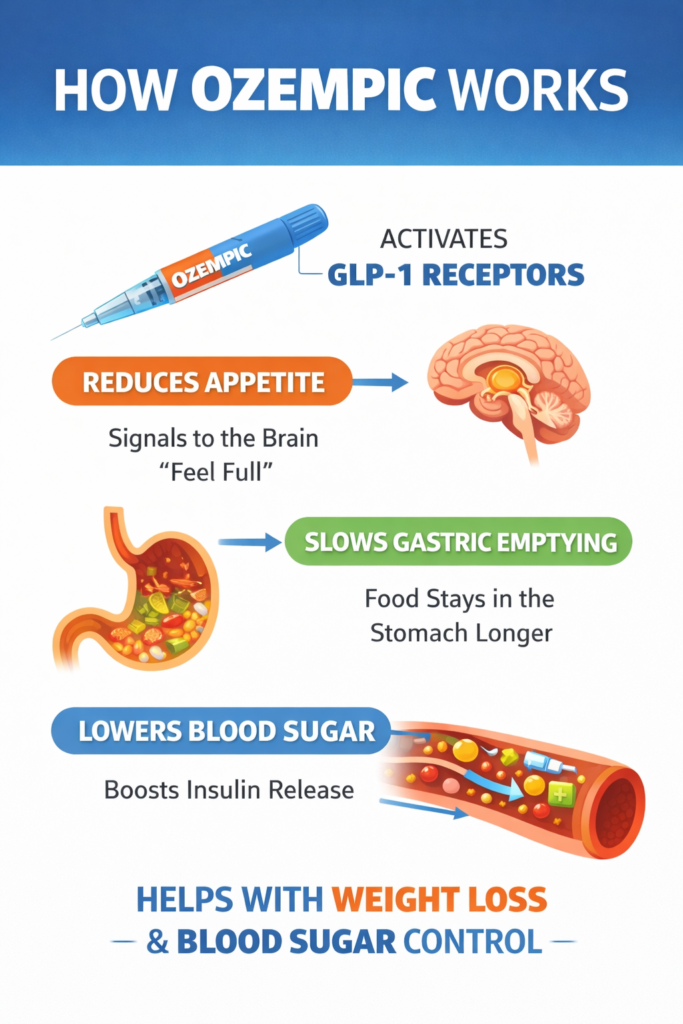
Remember those hunger hormones we talked about? GLP-1 medications work by mimicking your body’s natural GLP-1 hormone—the one that’s supposed to tell your brain “I’m full, stop eating.”
For many people struggling with weight, this signaling system doesn’t work properly. It’s like having a broken thermostat in your house. You can wear fewer clothes (diet) and open windows (exercise), but until you fix the thermostat itself, you’re always going to be fighting the system.
Semaglutide fixes the thermostat.
The Results Speak for Themselves
Clinical studies show people using semaglutide lose an average of 12-15% of their body weight. That means:
- If you’re 250 pounds: 30-38 pounds lost
- If you’re 200 pounds: 24-30 pounds lost
- If you’re 300 pounds: 36-45 pounds lost
But here’s what matters more than the numbers: people report finally feeling NORMAL around food.
“I don’t think about food every waking moment anymore.” “I can eat half my meal and actually feel satisfied.” “The constant hunger and cravings are just… gone.”
This is what happens when you address the biological problem instead of just fighting symptoms with willpower.
It Works While You Sleep
Unlike diets that require constant vigilance—counting calories, measuring portions, fighting cravings all day—semaglutide works continuously.
You take one injection per week (a tiny needle you barely feel), and it’s in your system regulating those hunger signals 24/7. You’re not relying on willpower anymore. The medication is doing the heavy lifting by normalizing your hunger hormones.
It’s Designed for Long-Term Success
Here’s the reality with traditional diets: even if you lose weight, keeping it off requires the same exhausting effort forever. Your body never stops trying to get back to its set point.
GLP-1 medications are designed for ongoing use because they’re treating a chronic condition. Just like someone with high blood pressure stays on medication to keep it controlled, many people stay on semaglutide to keep their hunger hormones regulated.
This isn’t a crutch. It’s treatment for a medical condition.

Who It’s Actually For
GLP-1 medications aren’t for everyone, and that’s important to understand. Doctors typically prescribe them for people who:
- Have a BMI of 30 or higher (classified as obese), OR
- Have a BMI of 27 or higher with weight-related health conditions (like high blood pressure, type 2 diabetes, high cholesterol, sleep apnea)
- Have tried traditional weight loss methods without lasting success
- Don’t have certain medical conditions that make it unsafe (like a history of thyroid cancer or pancreatitis)
This is medical treatment for people who genuinely need it—not a cosmetic quick-fix for vanity weight loss.
Why Now Is Different
For years, these medications were expensive and hard to access. Insurance often wouldn’t cover them. Supply was limited.
That’s changing. Compounded semaglutide (the same active ingredient, made by specialized pharmacies) is now available at a fraction of the cost—often $200-400/month instead of $1,000+. And with online telemedicine, you don’t need to wait months for a doctor’s appointment.
For the first time, this treatment is actually accessible to the people who need it most.
The Difference Medical Support Makes
Think about what would happen if you could:
- Feel satisfied after normal-sized meals
- Stop thinking about food every hour
- Not feel ravenously hungry all the time
- Have your biology working WITH you instead of against you
This is what modern medical weight loss does. It levels the playing field.
You still need to make decent food choices. You still benefit from movement and exercise. But now you’re not fighting a losing battle against your own body.
It’s Not About Taking the “Easy Way Out”
Let me address this directly because someone’s probably thinking it:
“That’s cheating. That’s the easy way. You should do it naturally.”
Would you say that to someone taking:
- Blood pressure medication?
- Antidepressants?
- Insulin?
- Thyroid medication?
No. Because we understand those are legitimate medical conditions that need treatment.
Weight, for many people, is the same. It’s a biological issue. Getting medical help isn’t cheating—it’s smart.
Stop Blaming Yourself
You haven’t failed at weight loss dozens of times because you’re lazy or undisciplined.
You’ve been fighting against powerful biological forces with nothing but willpower. That’s like trying to swim against a riptide—you might make progress for a while, but eventually, the current wins.
The good news? You don’t have to keep fighting the same losing battle.
Medical science has caught up to what your body’s been doing all along. There are now treatments that address the actual biological mechanisms driving weight gain.
Ready to Try a Different Approach?
Stop Fighting Your Biology. Work With It Instead.
ClinicSecret.com is a telehealth/online healthcare platform that offers weight-loss support and prescription services for medications like GLP-1 therapies (e.g., semaglutide) intended to help with weight loss. They claim to provide online consultations with U.S. doctors, prescriptions when appropriate, and home delivery of medications.
ClinicSecret has genuinely been one of the best online health solutions I’ve come across, especially for anyone looking for a convenient and discreet way to take control of their weight-loss journey. The entire process is refreshingly simple — from the online consultation to receiving treatment at home — without the stress of long appointments or feeling judged. What really stands out is how professional and supportive the experience feels, making it clear that you’re not just another number, but someone being guided with care and expertise.
Trustpilot reviews
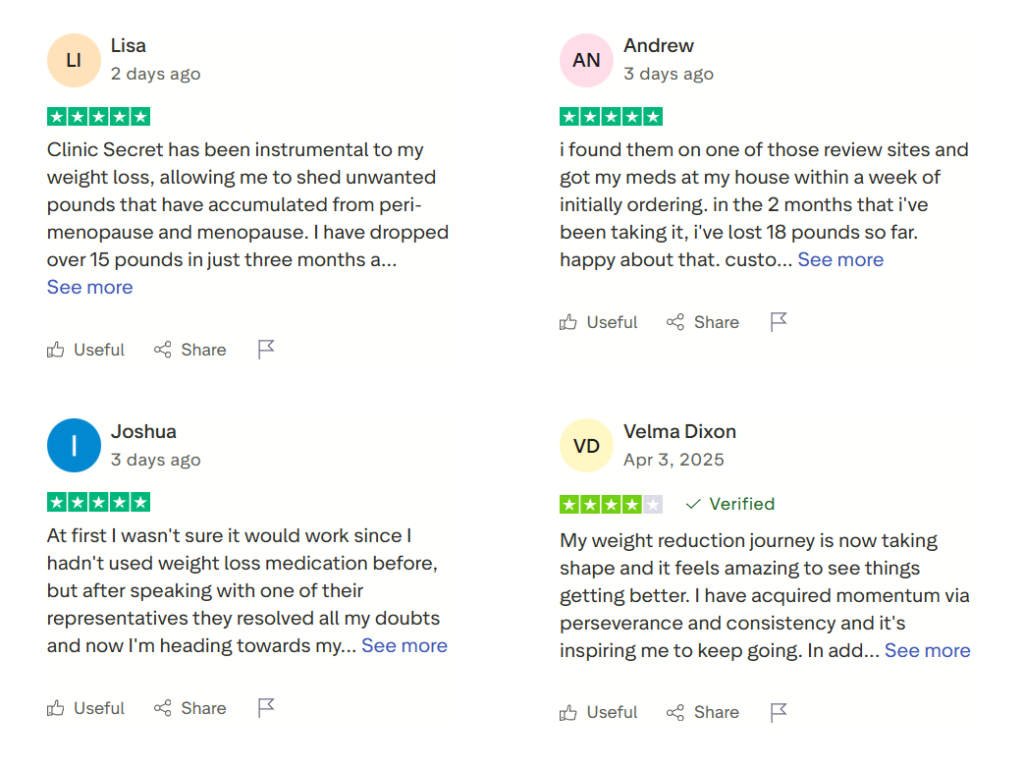
What makes ClinicSecret the best solution online is how it blends medical oversight with real-world convenience. You get access to licensed providers, clear guidance, and a streamlined system that fits into everyday life. Compared to other platforms, it feels more transparent, more user-friendly, and far more focused on results without unnecessary hassle. If you’re searching for a modern, effective, and trustworthy online clinic, ClinicSecret is an option I confidently recommend.
Join thousands who’ve stopped blaming themselves and started getting real, lasting results with medical supervision.


Thank you so much for recommending ClinicSecret! They were great!
My doctor actually told me about Clinicsecret! I’m starting tomorrow thanks!