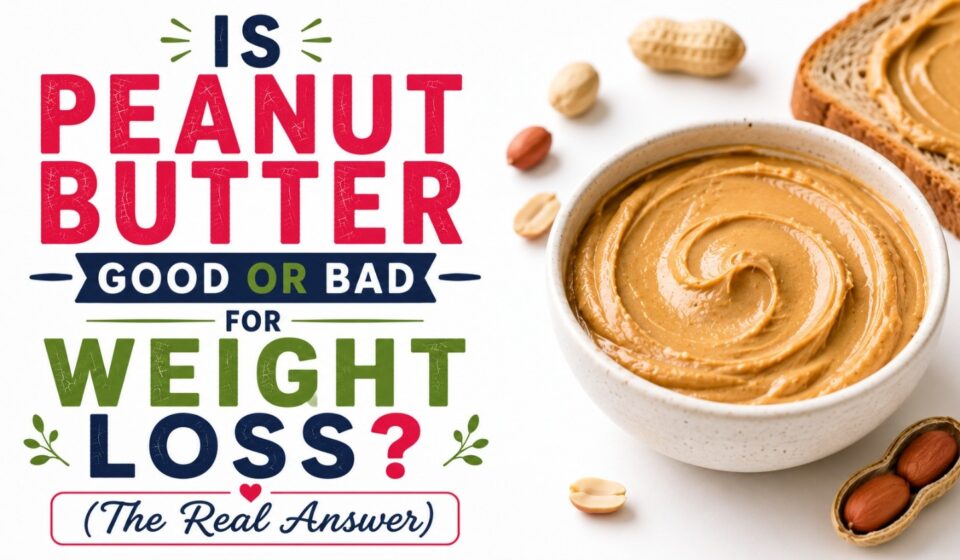

One of the most beloved foods in existence — here’s the honest truth about peanut butter and fat loss
Peanut butter occupies a contradictory space in weight loss culture. Some people swear by it as a weight loss food — high protein, healthy fats, incredibly satisfying. Others avoid it entirely — too high in calories, too easy to overeat, too addictive.
Both groups are partly right. Here’s the full picture.
The Case For Peanut Butter in a Weight Loss Diet
It’s Genuinely Nutritious
Two tablespoons of natural peanut butter provides:
- 8g protein — meaningful contribution toward daily targets
- 16g fat — mostly monounsaturated (heart-healthy, same as olive oil)
- 2g fiber
- Magnesium, vitamin E, niacin, manganese
- 190–200 calories
This is real nutrition — not empty calories. The fat in peanut butter is genuinely healthy and the protein content is meaningful.
High Satiety Per Calorie
The combination of protein + fat + fiber in peanut butter produces significant satiety. Studies comparing peanut butter consumption to other snacks consistently find that it produces longer-lasting fullness — meaning people who eat peanut butter tend to eat less at subsequent meals.
Reduces Cravings
Peanut butter’s fat and protein combination stabilizes blood sugar — reducing the spikes and crashes that produce sugar cravings. People who eat peanut butter as a snack often report significantly reduced afternoon and evening cravings for sweets and processed food.
May Reduce Overall Calorie Intake
Several studies have found that people who eat peanuts and peanut butter regularly don’t gain more weight than those who don’t — and some studies find they gain less, despite peanut butter’s high calorie density. The proposed mechanism: the high satiety and craving-reduction effects cause spontaneous reduction in other food intake that offsets the peanut butter calories.
This doesn’t mean calorie-free — it means highly satiating calories that may reduce intake elsewhere.
The Case Against Peanut Butter for Weight Loss
Extremely Calorie Dense
This is the primary issue. Two tablespoons of peanut butter contains 190–200 calories — from a volume of food that fits on a dessert spoon.
The problem: peanut butter is extraordinarily easy to consume in quantities significantly larger than two tablespoons. A “serving” from the jar looks like almost nothing. Three or four “servings” consumed while eating from the jar looks like a reasonable amount — but represents 600–800 calories.
For context: 600 calories of peanut butter is roughly the same calorie content as 12 cups of cucumber or 6 large eggs. The satiety from the cucumber or eggs is dramatically higher than from the peanut butter.
Almost Impossible to Eat in True Moderation for Some People
Peanut butter has a specific flavor profile — the combination of fat, salt, and mild sweetness — that many people find difficult to stop eating. The palatability that makes it enjoyable makes portion control genuinely challenging for a significant proportion of people.
This isn’t a character flaw — it’s the palatability engineering of a food that was specifically designed to be hard to stop eating.
Commercial Peanut Butter Often Contains Added Sugar and Hydrogenated Oil
Most major commercial peanut butter brands (Jif, Skippy, Peter Pan) add sugar and sometimes partially hydrogenated vegetable oil to improve shelf stability and palatability. The added sugar turns an otherwise excellent food into something more like dessert.
Skippy Creamy: 3g added sugar, 1.5g saturated fat from added palm oil per serving — on top of the natural peanut butter nutrition.
Natural vs. Commercial Peanut Butter
The distinction matters:
Natural peanut butter (ingredients: peanuts, salt):
- No added sugar
- No hydrogenated oils
- Slightly less palatable (which actually helps with portion control)
- Oil separation is normal — stir before using
Commercial peanut butter (Jif, Skippy, etc.):
- Added sugar (2–3g per serving)
- Often contains hydrogenated or palm oil
- More uniform texture and enhanced palatability
- Easier to overeat
For weight loss: natural peanut butter is the clear choice. The absence of added sugar and modified fats makes it nutritionally superior, and the slightly less addictive palatability helps with portion control.
How Many Calories Are You Actually Eating?
This is where most people go wrong with peanut butter. Let’s look at what different amounts actually contain:
| Amount | Calories | Protein |
|---|---|---|
| 1 teaspoon | 32 | 1.3g |
| 1 tablespoon | 95 | 4g |
| 2 tablespoons (standard serving) | 190 | 8g |
| 3 tablespoons | 285 | 12g |
| ¼ cup | 380 | 16g |
| ½ cup | 760 | 32g |
Most people who eat peanut butter from a jar, or spread it “generously” on toast, are consuming 3–5 tablespoons (285–475 calories) while thinking they’re eating a “small snack.”
Measuring peanut butter — on a scale or with a measuring spoon — before eating it is one of the most commonly revelatory food tracking experiences. What looks like a reasonable amount is typically 2–3x the serving size.
As covered in our article on is counting calories worth it, accurate tracking of calorie-dense foods like peanut butter is where tracking produces the most value.
The Verdict: Good or Bad for Weight Loss?
Peanut butter is a genuinely good food for weight loss — IF portion controlled.
The protein, healthy fat, fiber, and satiety effects make it an excellent dietary addition. The calorie density makes uncontrolled consumption a significant fat loss obstacle.
It’s good for weight loss when:
- You measure portions (2 tablespoons maximum, weighed)
- You eat natural peanut butter without added sugar
- You use it as a protein/fat addition to a meal or snack rather than eating it from the jar
- You account for its calories in your daily total
It’s problematic for weight loss when:
- You eat it directly from the jar without measuring
- You use it as a “free food” that doesn’t count in your calories
- You find it impossible to stop eating
- You’re buying commercial varieties with added sugar
The Best Ways to Eat Peanut Butter for Weight Loss
On apple slices: The fiber from the apple + protein and fat from peanut butter produces excellent satiety. One medium apple + 1 tablespoon peanut butter = approximately 200 calories, genuinely filling snack.
In a protein smoothie: 1 tablespoon blended into a protein shake adds flavor, fat, and additional protein without the portion control problem of eating from the jar.
On celery: The classic combination. Very low calorie base (celery) + measured peanut butter = high volume, reasonable calories.
On whole grain toast: 1 tablespoon on whole grain toast = approximately 175 calories with real nutrition and good satiety. Better than jam or butter for weight loss.
In overnight oats: A tablespoon mixed into oats adds protein and fat that significantly improves the satiety of an already filling breakfast. As covered in our article on the best high protein breakfast ideas, combining oats with protein sources dramatically improves morning satiety.
What to avoid: Eating directly from the jar. The absent portion boundary makes this the primary way peanut butter consumption gets out of control.
What About Other Nut Butters?
Almond butter: Similar calorie profile to peanut butter (190 calories per 2 tbsp), slightly more vitamin E and calcium. Neither better nor worse for weight loss.
Cashew butter: Slightly lower in fat, slightly higher in carbohydrates. Similar calories. Genuinely delicious but the same portion control issues apply.
Sunflower seed butter: Nut-free alternative with similar nutrition profile. Good for people with peanut allergies.
Powdered peanut butter (PB2): The reduced-calorie option — made by pressing most of the fat from peanuts. 45 calories per 2 tablespoons vs. 190 for regular. Much lower calorie density, though also lower in the healthy fats and somewhat less satisfying. Useful for adding peanut butter flavor to smoothies and oatmeal without the full calorie cost.
The Bottom Line
Peanut butter is:
- Nutritious (protein, healthy fat, fiber, vitamins)
- Highly satiating
- Compatible with fat loss when portioned correctly
- Problematic when eaten without portion awareness
The single most important thing for peanut butter and weight loss: measure it. Two tablespoons, weighed, not estimated. This single habit transforms peanut butter from a potential fat loss obstacle into a genuinely useful dietary addition.
Choose natural peanut butter (peanuts + salt only), measure your portions, account for the calories, and peanut butter absolutely has a place in a fat loss diet.
For the complete framework for managing calorie-dense healthy foods within a fat loss approach, our guide to how to get rid of belly fat covers everything in one place.
Are you a peanut butter lover who has found a way to include it in your weight loss diet — or does it tend to derail you? Share in the comments.
Stop Wondering What to Eat This Week
Get my free 7-Day High-Protein Weight Loss Meal Plan delivered straight to your inbox — a simple week of satisfying, protein-focused meals designed to make healthy eating easier without complicated calorie tracking.
- 7 full days of breakfast, lunch, dinner & snacks
- One complete shopping list for the whole week
- A quick high-protein food cheat sheet
- Simple daily tips to help you stay on track
Free PDF • Delivered by email • Unsubscribe anytime
Check your inbox 💜
Your free 7-day high-protein meal plan is on its way.