
The most demonized food in weight loss culture — here’s what the evidence actually shows
Bread has become the symbolic villain of weight loss culture. “Cut out bread and the weight falls off.” “Bread is just empty carbs.” “I lost 10 pounds just by giving up bread.”
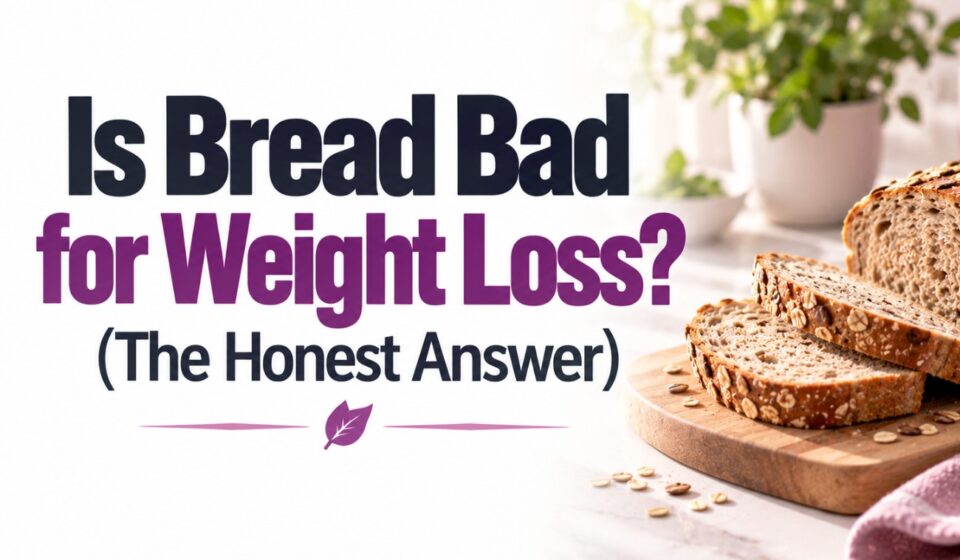
The reality is considerably more nuanced. Is bread bad for weight loss? It depends entirely on the type of bread, the amount, and the overall dietary context.

Why Bread Gets Such a Bad Reputation
The case against bread isn’t entirely without merit:
Most commercially sold bread is highly processed: Standard white sandwich bread is made from refined flour — wheat stripped of its bran and germ, removing most of the fiber, vitamins, and minerals. What’s left is essentially starch that converts rapidly to glucose.
White bread has a high glycemic index (GI of 70-75): This means it raises blood sugar rapidly, triggering a significant insulin response. As covered in our guide to how to improve insulin sensitivity naturally — for people with insulin resistance this effect is amplified and directly impairs fat metabolism.
Bread is easy to overeat: A slice of bread is 70-100 calories — seemingly modest. But most people don’t eat one slice, they eat two or four, often with calorie-dense toppings. A sandwich with two thick slices, butter, and filling can easily reach 500-700 calories.
Bread is often a vehicle for other high-calorie foods: Butter, jam, peanut butter, processed meats, full-fat cheese — the toppings often contribute more calories than the bread itself.
Why Bread Isn’t Inherently Fattening
At the same time — the “bread is bad” narrative is significantly oversimplified:
Bread contains calories — not magic fat-storing properties: Bread causes weight gain only when it contributes to a calorie surplus. Eaten within a calorie deficit, bread does not prevent fat loss. As covered in our guide to how to lose weight with a calorie deficit — total calorie balance determines fat loss, not any single food.
Many healthy populations eat bread regularly: Mediterranean countries consume significant amounts of bread — particularly whole grain, sourdough, and olive oil-based varieties — alongside some of the best health and longevity outcomes in the world. As covered in our guide to how to lose weight on the Mediterranean diet — bread eaten in the Mediterranean context looks very different from processed sandwich bread.
“People who lose weight by cutting out bread aren’t benefiting from some magical property of bread elimination — they’re benefiting from reduced calorie intake.”
The dramatic weight loss from cutting out bread is mostly water: Bread is a major carbohydrate source. When you reduce carbohydrates significantly, glycogen stores deplete and release 2-4 lbs of associated water. As covered in our guide to why weight loss stops after the first week — initial rapid loss from carbohydrate reduction is primarily fluid, not fat.
The Critical Distinction — Type of Bread Matters Enormously
Not all bread is created equal. The nutritional difference between white sandwich bread and genuine whole grain bread is substantial:
| Type | Glycemic Index | Fiber per slice | Satiety | Blood sugar impact |
|---|---|---|---|---|
| White bread | 70-75 | 0.6g | Low | High |
| Whole grain bread | 45-55 | 2-3g | Moderate-High | Moderate |
| Sourdough | 54 | 1-2g | Moderate | Moderate |
| Rye bread | 41-45 | 2-3g | High | Lower |
| Sprouted grain | 36-42 | 3-4g | High | Lower |
White bread: The worst choice for weight loss — high GI, low fiber, low satiety, rapid blood sugar spike.
Whole grain bread: Significantly better — lower GI, more fiber, better satiety, slower glucose release. As covered in our guide to 12 high-carb foods that are actually healthy — genuinely whole grain bread earns its place in a healthy diet.
Sourdough bread: Despite being made from white flour in many versions — sourdough’s fermentation process partially breaks down starch and produces organic acids that slow digestion and lower the glycemic response. Real sourdough (long-fermented) has a meaningfully lower GI than standard white bread.
Sprouted grain bread (Ezekiel bread): Made from whole sprouted grains — higher in protein and fiber than conventional bread, lower GI. One of the best commercial bread options for weight loss.
Rye bread: Dense, high in fiber, lower GI than wheat bread. Research finds rye bread produces greater satiety than equivalent wheat bread — making it one of the most filling bread options available.
What “Cutting Out Bread” Actually Does
When people report dramatic results from eliminating bread — several things are happening:
Glycogen and water loss: Removing a major carbohydrate source depletes glycogen — producing rapid scale reduction that isn’t fat loss. As covered in our guide to how much weight can you lose in a month — this initial fluid loss is temporary.
Reduced calorie intake: If bread was a frequent vehicle for high-calorie toppings — eliminating it reduces total calorie intake, which does produce genuine fat loss.
Reduced processed food intake: Most commercially produced bread comes alongside processed meats, spreads, and convenience foods. Eliminating bread often means eliminating an entire processed eating pattern — as covered in our guide to what’s wrong with ultra-processed food.
Psychological clarity: Some people find clear rules easier to follow than calorie management. If eliminating bread helps maintain a calorie deficit — the mechanism is the deficit, not the bread specifically. As covered in our guide to how to lose weight without fad diets — the best approach is the one you can actually sustain.
The Verdict — Should You Cut Out Bread?
You don’t have to cut out bread to lose weight. But the type and amount matters significantly.
Cut out or dramatically reduce:

- White sandwich bread
- Bagels, croissants, brioche — high calorie, low nutrition
- Commercial garlic bread and flavored breads — often extremely high in added fat
Keep or switch to:
- Genuine whole grain or whole wheat bread (check that “whole grain” is the first ingredient — not “enriched wheat flour”)
- Real sourdough — long-fermented, not commercial “sourdough flavored”
- Rye bread
- Sprouted grain bread
The practical approach for bread lovers:
- 1-2 slices of whole grain bread per day fits comfortably into most fat loss plans
- Choose toppings that add protein rather than empty calories — avocado, eggs, cottage cheese, lean protein — over butter, jam, and processed meats
- Be aware of portion sizes — commercial sandwich portions are often significantly larger than a standard slice
Better Bread Swaps Worth Knowing
Lettuce wraps: Zero calories, genuine crunch — works for burgers, tacos, sandwiches.
Oat cakes or rice cakes: Lower calorie than bread, best as a base for protein-rich toppings.
Portobello mushroom “buns”: Large portobello caps roasted as burger buns — minimal calories, good texture.
Cauliflower pizza base: For pizza specifically — dramatically lower calorie than conventional dough. As covered in our guide to how to lose weight on a low carb diet — cauliflower substitutes work well in the right context.
Bread and Specific Dietary Approaches
On keto: Bread is essentially incompatible with ketogenic carbohydrate limits. As covered in our guide to what can you eat on keto — this is one area where bread genuinely needs to go if ketosis is the goal.
On low-carb (moderate): As covered in our guide to high-protein low-carb diets explained — moderate low-carb allows small amounts of whole grain bread within daily carbohydrate targets.
On Mediterranean: Bread is a central component — specifically whole grain, sourdough, and rye varieties eaten with olive oil. As covered in our guide to how to lose weight on the Mediterranean diet — the Mediterranean approach to bread is genuinely different from the standard Western one.
On intermittent fasting: Bread itself isn’t the issue — total calorie intake within the eating window is. As covered in our guide to is intermittent fasting worth it — bread fits within intermittent fasting as long as overall intake is managed.
The Bottom Line
Is bread bad for weight loss?
White bread in large amounts with calorie-dense toppings: Yes — high GI, low satiety, easy to overeat.
Whole grain, sourdough, or rye bread in moderate amounts with nutritious toppings: Compatible with fat loss — lower GI, more fiber, better satiety, fits within a calorie deficit.
The key insight: People who lose weight by cutting out bread are benefiting from reduced calorie intake — which could be achieved equally well by switching to better bread in smaller portions with better toppings.
If you love bread — you don’t have to give it up. Switch to whole grain, watch your portions, choose nutritious toppings.
As covered in our guide to what is the best diet for weight loss — no single food makes or breaks fat loss. Total calorie balance and dietary pattern determine outcomes. For the complete carbohydrate framework, our guide to types of fiber — soluble vs insoluble covers why the fiber in whole grain bread makes such a meaningful difference.
Do you eat bread regularly while losing weight — and have you found a type or approach that works well? Share in the comments.
Stop Wondering What to Eat This Week
Get my free 7-Day High-Protein Weight Loss Meal Plan delivered straight to your inbox — a simple week of satisfying, protein-focused meals designed to make healthy eating easier without complicated calorie tracking.
- 7 full days of breakfast, lunch, dinner & snacks
- One complete shopping list for the whole week
- A quick high-protein food cheat sheet
- Simple daily tips to help you stay on track
Free PDF • Delivered by email • Unsubscribe anytime
Check your inbox 💜
Your free 7-day high-protein meal plan is on its way.