
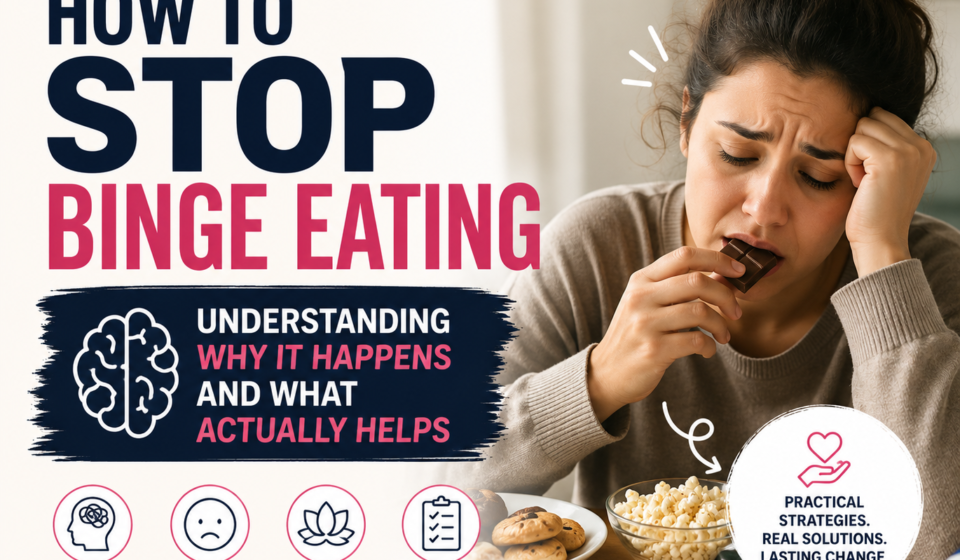

Binge eating isn’t a willpower failure. Here’s what’s actually driving it — and what genuinely helps.

Binge eating — eating far more than intended in a short period, often feeling out of control, often followed by guilt and shame — is one of the most common and least discussed obstacles to weight loss.
It can happen to anyone. People who eat healthily most of the time. People who are highly educated about nutrition. People who genuinely want to change. The binge isn’t a character flaw or a lack of knowledge — it’s almost always a response to specific psychological, hormonal, and behavioral triggers that, once understood, become far more manageable.
Here’s what’s actually driving binge eating — and the specific strategies that work.
Why Binge Eating Happens
Understanding the mechanisms makes the solutions make sense. Binge eating is rarely random — it’s almost always driven by one or more of these factors:
Restriction and Deprivation
The most common cause of binge eating is also the most counterintuitive: not eating enough.
Severe calorie restriction — crash dieting, cutting entire food groups, eating “perfectly” for days — creates physical and psychological deprivation that makes binge eating almost inevitable. When the body is physiologically deprived of food, hunger hormones surge and the brain’s reward response to food becomes hyperactive. When the psychological restriction finally breaks, the drive to eat is overwhelmingly powerful.
This is the restrict-binge cycle: strict dieting → deprivation → binge → guilt → stricter dieting → worse deprivation → bigger binge.
Many people who struggle with binge eating are actually eating too little most of the time — not too much. The solution isn’t more restriction. It’s breaking the cycle.
Blood Sugar Instability
A diet high in refined carbohydrates and added sugar creates blood sugar spikes followed by crashes that trigger intense hunger and cravings — particularly for more sugar and refined carbs. This physiological drive to eat when blood sugar crashes is often experienced as a binge trigger that feels impossible to resist because it is, in the moment, genuinely overwhelming.
Emotional Regulation
Food produces genuine neurochemical relief from negative emotions — dopamine, serotonin, and endorphin release provide real, temporary comfort. The brain learns this association powerfully: stress → eat → feel better (briefly). For people who don’t have other reliable methods for managing difficult emotions, food becomes the primary coping mechanism.
This isn’t weakness. It’s classical conditioning — and it responds to specific behavioral interventions, not willpower.
Fatigue and Sleep Deprivation
As we cover in our article on why sleep is the most underrated weight loss tool, sleep deprivation spikes ghrelin (hunger hormone), suppresses leptin (fullness hormone), and depletes the prefrontal cortex function needed for self-regulation. After a poor night’s sleep, binge eating risk increases significantly — the biological drives are stronger and the resistance is weaker.
The “Already Ruined It” Spiral
One of the most destructive binge eating triggers isn’t hunger or emotion — it’s the thought “I’ve already eaten something off-plan, so I might as well eat everything.”
This all-or-nothing thinking turns a minor deviation into a full binge, then into a written-off day or week. It’s responsible for escalating what would have been a minor slip into a major episode.
Chaotic Food Environment
When highly palatable, calorie-dense food is constantly visible and accessible, binge eating becomes more likely — not because of weakness but because of the unconscious eating that constant availability promotes. As covered in our article on how to lose weight without counting calories, environmental design is one of the most powerful tools for managing food intake.
What Actually Helps: The Evidence-Based Strategies
1. Stop Restricting So Much
This is the hardest advice to accept because it feels counterintuitive — but it’s the most important.
If you’re binge eating regularly, the restriction level you’re currently maintaining is probably too high for you to sustain. Not because you’re weak — but because the restriction is physiologically and psychologically unsustainable.
The practical shift: Move from extreme restriction to moderate, sustainable deficit. Eat enough that genuine physical hunger is managed throughout the day. No food should be completely off-limits in principle — deprivation of specific foods makes them more powerful triggers, not less.
This doesn’t mean abandoning fat loss goals. It means pursuing them at a pace that doesn’t create the restriction-binge cycle that makes net results worse than moderate eating.
A 400-calorie daily deficit maintained consistently for a year produces far more fat loss than a 1,000-calorie deficit that breaks every two weeks in a multi-day binge.
2. Eat Regular Meals With Adequate Protein
Skipping meals, eating too little, or going long periods without food makes binge eating significantly more likely by depleting blood sugar, spiking hunger hormones, and reducing decision-making capacity.
Eating regular, protein-rich meals throughout the day maintains blood sugar stability, keeps hunger hormones in check, and ensures the prefrontal cortex has the metabolic fuel it needs for self-regulation.
Protein is the most satiating macronutrient and the most effective dietary tool for preventing the physiological hunger that triggers binges. As covered in our guide to how much protein you actually need per day, prioritizing protein at every meal is the most impactful single dietary change for managing appetite.
A high-protein breakfast in particular sets up the entire day’s appetite and hunger hormone profile — reducing the likelihood of the late-afternoon or evening hunger surges that often precede binge episodes.
3. Identify Your Personal Binge Triggers
Binge eating almost always follows recognizable patterns — specific times, emotions, situations, or food environments that consistently precede episodes. These patterns are invisible until you deliberately look for them.
Simple trigger tracking: For two weeks, every time you experience a binge urge or episode, note:
- What time it was
- What you were feeling beforehand (emotion, energy level, stress)
- What you’d eaten that day
- Where you were and what was happening
Patterns emerge quickly. Common patterns include: late evenings after stressful days, immediately after arriving home from work, during or after social events involving alcohol, after several days of strict eating.
Once you know your specific triggers, you can prepare specifically for them — rather than hoping general willpower holds when you’re in a high-risk situation.
4. Build the Pause Between Urge and Action
The urge to binge and the act of bingeing are not the same thing. Between them is a gap — and that gap is where intervention is possible.
The urge typically peaks within 10–20 minutes and then subsides if not acted upon. Creating a buffer between the urge and the eating gives this peak time to pass:
The 10-minute rule: When a binge urge hits, commit to doing something — anything — else for 10 minutes before acting. Walk around the block. Call someone. Do 10 minutes of stretching. The majority of urges that aren’t acted upon immediately will significantly reduce in intensity within this window.
Create physical distance from the food. If the food that triggers binges isn’t in your immediate environment, the urge to binge requires additional steps (going to the store, ordering delivery) that add friction and time for the urge to subside.
5. Address the Emotional Component Directly
For people whose binge eating is primarily emotionally driven, the food itself isn’t the real issue — it’s the absence of other reliable emotional regulation tools.
Building a “stress toolkit” — a collection of non-food interventions that provide genuine relief from difficult emotions — is the most sustainable long-term solution:
- Physical movement (even a short walk genuinely reduces stress hormones)
- Breathing exercises (slow, deep breathing activates the parasympathetic nervous system within minutes)
- Social connection (talking to someone trusted)
- Journaling (externalizing emotional content reduces its intensity)
- Hot bath or shower (physiological relaxation response)
These tools don’t work as immediately as food — food provides comfort in seconds. But with practice, they become genuinely effective alternatives that don’t carry the guilt and physical consequences of binge eating.
6. Practice Self-Compassion After Slips
This is not soft advice — it’s evidence-based behavioral science.
Shame and self-criticism after a binge episode are among the most reliable predictors of the next binge episode. Shame increases stress, depletes self-efficacy, and activates the “already ruined it, might as well continue” thinking that extends single episodes into multi-day spirals.
Self-compassion — treating yourself with the same kindness you’d offer a friend in the same situation — is associated in research with faster recovery from slips, greater behavioral resilience, and better long-term outcomes.
Practically: a binge happened. It’s over. The next meal is a fresh start. No drama, no extended punishment, no “starting again Monday.” Just the next meal, made as well as possible.
As covered in our article on how to stay motivated to lose weight, the all-or-nothing thinking that turns slips into spirals is one of the most destructive patterns in any fat loss effort. Breaking it requires practiced self-compassion, not stricter rules.
7. Improve Sleep Consistently
Given sleep deprivation’s role in hunger hormone dysregulation and reduced self-regulation, consistently prioritizing 7–9 hours of quality sleep is one of the most effective binge eating prevention strategies available.
People who sleep well consistently eat fewer total calories, make better food choices, and have significantly less binge eating than chronic poor sleepers — not because they have better willpower, but because their hormonal and neurological environment supports appropriate eating naturally.
8. Reduce Alcohol
Alcohol lowers inhibitions, depletes blood sugar, and activates the brain’s reward pathways in ways that powerfully increase binge eating risk. Many people who don’t binge while sober find their biggest binge episodes happen during or after drinking.
If alcohol consistently precedes binge episodes, reducing or eliminating it removes one of the most reliable triggers.
When Binge Eating Is Connected to a Deeper Metabolic Struggle
For some people, binge eating isn’t purely psychological — it has a significant biological component.
Chronically elevated hunger hormones, insulin resistance, and dysregulated appetite signaling can create a physiological drive to overeat that genuinely overwhelms behavioral strategies. This isn’t a character flaw — it’s biology. And for these cases, addressing the underlying metabolic environment can make behavioral strategies dramatically more effective.
GLP-1 medications (the class of drugs that includes Ozempic and Wegovy) work directly on the brain’s appetite and reward centers — reducing the “food noise” and compulsive hunger that can drive binge eating in people with underlying metabolic dysregulation. Several people who have struggled with binge eating for years report significant reduction in urges after starting GLP-1 treatment under medical supervision.
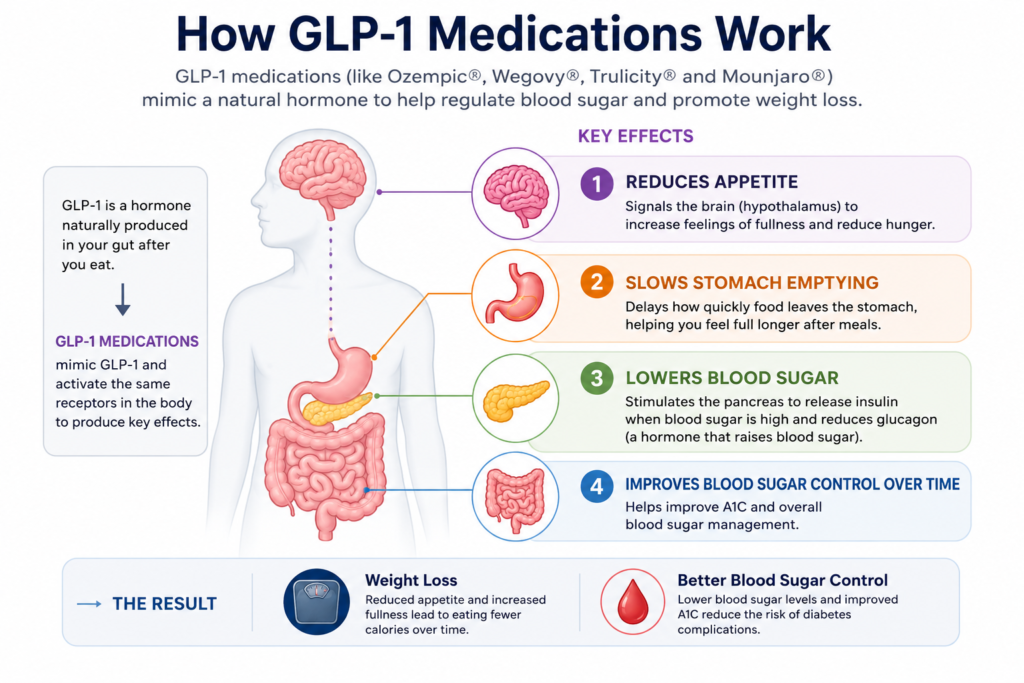
This isn’t appropriate for everyone — and it should always be combined with the behavioral strategies above, not used as a replacement for them. But if you’ve genuinely worked on the psychological and behavioral side and still find the biological hunger drive overwhelming, it may be worth exploring whether a medical evaluation is appropriate.
ClinicSecret is a telehealth weight loss program where licensed doctors evaluate whether prescription weight loss medication is right for your situation — including whether the appetite-regulating effects of GLP-1 treatments might help address the biological component of compulsive hunger.
Trustpilot Reviews

This is a paid partnership. ClinicSecret is a licensed telehealth provider. Medication is only prescribed following a medical consultation and is not guaranteed.
The Bigger Picture
Binge eating doesn’t happen in isolation — it’s connected to restriction patterns, emotional regulation, sleep, stress, and food environment. Addressing it requires looking at the full system rather than just trying harder to resist individual episodes.
The strategies that reduce binge eating most effectively — adequate eating, regular protein-rich meals, emotional regulation tools, sleep, self-compassion, and reduced restriction — also happen to support sustainable fat loss better than the restrict-binge-restrict cycle that binge eating maintains.
Addressing binge eating isn’t a detour from your fat loss goals. It’s the most direct path to them.
For the complete dietary and lifestyle approach that supports sustainable fat loss without the restriction that drives binge cycles, our guide to how to get rid of belly fat covers the balanced, sustainable framework that works alongside emotional eating recovery.
Binge eating is more common than most people realize — and many people feel ashamed to talk about it. If this resonates with your experience, sharing in the comments might help others feel less alone.



My doctor actually told me about Clinicsecret! I’m starting tomorrow thanks!