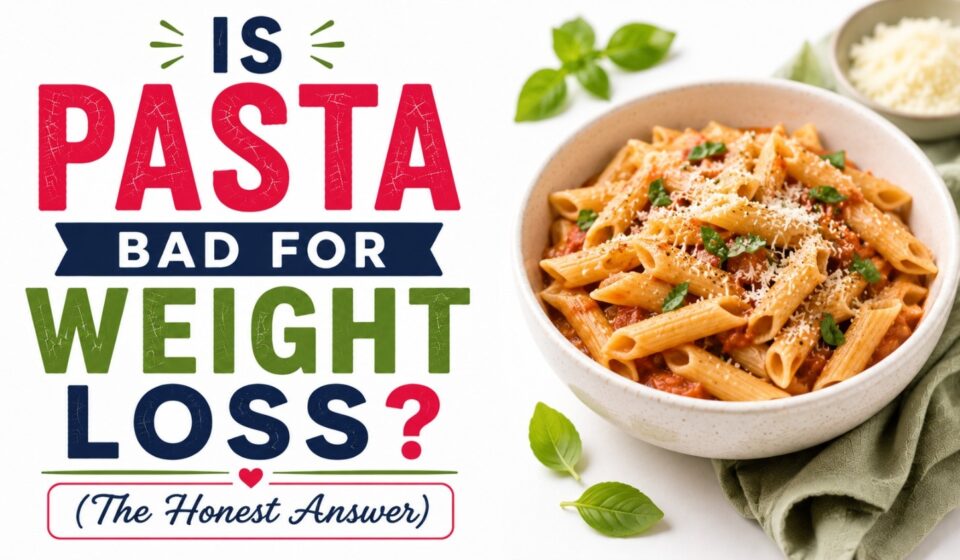

Italy has one of the lowest obesity rates in Europe. They eat pasta multiple times a week. Here’s what’s actually going on.
Pasta is one of the most universally loved foods on the planet — and one of the first things people cut when trying to lose weight. The question is whether that sacrifice is actually necessary.
Is pasta bad for weight loss? The honest answer: not inherently. But how you cook it, how much you eat, and what you eat it with matters enormously.
The Case Against Pasta for Weight Loss
High in Refined Carbohydrates
Standard white pasta is made from refined semolina flour — similar to white bread in its processing. It’s relatively low in fiber (2–3g per serving) and protein (8g per serving), which means it doesn’t produce particularly strong satiety signals for its calorie content.
Easy to Overeat
Pasta is one of the easiest foods to over-portion. A standard serving of pasta is 56g dry (about 200g cooked) — which looks like a surprisingly small amount on a plate. Restaurant pasta portions are typically 2–3x this amount, delivering 500–600 calories before sauce, cheese, or accompaniments.
Often Paired With High-Calorie Additions
The calories in pasta dishes frequently come less from the pasta itself and more from:
- Cream-based sauces (carbonara, alfredo): 300–500 extra calories
- Large amounts of parmesan cheese: 100–200 extra calories per generous serving
- Garlic bread on the side: 200–400 calories
- Processed meat additions (sausage, bacon, pancetta)
A bowl of pasta with all the trimmings can easily reach 1,000–1,500 calories — not because pasta is uniquely fattening, but because of everything surrounding it.
The Case For Pasta in a Weight Loss Diet
Lower Glycemic Index Than You’d Think
This surprises most people: pasta has a significantly lower glycemic index than white bread or white rice.
| Food | Glycemic Index |
|---|---|
| White bread | 70–75 |
| White rice | 64–72 |
| White pasta | 45–55 |
| Whole grain pasta | 37–45 |
Pasta’s lower GI comes from its dense structure — the starch is embedded in a protein matrix (gluten) that slows digestion and glucose release. Despite being made from refined flour, pasta doesn’t spike blood sugar as rapidly as other refined carbohydrates.
Al Dente Pasta Has an Even Lower GI
Cooking pasta al dente (firm, slightly undercooked) produces a lower glycemic response than soft-cooked pasta. The firmer structure slows digestion further. This is one reason traditional Italian pasta preparation — always al dente — produces a different metabolic response than overcooked pasta.
Italy’s Paradox
Italy has significantly lower obesity rates than the United States, the UK, and Australia — despite regular pasta consumption. In 2019, Italy’s adult obesity rate was approximately 10% vs. 42% for the US.
Traditional Italian pasta eating looks quite different from how most non-Italians eat pasta:
- Smaller portions (pasta as a first course, not the entire meal)
- Simple sauces based on olive oil, tomatoes, and vegetables
- Accompanied by substantial vegetables and lean protein
- Eaten slowly, as part of a meal, not from a giant bowl on the couch
The food is the same. The context is entirely different.
The Research on Pasta and Weight
A 2018 systematic review of pasta consumption and body weight (published in BMJ Open) found that pasta consumption within a low-GI dietary pattern was associated with modest weight loss — not weight gain. The conclusion: pasta is not obesogenic when eaten in appropriate portions within a balanced diet.
The Real Problem: Portion Size
If there’s one single factor that determines whether pasta helps or hurts weight loss, it’s portion size.
A standard serving (56g dry / 200g cooked):
- Calories: approximately 200
- Protein: 8g
- Fiber: 2–3g
What a restaurant typically serves:
- 150–200g dry (450–600g cooked)
- Calories: 500–600 from pasta alone
- Before sauce and toppings
Most people dramatically underestimate pasta portions. Measuring dry pasta on a kitchen scale before cooking is one of the most revealing food tracking experiences available — a “medium bowl” of pasta is typically 3–4 standard servings.
Pasta vs. Whole Grain Pasta: Does It Matter?
Whole grain pasta (made from whole wheat semolina) is nutritionally superior to white pasta:
| White Pasta | Whole Grain Pasta | |
|---|---|---|
| Calories (per 56g dry) | ~200 | ~180 |
| Fiber | 2–3g | 6–7g |
| Protein | 8g | 8–9g |
| Glycemic Index | 45–55 | 37–45 |
| Satiety | Moderate | Higher |
| Taste | Neutral | Slightly nutty |
The verdict: Whole grain pasta is meaningfully better for weight loss — more fiber, lower GI, better satiety. If you eat pasta regularly, switching to whole grain is a simple upgrade worth making.
However: White pasta in appropriate portions is not a diet-ending food. The difference in outcomes between white and whole grain pasta in moderate amounts is relatively small compared to the difference between appropriate and excessive portions of either type.
What About Alternatives to Regular Pasta?
Chickpea pasta: Made from chickpea flour. Higher in protein (14g per serving) and fiber (8g), lower GI. Genuinely good for weight loss — the protein and fiber produce much better satiety than regular pasta. Texture is slightly different but most people adapt quickly.
Lentil pasta: Similar to chickpea pasta — high protein, high fiber, lower GI. One of the best pasta alternatives for weight loss.
Zucchini noodles (zoodles): Spiralized zucchini. Approximately 20 calories per cup vs. 200 for pasta. No carbohydrates. Doesn’t taste like pasta, but works well with robust sauces for people following low-carb approaches.
Shirataki noodles: Made from konjac root. Virtually zero calories. Gelatinous texture that most people find requires adjustment. Useful for very low calorie approaches but not everyone tolerates the texture.
The honest assessment: Regular or whole grain pasta in appropriate portions is perfectly compatible with fat loss. Pasta alternatives like chickpea or lentil pasta offer genuine nutritional upgrades. Vegetable “pasta” substitutes are useful tools for very low calorie or low carb approaches.
How to Eat Pasta While Losing Weight
Control the Portion
This is the most important single factor. Measure 56g dry per serving. Use a kitchen scale — what looks like “a small amount” is often 100–150g dry (double or triple a serving).
Choose the Right Sauce
Sauce is often where pasta dishes become calorie-dense:
Better sauce choices:
- Tomato-based sauces (marinara, arrabbiata, puttanesca): 60–100 calories per serving, lots of flavor
- Olive oil and garlic (aglio e olio): moderate calories, high-quality fat, genuinely delicious
- Pesto in small amounts: calorie-dense but flavorful — use as a dressing rather than a sauce
Higher calorie sauces (use in moderation or smaller amounts):
- Carbonara: traditional version (egg, pecorino, guanciale) is actually more moderate than cream-based versions but still rich
- Alfredo and cream-based sauces: 300–500 extra calories per serving
- Bolognese: depends heavily on fat content of meat used; lean beef Bolognese is moderate
Build Around Protein and Vegetables
The plate structure that makes pasta compatible with weight loss:
- Start with a generous vegetable base (roasted vegetables, spinach, cherry tomatoes, zucchini mixed into the sauce)
- Add lean protein (chicken, shrimp, canned tuna, lean beef)
- Add pasta as one component rather than the entire meal
- Finish with a modest amount of quality cheese (parmesan, pecorino) for flavor
This structure naturally limits pasta to an appropriate portion while providing the protein and fiber that improve satiety and body composition.
Cook Al Dente
Always cook pasta al dente — firm to the bite, not soft. This produces a lower glycemic response and better texture. Overcooked pasta both tastes worse and digests more rapidly.
The Cooled Pasta Trick
Like rice, pasta that has been cooked, cooled in the refrigerator, and reheated has significantly higher resistant starch content. Resistant starch acts like fiber — it’s not absorbed as glucose, feeds beneficial gut bacteria, and produces a lower glycemic impact than freshly cooked pasta. Meal-prepping pasta and eating it cold or reheated the next day is genuinely better for blood sugar management than eating it fresh.
The Bottom Line
Is pasta bad for weight loss?
In large portions with cream-based sauces and without vegetables or protein: Yes — high calorie, poor satiety, easy to massively overconsume.
In appropriate portions (56g dry) with tomato or olive oil sauce, vegetables, and lean protein: Completely compatible with fat loss — lower GI than bread or rice, moderate nutrition, genuinely satisfying.
The actual answer: Pasta isn’t the problem. Large portions, high-calorie sauces, and inadequate protein and vegetables are the problem — and these problems exist with any food, not just pasta.
Switch to whole grain or legume-based pasta for a nutritional upgrade. Measure portions. Choose simple sauces. Build the meal around protein and vegetables. Pasta fits in a fat loss diet.
As covered in our guide to what is the best diet for weight loss, no single food determines fat loss outcomes — total calorie balance and dietary pattern are what matter.
For the complete framework for managing carbohydrates within a fat loss approach, our guide to how to get rid of belly fat covers everything in one place.
Do you eat pasta while losing weight — and what approach has worked for keeping it in your diet without derailing progress? Share in the comments.
Stop Wondering What to Eat This Week
Get my free 7-Day High-Protein Weight Loss Meal Plan delivered straight to your inbox — a simple week of satisfying, protein-focused meals designed to make healthy eating easier without complicated calorie tracking.
- 7 full days of breakfast, lunch, dinner & snacks
- One complete shopping list for the whole week
- A quick high-protein food cheat sheet
- Simple daily tips to help you stay on track
Free PDF • Delivered by email • Unsubscribe anytime
Check your inbox 💜
Your free 7-day high-protein meal plan is on its way.