
Not all belly fat is the same — and the distinction matters more than you think
Most people think of belly fat as one thing. You can see it, you can pinch it, and you want it gone. But there are actually two completely different types of fat sitting in your midsection, and they behave differently, respond differently to diet and exercise, and have very different implications for your health.
Understanding the difference isn’t just interesting biology — it changes how you approach losing it.
The Two Types of Belly Fat
Subcutaneous Fat
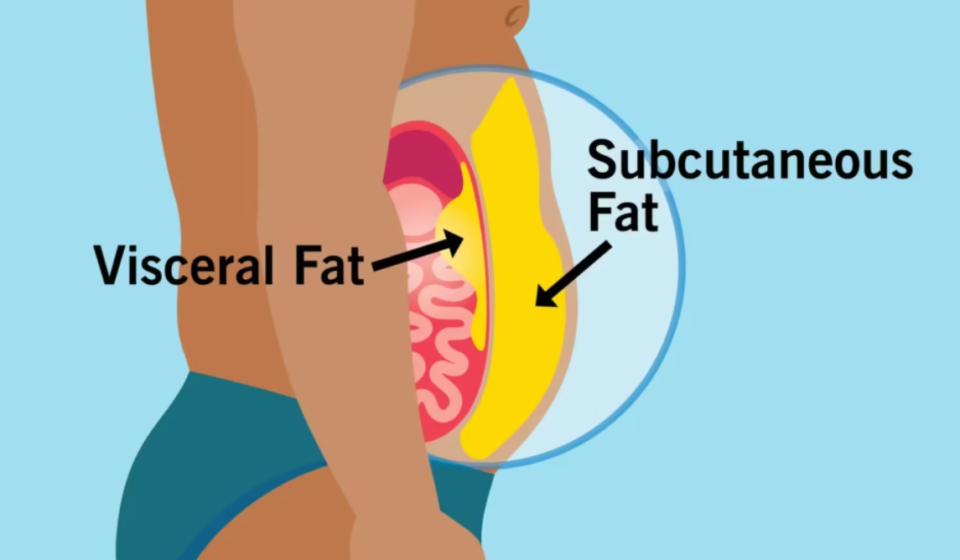
Subcutaneous fat is the soft, pinchable layer that sits directly under your skin. It’s the fat you can grab with your fingers — on your belly, your hips, your thighs, your arms.
It’s visible, it’s frustrating, but here’s something that might surprise you: subcutaneous fat is largely harmless from a health perspective. It’s essentially your body’s long-term energy storage system, sitting quietly under the skin doing very little metabolically.
It’s also the stubborn kind. Subcutaneous fat — especially in the lower belly, hips, and thighs — is notoriously resistant to loss, particularly for women. It tends to come off last, after fat has already been lost from other areas of the body.
Visceral Fat
Visceral fat is a completely different animal. It sits deep inside your abdominal cavity, packed around your organs — your liver, pancreas, intestines, and kidneys. You can’t see it directly or pinch it. It’s what makes the belly feel hard and protrude outward rather than feel soft and squishy.
And unlike subcutaneous fat, visceral fat is metabolically active. It functions almost like an organ itself — releasing hormones, inflammatory compounds, and fatty acids directly into the portal vein that feeds your liver. This is what makes it dangerous, and what makes it the primary target when we talk about health-driven fat loss.
Why Visceral Fat Is the One You Really Need to Worry About
Visceral fat isn’t just sitting there — it’s actively doing things to your body, and most of them are bad.
It drives insulin resistance. Visceral fat releases fatty acids and inflammatory cytokines that interfere with insulin signaling. This makes your cells less responsive to insulin, pushing your body toward type 2 diabetes and making fat loss harder across the board.
It increases cardiovascular risk. The inflammatory compounds released by visceral fat contribute to arterial inflammation, higher LDL cholesterol, lower HDL cholesterol, and elevated blood pressure — a cluster that dramatically raises heart disease and stroke risk.
It promotes systemic inflammation. Visceral fat is one of the largest sources of inflammatory signaling molecules in the body. Chronic low-grade inflammation is linked to everything from joint pain to depression to accelerated aging to increased cancer risk.
It disrupts hormones. Visceral fat interferes with cortisol regulation, leptin signaling, and adiponectin production — a hormone that normally helps regulate metabolism and reduce inflammation. The result is a hormonal environment that promotes further fat storage, particularly in the abdomen.
It’s linked to cognitive decline. Emerging research suggests that high visceral fat levels in midlife are associated with increased risk of dementia and cognitive decline later in life, likely through the inflammation and insulin resistance pathways.
The good news — and this is genuinely good news — is that visceral fat is far more responsive to lifestyle intervention than subcutaneous fat. It comes off faster and responds more dramatically to the strategies outlined throughout this blog.
How to Tell Which Type You Have
You can’t perfectly distinguish between the two without imaging, but there are practical clues.
Waist circumference is the most accessible proxy for visceral fat levels. The thresholds associated with elevated health risk are:
- Men: waist circumference over 40 inches (102cm)
- Women: waist circumference over 35 inches (88cm)
Measure at the level of your belly button, relaxed (not sucked in). This is a better predictor of metabolic health risk than BMI in most cases.
Waist-to-hip ratio is even more informative. Divide your waist measurement by your hip measurement. Ratios above 0.90 for men and 0.85 for women indicate significant visceral fat accumulation.
How your belly looks and feels gives you clues too. A firm, protruding belly that doesn’t move much when you walk suggests more visceral fat. A softer, more mobile belly that you can grab and squeeze suggests more subcutaneous fat. Most people have a mix of both.
The only precise measurement is imaging — a DEXA scan or MRI can quantify both types accurately — but for most people, waist circumference and how you feel are sufficient to track progress.
Which Type Is Harder to Lose?
Here’s the counterintuitive truth: visceral fat is actually easier to lose than subcutaneous fat.
Visceral fat is highly sensitive to insulin levels, cortisol, diet quality, and exercise. When you make meaningful lifestyle changes — improving nutrition, adding exercise, sleeping better, managing stress — visceral fat responds quickly and dramatically. Many people lose significant amounts of visceral fat before they see much visible change in the mirror, because subcutaneous fat on the surface is the last to go.
Subcutaneous fat — particularly in the lower belly, hips, and thighs — is stubborn by design. It’s a long-term energy reserve your body holds onto tightly, especially in women where hormones influence fat distribution significantly. It will come off eventually with consistent effort, but it takes longer and requires more patience.
This is why the scale and the mirror can be misleading in the early weeks of a fat loss effort. Internally, meaningful and health-improving changes are happening — visceral fat is dropping, insulin sensitivity is improving, inflammation is decreasing — even when the visual change seems slow.
What Causes Visceral Fat to Accumulate?
Understanding the drivers helps target the solution.
Diet high in added sugar and refined carbohydrates. Fructose in particular is processed in the liver and contributes directly to visceral fat accumulation. Liquid sugar — soda, juice, alcohol — is especially potent. Our detailed breakdown of what happens when you cut sugar for 30 days covers exactly how sugar drives visceral fat and what changes when you eliminate it.
Chronic stress and high cortisol. Cortisol doesn’t just respond to visceral fat — it actively creates it. Visceral fat cells have more cortisol receptors than other fat cells, making the abdominal area specifically prone to fat storage under chronic stress.
Poor sleep. Sleep deprivation raises cortisol, disrupts insulin sensitivity, and promotes visceral fat storage through multiple hormonal pathways. As we covered in our article on why sleep is the most underrated weight loss tool, consistently sleeping under 7 hours is one of the most reliable ways to accumulate visceral fat regardless of diet.
Physical inactivity. Sedentary behavior is independently associated with visceral fat accumulation, even in people who aren’t significantly overweight. Regular movement — particularly resistance training and moderate cardio — directly reduces visceral fat.
Alcohol consumption. Alcohol is metabolized like fructose in the liver and is one of the most direct dietary contributors to visceral fat, particularly beer. The term “beer belly” is anatomically accurate — it’s describing visceral fat, not subcutaneous.
Genetics and hormones. Where your body stores fat has a genetic component. Men tend to accumulate visceral fat more readily than premenopausal women. After menopause, the drop in estrogen causes women’s fat distribution to shift toward the abdomen, increasing visceral fat risk significantly.
How to Target Visceral Fat Specifically
The strategies that most effectively reduce visceral fat are the same ones we cover throughout this blog — but it’s worth understanding why each one works on this specific type of fat.
Reduce added sugar and refined carbs. Lowering sugar intake directly reduces liver fat and visceral fat accumulation. The fructose-liver-visceral fat pathway is one of the most well-established in metabolic research.
Strength train regularly. Resistance training reduces visceral fat even without significant weight loss, likely through improvements in insulin sensitivity and metabolic rate. This is one of the most consistent findings in the exercise and fat loss literature.
Do cardio — particularly HIIT. High-intensity interval training is especially effective at reducing visceral fat, with studies showing meaningful reductions in as little as 8–12 weeks. As we covered in our article on whether cardio actually burns belly fat, HIIT outperforms steady-state cardio for visceral fat loss specifically.
Prioritize sleep. 7–9 hours consistently is one of the most powerful interventions for reducing visceral fat, through its effects on cortisol and insulin sensitivity.
Manage stress actively. Lowering chronic cortisol levels directly reduces visceral fat storage. Even simple daily habits — walking outside, breathing exercises, limiting news and screen time in the evening — can make a measurable difference over weeks.
Eat more protein. Higher protein diets are consistently associated with less visceral fat, likely through better appetite regulation, muscle preservation, and the metabolic effects of higher protein intake. Our full guide on how much protein you actually need covers exactly how to optimize this.
Avoid or minimize alcohol. Reducing alcohol consumption — especially beer and sugary cocktails — has a direct and relatively fast effect on visceral fat levels.
The Bottom Line
Subcutaneous fat is the kind you can see and pinch — frustrating but largely harmless. Visceral fat is the deeper kind you can’t grab — less visible but far more dangerous, and the primary driver of the health risks associated with excess belly fat.
The good news is that visceral fat responds faster and more dramatically to lifestyle changes than subcutaneous fat. The strategies that reduce it — lower sugar intake, strength training, better sleep, stress management, more protein — are exactly what this blog is built around.
For a complete action plan that targets both types, our guide to how to get rid of belly fat pulls everything together in one place.
Start there, stay consistent, and know that even when the mirror is slow to show it, meaningful changes are happening underneath the surface.
Did you know there were two different types of belly fat before reading this? Drop a comment below — most people are surprised by this one.
Stop Wondering What to Eat This Week
Get my free 7-Day High-Protein Weight Loss Meal Plan delivered straight to your inbox — a simple week of satisfying, protein-focused meals designed to make healthy eating easier without complicated calorie tracking.
- 7 full days of breakfast, lunch, dinner & snacks
- One complete shopping list for the whole week
- A quick high-protein food cheat sheet
- Simple daily tips to help you stay on track
Free PDF • Delivered by email • Unsubscribe anytime
Check your inbox 💜
Your free 7-day high-protein meal plan is on its way.