
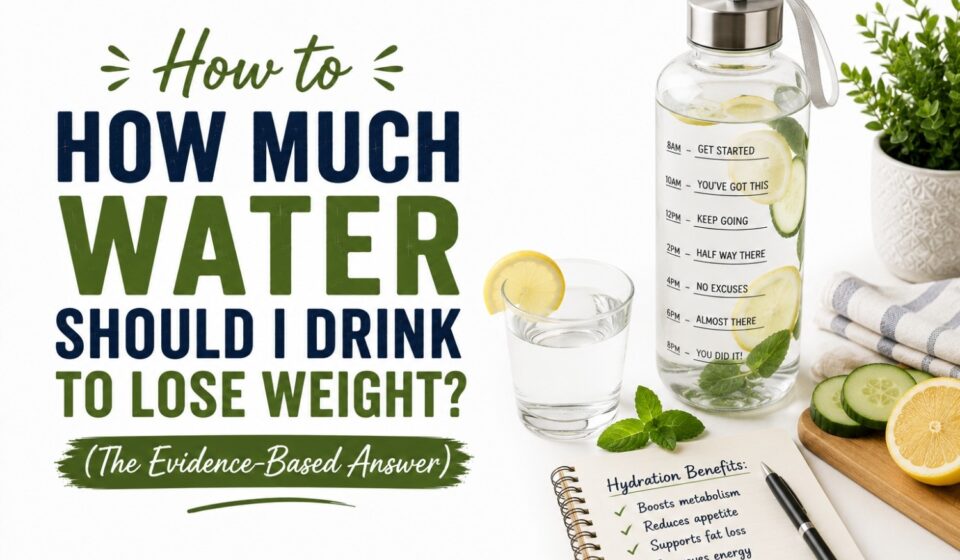

The simplest weight loss intervention available — here’s what the research actually shows
Water is the most overlooked weight loss tool. It’s free, it’s everywhere, and the evidence for its role in fat loss is stronger than most people realize. Here’s exactly how much you need, why it matters, and the specific ways water supports weight loss.
Does Water Actually Help With Weight Loss?
Yes — through several distinct mechanisms that are well-supported by research:
Appetite suppression: Drinking water before meals reduces calorie intake. A 2010 study found that drinking 500ml (17oz) of water 30 minutes before each meal produced 44% more weight loss over 12 weeks compared to a control group — without any other dietary changes.
Metabolic boost: Drinking cold water temporarily increases metabolism. A 2003 study found that 500ml of water increased metabolic rate by 30% for 30–40 minutes — the body expends energy heating the water to body temperature. Drinking 2 liters of cold water daily adds approximately 95 calories of metabolic expenditure.
Replacing liquid calories: The most impactful water-weight loss connection. Replacing calorie-containing beverages (soda, juice, sweetened coffee, alcohol) with water eliminates hundreds of calories daily without any feeling of deprivation.
Reducing false hunger: Mild dehydration produces sensations that are easily confused with hunger. Many people who think they’re hungry are actually thirsty — drinking water first before snacking eliminates false hunger signals.
Supporting fat metabolism: Water is required for lipolysis — the metabolic process of breaking down stored fat for energy. Even mild dehydration impairs fat metabolism.
Reducing water retention: Chronically insufficient water intake causes the body to retain water as a protective response. Adequate hydration paradoxically reduces water retention and bloating.
How Much Water Should You Drink to Lose Weight?
There’s no universal answer — water needs vary by body size, activity level, climate, and diet. But here are the evidence-based guidelines:

General baseline recommendation:
- Women: 2.7 liters (91oz) total daily fluid
- Men: 3.7 liters (125oz) total daily fluid
Note: This includes water from all sources — beverages AND food (fruits and vegetables contribute 20–30% of total water intake).
For weight loss specifically:
- 500ml (17oz) before each meal — the amount with the strongest evidence for appetite suppression and weight loss
- Total daily water: 3–4 liters for most people actively trying to lose weight
- In hot weather or with significant exercise: add 500ml–1 liter per hour of sweating
A practical calculation: Body weight in lbs ÷ 2 = daily water intake in ounces as a starting baseline Example: 160 lbs ÷ 2 = 80oz (approximately 2.4 liters)
The “8 Glasses a Day” Rule — Is It Accurate?
The classic “8×8” rule (eight 8oz glasses = 64oz / 1.9 liters daily) has almost no scientific basis — it appears to derive from a misinterpreted 1945 recommendation that was referring to total fluid from all sources including food.
64oz is below the evidence-based recommendations for most adults — and well below what’s optimal for weight loss. The 8×8 rule is a minimum floor for basic hydration, not an optimal target.
For active adults focused on weight loss: 3–4 liters (100–135oz) of water is more appropriate.
Signs You’re Not Drinking Enough
- Urine is dark yellow — optimal hydration produces pale yellow urine
- Feeling thirsty frequently — thirst is a late signal, not an early one
- Afternoon energy crashes
- Frequent headaches
- Constipation
- Persistent hunger that doesn’t resolve after eating
- Difficulty concentrating
The Best Times to Drink Water for Weight Loss
Timing matters more than most people realize:
30 minutes before each meal: The most evidence-backed timing for weight loss. 500ml 30 minutes before meals reduces calorie intake at that meal by reducing hunger and taking up stomach volume.
First thing in the morning: After 7–9 hours without water, mild dehydration is common on waking. A large glass of water (500ml) first thing rehydrates, kickstarts metabolism, and reduces morning hunger.
Before snacking: When a snack craving hits outside of meals, drink 500ml of water first and wait 15 minutes. If hunger persists, eat. If it passes, it was thirst or false hunger.
During and after exercise: Sweat losses during exercise require replacement — approximately 500ml per 30 minutes of moderate exercise in normal temperatures.
With each meal: Sipping water with meals (rather than large amounts immediately before or after) aids digestion and adds to the daily total without disrupting digestive enzyme concentration.
Avoid: Large amounts immediately before bed — disrupts sleep with nighttime bathroom trips.
Does the Type of Water Matter?
Still vs. sparkling: Both hydrate equally. Sparkling water is an excellent calorie-free soda replacement — carbonation provides a similar mouthfeel to soft drinks. As covered in our guide to the best and worst drinks for weight loss, unsweetened sparkling water is one of the best beverage swaps available.
Cold vs. room temperature: Cold water burns slightly more calories (body heats it to body temperature) but the difference is modest — approximately 8 extra calories per 500ml. Drink whichever temperature you prefer and will drink more of.
Filtered vs. tap: Both hydrate equally. If tap water taste is a barrier to drinking enough, filtered or bottled water is worth the investment for the hydration benefit.
Flavored water: Unsweetened only. Many flavored waters contain sugar or artificial sweeteners — check labels. Naturally flavoring water with sliced lemon, cucumber, or mint provides flavor with zero downsides.
Water vs. Other Beverages for Weight Loss
| Beverage | Hydration | Calories | Weight Loss Impact |
|---|---|---|---|
| Water | Excellent | 0 | Best |
| Sparkling water (unsweetened) | Excellent | 0 | Excellent |
| Black coffee | Good | 0–5 | Good (modest metabolic boost) |
| Green tea | Good | 0–5 | Good (EGCG benefits) |
| Herbal tea | Good | 0 | Good |
| Diet soda | Good | 0 | Neutral (some evidence of cravings) |
| Milk | Good | 100–150 | Moderate (protein benefits) |
| Fruit juice | Good | 100–150 | Poor (sugar without fiber) |
| Soda | Good | 140–200 | Very poor |
| Sports drinks | Good | 100–150 | Poor (sugar) |
| Alcohol | Poor (diuretic) | 100–300+ | Very poor |
Water and unsweetened beverages (black coffee, green tea, herbal tea, sparkling water) are the only calorie-free hydration options — and form the ideal beverage foundation for weight loss.
Can You Drink Too Much Water?
Yes — though it’s rare in healthy adults under normal circumstances.
Hyponatremia (water intoxication) occurs when excessive water intake dilutes blood sodium to dangerous levels — producing nausea, headache, confusion, and in severe cases seizures or death. This typically requires drinking several liters of water in a short period (hours) — far more than normal daily consumption.
For healthy adults: drinking 3–4 liters spread throughout the day carries no risk. The kidneys can process approximately 800–1,000ml per hour — drinking within this rate is safe.
Practical guideline: Drink enough to keep urine pale yellow. Dark yellow = drink more. Clear/colorless = you may be drinking more than necessary (though not dangerously so for most people).
Practical Tips to Drink More Water Daily
Keep a water bottle visible: Visibility drives behavior. A water bottle on your desk, in your bag, and in the kitchen dramatically increases consumption compared to drinking only when actively thirsty.
Set reminders: Phone reminders every 90 minutes — “drink water” — until the habit is established.
Drink a glass before each meal: Tying water consumption to meals (which already happen 3x daily) creates automatic habit cues.
Add natural flavor: Lemon, cucumber, mint, or berries infused in water make it more enjoyable without adding calories.
Track it: Apps like WaterMinder or simply marking a water bottle make progress visible. What gets measured gets done.
Eat water-rich foods: Cucumber (96% water), watermelon (92%), strawberries (91%), lettuce (95%), and similar foods contribute meaningfully to daily hydration while providing nutrients and fiber.
The Bottom Line
How much water should you drink to lose weight?
Minimum baseline: 3 liters (100oz) daily for most adults Optimal for weight loss: 3–4 liters (100–135oz) daily Pre-meal protocol: 500ml 30 minutes before each meal — strongest evidence for weight loss specifically
The most impactful water-related weight loss intervention: drink 500ml before each of your three daily meals. This simple habit has the strongest controlled trial evidence for producing additional weight loss — approximately 44% more weight loss in 12 weeks in one study — without any other dietary changes.
Water doesn’t burn fat directly — but it suppresses appetite, replaces liquid calories, supports fat metabolism, and eliminates false hunger. At zero cost and zero calories, it’s the highest return-on-investment weight loss intervention available.
For the complete weight loss framework that incorporates hydration alongside diet and exercise, our guide to how to get rid of belly fat covers everything in one place.
How much water do you actually drink daily — and have you noticed a difference in hunger or energy when you drink more? Share in the comments.