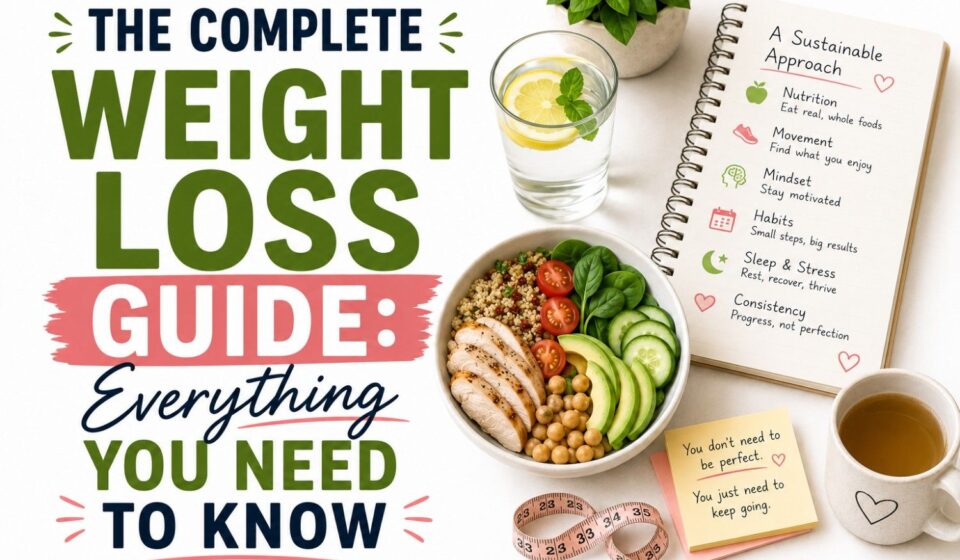

One comprehensive resource covering every aspect of sustainable fat loss — backed by science, built for real life
Weight loss is one of the most researched, most discussed, and most misunderstood topics in health. There’s no shortage of advice — but there’s an enormous shortage of clear, honest, science-backed guidance that actually helps people achieve lasting results.
This is that guide.
It covers the fundamentals of how fat loss works, the dietary approaches that produce the best results, the exercise strategies that matter most, the lifestyle factors most people overlook, and the specific strategies for different life situations. Every section links to a detailed article where you can go deeper on any topic.
Part 1: How Fat Loss Actually Works
The Fundamental Mechanism
Every successful weight loss approach has one thing in common: it creates a calorie deficit — a state where you consistently consume fewer calories than your body burns. When this happens, your body draws from fat stores for the energy it needs. Fat stores decrease. You lose weight.
This isn’t a theory. It’s thermodynamics applied to human biology. And understanding it is liberating — because it means there’s no magic diet, no forbidden food combination, no secret protocol. There’s a calorie deficit, and many sustainable paths to creating one.
→ Deep dive: How to Lose Weight With a Calorie Deficit
Why the Scale Lies (Sometimes)
Body weight fluctuates by 2–5 lbs daily based on water retention, food volume, sodium intake, and hormonal cycles. This means the scale can show no change — or even an increase — during a week of genuinely good fat loss.
Progress tracking should include body measurements, progress photos, strength improvements, and how clothes fit alongside scale weight. Multiple measures provide an accurate picture; scale weight alone doesn’t.
How Fast Should You Lose Weight?
The research is clear: moderate, consistent fat loss produces better long-term results than rapid weight loss. Losing 0.5–1.5 lbs per week through a moderate calorie deficit (400–600 calories below maintenance) preserves muscle, maintains metabolic rate, and is sustainable enough to become a lifestyle.
Rapid weight loss — 3+ lbs per week — accelerates muscle loss, triggers metabolic adaptation, and produces the rebound that most crash dieters experience.
Part 2: Nutrition — The Foundation of Fat Loss
Nutrition drives approximately 70–80% of fat loss results. Exercise matters — but diet does most of the work.
Protein: The Most Important Macronutrient
Protein is the single most important dietary variable for fat loss quality. It:
- Preserves muscle during a calorie deficit
- Suppresses hunger more effectively than carbohydrates or fat
- Has the highest thermic effect (burns more calories through digestion)
- Supports the strength training that maintains metabolic rate
Target: 0.7–1g per pound of bodyweight per day, at every meal.
→ Deep dive: How Much Protein Do You Actually Need Per Day?
The Best Dietary Approaches
There is no single best diet for weight loss. The best diet is the one that creates a sustainable calorie deficit while providing adequate protein and nutrition. Several approaches have strong evidence:
Low carb — reduces insulin levels, produces strong appetite suppression, excellent for people with insulin resistance. → How to Lose Weight With Low Carb
Keto — extreme carb restriction with powerful satiety effects for the right person. → How to Lose Weight With Keto
Mediterranean diet — the most sustainable, best evidence for long-term health alongside weight loss. → How to Lose Weight With Mediterranean Diet
Intermittent fasting — time-restricted eating that naturally reduces calorie intake for many people. → Is Intermittent Fasting Worth It?
Calorie counting and macro tracking — precise, flexible approaches for people who respond well to data. → How to Lose Weight With Macros
Plant-based and vegan — excellent for fat loss when protein is prioritized. → How to Lose Weight on a Plant-Based Diet
Foods That Support Fat Loss
The foods that drive the best fat loss results share common characteristics: high protein, high fiber, high volume, low calorie density, minimal processing.
→ Deep dive: Best Foods to Eat to Lose Weight Fast
What to Drink
Liquid calories are among the most easily overlooked sources of caloric excess. Water, black coffee, and unsweetened tea are the best default drinks for fat loss. → Best and Worst Drinks for Weight Loss
Part 3: Exercise — What Actually Moves the Needle
Exercise contributes 20–30% of fat loss results — less than diet, but significant. More importantly, it determines the quality of fat loss: whether you lose primarily fat (ideal) or a mix of fat and muscle (less ideal).
Strength Training: The Non-Negotiable
Strength training is the most important form of exercise for fat loss — not because it burns the most calories during the session, but because it builds and preserves lean muscle that raises resting metabolic rate and produces the toned, defined appearance most people are aiming for.
Three sessions per week of compound movements — squats, deadlifts, rows, presses — is the minimum effective dose.
→ Deep dive: Best Exercises to Lose Belly Fat for Beginners
Walking: The Most Underrated Tool
8,000–10,000 steps per day burns meaningful additional calories, reduces cortisol, improves insulin sensitivity, and can be done every day without recovery concerns. For most people, increasing daily walking is the highest-return additional activity they can add.
→ Deep dive: How to Lose Weight by Walking
Cardio Options
Every cardio modality works — the best one is the one you’ll actually do consistently:
- HIIT — maximum fat loss in minimum time. → HIIT for Beginners
- Running — high calorie burn, accessible. → How to Lose Weight Running
- Cycling — high burn, low impact. → How to Lose Weight Cycling
- Swimming — full body, zero impact. → How to Lose Weight Swimming
- Yoga and Pilates — cortisol reduction and body composition. → Yoga | Pilates
Home Workouts
A gym isn’t required. Effective fat loss training is entirely achievable at home with zero or minimal equipment.
→ Deep dive: How to Build a Home Workout Routine
Part 4: The Lifestyle Factors Most People Ignore
These factors are responsible for more fat loss success and failure than most people realize — and they’re almost never discussed in diet advice.
Sleep: The Underrated Fat Loss Tool
Sleep deprivation disrupts hunger hormones, worsens insulin sensitivity, elevates cortisol, and reduces metabolic rate. People who consistently sleep under 6 hours lose significantly less fat — and more muscle — than those sleeping 7–9 hours, even on identical diets.
7–9 hours of quality sleep is not optional. It’s a fat loss strategy.
→ Deep dive: Why Sleep Is the Most Underrated Weight Loss Tool
Stress and Cortisol
Chronic stress elevates cortisol, which promotes visceral belly fat storage and makes fat loss harder regardless of dietary quality. Active daily stress management — walking, breathing practices, adequate sleep, social connection — directly supports fat loss.
Water and Hydration
Even mild dehydration impairs metabolic processes and is often misread as hunger. Adequate hydration (2–3 liters per day for most people) supports fat loss directly.
→ Deep dive: How to Lose Weight by Drinking More Water
Part 5: Targeting Specific Problem Areas
Fat is lost from the body overall — spot reduction doesn’t exist. But specific areas respond at different rates and benefit from targeted muscle development that shapes them as fat reduces.
Complete guides for every problem area:
- Belly Fat | Flat Stomach | Love Handles
- Thigh Fat | Inner Thigh Fat | Hip Fat
- Arm Fat | Back Fat | Chest Fat
- Face Fat | Neck Fat | Calf Fat
→ Hub article: How to Lose Fat From Every Problem Area
Part 6: Weight Loss for Specific Situations
Different life stages and health conditions require adapted approaches:
By age: After 20 | After 30 | After 40 | After 50 | After 60 | After 65 | After 70
By condition: During Menopause | After Menopause | PCOS | Hypothyroidism | Diabetes | Sleep Apnea | Anxiety and Depression
By lifestyle: Busy Schedule | Sedentary Job | Without Exercise | Without Counting Calories | On a Budget
Part 7: The Psychology of Lasting Change
The practical strategies above produce results when executed consistently. Consistency requires the right psychological foundation.
The Most Important Mindset Shifts
- From “diet” to “lifestyle” — there’s no finish line, only how you live
- From all-or-nothing to always-something — imperfect consistency beats perfect sprints
- From self-criticism to self-compassion — recovering faster from slips is more important than not slipping
- From outcome goals to process goals — focus on behaviors you control, not numbers you can’t
→ Deep dives: Healthy Mindset for Weight Loss | How to Stay Consistent | How to Stay Motivated
Building Habits That Last
The goal isn’t a diet you follow until you reach a number. The goal is a set of habits that become who you are — so maintaining a healthy weight requires no ongoing willpower because it’s just how you live.
→ Deep dive: How to Build Healthy Eating Habits for Life
Handling Setbacks
Setbacks are universal. Every person who has maintained long-term healthy weight has had periods where things fell apart. What separates them from people who don’t succeed isn’t the absence of setbacks — it’s the speed and ease of recovery.
→ Deep dive: How to Lose Weight After a Setback
Part 8: When Lifestyle Changes Need Support
For most people, the strategies in this guide — applied consistently over 6–12 months — produce meaningful, lasting fat loss. But some people genuinely struggle despite consistent effort.
Common Reasons Progress Stalls
Persistent weight loss resistance is often explained by specific, addressable factors: underestimated calorie intake, inadequate protein, poor sleep, chronic stress, inconsistency on weekends, or an underlying medical condition.
→ Deep dive: Why You’re Not Losing Weight (10 Real Reasons)
When Medical Support Is Appropriate
For people who have genuinely implemented the lifestyle strategies above for months without results — particularly those with hormonal imbalances, insulin resistance, or significant metabolic challenges — prescription weight loss medication may be worth discussing with a doctor.
GLP-1 medications (including semaglutide and tirzepatide) have clinical evidence showing average weight loss of 15–22% of body weight in people with obesity — results that significantly exceed what was previously achievable pharmaceutically.
→ Deep dives: How to Lose Weight With Ozempic | Ozempic vs Wegovy | Ozempic Side Effects | Is Ozempic Safe Long Term? | The Ozempic Diet | Ozempic Before and After
Breeze Meds is a telehealth weight loss program where licensed doctors evaluate whether prescription weight loss medication is medically appropriate for your specific situation — from the comfort of your home, with genuine medical oversight rather than guesswork.
Check eligibility & pricing at Breeze Meds →Affiliate disclosure: We may earn a commission if you use this link. Breeze Meds provides telehealth weight-loss services. Prescription medication is only provided following an evaluation by a licensed healthcare professional and is not guaranteed.
The Bottom Line
Lasting weight loss comes down to a small number of fundamentals applied consistently over time:
Diet: A moderate calorie deficit built around adequate protein, plenty of vegetables, and minimally processed whole foods — in whichever dietary pattern you can genuinely sustain.
Exercise: Strength training to preserve muscle and raise metabolic rate, daily walking to add calorie burn and reduce cortisol, and whatever cardio you actually enjoy.
Lifestyle: 7–9 hours of sleep, active stress management, and adequate hydration — not as wellness extras but as genuine fat loss strategies.
Mindset: Consistency over perfection, self-compassion after setbacks, identity built around the person you’re becoming, and a long-term view that makes moderate approaches more appealing than dramatic ones.
These fundamentals don’t change. Every diet that works creates a deficit. Every sustainable approach prioritizes protein. Every lasting result is built on habits, not willpower.
Start with one change. Build from there. Give it real time.
The results follow.
What aspect of weight loss has been most challenging for you — and what’s helped you make progress? Share in the comments. This community has genuine collective wisdom worth tapping.
Stop Wondering What to Eat This Week
Get my free 7-Day High-Protein Weight Loss Meal Plan delivered straight to your inbox — a simple week of satisfying, protein-focused meals designed to make healthy eating easier without complicated calorie tracking.
- 7 full days of breakfast, lunch, dinner & snacks
- One complete shopping list for the whole week
- A quick high-protein food cheat sheet
- Simple daily tips to help you stay on track
Free PDF • Delivered by email • Unsubscribe anytime
Check your inbox 💜
Your free 7-day high-protein meal plan is on its way.