

How to Lose Weight With Ozempic (What It Actually Does and What to Expect)

The most talked-about weight loss drug in years — here’s the honest, complete breakdown
Ozempic has become one of the most discussed topics in health and weight loss over the past few years. Celebrities, social media, and mainstream news have all covered it — often with either breathless enthusiasm or sharp skepticism.
The reality is more nuanced than either extreme. Ozempic (and its sister medications) represent a genuine breakthrough in obesity medicine — with clinical results that far exceed anything previously available. But they’re also not magic, not without side effects, and not appropriate for everyone.

Here’s the complete, honest breakdown of what Ozempic is, how it works for weight loss, what to expect if you use it, and how to get the best results.
What Is Ozempic?
Ozempic is the brand name for semaglutide — a GLP-1 receptor agonist originally developed to treat type 2 diabetes. It’s administered as a weekly subcutaneous injection.
GLP-1 (glucagon-like peptide-1) is a hormone naturally produced in the gut that regulates blood sugar, slows gastric emptying, and suppresses appetite. Semaglutide mimics and amplifies these effects at a far higher potency than the body produces naturally.
Ozempic vs. Wegovy: Both contain semaglutide. Ozempic is FDA-approved for type 2 diabetes management (2.0mg max dose). Wegovy is FDA-approved specifically for chronic weight management (2.4mg max dose). The mechanism is identical — the approval indication and maximum dose differ.
Ozempic vs. Mounjaro/Zepbound: Mounjaro (tirzepatide) is a dual GIP/GLP-1 agonist — it targets two gut hormone pathways simultaneously. Clinical trials show slightly greater average weight loss than semaglutide alone. Zepbound is the weight management brand name for tirzepatide.
How Ozempic Works for Weight Loss
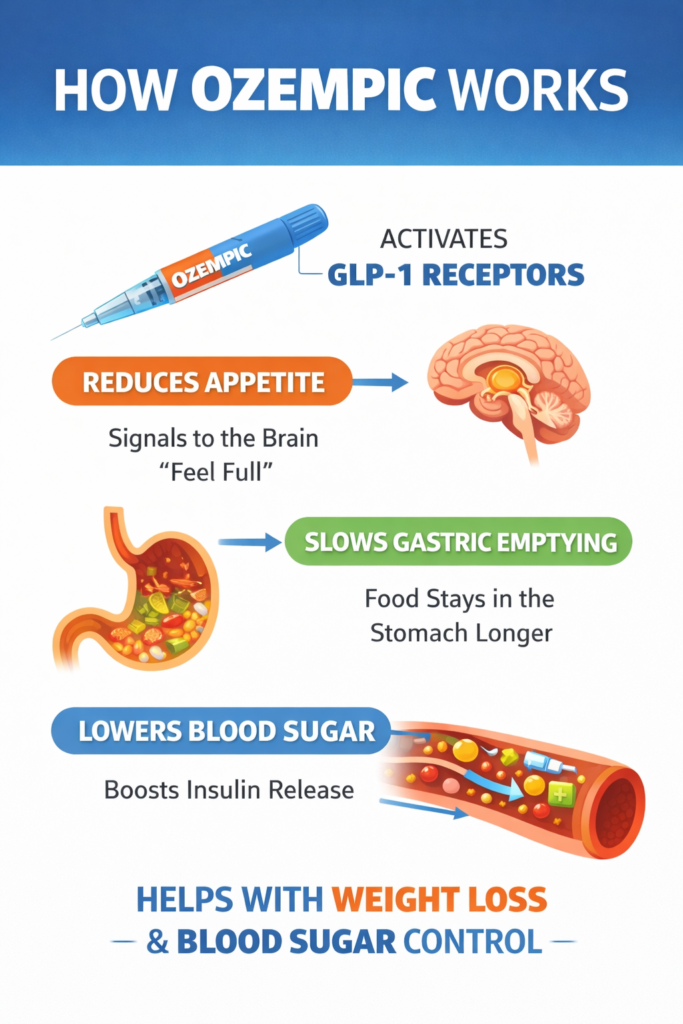
Semaglutide produces weight loss through several overlapping mechanisms:
Appetite suppression — GLP-1 receptors in the brain’s appetite centers (particularly the hypothalamus) are activated by semaglutide, significantly reducing hunger signals. Most people on semaglutide report substantially reduced appetite — many describe simply forgetting to eat or feeling satisfied with much smaller portions than before.
Slowed gastric emptying — semaglutide slows how quickly food leaves the stomach, prolonging the feeling of fullness after meals and reducing the desire to eat again.
Reduced food cravings — beyond simple hunger reduction, many people report reduced cravings specifically for high-calorie, high-fat, and high-sugar foods. The mechanism appears to involve GLP-1 receptors in the brain’s reward pathways, reducing the pleasure response to these foods.
Improved insulin sensitivity — semaglutide significantly improves insulin sensitivity, reducing the insulin-driven fat storage that is a primary driver of visceral belly fat accumulation.
Direct fat loss effects — research suggests GLP-1 agonists may have direct effects on fat cell metabolism beyond their appetite-suppressing effects.
What the Clinical Trials Actually Show
The clinical data for semaglutide is genuinely impressive — the strongest results ever seen from a pharmaceutical weight loss intervention outside of surgery.
The STEP trials (semaglutide for weight management):
- Average weight loss of 14.9% of body weight over 68 weeks at 2.4mg dose
- 69% of participants lost over 10% of body weight
- 50% lost over 15% of body weight
- 32% lost over 20% of body weight
For context: previously available weight loss medications produced average losses of 5–8%. Surgery typically produces 20–35%. Semaglutide at 2.4mg sits between the two.
Tirzepatide (Mounjaro/Zepbound) in the SURMOUNT trials:
- Average weight loss of 22.5% of body weight at the highest dose
- Results exceeding 25% loss in significant proportions of participants
These are medically meaningful numbers — not modest improvements at the margins.
Who Is Ozempic Appropriate For?
Semaglutide for weight management is currently approved for:
- Adults with a BMI of 30 or above (obesity)
- Adults with a BMI of 27 or above (overweight) with at least one weight-related health condition (high blood pressure, type 2 diabetes, high cholesterol, sleep apnea)
It is not appropriate for:
- People who are pregnant or planning pregnancy
- People with a personal or family history of medullary thyroid carcinoma or MEN2 syndrome
- People with a history of pancreatitis (with caution)
- People with severe gastrointestinal disease
- Children and adolescents (outside specific clinical settings)
It should be used with caution and medical supervision in people with kidney disease, liver disease, or certain other conditions.
The key point: semaglutide should be prescribed following a proper medical evaluation — not obtained through unregulated channels. The evaluation exists to screen for contraindications and to ensure appropriate use.
What to Expect: Side Effects and Timeline
Common Side Effects
The most frequently reported side effects are gastrointestinal — and they’re the primary reason people discontinue:
- Nausea — the most common side effect, particularly in the first weeks at each dose increase. Typically improves significantly after 4–6 weeks at each dose level.
- Vomiting — less common than nausea but reported by a meaningful proportion
- Diarrhea or constipation — digestive changes are common during dose escalation
- Reduced appetite — listed as a side effect but often the desired outcome
- Fatigue — some people experience fatigue, particularly early in treatment
- Burping and acid reflux — from slowed gastric emptying
These side effects are managed by slow dose escalation — starting at 0.25mg weekly and increasing every 4 weeks over 16–20 weeks to the target dose. Eating smaller meals, avoiding high-fat foods, and staying hydrated all reduce gastrointestinal side effects.
Serious but Rare Side Effects
- Pancreatitis (rare — stop medication and seek care if severe abdominal pain occurs)
- Gallbladder issues (increased risk with rapid weight loss)
- Diabetic retinopathy (in people with existing diabetes)
- Kidney injury (typically secondary to dehydration from vomiting)
- Theoretical thyroid C-cell tumor risk (based on rodent studies — not confirmed in humans at clinical doses)
The Weight Loss Timeline
Weight loss with semaglutide follows a predictable pattern:
Months 1–2 (dose escalation phase): Modest weight loss of 2–4 lbs as dose increases gradually. Significant gastrointestinal side effects possible. Body adjusting to the medication.
Months 2–4: Appetite suppression becoming more pronounced as therapeutic doses are reached. Weight loss accelerating — typically 1–2 lbs per week.
Months 4–8: Maximum weight loss rate. Average of 1–1.5 lbs per week at therapeutic doses for many people.
Months 8–12: Weight loss continuing but slowing as body adapts and a new equilibrium is approached.
Beyond 12 months: Weight loss plateau typically reached. Maintenance phase.
How to Maximize Results on Ozempic
Semaglutide works through appetite suppression and metabolic improvements — but the results are significantly better when combined with lifestyle changes rather than used alone.
Keep Protein High
This is the most important dietary priority on semaglutide. The dramatically reduced appetite can cause people to eat very little — and without adequate protein, a significant proportion of weight lost will be muscle rather than fat.
Muscle loss on semaglutide has been documented in clinical settings. It’s not inevitable — but it requires conscious effort to maintain protein intake even when appetite is severely suppressed.
Aim for 0.7–1g of protein per pound of bodyweight, spread across whatever meals you can manage. Protein shakes may be useful for hitting targets when appetite makes solid food difficult. As covered in our guide to how much protein you actually need per day, protein is the most critical dietary variable for maintaining muscle while losing fat.
Strength Train Throughout Treatment
For the same reason — preserving muscle during significant fat loss — strength training is essential during semaglutide treatment.
Research on GLP-1 agonists has found that people who exercise during treatment preserve significantly more lean muscle mass than those who don’t — producing better body composition outcomes at the same total weight loss.
Three sessions per week of compound movements is the minimum. The approach covered in our article on best exercises to lose belly fat for beginners is entirely appropriate during semaglutide treatment.
Don’t Skip Meals Entirely
The appetite suppression from semaglutide can be so powerful that some people struggle to eat enough. Severe calorie restriction (under 1,000–1,200 calories) accelerates muscle loss, nutritional deficiencies, and metabolic adaptation that makes maintaining results harder.
Eat small, protein-rich meals consistently even when appetite is absent. The medication has done its job of reducing hunger — your role is to still provide adequate nutrition within the reduced appetite window.
Manage the Side Effects
For nausea: Eat small portions. Avoid high-fat foods and spicy food. Ginger tea or ginger candies help. Don’t lie down immediately after eating. Stay hydrated.
For constipation: Increase fiber intake and water. Movement helps. A gentle fiber supplement if needed.
For fatigue: Ensure adequate calorie and protein intake. Sleep optimization. Reduce other stressors during the adjustment period.
Continue Lifestyle Changes for Long-Term Success
This is the most important long-term consideration with semaglutide: the weight typically returns when the medication is stopped — because the appetite suppression stops.
The STEP extension trial found that people who stopped semaglutide after 68 weeks regained approximately two-thirds of the lost weight within a year.
This means one of two things: either semaglutide is used as a long-term maintenance medication (which is increasingly how clinicians approach it for people with obesity as a chronic condition), or the lifestyle changes made during treatment need to be robust enough to support maintenance after stopping.
The dietary habits, exercise routines, sleep optimization, and stress management covered throughout this blog are what make the difference between regaining everything after stopping and maintaining most of the loss. As covered in our guide to how to get rid of belly fat, these foundational habits work independently of medication — and they need to be genuinely established during treatment to provide the scaffold for maintenance afterward.
How to Access Ozempic/Semaglutide for Weight Loss
This is where many people get stuck — primary care physicians are often unfamiliar with prescribing semaglutide for weight management specifically, and insurance coverage is variable and often limited for the Wegovy formulation.
Telehealth weight loss services have emerged specifically to address this — connecting patients with licensed physicians who evaluate whether prescription weight loss medication is appropriate for their situation.
One option worth looking into is Breeze Meds — a telehealth weight loss program where licensed doctors evaluate your case and, if medically appropriate, can prescribe GLP-1 based treatments. The process is online, private, and efficient compared to navigating the traditional healthcare system for a weight management prescription.
Check eligibility & pricing at Breeze Meds →Affiliate disclosure: We may earn a commission if you use this link. Breeze Meds provides telehealth weight-loss services. Prescription medication is only provided following an evaluation by a licensed healthcare professional and is not guaranteed.
The Honest Bottom Line
Semaglutide and tirzepatide represent a genuine step change in obesity medicine — producing average weight loss that was previously only achievable through surgery, in a weekly injection that most people tolerate reasonably well.
They work best when combined with lifestyle changes — particularly adequate protein intake and strength training to preserve muscle. They require medical supervision and proper screening. And they typically require ongoing use or robust lifestyle maintenance to sustain results.
They are not for everyone. They do have side effects. And they are not a replacement for the dietary, exercise, sleep, and stress management habits that support long-term health and weight maintenance.
But for people who have genuinely struggled with weight despite consistent lifestyle effort — particularly those with obesity-related health conditions — they represent a legitimate and clinically supported option that is worth understanding and discussing with a medical professional.
Have you tried Ozempic or a similar medication for weight loss? Share your experience in the comments — real-world accounts help others make informed decisions.
Stop Wondering What to Eat This Week
Get my free 7-Day High-Protein Weight Loss Meal Plan delivered straight to your inbox — a simple week of satisfying, protein-focused meals designed to make healthy eating easier without complicated calorie tracking.
- 7 full days of breakfast, lunch, dinner & snacks
- One complete shopping list for the whole week
- A quick high-protein food cheat sheet
- Simple daily tips to help you stay on track
Free PDF • Delivered by email • Unsubscribe anytime
Check your inbox 💜
Your free 7-day high-protein meal plan is on its way.