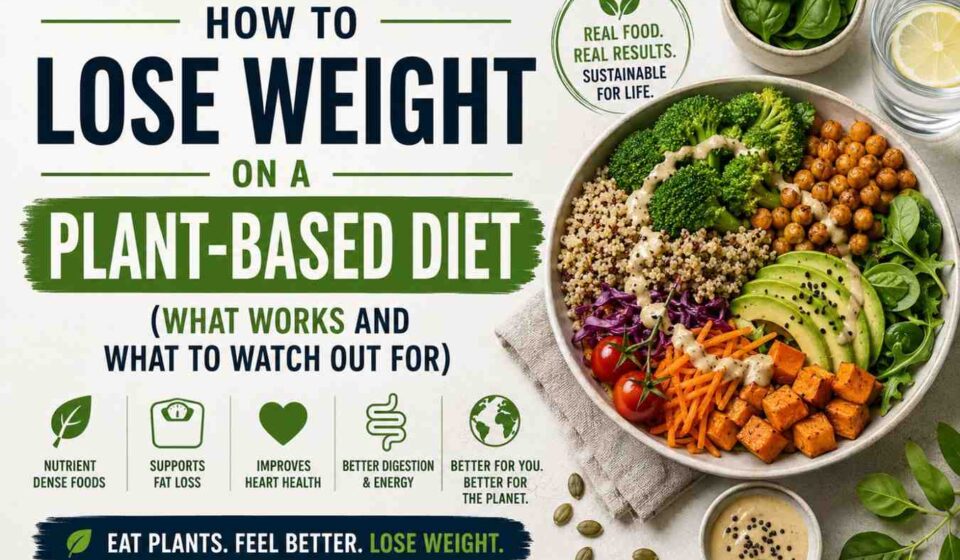

Plant-based eating can be excellent for fat loss — but only if you avoid the common traps

Plant-based diets have enormous health potential — and a genuine track record in the research for supporting weight loss, reducing inflammation, improving cardiovascular health, and extending healthy lifespan.
But “plant-based” doesn’t automatically mean weight-loss-friendly. Vegan cookies are still cookies. Plant-based burgers can have as many calories as beef burgers. And a diet built around refined carbohydrates, processed meat substitutes, and sugar — without animal products — isn’t any better for fat loss than its omnivore equivalent.
Done well, a plant-based diet is one of the most effective and health-supporting approaches to fat loss available. Here’s how to do it well.
What “Plant-Based” Actually Means
“Plant-based” covers a spectrum:
Vegan — no animal products whatsoever (no meat, fish, dairy, eggs, honey)
Vegetarian — no meat or fish, but includes dairy and eggs (lacto-ovo vegetarian)
Flexitarian — predominantly plant foods with occasional animal products
Whole food plant-based (WFPB) — plants as the foundation with emphasis on unprocessed whole foods; the version with the strongest health and fat loss evidence
For weight loss specifically, the whole food plant-based approach — emphasizing vegetables, legumes, whole grains, fruits, nuts, and seeds while minimizing processed food regardless of its plant origin — produces the best outcomes.
Why Plant-Based Diets Support Fat Loss
High Fiber Drives Satiety
Whole plant foods are extraordinarily fiber-rich — and fiber is one of the most powerful dietary tools for managing hunger naturally. People who eat predominantly whole plant foods typically consume 35–50g of fiber per day, compared to the 10–15g average of Western omnivore diets.
High fiber intake:
- Slows digestion and extends post-meal fullness
- Feeds beneficial gut bacteria that produce appetite-suppressing compounds
- Stabilizes blood sugar, preventing the spikes and crashes that drive hunger
As covered in our article on why you’re always hungry, adequate fiber is one of the two most powerful dietary tools for natural hunger management.
High Volume, Lower Calorie Density
Vegetables, fruits, and legumes provide large amounts of food for relatively few calories — you can eat a genuinely large volume of plant foods without consuming excessive calories. This makes overeating significantly harder on a whole food plant-based diet.
Compare: a cup of cooked lentils (230 calories, 18g protein, 16g fiber) vs. a cup of cheese (450 calories, 28g protein, 0g fiber). The lentils provide more food volume, similar protein, dramatically more fiber, and half the calories.
Reduced Processed Food
A well-constructed plant-based diet eliminates most ultra-processed foods — not because they contain animal products, but because genuine plant-based eating emphasizes whole foods. This reduction in calorie-dense, nutrient-poor processed food naturally reduces calorie intake.
Anti-Inflammatory Effects
Whole plant foods are among the most anti-inflammatory foods in existence — the fiber, polyphenols, and antioxidants in vegetables, fruits, legumes, and whole grains reduce chronic inflammation that impairs insulin sensitivity and promotes fat storage.
The Protein Challenge — The Most Important Issue
This is where most plant-based fat loss efforts go wrong. And it’s important enough to address directly before anything else.
Animal products provide concentrated, complete protein with excellent bioavailability. Removing them — without deliberately replacing the protein — produces a low-protein diet that:
- Reduces satiety (protein is the most satiating macronutrient)
- Promotes muscle loss during fat loss
- Slows metabolism over time
- Makes hitting fat loss goals significantly harder
The solution: Make protein the intentional focus of every plant-based meal — not an afterthought.
The best plant-based protein sources:
Complete proteins (contain all essential amino acids):
- Tofu: 10g per 100g (firm), 17g per 100g (extra firm)
- Tempeh: 19g per 100g — the highest protein density of common plant proteins
- Edamame: 11g per 100g shelled
- Quinoa: 8g per cup cooked — the only complete protein grain
- Hemp seeds: 10g per 3 tablespoons
High-quality incomplete proteins (combine for completeness):
- Lentils: 18g per cup cooked — exceptional
- Black beans, chickpeas, kidney beans: 15g per cup cooked
- Seitan (wheat gluten): 25g per 100g — highest plant protein density available
- Peas and pea protein: 8g per cup cooked
For lacto-ovo vegetarians:
- Eggs: 6g per egg
- Greek yogurt: 17g per cup
- Cottage cheese: 25g per cup
- These make hitting protein targets significantly easier
Protein powder: Pea protein, brown rice protein, and hemp protein powders are high-quality vegan options — practical tools for hitting targets when whole food alone is challenging.
As covered in our guide to how much protein you actually need per day, adequate protein is the most important dietary variable for fat loss quality — and this applies with equal force on plant-based diets.
Building Plant-Based Meals for Fat Loss
The formula for a fat-loss-optimized plant-based meal:
Protein anchor + abundant vegetables + quality carbohydrate + healthy fat
Breakfast examples:
- Tofu scramble with spinach, tomatoes, and nutritional yeast
- Overnight oats with pea protein powder, berries, and hemp seeds
- Smoothie with soy milk, banana, spinach, and pea protein
- Tempeh bacon with avocado and whole grain toast
Lunch examples:
- Large salad with roasted chickpeas, quinoa, cucumber, and tahini dressing
- Lentil soup with whole grain bread
- Black bean and vegetable burrito bowl (no cheese needed — avocado provides the fat)
- Edamame and vegetable stir-fry with brown rice
Dinner examples:
- Tofu and vegetable curry with lentils and cauliflower rice
- Tempeh stir-fry with mixed vegetables and noodles
- Black bean tacos with guacamole and salsa
- Chickpea and spinach stew with whole grain pita
Snacks:
- Edamame (portable and protein-rich)
- Hummus with vegetable crudités
- Roasted chickpeas
- A handful of nuts with fruit
- Soy yogurt with berries
The Processed Plant-Based Food Trap
This deserves its own section because it’s one of the most common ways plant-based diets fail for fat loss.
The plant-based food industry has exploded — and much of what it produces is highly processed, calorie-dense food that happens not to contain animal products.
Plant-based products to be cautious with:
- Plant-based burgers and sausages — often high in sodium, saturated fat, and processed ingredients
- Vegan cheese — typically low in protein and high in fat and sodium
- Plant-based nuggets and deli slices — frequently highly processed
- Vegan desserts and bakery items — same sugar and calorie content as conventional versions
- Flavored plant milks — often contain significant added sugar
These foods aren’t inherently off-limits — but building your diet around them rather than whole foods undermines the health and fat loss benefits that give plant-based eating its reputation.
The rule: Whole food plant-based eating produces excellent fat loss results. Processed food plant-based eating produces similar results to other processed food diets — mediocre.
Key Nutrients to Monitor on a Plant-Based Diet
Removing animal products can create nutritional gaps that affect energy, metabolism, and overall health — potentially impairing fat loss indirectly.
Vitamin B12 — found almost exclusively in animal products. Deficiency causes fatigue, brain fog, and neurological issues. Supplement regardless of how plant-based your diet is. This is non-negotiable.
Vitamin D — deficiency is common generally but more likely without fatty fish and eggs. As covered in our supplement article, test and supplement if deficient.
Iron — plant-based (non-heme) iron is less bioavailable than animal iron. Combine iron-rich plant foods (lentils, spinach, pumpkin seeds) with vitamin C sources to improve absorption. Women are particularly at risk.
Omega-3 fatty acids — DHA and EPA from fatty fish are important for inflammation management and metabolic health. Algae-based omega-3 supplements provide DHA and EPA in vegan form.
Zinc and calcium — less bioavailable from plant sources. Variety and adequate total intake generally covers needs; a broad multivitamin covers gaps.
Iodine — if not using iodized salt, consider supplementation. Iodine supports thyroid function and metabolism.
Combining Plant-Based Eating With Exercise
Plant-based eating is entirely compatible with all exercise forms — with some considerations for high-intensity training:
Strength training: Fully compatible. Tofu, tempeh, legumes, and protein powder provide adequate protein for muscle development and preservation. The anti-inflammatory properties of whole plant foods support recovery.
Endurance exercise: Well-suited — the high carbohydrate content of whole plant foods provides excellent glycogen stores for aerobic exercise.
High-intensity training: Adequate protein becomes even more important. Ensure protein targets are met — toward the higher end of recommendations (1g per pound of bodyweight) for people training intensely.
As covered in our article on best exercises to lose belly fat for beginners, the exercise approach for fat loss works equally well whether you eat animal products or not. The protein requirement just requires more intentional sourcing on a plant-based diet.
Practical Tips for Making Plant-Based Fat Loss Sustainable
Cook in bulk. A large pot of lentil soup, a tray of roasted vegetables, and a batch of cooked quinoa on Sunday sets up easy, protein-rich plant-based meals for the entire week. As covered in our article on how to lose weight with a busy schedule, batch cooking is the single highest-leverage preparation strategy.
Master a few high-protein plant recipes. Having 5–6 genuinely delicious high-protein plant meals you can cook confidently removes the main barrier to sustained plant-based eating.
Keep protein-rich snacks accessible. Edamame, roasted chickpeas, hummus, and plant-based protein bars make hitting protein targets easy between meals.
Use nutritional yeast liberally. It adds a cheesy, savory flavor to dishes and provides B vitamins including B12 in fortified versions — a genuinely useful plant-based cooking staple.
Don’t fear legumes. Beans and lentils are the cornerstone of effective plant-based fat loss eating — high protein, high fiber, extraordinarily filling, cheap, and versatile. Eating them at most meals is not excessive.
What to Expect: Plant-Based Fat Loss Timeline
Weeks 1–2: Digestive adjustment (increased fiber can cause temporary bloating — this normalizes). Initial water weight changes. Energy shifting as food patterns change.
Weeks 2–6: Fat loss beginning if calorie intake is appropriate. Improved energy and reduced inflammation for many people. Digestive system adapted.
Weeks 6–12: Meaningful body composition changes with adequate protein and consistent calorie management.
Beyond 3 months: For people who genuinely adopt plant-based eating as a lifestyle — rather than a temporary approach — the cumulative health and body composition benefits become significant.
The Bottom Line
Plant-based eating is one of the most effective dietary approaches for fat loss and long-term health — with a strong evidence base that few other dietary patterns can match.
The keys to making it work for fat loss:
- Make protein the intentional focus of every meal — tofu, tempeh, legumes, edamame, seitan
- Build meals around whole plant foods, not processed plant products
- Supplement B12 without exception, and address other potential gaps
- Combine with adequate exercise, sleep, and the lifestyle strategies covered throughout this blog
Done well, plant-based eating produces excellent fat loss results alongside health benefits that extend well beyond body weight.
For the complete fat loss framework that applies across all dietary patterns — including plant-based — our guide to how to get rid of belly fat covers everything in one place.
Are you eating plant-based and have found specific protein sources or meals that make it sustainable? Share in the comments — practical plant-based tips from real experience are some of the most useful content this community generates.