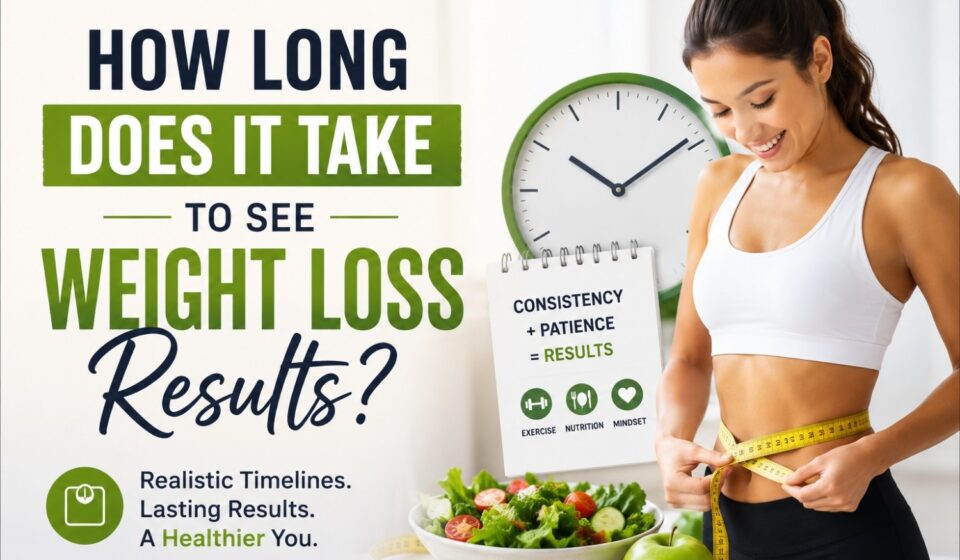

The honest timeline — when you’ll notice changes, when others will, and what to expect week by week

One of the most common questions from people starting a weight loss journey — and one where honest, specific answers are surprisingly rare.
Most content either gives vague reassurances (“results vary!”) or wildly optimistic timelines that set people up for discouragement. This guide gives you the real timeline — what changes happen when, why some take longer than others, and how to track progress when the scale isn’t cooperating.
The Honest Week-by-Week Timeline
Week 1–2: The Scale Moves Fast (But Not From Fat)
Most people are delighted by week 1 results — often 3–6 lbs on the scale. This feels validating and motivating.
But as covered in our article on why weight loss stops after the first week, most of this initial loss is fluid and glycogen — not fat. The breakdown:
- 2–3 lbs: glycogen + water depletion from reduced carbohydrate intake
- 1–1.5 lbs: sodium-driven fluid reduction from improved diet quality
- 0.5–1 lb: actual fat
What you’ll notice: The scale moving. Possibly less bloating. Clothes feeling slightly looser.
What you won’t notice yet: Visible body composition changes. These require more time and more total fat loss.
Week 2–4: The Real Rate Emerges
After the initial fluid losses normalize, fat loss continues at its actual rate — 0.5–1.5 lbs per week depending on the size of the deficit.
This phase often feels discouraging because:
- Week 2 shows dramatically less loss than week 1 (normal — not a failure)
- Visible changes aren’t yet significant enough to see clearly
- The gap between effort and visible reward is widest here
What the scale shows: 0.5–1.5 lbs per week ongoing loss What you’ll start noticing: Clothes fitting slightly differently. Belt loop changing. Face potentially looking slightly less puffy.

What you won’t notice yet: Significant body composition changes. Comments from others.
Month 1: 4–8 lbs of Total Scale Loss
At 1 month, most people have lost:
- 4–8 lbs total on the scale (fluid + fat)
- 2–4 lbs of actual fat
Physical changes at 1 month:
- Face noticeably slimmer for many people (face fat responds early)
- Slight reduction in bloating
- Clothes fitting more loosely in some areas
- Energy levels often improved
- Digestion typically improved from better dietary quality
What others notice at 1 month: Probably nothing yet — or very little. The changes are real but often not yet significant enough for casual observers to comment.
Month 2–3: Visible Changes Begin
This is when most people start seeing genuine, visible body composition changes — and when some people around them begin to notice.
At 2–3 months with consistent effort:
- Scale: 10–20 lbs total loss
- Actual fat lost: 6–12 lbs
Physical changes at 2–3 months:
- Clothes noticeably looser — potentially a size difference
- Face and neck visibly slimmer
- Arms beginning to show change
- Posture often improved
- Significantly more energy
- Strength noticeably improving if strength training
What others notice: Closer friends and family will often comment around the 2–3 month mark, particularly if they see you regularly. Coworkers you see daily may not notice until later because the change is gradual.
Month 3–6: Significant Transformation
At 3–6 months of consistent effort:
- Scale: 15–30+ lbs total loss
- Actual fat lost: 12–25+ lbs
Physical changes at 3–6 months:
- Clothing size clearly changed — 1–3 sizes depending on total loss
- Visible muscle definition emerging (with strength training)
- Significant face, neck, and upper body change
- Belly and waist visibly reduced
- Others frequently commenting
- Dramatically improved fitness and daily function
- Blood pressure, blood sugar, and cholesterol often showing significant improvement
This is the phase most people are aiming for when they imagine “seeing results.” It takes 3–6 months of consistent effort to arrive here — not 2 weeks.
Month 6–12: Major Transformation
For people with significant weight to lose — 50, 75, 100 lbs — the 6–12 month mark is where genuinely dramatic transformation happens.
- Scale: 30–60+ lbs total loss
- Physical changes: Profoundly different body composition, dramatically improved health markers, often transformed relationship with food and exercise
At this point, people who haven’t seen you in a while have dramatic reactions. Clothes are multiple sizes different. Activities that were impossible are now accessible.
Why Results Take Longer Than Expected
Fat Loss Is Invisible Below a Threshold
The fat that’s being lost is distributed throughout billions of fat cells across the entire body. Each cell gets very slightly smaller — but this change isn’t visible until enough total fat has been lost to produce a noticeable size difference.
A person losing fat from their abdomen might lose 3–4 lbs of abdominal fat before the reduction is large enough to be visible. At 0.5–1 lb per week, that takes 3–8 weeks — before any visible change appears in that area.
The Mirror Lies
Body dysmorphia — seeing yourself differently than you actually look — is extremely common in both directions. People who are losing weight often don’t see the changes that others do, because they see themselves every day and the gradual change is imperceptible in the mirror.
Progress photos are more reliable than the mirror — comparing yourself monthly, in identical lighting and poses, reveals changes that daily mirror viewing obscures.
Hormonal and Regional Timing
Fat doesn’t come off evenly. It tends to come off first from areas where it’s most metabolically active (often face, upper chest, arms) and last from hormonally protected areas (lower abdomen, hips, thighs in women).
This means visible results in “problem areas” often take significantly longer than results in other areas — creating the frustrating experience of your face slimming while your belly seems unchanged.
Non-Scale Results You’ll Notice Before Visible Changes
Several improvements happen before — and independently of — visible body composition changes:
Energy: Within 1–2 weeks of improved diet quality, most people notice significantly better energy levels — particularly if reducing sugar and processed food.
Sleep quality: Often improves within weeks with better nutrition and reduced alcohol.
Digestive health: Improved with increased fiber and reduced processed food — typically within 1–2 weeks.
Joint pain: For people carrying significant excess weight, even modest early weight loss can reduce joint pain noticeably — as every pound lost removes 4 lbs of knee joint force.
Blood pressure: Often responds within 2–4 weeks of sodium reduction and modest weight loss.
Mood: Exercise, improved sleep, and better nutrition all improve mood — often within the first 2–3 weeks.
These changes aren’t visible to others — but they’re real, meaningful, and worth acknowledging as evidence that the approach is working, even before visible changes appear.
How to Track Progress When the Scale Isn’t Moving
As covered in our article on why you weigh more at night than in the morning, the scale provides useful but incomplete information. Multiple progress measures together tell a more accurate story:
Monthly measurements: Waist, hips, chest, arms, thighs. Fat loss often shows in measurements before it shows on the scale.
Progress photos: Same time of day, same lighting, same poses, once per month. Comparison across photos reveals changes that daily mirror viewing misses.
Clothing fit: The size of clothes you can wear is one of the most practically meaningful progress measures. Moving from a size 14 to a size 12 represents real body composition change regardless of the scale.
Strength benchmarks: How many push-ups you can do, how much you can squat, how long you can walk before tiring. Improving fitness alongside fat loss indicates the body composition is improving.
Energy and wellbeing: Subjective but meaningful — how you feel in daily life is a legitimate measure of whether the approach is working.
Realistic Expectations by Amount to Lose
| Goal | Time at 1 lb/week | Time at 1.5 lbs/week |
|---|---|---|
| 10 lbs | 10 weeks | 7 weeks |
| 20 lbs | 20 weeks | 14 weeks |
| 30 lbs | 30 weeks | 20 weeks |
| 50 lbs | 50 weeks | 34 weeks |
| 100 lbs | 100 weeks | 67 weeks |
These timelines are for actual fat loss — not including the initial fluid loss of week 1, and not accounting for plateaus, breaks, or weeks of slower progress.
The most important takeaway: Every weight loss goal takes longer than most people expect — and significantly longer than most weight loss marketing suggests. 10 lbs takes 2–3 months, not 2 weeks. 50 lbs takes 10–13 months, not 3. Understanding this prevents the discouragement that causes people to quit before they’ve given the approach enough time to show meaningful results.
When to Reassess vs. When to Be Patient
Be patient (give it more time) when:
- You’re in weeks 1–6 and the scale is moving even slowly
- Body measurements are changing even if scale isn’t
- You’ve had weeks of poor adherence mixed in — the timeline extends accordingly
- You’ve recently started strength training (muscle gain can offset scale movement temporarily)
Reassess the approach when:
- 6+ weeks of genuinely consistent adherence with zero scale or measurement change
- Honest food tracking reveals a deficit that should be producing results but isn’t
- You suspect an underlying medical condition (thyroid, insulin resistance)
As covered in our guide to how to break a weight loss plateau, real stalls are addressable — but patience with slow-but-consistent progress is almost always more appropriate than changing approaches prematurely.
The Bottom Line
When will you see weight loss results?
- Week 1–2: Scale movement (mostly fluid), possibly less bloating
- Month 1: Face slimmer, clothes slightly looser, energy improved
- Month 2–3: Visible body composition change, others starting to notice
- Month 3–6: Significant transformation, dramatic improvement in function and health
- Month 6–12+: Major transformation for larger weight loss goals
The consistent message: meaningful visible results take 2–3 months of consistent effort. Most people quit before reaching this point — not because the approach isn’t working, but because they expected faster visible results than physiology produces.
For the complete fat loss framework that produces these results on the fastest safe timeline, our guide to how to get rid of belly fat covers everything in one place.
When did you first notice visible weight loss results — and what was the first change you or others spotted? Share in the comments.