
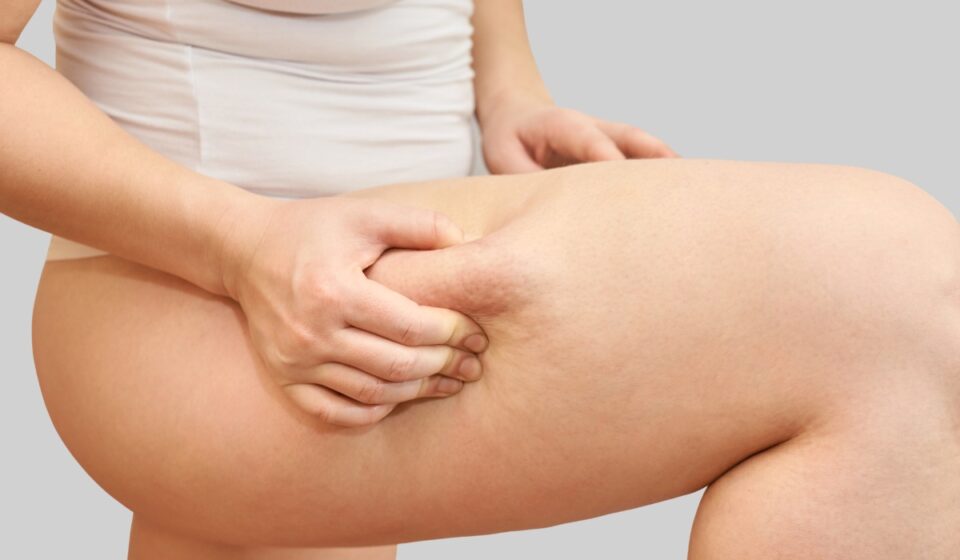

Inner thighs, outer thighs, the whole area — here’s the honest science on losing fat from your legs
Thigh fat is one of the most commonly targeted and most misunderstood areas of the body when it comes to fat loss. A huge industry of thigh-specific exercises, wraps, creams, and “inner thigh workouts” exists to sell the idea that you can spot-reduce fat from your legs.
You can’t. That’s not how fat loss works, and understanding why — and what actually does work — will save you a lot of wasted time and frustration.

Here’s the complete, honest guide to losing thigh fat.
The Spot Reduction Myth
Spot reduction — the idea that you can burn fat from a specific area by exercising that area — is one of the most persistent myths in fitness. It has been studied repeatedly and consistently disproven.
When you do inner thigh exercises, you’re building the muscles underneath the fat in that area. You are not burning the fat that sits on top of those muscles. Fat is mobilized from stores throughout the body based on genetics, hormones, and overall energy balance — not based on which muscles are working.
This is why someone can do a thousand inner thigh squeezes and see no reduction in thigh fat. The muscles are working. The fat is not being preferentially burned from that location.
Does this mean thigh exercises are useless? No — they’re excellent for building muscle that improves the shape and appearance of your thighs. But building muscle and losing fat are two different processes, and only overall fat loss will reduce the fat layer over any muscle.
Why Thigh Fat Is Particularly Stubborn (Especially for Women)
Thigh and hip fat is notoriously difficult to lose — and there are specific biological reasons for this that are worth understanding.
Estrogen directs fat storage to hips and thighs in women. This is evolutionary — subcutaneous fat in the lower body provides a reserve of energy for pregnancy and breastfeeding. Estrogen receptors in hip and thigh fat cells make them resistant to fat mobilization and keep them in storage mode.
Alpha-2 adrenergic receptors are more abundant in lower body fat. These receptors respond to adrenaline by inhibiting fat breakdown — the opposite of the beta-2 receptors that promote fat release. Lower body fat has a higher ratio of these inhibitory receptors compared to abdominal fat, making it physiologically harder to mobilize.
Lower body fat comes off last. In the typical pattern of fat loss, most people lose fat from their face, arms, and upper body first, with hips, thighs, and lower abdomen being among the last areas to respond. This is frustrating but normal — and means that consistent effort will eventually reach thigh fat, even if it takes longer than other areas.
Hormonal cycles affect lower body fat retention. Progesterone and estrogen fluctuations throughout the menstrual cycle affect water retention and fat storage in the hips and thighs specifically. Many women notice their thighs looking and feeling different at different points in their cycle — this is hormonal, not fat change.
What Actually Reduces Thigh Fat
Since spot reduction isn’t possible, losing thigh fat requires the same overall fat loss strategies that reduce fat everywhere — with a few specific additions that help target lower body fat at the margins.
Overall Calorie Deficit
The foundation of all fat loss — including thigh fat — is a sustained calorie deficit. Your body will eventually pull from thigh fat stores when overall energy balance requires it, even though it will pull from other areas first.
A moderate deficit of 400–600 calories per day produces steady, sustainable fat loss of 0.5–1.5 lbs per week. The strategies for creating this deficit without misery are covered throughout our blog — most comprehensively in our guide to how to get rid of belly fat, which applies equally to thigh fat despite the title.
High Protein Intake
Protein is the most important dietary variable for fat loss that preserves muscle — and this is particularly relevant for thighs, where you want to maintain the muscle shape that gives legs their definition as fat reduces.
Without adequate protein, fat loss in the thighs produces a flat, undefined appearance rather than the toned, shaped look most people are aiming for. The muscle underneath the fat needs to be maintained or built for the results to look as good as possible.
Aim for 0.7–1g of protein per pound of bodyweight. Our guide on how much protein you actually need per day covers the practical strategies.
Compound Lower Body Strength Training
While you can’t spot-reduce thigh fat, building the muscles in your thighs through compound strength training produces two meaningful benefits:
It increases the metabolic demand of the legs. Larger, more metabolically active leg muscles burn more calories at rest, which contributes to overall fat loss over time.
It improves the shape and appearance of the thighs. As fat reduces through overall fat loss, well-developed leg muscles create the toned, defined appearance that most people are aiming for. Thighs that have built muscle look dramatically different from thighs that have simply lost weight without training.
The best compound exercises for thighs:
Squats — the fundamental lower body exercise that targets quads, hamstrings, glutes, and inner thighs simultaneously. Feet shoulder-width apart, toes slightly turned out. Lower until thighs are parallel to the floor, press through heels to stand.
Romanian Deadlifts — targets the hamstrings and glutes particularly effectively. Hold weights in front of thighs, hinge at the hips maintaining a flat back, lower until you feel a deep hamstring stretch, drive hips forward to return.

Lunges — targets quads and glutes while also engaging hip stabilizers including inner thigh muscles. Forward, reverse, or lateral lunges all work.
Sumo Squats (Wide Stance Squats) — wider stance with feet turned out to approximately 45 degrees targets inner thighs (adductors) more than standard squats. Lower slowly, press through heels.
Leg Press — if you have gym access, the leg press allows heavy lower body training with reduced spinal loading.
Step-Ups — step onto a box or bench with one foot, drive through the heel to bring the other foot up. One of the best unilateral lower body exercises for overall leg development.
Three sessions per week with these movements, progressively increasing resistance over time, produces meaningful muscle development in the thighs within 8–12 weeks.
Walking — Particularly Incline Walking
Walking is one of the most effective fat loss tools available — and incline walking specifically places extra demand on the thighs, glutes, and hamstrings compared to flat walking.
A 30-minute incline treadmill walk or outdoor hill walking significantly elevates heart rate, burns 30–40% more calories than flat walking, and creates meaningful lower body muscle activation that contributes to leg shape over time.
Even flat walking at 8,000–10,000 steps per day contributes substantially to the overall calorie deficit that reduces thigh fat. As we cover in our article on best exercises to lose belly fat for beginners, walking is the most accessible, lowest-barrier fat loss exercise available.
Reduce Sodium and Processed Food Intake
A significant portion of what looks like thigh fat — particularly the puffy, soft appearance of lower body fat — is actually water retention driven by high sodium intake and chronic inflammation from processed food.
Reducing sodium, eliminating processed food, and increasing potassium-rich foods (lentils, avocado, leafy greens, sweet potatoes) can reduce lower body water retention enough to produce noticeable visual changes within a week — before significant fat loss has even occurred.
This is also the fastest route to reducing the bloated, heavy feeling in the legs and thighs that many people experience from a high-sodium, processed food diet.
Address Hormonal Factors if Relevant
For women whose thigh fat is particularly stubborn and resistant despite consistent effort over several months, hormonal factors may be worth investigating:
Estrogen dominance — higher relative estrogen to progesterone promotes lower body fat storage. This can result from hormonal imbalances, certain contraceptives, or environmental estrogen exposure.
Insulin resistance — impaired insulin sensitivity promotes fat storage throughout the body and makes mobilizing stored fat more difficult. As we cover in our article on how to lose weight with PCOS, conditions that worsen insulin resistance disproportionately affect fat distribution.
Hypothyroidism — underactive thyroid reduces overall metabolic rate and can make fat loss from all areas, including the thighs, slower than expected. Our guide on how to lose weight with hypothyroidism covers this in detail.
If you’ve been consistently executing a good diet, exercise, sleep, and stress management approach for 3–6 months without meaningful thigh fat reduction, a conversation with your doctor about hormonal factors is worth having.
Exercises That Don’t Work for Thigh Fat Loss
Inner thigh squeezes and adductor machines — build adductor strength and muscle, but don’t burn inner thigh fat. Still worth doing for muscle development, but not for fat loss.
High-rep, low-resistance “toning” workouts — the idea that light weights with many reps “tone” rather than “bulk” is a myth. These workouts build minimal muscle and produce minimal metabolic stimulus. They’re inferior to compound strength training for both fat loss and muscle development.
Thigh gap workouts — the “thigh gap” is primarily determined by hip width and bone structure, not fat content or muscle development. It’s not a realistic or meaningful goal for most people and the workouts marketed around it are not specially effective for thigh fat.
Sweat wraps and creams — any reduction is water loss that returns immediately with hydration. No evidence of fat reduction.
What to Expect and When
Thigh fat responds more slowly to fat loss efforts than abdominal fat — it’s biologically more stubborn, particularly for women. Realistic expectations:
Weeks 1–2: Reduction in water retention and bloating, particularly with reduced sodium. Possibly 1–3 lbs on the scale, some visual improvement in puffiness.
Weeks 3–8: Real fat loss beginning. Scale moving. Clothes fitting differently in the thighs. Leg muscles becoming more visible as fat layer reduces slightly.
Weeks 8–16: Meaningful visual changes in thigh appearance with consistent effort. Muscle development from strength training contributing to improved shape.
Months 4–6+: Continued improvement. For women, this is often when lower body fat that was most resistant starts responding more noticeably as overall body fat percentage drops.
The timeline is longer than for abdominal fat — but the process is the same. Calorie deficit, high protein, compound strength training, daily walking, adequate sleep, and stress management. These strategies work for thigh fat just as they work for every other fat store in the body.
The Role of Genetics
Genetics play a real role in where your body stores fat and in what order it releases it. Some women are genetically predisposed to carry more lower body fat — and will always carry relatively more in their hips and thighs even at lower body fat percentages.
This is not a reason to abandon effort — it’s a reason to set realistic expectations about what your body will look like at different stages of fat loss, and to focus on health and performance rather than trying to achieve a body type that isn’t compatible with your genetics.
The goal is your best body — not someone else’s.
The Bottom Line
Losing thigh fat requires losing fat overall — there are no shortcuts, no spot reduction exercises, no creams or wraps that change this biology.
What works: calorie deficit, high protein, compound lower body strength training (squats, lunges, deadlifts), daily walking (especially incline), reduced sodium, adequate sleep, and stress management.
What determines the timeline: mostly genetics, hormones, and consistency. For most women, lower body fat is the last to go — which means the journey to noticeably slimmer thighs is longer than the journey to a slimmer face or upper body. But it responds to the same approach, and consistent effort does get there.
For the complete fat loss framework that applies to thigh fat reduction, our guide to how to get rid of belly fat covers all the foundational strategies — despite the title, every principle applies body-wide.
What’s been your biggest challenge with losing lower body fat? Share in the comments — it’s one of the most commonly discussed frustrations and the community has a lot of experience with it.
Stop Wondering What to Eat This Week
Get my free 7-Day High-Protein Weight Loss Meal Plan delivered straight to your inbox — a simple week of satisfying, protein-focused meals designed to make healthy eating easier without complicated calorie tracking.
- 7 full days of breakfast, lunch, dinner & snacks
- One complete shopping list for the whole week
- A quick high-protein food cheat sheet
- Simple daily tips to help you stay on track
Free PDF • Delivered by email • Unsubscribe anytime
Check your inbox 💜
Your free 7-day high-protein meal plan is on its way.