
Pilates won’t torch calories like HIIT — but its effect on body composition is more significant than most people expect

Pilates has been around since the 1920s and has quietly built one of the most loyal exercise followings of any fitness modality. Dancers swear by it. Physical therapists prescribe it. And an increasing number of people are turning to it for weight loss — with results that are genuinely impressive when you understand what Pilates actually does to your body.
The question “can you lose weight with Pilates?” has a nuanced answer. And the nuance is worth understanding before you commit to a practice — or dismiss it as “not enough” for fat loss.
What Pilates Actually Is
Joseph Pilates developed his method in the early 20th century as a system of controlled movements designed to strengthen the deep core muscles, improve posture and alignment, and create long, lean muscle development without bulk.
Modern Pilates takes two main forms:
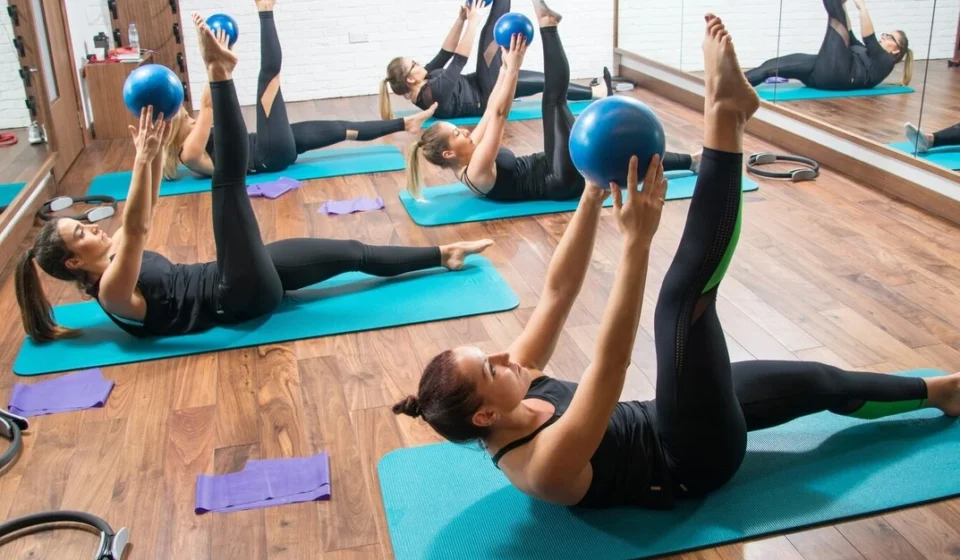
Mat Pilates — performed on a mat using bodyweight resistance. Accessible, equipment-free, and the most widely available form.
Reformer Pilates — performed on a spring-resistance machine (the reformer) that adds variable resistance to movements. More challenging, more expensive, and increasingly popular in boutique studio settings.
Both share the same foundational principles: controlled movement, breath coordination, core engagement throughout, and precise alignment.
What Pilates Does for Weight Loss
Calorie Burn — Modest but Real
Let’s start with the honest numbers:
Approximate calorie burn per hour:
- Mat Pilates (beginner): 170–250 calories
- Mat Pilates (intermediate/advanced): 250–350 calories
- Reformer Pilates: 250–450 calories
These numbers are lower than most cardio and similar to or slightly above yoga. They’re not going to drive dramatic weight loss on their own — a single session burns roughly what you’d get from a 30-minute walk.
But calorie burn during the session isn’t the whole picture.
Body Composition Changes — Where Pilates Shines
This is where Pilates becomes genuinely interesting for weight loss purposes. Multiple studies have found that regular Pilates practice produces meaningful improvements in body composition that go beyond what the calorie burn would suggest.
A 2021 study in PLOS ONE found that 8 weeks of Pilates training in overweight women significantly reduced body fat percentage, waist circumference, and hip circumference compared to a control group — without dietary changes.
A 2015 study found that 12 weeks of mat Pilates improved body composition, flexibility, and core endurance in sedentary women aged 30–50.
The proposed mechanisms:
- Increased lean muscle mass — Pilates builds specific, functional muscle that raises resting metabolic rate over time
- Improved posture and core activation — changes how the body carries itself, reducing apparent body size and improving functional movement
- Hormonal effects — the low-cortisol, controlled nature of Pilates may support better hormonal balance than high-stress exercise forms
Core Strength and Waist Definition
Pilates has perhaps the strongest evidence base of any exercise modality for deep core strengthening — specifically the transverse abdominis, multifidus, and pelvic floor muscles that create the “corset” effect pulling the waist inward.
As we cover in our article on how to get a flat stomach, core muscle development changes the shape and appearance of the midsection independently of fat loss. Well-developed deep core muscles hold the abdominal contents in toward the spine, creating a visually flatter, more defined waist.
Pilates is arguably the best exercise modality for developing this specific quality — more targeted and effective than general gym training for deep core engagement.
Posture Transformation
One of Pilates’ most visually significant effects — and one that happens relatively quickly — is dramatic improvement in posture and body alignment.
People who practice Pilates regularly typically develop:
- A longer, more upright spine
- Open, pulled-back shoulders
- Neutral pelvis alignment that reduces the lower belly protrusion of anterior pelvic tilt
- More graceful, efficient movement patterns
These postural changes can make someone appear to have lost 5–10 lbs without any actual fat loss occurring — simply because they carry themselves differently. And they’re visible within weeks of starting a consistent practice.
Injury Prevention and Exercise Sustainability
This is an often-overlooked contribution to weight loss: Pilates significantly reduces injury risk and improves movement quality that supports other exercise forms.
People who do Pilates alongside other training tend to train more consistently, recover faster, and avoid the injuries that derail exercise habits. The long-term compounding effect of injury-free consistent exercise is significant for body composition.
Reformer vs Mat Pilates for Weight Loss
If weight loss is a primary goal, reformer Pilates has meaningful advantages over mat Pilates:
- Higher calorie burn (spring resistance creates genuine muscular challenge)
- Greater muscle recruitment and development
- More exercise variety that prevents adaptation
- Assistance for beginners in movements they can’t yet perform with bodyweight alone
However:
- Reformer Pilates is expensive — $30–$50+ per class at most boutique studios
- It’s not accessible everywhere
- Mat Pilates produces genuine results at zero cost
For people with budget constraints, consistent mat Pilates at home (free on YouTube) is entirely effective. For people who can afford reformer classes and enjoy the environment, the additional investment produces meaningfully better body composition results.
How to Structure Pilates for Weight Loss
Pilates alone will produce modest weight loss for most people. Combined with the right additional strategies, results improve dramatically.
Pilates-primary approach (for people who love Pilates):
- 4–5 Pilates sessions per week (mix reformer and mat if possible)
- Daily walking 8,000–10,000 steps for additional calorie burn
- 1–2 additional strength training sessions per week
- High protein diet as the dietary foundation
Pilates as complement to other training:
- 2–3 Pilates sessions per week alongside strength training and cardio
- Use Pilates for core development and active recovery
- Particularly valuable on rest days from high-intensity training
The dietary non-negotiable: Exercise can’t outpace a poor diet at any intensity — and Pilates burns too few calories to create meaningful deficit through exercise alone. Dietary quality, particularly adequate protein intake as covered in our guide to how much protein you actually need per day, does the heavy lifting for fat loss. Pilates shapes and tones the body revealed by that fat loss.
The Best Pilates Exercises for Body Composition
The Hundred — the foundational Pilates warm-up. Lying on your back, legs raised to tabletop, pumping arms while maintaining a curl. Core activation throughout, breath coordination. A genuine cardiovascular and core challenge.
Teaser — the advanced Pilates core exercise. From lying flat, lift legs and torso simultaneously to balance on the tailbone with arms extended. One of the most demanding core exercises in any discipline.
Side-Lying Series — lying on your side, the leg series (inner thigh lifts, clam, outer hip lifts) targets the hip abductors and adductors that shape the hips and thighs. Directly relevant to the lower body shaping that Pilates is famous for.
Swan and Swimming — prone back extension exercises that build the posterior chain (lower back, glutes, hamstrings) and counteract the forward-flexed posture of modern life.
Plank and Push-Up Series — Pilates incorporates planks and push-ups with the distinctive Pilates emphasis on alignment and core engagement throughout. More effective than standard push-ups for core development.
Footwork on the Reformer — the foundational reformer exercise that works the entire lower body through precise, controlled movement. Builds leg strength and shapes the thighs and glutes without the joint load of squats.
Long Stretch Series — reformer exercises that challenge the core and upper body in ways that mat Pilates can’t replicate.
Who Benefits Most From Pilates for Weight Loss
Pilates is particularly well-suited for:
- People recovering from injury or with chronic pain who can’t do high-impact exercise
- People with diastasis recti (abdominal separation) — Pilates is one of the safest and most effective rehabilitation approaches
- Women postpartum — Pilates is often recommended for safe return to exercise and pelvic floor rehabilitation
- People with poor posture and anterior pelvic tilt — Pilates addresses these root causes directly
- People who want a mind-body practice with genuine physical results
- Older adults — Pilates builds functional strength and balance with lower injury risk than many alternatives
- People who find conventional gym training unappealing or inaccessible
Pilates may not be the best primary approach for:
- People who need rapid, significant weight loss and can tolerate higher-intensity exercise
- People who primarily enjoy cardiovascular exercise
- People with very limited time who need maximum calorie burn per session
Pilates vs Yoga for Weight Loss
These two are frequently compared since they occupy similar cultural space as mind-body practices.
| Factor | Pilates | Yoga |
|---|---|---|
| Calorie burn | Slightly higher | Slightly lower |
| Core strength | Superior | Good |
| Flexibility | Good | Superior |
| Cortisol reduction | Moderate | Strong |
| Posture | Superior | Good |
| Injury rehab | Superior | Good |
| Accessibility | Good (mat) / Expensive (reformer) | Excellent |
| Mental/stress benefit | Moderate | Strong |
For fat loss specifically, Pilates has a slight edge in body composition improvement through its superior core and muscle development. For stress management and sleep — two critical fat loss factors — yoga has a slight edge.
The ideal combination for someone who enjoys both: Pilates 3x per week for body composition and core development, yoga 2x per week for stress and sleep. Combined with the strength training and walking approach covered throughout this blog, this is a genuinely powerful program.
Getting Started With Pilates
For complete beginners at home: YouTube channels offering free Pilates content include: Move With Nicole, Blogilates (Cassey Ho), and Pilates Anytime. Start with beginner mat series before progressing to intermediate work.
For people considering reformer: Most studios offer introductory packages at reduced rates. A few private sessions with a qualified instructor before joining group classes is worth the investment — learning correct form dramatically improves results and reduces injury risk.
Building consistency: Three sessions per week is the minimum to see meaningful results. Daily 20-minute practices produce better outcomes than longer infrequent sessions.
Realistic Expectations
What Pilates alone produces over 12 weeks:
- 3–6 lbs of weight loss (varies significantly by adherence and starting point)
- Noticeable improvement in waist measurement and definition
- Significant posture improvement
- Visible improvement in how clothes fit — particularly around the midsection
- Meaningfully improved core strength and stability
What Pilates combined with dietary improvement and walking produces:
- 8–15+ lbs of weight loss over 12 weeks
- Significant body composition improvement
- Dramatic posture and movement quality changes
- Toned, defined appearance at the new lower weight
The combination is where Pilates truly delivers — it’s the shaping and toning tool that reveals the best possible version of the body that dietary fat loss creates.
The Bottom Line
Pilates won’t produce dramatic fat loss through calorie burn alone — the numbers simply don’t support that. But its effects on core strength, posture, body composition, and the mind-body connection that supports better eating and stress management make it significantly more impactful for weight loss than its calorie numbers suggest.
Used as the shaping and toning complement to a diet-driven fat loss approach — alongside daily walking and the dietary strategies covered in our guide to how to get rid of belly fat — Pilates produces genuinely impressive body composition results that pure calorie-burning exercise rarely matches.
The body Pilates builds — long, strong, well-postured, and deeply stable — is worth the practice regardless of the number on the scale.
Do you practice Pilates? Have you found it helpful for weight management or body composition? Share your experience in the comments — Pilates results vary significantly and real-world accounts help others set realistic expectations.