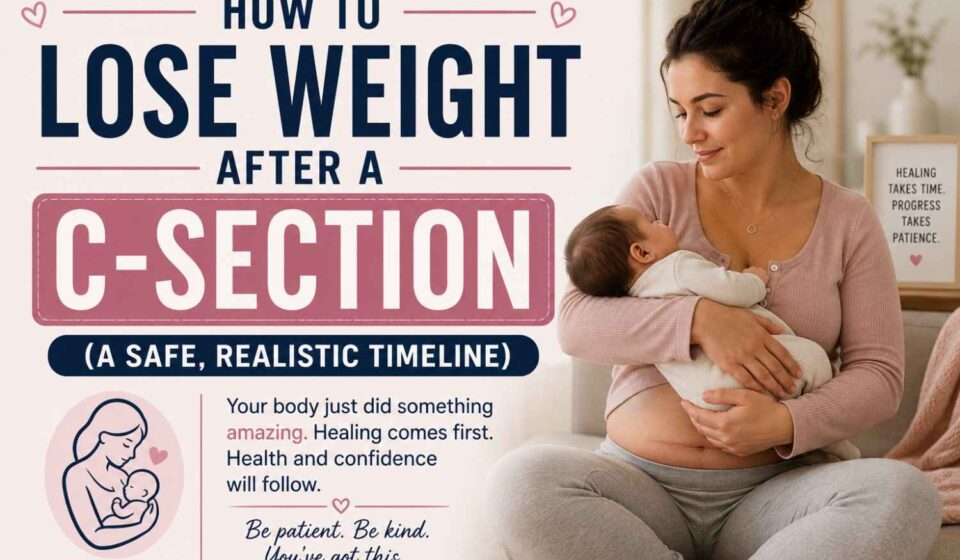
How to Lose Weight After a C-Section (A Safe, Realistic Timeline)

Major abdominal surgery requires a different recovery and weight loss approach than vaginal birth — here’s what you need to know

A C-section is major abdominal surgery — not just a different way to give birth. Recovery involves healing through seven layers of tissue, managing a significant incision, and rebuilding core function that is directly compromised by the surgical procedure.
Weight loss after a C-section requires understanding this surgical reality and working with the body’s healing timeline rather than against it. The approach that’s safe and effective at 6 weeks postpartum is very different from what’s appropriate at 6 months.
This guide covers the safe timeline, the specific considerations that make C-section recovery different from vaginal birth, and the strategies that produce real results without compromising healing.
Important Disclaimer
This article provides general information — not medical advice for your specific situation. Your recovery, clearance for exercise, and appropriate timeline should be discussed with your OB/GYN or midwife. Every C-section is different. Follow your care team’s guidance over any general recommendation here.
Why C-Section Recovery Is Different
Major Abdominal Surgery
A C-section involves cutting through skin, subcutaneous fat, fascia, the rectus abdominis muscle (or separation of the muscle), the peritoneum, and the uterus. The healing of these layers takes significant time — internal healing continues for 6–12 months even when the external incision looks healed.
This means the core muscles — the transverse abdominis, rectus abdominis, and obliques — are directly affected by the surgery. Not just weakened by pregnancy, but surgically cut through and healing.
Diastasis Recti Is Almost Universal
Diastasis recti — the separation of the rectus abdominis muscles along the midline — occurs in the vast majority of pregnancies regardless of delivery method. After a C-section, the combination of pregnancy-related diastasis and surgical abdominal incision means the core needs careful, progressive rehabilitation rather than conventional abdominal exercise.
Traditional core exercises — crunches, sit-ups, and many Pilates movements — can worsen diastasis and place inappropriate stress on the healing surgical incision.
Scar Tissue Formation
The C-section scar involves adhesions and scar tissue that can affect surrounding structures over time — including bladder, bowel, and other abdominal structures. Scar massage (when cleared by your doctor, typically at 6–8 weeks when the incision is fully healed externally) helps maintain tissue mobility and reduce adhesion-related discomfort.
Hormonal Recovery
Postpartum hormones — regardless of delivery method — involve significant shifts in estrogen, progesterone, prolactin, relaxin, and cortisol that affect body composition, fluid retention, and fat distribution. These hormonal changes take months to normalize.
Breastfeeding specifically affects weight loss — it burns approximately 400–500 extra calories per day but also increases appetite and affects fat storage patterns in complex ways that vary significantly between individuals.
The Safe Timeline: What to Do When
Weeks 1–6: Recovery Only
Weight loss is not a goal in this phase. Recovery is.
What’s appropriate:
- Rest and healing
- Gentle walking — starting with very short walks (5 minutes) as soon as comfortable, typically within days of surgery
- Pelvic floor breathing and gentle diaphragmatic breathing
- Gentle pelvic floor engagement (not Kegels initially — diaphragmatic breathing first)
- Adequate nutrition and hydration — particularly important for wound healing and breastfeeding if applicable
What to avoid:
- Any core exercise beyond gentle breathing
- Anything that causes pulling or discomfort at the incision
- Lifting anything heavier than your baby
- Returning to exercise — even low impact — without medical clearance
On diet: This is not the time to restrict calories significantly. Healing requires adequate nutrition. Breastfeeding mothers particularly need adequate calorie and protein intake. Focus on food quality rather than restriction:
- High protein foods to support tissue healing
- Anti-inflammatory whole foods
- Adequate hydration
- Iron-rich foods (blood loss during surgery increases iron requirements)
What happens naturally: Many women lose 10–15 lbs in the first 1–2 weeks postpartum from the combination of baby weight, placenta, amniotic fluid, and initial fluid loss. This is not fat loss — it’s physiological fluid normalization.
Weeks 6–12: Gentle Reintroduction (After Medical Clearance)
The 6-week postpartum appointment typically provides the first opportunity for medical clearance to begin gentle exercise. However — this varies significantly. Some women need more time; the healing of internal layers isn’t visible from the outside.
When cleared, appropriate activities:
- Walking — gradually increasing duration and pace
- Pelvic floor rehabilitation exercises
- Core rehabilitation beginning with the gentlest level (not crunches — diaphragmatic breathing, heel slides, gentle transverse abdominis engagement)
- Swimming when the incision is fully healed and your doctor has cleared water immersion
What to continue avoiding:
- Traditional core exercises (crunches, sit-ups, leg raises)
- High-impact activities (running, HIIT, jumping)
- Heavy lifting
- Any exercise that causes coning or doming at the midline (a sign of diastasis recti being stressed)
On diet: Gentle dietary attention is now appropriate:
- Prioritize protein (0.7–1g per pound of bodyweight) — supports healing and milk production
- Focus on whole, minimally processed foods
- Don’t aggressively restrict calories — particularly if breastfeeding
Months 3–6: Progressive Return to Exercise
With consistent healing and medical guidance, most women can progressively return to more demanding exercise in this phase — but the timeline varies significantly.
Appropriate progressions:
- Walking increasing to brisk walking and longer distances
- Core rehabilitation progressing through progressively demanding exercises as diastasis heals
- Swimming as a low-impact cardio option
- Body weight lower body exercises (glute bridges, squats without weights initially)
- Pilates specifically designed for postpartum — not standard Pilates
Still approach cautiously:
- Running — many pelvic floor and core physiotherapists recommend waiting until 3–6 months postpartum minimum, and only after core and pelvic floor rehabilitation
- Heavy lifting — requires functional core integrity first
- High-impact exercise
On diet: Moderate, gentle calorie deficit now appropriate if weight loss is a goal and medical team agrees. Maintain high protein. Avoid aggressive restriction — still healing, potentially breastfeeding.
Month 6 and Beyond: Full Return
Most women with uncomplicated recovery and consistent rehabilitation can return to full exercise by 6 months postpartum — though this varies and some need longer.
By this point, the standard fat loss approach applies — calorie deficit, adequate protein, strength training, cardio, sleep optimization, stress management.
The C-section-specific considerations that remain:
- Continue scar massage until the scar is fully supple and mobile
- Continue core rehabilitation — diastasis recti takes 6–12 months to fully address
- Be alert to any symptoms of prolapse (heaviness, pressure, or leaking during exercise) — see a pelvic floor physiotherapist
The Most Effective Fat Loss Strategies for Post-C-Section
Pelvic Floor and Core Rehabilitation — First Priority
Before any conventional exercise, rebuilding proper core and pelvic floor function after a C-section is the foundation everything else is built on.
Working with a pelvic floor physiotherapist is genuinely the most valuable thing you can do for post-C-section recovery and long-term core health. These specialists assess diastasis recti severity, pelvic floor function, and scar tissue, then provide a specific rehabilitation program.
This isn’t optional — it’s foundational. Core function that’s compromised by diastasis makes conventional exercise both less effective and potentially harmful.
Prioritize Protein Throughout
High protein intake supports healing in the early months and fat loss quality (preserving muscle) in the later months. It’s also the most satiating dietary change, making calorie management easier while breastfeeding drives appetite.
As covered in our guide to how much protein you actually need per day, 0.7–1g per pound of bodyweight is the foundation of effective fat loss — and protein needs are actually higher during healing and breastfeeding.
Walking — The Safest, Most Consistent Activity
Walking is appropriate from the earliest days postpartum, can be done with the baby, and scales from 5-minute gentle strolls to vigorous long walks as recovery progresses. It burns meaningful calories without stressing the healing surgical site.
As covered in our guide to how to lose weight by walking, consistent daily walking is one of the most effective and sustainable fat loss activities available — and it’s uniquely compatible with early postpartum life.
Sleep — Despite the Newborn Reality
Sleep deprivation is essentially universal in the newborn phase — and it significantly impairs fat loss through disrupted hunger hormones, elevated cortisol, and reduced metabolic efficiency.
The advice to “sleep when the baby sleeps” exists for good reason. Prioritizing sleep over other activities — including exercise in the early months — is a legitimate fat loss strategy, not laziness.
As covered in our article on why sleep is the most underrated weight loss tool, adequate sleep is as important for fat loss as diet and exercise — and protecting sleep in the newborn phase, even imperfectly, supports the metabolic environment for weight loss.
Don’t Diet While Breastfeeding (Without Guidance)
Breastfeeding requires approximately 400–500 additional calories per day to maintain milk supply. Aggressive calorie restriction while breastfeeding can reduce milk supply and compromise the nutrition of both mother and baby.
If breastfeeding, work with your healthcare team on an appropriate calorie intake. The extra calorie demand of breastfeeding contributes to weight loss on its own — many mothers lose weight without any deliberate restriction simply from the calorie cost of milk production.
Manage Realistic Expectations
The “bounce back” pressure from social media and celebrity culture around postpartum bodies is genuinely harmful. The body that just underwent major surgery and grew a human being is not supposed to look the same as before pregnancy 6 weeks later.
Realistic postpartum weight loss timelines:
- Most women are still carrying pregnancy weight at 6 months postpartum
- Full return to pre-pregnancy weight typically takes 12–18 months when it happens at all
- Body composition changes permanently for many women — shape may differ from pre-pregnancy even at the same weight
- This is normal. It’s not failure.
The Bottom Line
Losing weight after a C-section requires respecting the surgical reality of recovery — a timeline measured in months, not weeks, and an approach that prioritizes healing before fat loss.
The stages:
- Weeks 1–6: Recovery only — food quality, gentle walking, healing
- Weeks 6–12: Gentle reintroduction — walking, pelvic floor work, core rehabilitation begins
- Months 3–6: Progressive return — more demanding exercise as cleared
- Month 6+: Full approach — standard fat loss strategies apply with C-section-specific awareness
Throughout: high protein, adequate nutrition (especially if breastfeeding), sleep protection, pelvic floor physiotherapy, and realistic timelines.
For the complete fat loss framework that applies once you’re medically cleared for full exercise, our guide to how to get rid of belly fat covers all the foundational strategies.
Are you recovering from a C-section and navigating weight loss? Share your experience in the comments — the postpartum weight loss journey is one where real experience from real mothers is invaluable.