
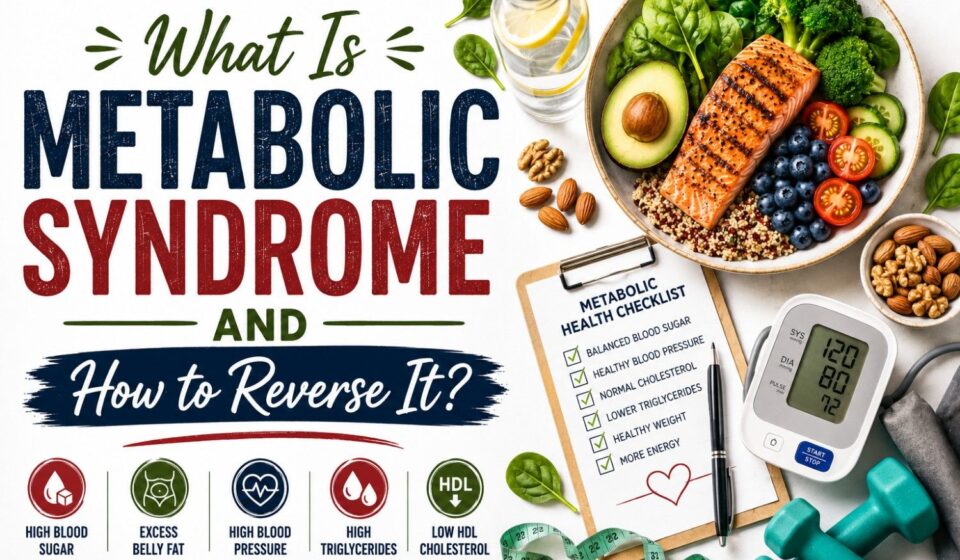

The cluster of conditions that dramatically raises disease risk — and the lifestyle interventions that reverse it
Metabolic syndrome is one of the most common and most serious health conditions in the Western world — affecting approximately 1 in 3 adults in the United States. Despite its prevalence, many people have it without knowing, and many who’ve been diagnosed don’t understand what it means or what to do about it.
Here’s the complete, honest guide: what metabolic syndrome is, how it develops, and — most importantly — how to reverse it.

What Is Metabolic Syndrome?
Metabolic syndrome is not a single disease — it’s a cluster of interconnected metabolic abnormalities that together significantly raise the risk of cardiovascular disease, type 2 diabetes, stroke, and other serious conditions.
The diagnostic criteria: You have metabolic syndrome if you have 3 or more of the following 5 conditions:
| Condition | Threshold |
|---|---|
| Abdominal obesity | Waist circumference >40 inches (men) / >35 inches (women) |
| High triglycerides | ≥150 mg/dL (or on medication for high triglycerides) |
| Low HDL cholesterol | <40 mg/dL (men) / <50 mg/dL (women) |
| High blood pressure | ≥130/85 mmHg (or on blood pressure medication) |
| High fasting blood glucose | ≥100 mg/dL (or on diabetes medication) |
Having 3 or more of these simultaneously creates a health risk greater than the sum of its parts — each condition worsens the others in interconnected ways.
What Causes Metabolic Syndrome?
Insulin resistance is the central mechanism.
When cells become resistant to insulin’s signaling — requiring more and more insulin to achieve the same glucose uptake — a cascade of metabolic disruptions follows:
- The pancreas produces more insulin to compensate → chronic hyperinsulinemia
- Excess insulin promotes fat storage, particularly visceral fat
- Visceral fat produces inflammatory cytokines that worsen insulin resistance
- The liver produces more triglycerides in response to excess insulin
- HDL cholesterol falls as triglycerides rise
- Blood pressure increases through multiple insulin-related mechanisms
- Blood glucose eventually rises as the pancreas can no longer fully compensate
What drives insulin resistance in the first place:
- Excess visceral fat (the primary driver — and a consequence that also perpetuates the cause)
- Sedentary lifestyle
- Poor dietary quality (refined carbohydrates, sugar, processed food)
- Chronic sleep deprivation
- Chronic stress (cortisol directly promotes insulin resistance)
- Genetic predisposition
Why Metabolic Syndrome Is Serious
Having metabolic syndrome significantly increases risk of:
- Type 2 diabetes: 5x increased risk
- Cardiovascular disease: 2x increased risk of heart attack and stroke
- Non-alcoholic fatty liver disease: Very common with metabolic syndrome
- Chronic kidney disease: Metabolic syndrome accelerates kidney function decline
- Certain cancers: Particularly colorectal, breast, and endometrial
- Sleep apnea: Bidirectional relationship — each worsens the other
- Dementia: Growing evidence for metabolic syndrome’s contribution to cognitive decline
The good news: metabolic syndrome is largely reversible through lifestyle intervention — and the response to appropriate treatment is often dramatic and relatively rapid.
How to Reverse Metabolic Syndrome
1. Reduce Visceral Belly Fat — The Central Target
Since visceral fat is both a primary cause and primary consequence of metabolic syndrome, reducing it directly addresses the root of the condition.
Every component of metabolic syndrome improves with visceral fat reduction:
- Blood pressure decreases
- Triglycerides decrease (often dramatically)
- HDL cholesterol increases
- Fasting blood glucose decreases
- Insulin sensitivity improves
Even modest weight loss — 5–10% of body weight — produces clinically significant improvements in all five metabolic syndrome markers.
As covered in our complete guide to how to get rid of belly fat, visceral fat is specifically responsive to the combination of calorie deficit, reduced refined carbohydrates, strength training, sleep, and stress management.
2. Dramatically Reduce Refined Carbohydrates and Sugar
This is the single most impactful dietary change for metabolic syndrome — because refined carbohydrates and sugar are the primary dietary drivers of the hyperinsulinemia that underlies every component of the condition.
The evidence: Low-carbohydrate dietary approaches produce dramatic improvements in metabolic syndrome markers — in some studies reversing all five criteria within 12 weeks.
What to eliminate:
- Sugar-sweetened beverages (the highest priority)
- Added sugar in all forms
- White bread, white rice, white pasta
- Processed snacks and packaged foods
- Fruit juice
What to replace them with:
- Non-starchy vegetables
- Lean protein
- Healthy fats (olive oil, avocado, nuts)
- Whole food carbohydrates in controlled amounts (legumes, oats, sweet potato)
As covered in our article on how to lose weight with metabolic syndrome, dietary composition — not just calories — matters specifically for this condition.
3. Strength Train Consistently
Strength training is the most effective exercise intervention for metabolic syndrome — more effective than cardio alone for improving insulin sensitivity.
Why strength training specifically:
- Builds muscle that acts as a glucose “sink” — dramatically improving insulin sensitivity
- Each pound of muscle added increases resting metabolic rate
- Improves body composition even when scale weight changes minimally
- Specifically reduces visceral fat
Target: 3 sessions per week of compound movements (squats, deadlifts, rows, presses). Progress gradually — starting with whatever load allows good form.
4. Walk Daily
Walking is the most accessible and most consistently studied lifestyle intervention for metabolic syndrome — with evidence that consistent daily walking improves all five metabolic syndrome criteria over weeks to months.
Why walking works for metabolic syndrome:

- Post-meal walks (10–15 minutes after eating) specifically reduce post-meal blood glucose spikes — directly improving insulin sensitivity
- Reduces visceral fat in long-term studies
- Lowers cortisol — reducing the stress-driven insulin resistance contribution
- Produces no post-exercise hunger compensation (unlike intense exercise)
As covered in our guide to how to lose weight by walking, 8,000–10,000 steps daily is achievable for most people and produces meaningful metabolic improvements.
5. Prioritize Sleep
Sleep deprivation directly worsens every component of metabolic syndrome:
- Elevates blood glucose and impairs insulin sensitivity
- Raises blood pressure
- Lowers HDL cholesterol
- Increases triglycerides
- Promotes visceral fat accumulation through elevated cortisol
7–9 hours of quality sleep is a metabolic syndrome treatment — not just a lifestyle recommendation. As covered in our article on why sleep is the most underrated weight loss tool, sleep is where many of the metabolic improvements from dietary and exercise changes are consolidated.
Sleep apnea and metabolic syndrome: These two conditions are strongly bidirectionally linked. Sleep apnea worsens insulin resistance; insulin resistance and obesity worsen sleep apnea. If you have metabolic syndrome and have been told you snore heavily or wake unrefreshed despite adequate sleep time, sleep apnea screening is important.
6. Manage Stress
Chronic stress drives cortisol elevation that directly:
- Promotes insulin resistance
- Drives visceral fat accumulation
- Raises blood pressure
- Increases blood glucose
Active daily stress management — walking, breathing exercises, adequate sleep, reducing unnecessary obligations — is a metabolic syndrome treatment alongside dietary and exercise changes.
7. Reduce Alcohol
Alcohol directly:
- Raises triglycerides (fructose metabolism in the liver)
- Raises blood pressure
- Impairs sleep quality
- Adds empty calories that worsen abdominal obesity
Reducing alcohol consumption consistently improves triglycerides and blood pressure — two of the five metabolic syndrome criteria — often within weeks.
How Quickly Does Metabolic Syndrome Reverse?
The metabolic syndrome reversal timeline with consistent lifestyle intervention:
2–4 weeks:
- Triglycerides often decrease dramatically (particularly with reduced sugar and alcohol)
- Blood pressure begins improving
- Fasting blood glucose starts declining
4–12 weeks:
- Significant improvements in all five markers
- Many people “lose” one or two of the five criteria
- Measurable waist circumference reduction
3–6 months:
- Full reversal possible for people who were at the milder end
- Substantial improvement for everyone with consistent effort
- HDL cholesterol improves (slower to respond than other markers)
6–12 months:
- Complete reversal achievable for many people
- Medication reduction or elimination possible (under medical supervision)
The response to lifestyle intervention in metabolic syndrome is often faster and more dramatic than in isolated conditions — because the interventions address the root cause (insulin resistance) rather than individual symptoms.
When Medication Is Appropriate
Lifestyle intervention is the foundation of metabolic syndrome treatment — but medication has a role:
Metformin: Often prescribed for elevated blood glucose and insulin resistance — improves insulin sensitivity and may support weight loss efforts.
Statins: For elevated cardiovascular risk alongside metabolic syndrome — though lifestyle intervention should be pursued alongside or before medication.
Blood pressure medications: When blood pressure is significantly elevated, medication while implementing lifestyle changes is appropriate.
GLP-1 medications (Ozempic, Wegovy): These medications specifically address insulin resistance, reduce visceral fat, and improve multiple metabolic syndrome markers simultaneously — making them particularly relevant for people with metabolic syndrome who haven’t achieved adequate results from lifestyle changes alone.
Breeze Meds offers telehealth medical evaluations to assess whether prescription weight loss treatment — including GLP-1 compounded medications that directly address the insulin resistance underlying metabolic syndrome — is appropriate for your situation.
Check eligibility & pricing at Breeze Meds →Affiliate disclosure: We may earn a commission if you use this link. Breeze Meds provides telehealth weight-loss services. Prescription medication is only provided following an evaluation by a licensed healthcare professional and is not guaranteed.
Monitoring Progress
Track these markers every 3–6 months with your doctor:
- Waist circumference (monthly at home)
- Fasting blood glucose and insulin (HbA1c for longer-term glucose picture)
- Full lipid panel (triglycerides and HDL specifically)
- Blood pressure (home monitor for regular tracking)
- Weight and BMI
Seeing these numbers improve is one of the most motivating aspects of treating metabolic syndrome — the response to appropriate lifestyle intervention is often dramatic and visible in blood work relatively quickly.
The Bottom Line
Metabolic syndrome is a cluster of conditions — abdominal obesity, high triglycerides, low HDL, high blood pressure, and high blood glucose — driven by insulin resistance and visceral fat.
It’s serious — dramatically increasing cardiovascular disease and diabetes risk. And it’s largely reversible through:
- Reducing visceral fat through calorie deficit
- Dramatically reducing refined carbohydrates and sugar
- Strength training 3x per week
- Daily walking (8,000–10,000 steps)
- 7–9 hours quality sleep
- Active stress management
- Reducing alcohol
Response to these interventions is often faster than people expect — with measurable improvements in blood markers within weeks and potential full reversal within months for many people.
Have you been diagnosed with metabolic syndrome — and what interventions have made the biggest difference to your blood markers? Share in the comments.
Stop Wondering What to Eat This Week
Get my free 7-Day High-Protein Weight Loss Meal Plan delivered straight to your inbox — a simple week of satisfying, protein-focused meals designed to make healthy eating easier without complicated calorie tracking.
- 7 full days of breakfast, lunch, dinner & snacks
- One complete shopping list for the whole week
- A quick high-protein food cheat sheet
- Simple daily tips to help you stay on track
Free PDF • Delivered by email • Unsubscribe anytime
Check your inbox 💜
Your free 7-day high-protein meal plan is on its way.