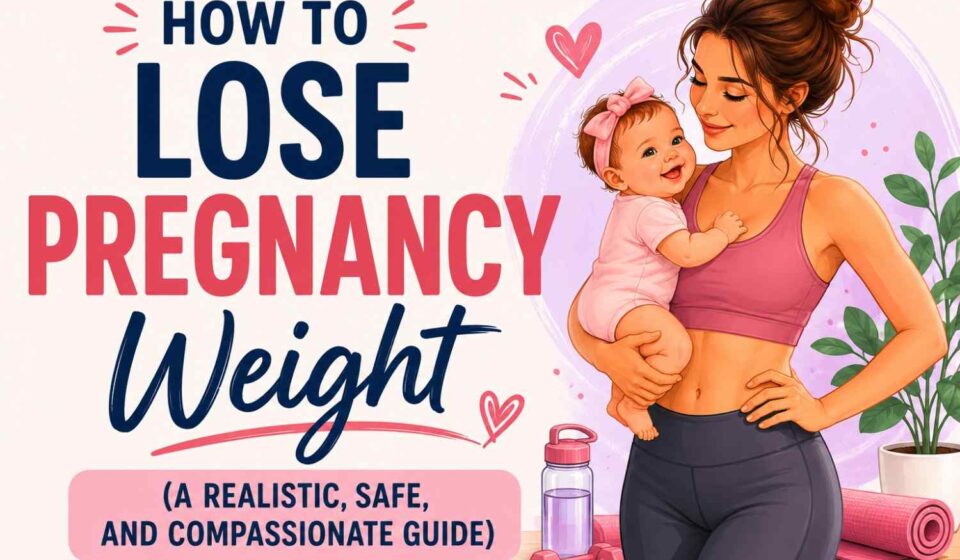
How to Lose Pregnancy Weight (A Realistic, Safe, and Compassionate Guide)

Your body grew a human being. Here’s a timeline that respects that extraordinary fact.

Losing pregnancy weight is one of the most common health goals for new mothers — and one of the most surrounded by unhealthy cultural pressure. Social media, celebrity culture, and even well-meaning friends create the impression that “getting your body back” should happen within weeks of delivery.
This guide provides a different framework: realistic timelines, evidence-based strategies, and genuine respect for what your body has been through — while still providing practical, actionable guidance for women who want to lose the weight gained during pregnancy.
What Is Pregnancy Weight?
First, understanding what pregnancy weight actually consists of helps set realistic expectations:
At delivery, typical weight distribution:
- Baby: 6–8 lbs
- Placenta: 1.5 lbs
- Amniotic fluid: 2 lbs
- Uterus enlargement: 2 lbs
- Breast tissue: 2 lbs
- Blood volume increase: 4 lbs
- Fluid and fat stores: 5–10 lbs
Total: 25–35 lbs typical weight gain (recommended range)
Of this, approximately 10–13 lbs is lost immediately at and within the first week of delivery (baby, placenta, fluid, blood). The remaining weight — primarily additional fat stores and fluid — is what takes longer to address.
The Honest Timeline
The “bounce back” timeline suggested by social media is not realistic for most women — and pursuing it through aggressive restriction and exercise too soon after delivery causes harm.
What realistic postpartum weight loss actually looks like:
Weeks 1–2: 10–13 lbs lost naturally through delivery and immediate fluid normalization. This happens regardless of anything you do.
Weeks 2–6: Minimal intentional weight loss appropriate. Focus is recovery, feeding the baby, and healing. The 6-week postpartum appointment is a milestone, not a mandatory starting gun.
Months 2–6: Gentle, progressive weight loss begins for most women. Breastfeeding contributes. Gradual return to exercise. 0.5–1 lb per week is realistic and appropriate.
Months 6–12: Most women who will return to pre-pregnancy weight do so within this window with consistent effort.
12+ months: Some women take longer — particularly those who had significant weight gain, are breastfeeding, have thyroid issues, or face the very real practical challenges of caring for an infant while prioritizing their own health.
The honest truth: Many women’s bodies don’t fully return to pre-pregnancy shape — even at the same weight, body composition, breast size, hip width, and abdominal muscle function may be permanently changed. This is normal. It’s not failure.
Before Weight Loss: Recovery First
The 6-Week Rule — And Why It Exists
Most healthcare providers recommend waiting until at least 6 weeks postpartum before intentional exercise or caloric restriction — and for C-section deliveries, often longer. As covered in our article on how to lose weight after a C-section, surgical recovery has a longer timeline.
This isn’t excessive caution — it’s recognition that:
- The uterus takes 6 weeks to involute (return to pre-pregnancy size)
- Pelvic floor healing is incomplete for weeks
- Hormones are in dramatic flux
- Sleep deprivation is typically extreme
- Breastfeeding is being established (if applicable)
Attempting aggressive dietary restriction or intense exercise before the body has healed creates risk of injury, worsened diastasis recti, pelvic organ prolapse, and hormonal disruption.
Pelvic Floor Rehabilitation — The Essential First Step
Before any conventional exercise is resumed, pelvic floor rehabilitation is the most important physical priority. Pregnancy and delivery profoundly affect the pelvic floor — weakness, tension, and coordination problems that aren’t addressed before returning to exercise can cause problems that persist for years.
A pelvic floor physiotherapist provides assessment and a rehabilitation program tailored to your specific delivery and recovery. This is not optional wellness advice — it’s foundational for long-term health.
The Breastfeeding Consideration
Breastfeeding burns approximately 400–500 calories per day — a significant contribution to caloric deficit that supports weight loss.
However:
Breastfeeding also increases appetite significantly — the body tries to replace the calories being used for milk production. Some women lose weight easily while breastfeeding; others maintain or gain slightly, as the hormonal environment of breastfeeding (elevated prolactin, reduced estrogen) promotes fat retention in some women.
Critical: Aggressive caloric restriction while breastfeeding can reduce milk supply. The standard recommendation for breastfeeding mothers is a minimum of 1,800 calories per day — and many need more.
A modest dietary deficit of 200–300 calories per day (not 500+) is appropriate for breastfeeding mothers who want to lose weight without compromising supply. Monitor supply carefully when reducing intake.
Dietary Strategy for Losing Pregnancy Weight
Nutrition Quality Over Caloric Restriction
In the early postpartum months, nutritional quality is more important than caloric restriction. Recovery from delivery, breastfeeding, and the demands of new parenthood all require adequate nutrition.
Focus on nutrient-dense whole foods:
- High protein for tissue healing and milk production
- Iron-rich foods to replace blood loss
- Calcium for bone health (breastfeeding draws calcium from bones)
- Omega-3 fatty acids for both maternal and infant brain health
- Adequate hydration — breastfeeding significantly increases fluid needs
Prioritize Protein
Protein is the most important macronutrient for postpartum weight loss for several reasons:
- Supports tissue healing after delivery
- Preserves muscle mass during a calorie deficit
- Is the most satiating macronutrient — managing the significant postpartum hunger
- Supports milk production
Target 0.7–1g per pound of bodyweight. As covered in our guide to how much protein you actually need per day, this is the most important dietary variable for body composition.
Simple, Practical Food When Time Is Limited
New parenthood leaves almost no time for elaborate food preparation. The most practical dietary approach is simple, high-protein food that requires minimal preparation:
- Greek yogurt and cottage cheese
- Pre-made hard-boiled eggs
- Rotisserie chicken
- Canned fish
- Nuts and nut butter
- Pre-washed salad bags with any protein
- Protein shakes
Accepting meal delivery services, freezer meals prepared before delivery, or family help with food is entirely appropriate during this period.
Reduce Processed Food and Added Sugar — Without Aggressive Restriction
Rather than counting calories aggressively, improving dietary quality produces meaningful results:
- Reduce sugary snacks and beverages
- Choose whole foods over processed alternatives
- Limit takeout and fast food to occasional rather than daily
- Keep healthy, easy-to-grab food accessible
These changes produce caloric reduction without the psychological burden of formal dieting — and they’re compatible with the cognitive fog and time constraints of new parenthood.
Exercise After Pregnancy
Walking First
Walking is the most universally appropriate exercise for postpartum recovery — it can be done from the earliest days with the baby, scales from gentle to vigorous, and requires no childcare or gym access.
Start with whatever is comfortable — even 10 minutes. Build gradually as recovery allows. Getting outside for a daily walk also provides mental health benefits that are genuinely important in the postpartum period.
As covered in our guide to how to lose weight by walking, consistent walking is one of the most effective fat loss activities available — and it’s uniquely compatible with new motherhood.
Pelvic Floor and Core Exercises
These are the first exercises to add — before any conventional workout:
Diaphragmatic breathing: Deep belly breathing that gently activates the transverse abdominis. Appropriate from day 1 postpartum.
Pelvic floor contractions (gentle): When recommended by your healthcare provider. Not aggressive Kegels — gentle awareness and connection.
Heel slides: Lying on your back, slowly slide one heel out along the floor. Gentle core activation.
These prepare the foundation for all subsequent exercise — skipping them and going straight to crunches and traditional core work can worsen diastasis recti.
Progressive Return to Full Exercise
After medical clearance (typically 6 weeks for vaginal delivery, longer for C-section):
Weeks 6–12: Low-impact options. Swimming when the incision is healed and cleared. Light body weight movements. Building walking distance and pace.
Months 3–6: Progressive strength training. As covered in our guide to how to build a home workout routine, effective strength training is entirely possible at home with no equipment or minimal equipment — crucial when childcare for gym attendance is difficult.
Month 6+: Full return to pre-pregnancy exercise levels for most women with uncomplicated recovery.
Signs to reduce exercise or seek assessment:
- Leaking (urine or gas) during exercise
- Pelvic pressure or heaviness
- Pain at incision site
- Significant pelvic pain
These are signals to slow down and see a pelvic floor physiotherapist.
Sleep — The Most Important Factor
Sleep deprivation in the newborn period is nearly total — and it has profound effects on fat loss. As covered in our article on why sleep is the most underrated weight loss tool, poor sleep disrupts hunger hormones, worsens insulin sensitivity, and directly impairs fat loss.
“Sleep when the baby sleeps” sounds like a cliché — but it’s evidence-based advice for fat loss as much as for wellbeing. Prioritizing sleep over everything except baby care is legitimate health strategy in the postpartum period.
Mental Health and Postpartum Weight
Postpartum depression affects 10–15% of new mothers; postpartum anxiety is equally common. These conditions profoundly affect eating, motivation, sleep, and the capacity for self-care that weight loss requires.
If you’re experiencing persistent low mood, anxiety, difficulty bonding with your baby, or feeling unable to cope — please seek support from your healthcare provider. Postpartum mental health conditions are treatable, and weight loss can wait until mental health is addressed.
Weight loss is secondary to mental health. Please address both — but mental health first.
Managing Realistic Expectations
What healthy postpartum weight loss looks like:
- 0.5–1 lb per week after the recovery period
- Non-linear progress — weeks with no loss, weeks with more
- Body composition may differ from pre-pregnancy even at the same weight
- Some weight may reflect permanent changes (broader hips, changed breast tissue) rather than fat
What’s not helpful:
- Comparing your timeline to celebrities who have professional support, chefs, childcare, and personal trainers
- Comparing to friends who lost weight faster — every body and every pregnancy is different
- Using “getting your body back” language — your body didn’t go anywhere
What’s worth celebrating:
- Sustained healthy habits even in the most demanding period of your life
- Non-scale victories: energy, strength, mood, confidence
- The fact that you’re taking care of yourself while taking care of a new person
The Bottom Line
Pregnancy weight loss happens on a timeline measured in months — not the weeks that social media suggests. The body that grew and delivered a child deserves patience, nourishment, and respect.
The approach that works:
- Wait for medical clearance and pelvic floor rehabilitation before conventional exercise
- Prioritize nutrition quality over aggressive restriction
- High protein as the dietary foundation
- Simple, accessible food compatible with new parenthood
- Walking as the first and most consistent exercise
- Progressive return to full exercise over months 2–6
- Sleep protection as both a health necessity and a fat loss strategy
- Mental health support if needed — before weight loss strategies
For the complete fat loss framework that applies once recovery is established, our guide to how to get rid of belly fat covers everything in one place.
Where are you in your postpartum weight loss journey — and what has helped most? Share in the comments. This community has enormous compassion and practical wisdom for this specific season.