The Best Low-Calorie High-Protein Snacks for Weight Loss (That Actually Keep You Full)

The snack formula that makes fat loss dramatically easier — high protein, low calories, maximum satiety

Most snacks are terrible for weight loss. They’re high in refined carbohydrates, low in protein, calorie-dense, and produce a blood sugar spike followed by a crash that leaves you hungry again within an hour.
The right snack does the opposite: provides 15–25g of protein at 150–250 calories, keeps you full for 2–3 hours, preserves muscle during a calorie deficit, and fits easily into the daily calorie target.
This guide covers the best options — organized by convenience, cost, and calorie content — so you can find what works for your situation.
Why Protein Matters So Much in Snacks
Most people think about protein at meals and ignore it at snack time. This is a mistake.
Protein suppresses ghrelin (the hunger hormone) more powerfully than any other macronutrient — and the effect lasts for hours. A high-protein snack at 3pm reduces hunger at dinner, reduces late-night snacking, and reduces total daily calorie intake without any deliberate restriction.
As covered in our guide to how much protein you actually need per day, distributing protein across the day — including snacks — produces better satiety and muscle preservation than concentrating it all in two or three large meals.
The target for a good weight loss snack: 15–25g protein, under 200 calories.
The Best Options (Ranked by Convenience)
Tier 1: Zero Preparation Required
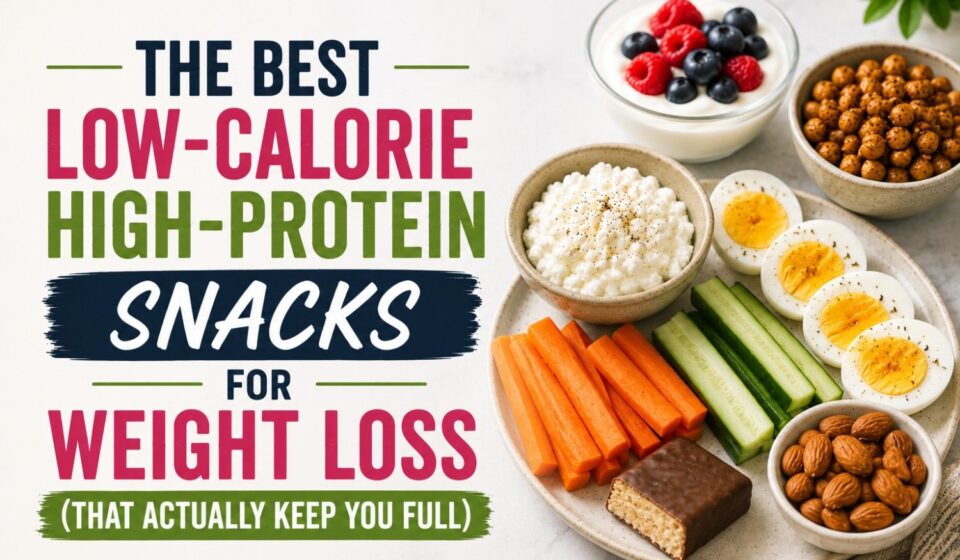
Greek Yogurt (plain, 0% or 2%)
- Per 200g serving: 17–20g protein, 100–130 calories
- One of the best protein-per-calorie ratios of any food
- Add berries for flavor and fiber without significant calories
- Choose plain over flavored — flavored versions contain 15–25g of added sugar
Cottage Cheese

- Per 200g serving: 22–25g protein, 160–180 calories
- Casein protein (slow-digesting) — keeps you fuller for longer than most other protein sources
- Works sweet (with fruit and honey) or savory (with salt, pepper, cucumber)
- Often overlooked — one of the most underrated weight loss foods available
String Cheese / Babybel
- Per 2 pieces: 12–14g protein, 140–160 calories
- Requires zero preparation
- Portable, doesn’t require refrigeration for several hours
- Pair with a piece of fruit for added fiber and satiety
Hard-Boiled Eggs
- Per 2 eggs: 12g protein, 140 calories
- Buy pre-made from grocery stores or batch cook Sunday
- Pair with a small amount of mustard or hot sauce
- The most portable complete protein snack available
Canned Tuna (pull-tab)
- Per can (~85g): 20–25g protein, 90–100 calories
- The highest protein-to-calorie ratio of any convenient snack
- Eat directly from the can with a fork — or on a few whole grain crackers
- Pairs well with lemon juice, mustard, or hot sauce
Protein Shake / Bar
- Shake: typically 25–30g protein, 120–160 calories (powder + water)
- Bar: typically 15–20g protein, 180–220 calories
- Most convenient option when nothing else is available
- Choose bars with under 8g sugar and over 15g protein
- Best options: Quest bars, RXBARs, Built bars
Tier 2: Minimal Preparation (Under 5 Minutes)
Edamame (frozen, microwaved)
- Per cup (shelled): 17g protein, 190 calories
- Microwave frozen edamame in bag for 3 minutes, add salt
- High in fiber alongside protein — exceptional satiety per calorie
- The pod-popping ritual naturally slows eating, supporting satiety signals
Smoked Salmon + Cream Cheese + Cucumber
- Per 60g salmon + 1 tbsp cream cheese: 15g protein, 160 calories
- No cooking — just slicing cucumber and assembling
- Omega-3 fatty acids alongside protein
- Genuinely satisfying and flavorful
Deli Turkey or Chicken Roll-Ups
- Per 6 slices turkey (90g): 18g protein, 90 calories
- Roll slices around cucumber strips, bell pepper, or mustard
- Zero cooking, minimal preparation
- Choose low-sodium versions — regular deli meat is high in sodium
Tuna + Crackers
- Canned tuna + 5–6 whole grain crackers: 22g protein, 200 calories
- Takes 2 minutes to assemble
- The combination of protein + fiber from crackers provides excellent satiety
Protein Overnight Oats
- Per serving: 20–25g protein, 250–300 calories (slightly higher but very filling)
- 50g oats + 150g Greek yogurt + 1 scoop protein powder + milk — assemble the night before
- Requires no morning preparation
- Best high-protein breakfast/snack combination available
Tier 3: Quick Cooking (5–10 Minutes)
Microwave Scrambled Eggs
- Per 3 eggs: 18g protein, 210 calories
- 2 minutes in a microwave-safe mug — whisk eggs, microwave 90 seconds, stir, 30 more seconds
- Add cheese for extra protein and flavor
Cottage Cheese Pancakes (2-Ingredient)
- Per serving (200g cottage cheese + 2 eggs): 30g protein, 260 calories
- Blend cottage cheese and eggs, cook as pancakes in a non-stick pan
- Takes 8 minutes, surprisingly filling
Edamame with Soy Sauce and Sesame
- Microwave edamame + toss with a little soy sauce and sesame oil
- 3 minutes total
- Transforms a plain snack into genuinely enjoyable eating
Best Options by Situation
For the Office
- String cheese + an apple
- Hard-boiled eggs (pre-made)
- Protein bar
- Greek yogurt cup
- Tuna pull-tab + crackers
For Travel / On the Go
- Jerky (beef, turkey, or salmon) — no refrigeration, high protein
- Protein bar
- Individual nut packs + string cheese
- Hard-boiled eggs
- Individual Greek yogurt cups (cooler bag)
Late Night Hunger
- Cottage cheese — casein protein is specifically beneficial before sleep for overnight muscle protein synthesis
- Greek yogurt with berries
- 2 hard-boiled eggs
- Small protein shake
Pre-Workout
- Greek yogurt + banana — protein + fast-digesting carbs for energy
- Protein shake
- Hard-boiled eggs + piece of fruit
Post-Workout
- Cottage cheese + fruit — casein + fast-digesting carbs
- Greek yogurt + berries
- Protein shake with milk
What to Avoid: The Worst “Healthy” Snacks
These are commonly presented as healthy snack options — but they’re poor choices for weight loss:
Granola bars: Typically 200–300 calories with 3–5g protein and 20–30g sugar. The sugar-to-protein ratio is the opposite of what you want.
Rice cakes: 35 calories each but essentially zero protein — provide volume without satiety.
Fruit alone: Nutritious but low in protein — produces quick energy without meaningful satiety. Pair fruit with a protein source.
Mixed nuts: Healthy fats but extremely calorie-dense and easy to over-consume. A “small handful” is routinely 300–400 calories. Not a good weight loss snack unless carefully portioned.
Hummus and crackers: 150–200 calories for a modest portion with only 4–6g protein — low satiety for the calorie cost.
Flavored yogurt: Often 20–25g added sugar — turns a genuinely healthy food into a dessert.
The Snack Strategy That Works
Time snacks strategically: The most effective snack timing is between meals when genuine hunger appears — typically 2–3 hours after a meal. Snacking out of boredom, habit, or proximity to food adds calories without managing actual hunger.
Prepare in advance: The snacks most likely to be eaten are the ones requiring the least effort at the moment of hunger. Pre-made hard-boiled eggs in the fridge, portioned cottage cheese, and individual yogurts require zero decision-making — making the healthy choice the easy choice.
Pair protein with fiber: The combination of protein and fiber produces the most sustained satiety. Cottage cheese + berries, tuna + whole grain crackers, Greek yogurt + apple — the fiber from fruit and whole grains extends the satiety window of the protein.
Avoid mindless snacking: Snacks eaten while watching television or scrolling a phone are consumed without full awareness — leading to larger quantities than intended. Eating snacks at a table, without screens, allows satiety signals to register properly.
Quick Reference: Best Options by Protein and Calories
| Snack | Protein | Calories | Prep |
|---|---|---|---|
| Canned tuna (1 can) | 22–25g | 90–100 | None |
| Cottage cheese (200g) | 22–25g | 160–180 | None |
| Greek yogurt (200g) | 17–20g | 100–130 | None |
| Edamame (1 cup) | 17g | 190 | 3 min |
| Deli turkey (6 slices) | 18g | 90 | None |
| Hard-boiled eggs (2) | 12g | 140 | Batch cook |
| Protein bar | 15–20g | 180–220 | None |
| String cheese (2) | 12–14g | 140–160 | None |
| Protein shake | 25–30g | 120–160 | 1 min |
| Smoked salmon (60g) | 13g | 80 | None |
The Bottom Line
The right snack does four things: provides significant protein (15–25g), keeps calories reasonable (under 200–250), genuinely reduces hunger until the next meal, and requires minimal preparation.
The best options: Greek yogurt, cottage cheese, canned tuna, hard-boiled eggs, edamame, deli turkey, and protein shakes — all available without cooking, all providing exceptional protein-to-calorie ratios.
The worst options: granola bars, flavored yogurt, rice cakes, and mixed nuts eaten without measuring — all common “healthy snack” choices that provide minimal protein and poor satiety.
For the complete dietary framework that makes snacking part of a fat loss strategy rather than an obstacle to it, our guide to how to stop hunger while dieting covers everything in one place.
What’s your go-to high-protein snack — and what made you discover it? Share in the comments.