
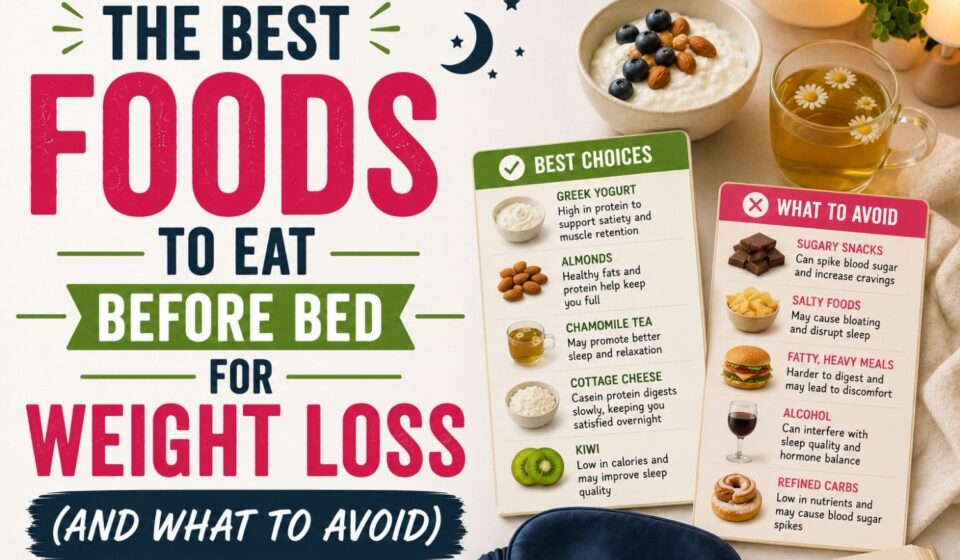

Late-night eating doesn’t have to derail your diet — if you eat the right things

Conventional diet wisdom says don’t eat before bed. But if you’re genuinely hungry at 9pm — or if you know from experience that going to bed hungry leads to worse sleep and more overeating the next day — avoiding all food isn’t a practical or effective strategy.
The question isn’t really whether to eat before bed. It’s what to eat if you do.
Some foods before bed directly support fat loss. Others undermine it. And a few are specifically beneficial for body composition overnight in ways most people don’t know about.
First: The Late-Night Eating Reality Check
As covered in our article on does eating late at night cause weight gain, the timing of eating matters less than what and how much you eat. A small, protein-rich snack before bed that fits within your daily calorie target doesn’t cause weight gain — it might actually improve overnight fat loss and muscle maintenance.
The problem with late-night eating isn’t the timing. It’s that it typically involves calorie-dense, low-protein, low-satiety foods that add excess calories on top of an already complete day.
The solution: if you eat before bed, make it count.
The Best Pre-Bed Foods for Weight Loss
1. Cottage Cheese — The #1 Pre-Bed Food
Cottage cheese is probably the single best food you can eat before bed for weight loss and body composition.
Why: Cottage cheese is high in casein protein — the slow-digesting milk protein that releases amino acids gradually over 6–8 hours. Eating casein protein before bed means your muscles have a steady supply of amino acids throughout the night — supporting muscle protein synthesis and reducing muscle breakdown during the overnight fast.
Studies have directly compared casein protein before bed to carbohydrate or no food before bed and found significantly better muscle retention and fat loss outcomes with the casein group.
The numbers: 200g cottage cheese = 22–25g protein, 160–180 calories
How to eat it: Plain with a sprinkle of salt and pepper. With a small amount of berries. With cinnamon and a drizzle of honey (adds calories but improves palatability).
2. Greek Yogurt (Plain)
Similar to cottage cheese, Greek yogurt provides a mix of casein and whey protein — not as purely casein-dominant as cottage cheese, but still an excellent overnight protein source.
The numbers: 200g plain Greek yogurt = 17–20g protein, 100–130 calories
Advantage over cottage cheese: Many people find Greek yogurt more palatable as a late snack. The slightly lower calorie content also makes it easier to fit into remaining daily calories.
How to eat it: Plain. With a small amount of berries (low sugar, high antioxidant). With a tablespoon of almond butter for added fat and satiety — note this adds significant calories.
3. A Small Protein Shake (Casein-Based)
Casein protein powder mixed with water or milk provides the same overnight muscle-supporting benefit as cottage cheese — in a form some people find more convenient late at night when they don’t want to eat solid food.
The numbers: 1 scoop casein protein + water = 25–30g protein, 120–140 calories
Practical advantage: Zero preparation. Drink and sleep.
Note: Whey protein works too, but casein is specifically preferred for overnight use due to its slow digestion. As covered in our guide to the best protein powders for weight loss, casein is the optimal pre-bed protein choice.
4. Tart Cherry Juice (Small Amount)
Tart cherry juice before bed has specific evidence for two things relevant to weight loss:
Improved sleep quality: Tart cherries are a natural source of melatonin — consuming 4–8oz of unsweetened tart cherry juice 1–2 hours before bed has been shown in multiple studies to improve sleep onset and quality.
Reduced muscle soreness and inflammation: The anti-inflammatory anthocyanins in tart cherries reduce exercise-induced muscle soreness, supporting better training recovery.
The calorie cost: 4–8oz of unsweetened tart cherry juice = 70–100 calories. This is worth it for people who train regularly and struggle with sleep.
Important: Tart cherry juice specifically (not regular cherry juice), unsweetened. Regular sweetened cherry juice would add excessive sugar.
5. A Small Handful of Almonds or Walnuts
Nuts before bed provide:
- Protein and healthy fats that slow digestion
- Magnesium — which supports sleep quality and muscle relaxation
- Melatonin (particularly walnuts) — though in small amounts
The caveat: Nuts are extremely calorie-dense. A “small handful” is approximately 150–180 calories for almonds and 185 calories for walnuts. This is easy to over-consume — measure and portion carefully before eating.
Best approach: A small, pre-portioned amount (10–12 almonds or 7–8 walnut halves) eaten slowly and deliberately. Not a bag on the couch.
6. Eggs (Hard-Boiled or Scrambled)
A small serving of eggs — 1–2 hard-boiled eggs or a 2-egg microwave scramble — provides good protein with minimal calories and essentially zero sugar.
The numbers: 2 eggs = 12g protein, 140 calories
Practical advantage: Hard-boiled eggs prepared in advance require zero cooking late at night.
Particularly useful for: People who need genuine food (not just a snack) late at night — eggs provide real satiety from protein and fat with minimal caloric cost.
7. Kiwi
This might be the most surprising entry. Multiple studies have found that eating 2 kiwi fruits before bed (1 hour before sleep) significantly improves:
- Time to fall asleep
- Total sleep duration
- Sleep quality
The mechanism appears to involve the high antioxidant content of kiwi and its serotonin precursor content (serotonin is converted to melatonin).
The numbers: 2 kiwis = 90 calories, 4g fiber, minimal protein
Best combined with: A small protein source (cottage cheese, Greek yogurt) — the kiwi addresses sleep quality, the protein addresses overnight muscle maintenance.
What to Avoid Before Bed
High-Sugar Foods and Refined Carbohydrates
Sugar and refined carbohydrates before bed:
- Spike blood sugar and insulin at a time when insulin sensitivity is lowest
- Promote fat storage through the elevated insulin environment
- Can disrupt sleep architecture through blood sugar fluctuations
- Provide empty calories without satiety, often leading to more snacking
Avoid: Ice cream, cookies, chips, crackers, sugary cereals, sweetened beverages, candy, pastries.
Large Meals
Eating a large meal close to bedtime:
- Diverts blood flow to digestion rather than sleep processes
- Can cause acid reflux, particularly when lying down
- Raises core body temperature (through the thermic effect of food) when the body should be cooling for sleep
- May disrupt sleep quality through digestive activity
If dinner is late, allow at least 2–3 hours before sleeping.
Alcohol
Alcohol before bed is one of the most common sleep disruptors — it may help you fall asleep faster, but dramatically worsens sleep architecture, reduces REM sleep, and causes more frequent awakenings in the second half of the night.
Poor sleep worsens every aspect of weight management — as covered in our article on why sleep is the most underrated weight loss tool. Alcohol “as a sleep aid” is counterproductive.
Caffeine (Including Chocolate)
Caffeine’s half-life is 5–6 hours — coffee at 6pm is still active at midnight. This includes the caffeine in dark chocolate (30–60mg per serving), which many people don’t account for.
Caffeine before bed reduces sleep quality even when it doesn’t prevent sleep onset — impairing the deep sleep phases that matter most for metabolic health and weight management.
High-Sodium Foods
A high-sodium late meal causes overnight fluid retention that shows up on the scale the next morning — which, while not fat, can be discouraging and mask genuine fat loss progress. If you’re tracking morning weight, a late high-sodium meal produces artificially elevated readings.
The Ideal Pre-Bed Eating Strategy
If you’re hungry before bed:
- Choose casein protein first (cottage cheese, Greek yogurt, casein shake)
- Add kiwi or tart cherry juice for sleep quality benefit if desired
- Keep total pre-bed calories under 200–250 to fit within daily targets
- Avoid sugar, refined carbs, alcohol, and caffeine
If you’re not hungry but have remaining daily protein to hit: A small cottage cheese or casein shake serves double duty — hitting protein targets while actively supporting overnight muscle maintenance.
If you’re not hungry and have hit your daily targets: Nothing before bed is fine. The “must eat before bed” framing is a myth — only eat if genuinely hungry or if you have specific protein targets to hit.
The Overnight Benefit of Pre-Bed Protein
The research on pre-sleep protein is clear enough to be practically relevant:
- Pre-sleep casein protein supplementation consistently improves overnight muscle protein synthesis
- Morning-measured resting metabolic rate is higher after pre-sleep protein consumption
- People consuming casein before bed show better body composition outcomes over 12-week periods compared to carbohydrate pre-sleep feeding
This isn’t a dramatic effect — but for people doing strength training and trying to optimize body composition alongside fat loss, the pre-bed casein habit is a legitimate marginal advantage.
The Bottom Line
The best foods before bed for weight loss:
- Cottage cheese — the most evidence-backed pre-bed choice for body composition
- Greek yogurt — similar benefit, slightly more palatable for many people
- Casein protein shake — convenient, effective, zero prep
- Tart cherry juice (small amount) — specific sleep quality benefit
- Almonds or walnuts — portioned carefully
- Eggs — good protein, minimal calories
- Kiwi — surprising sleep quality evidence
Avoid: Sugar, refined carbs, alcohol, caffeine, large meals, high-sodium food.
The key principle: If you eat before bed, make it protein-dominant, keep it modest in total calories, and choose foods that actively support overnight recovery rather than simply adding calories to the day.
For the complete dietary framework that makes pre-bed eating part of a fat loss strategy rather than an obstacle to it, our guide to how to get rid of belly fat covers everything in one place.
Do you eat before bed — and have you found certain foods affect your sleep or next-morning weight more than others? Share in the comments.