
Already on Ozempic or considering it? Here’s exactly how to eat to maximize your results

Ozempic (semaglutide) is one of the most powerful weight loss tools available — but it’s not a magic pill that works regardless of what you eat. The right dietary approach alongside Ozempic can accelerate fat loss significantly, reduce side effects, and produce results that last. The wrong approach wastes the medication’s potential and produces unnecessary nausea, fatigue, and slower progress.
This guide covers exactly what to eat on Ozempic, what to avoid, and how to structure your diet to get the most out of the medication.
How Ozempic Works — And Why Diet Still Matters
Ozempic is a GLP-1 receptor agonist — it mimics a hormone that regulates appetite, slows gastric emptying, improves insulin sensitivity, and signals satiety to the brain.
The practical effects:
- Significantly reduced appetite — many people feel satisfied with much smaller portions
- Slower digestion — food stays in the stomach longer, extending fullness
- Reduced cravings, particularly for high-fat and high-sugar foods
- Improved blood sugar regulation — reduced insulin spikes from carbohydrates
Despite these powerful appetite-suppressing effects, Ozempic doesn’t eliminate the importance of dietary quality. What you eat affects:
- How much weight you lose and the quality of that loss (fat vs. muscle)
- The side effects you experience (nausea is significantly worse with certain foods)
- How you feel on the medication
- Whether the weight loss is sustainable long-term
The Most Important Priority: Adequate Protein
This cannot be overstated: protein is the most critical dietary variable for people on Ozempic.
Here’s why: Ozempic dramatically reduces appetite — many people can barely eat. When total food intake drops significantly, the body needs a strong signal to preserve muscle rather than burning it alongside fat. Without adequate protein, a large proportion of weight lost on Ozempic can come from muscle rather than fat.
Research on semaglutide has found significant lean mass loss alongside fat loss in some users — primarily in those who weren’t intentional about protein intake.
Target: 0.8–1.2g of protein per pound of bodyweight per day.
On Ozempic, where total food intake may be significantly reduced, hitting protein targets requires intentional prioritization at every meal and snack.
As covered in our guide to how much protein you actually need per day, protein is the most important dietary variable for body composition quality during fat loss — and this applies with greater urgency when appetite suppression limits total intake.
Best protein sources on Ozempic (soft, easy to digest):
- Greek yogurt and cottage cheese
- Eggs (scrambled, soft-boiled)
- Fish (soft, gentle on the stomach)
- Chicken (well-cooked, tender)
- Protein shakes (particularly useful when appetite is very low)
- Lentils and beans
What to Eat on Ozempic: The Optimal Diet
Prioritize Nutrient-Dense Whole Foods
With reduced appetite, every calorie counts more — there’s less room for nutritionally empty food. The foods that should fill the smaller portions you’re eating:
Lean proteins: Chicken, fish, eggs, Greek yogurt, cottage cheese, legumes — at every meal
Non-starchy vegetables: Spinach, zucchini, cucumber, broccoli (cooked soft), carrots, tomatoes — provide volume, fiber, and micronutrients at minimal caloric cost
Low-glycemic carbohydrates: Oats, sweet potato, brown rice, lentils — provide sustained energy without the blood sugar spikes that can cause discomfort on Ozempic
Healthy fats in moderation: Avocado, olive oil, nuts — important for hormone production and fat-soluble vitamin absorption, but calorie-dense so portions matter
Focus on Soft, Easy-to-Digest Foods
Ozempic significantly slows gastric emptying — food stays in the stomach much longer than usual. This means:
- Hard-to-digest foods cause more discomfort
- Large portions feel overwhelming
- Rich, fatty foods sit in the stomach uncomfortably
Best textures and preparations on Ozempic:
- Soft, well-cooked proteins
- Cooked vegetables rather than raw
- Soups and stews
- Smoothies with protein powder when solid food is unappealing
- Yogurt, cottage cheese
- Well-cooked eggs
Eat Small, Frequent Portions
Rather than three large meals, eating smaller amounts more frequently works better with Ozempic’s gastric slowing effect:
- 4–5 small meals or snacks throughout the day
- Stop eating as soon as you feel satisfied — not “full,” satisfied
- Give food more time to register before eating more (the slow gastric emptying means fullness registers more slowly)
Stay Very Well Hydrated
Hydration is particularly important on Ozempic because:
- Nausea (a common side effect) is worsened by dehydration
- Reduced food intake means less water from food
- Constipation (another common side effect) is significantly worse without adequate hydration
Aim for 2.5–3.5 liters of water per day. Sipping consistently throughout the day rather than drinking large amounts at once is more comfortable with slowed gastric emptying.
What to Avoid on Ozempic
High-Fat Fried Foods
Fatty, fried foods are the primary trigger for Ozempic-related nausea and digestive discomfort. Fat takes longest to digest, and slowed gastric emptying + high fat = food sitting in the stomach uncomfortably for extended periods.
Avoid:
- Fried chicken, french fries, fried fish
- Heavy cream sauces
- Fast food generally
- Pizza with extra cheese and processed toppings
- Full-fat processed meats
High-Sugar Foods and Drinks
Ozempic improves insulin sensitivity and reduces blood sugar spikes — but consuming high amounts of sugar can still cause blood sugar fluctuations that lead to energy crashes and discomfort.
Additionally, sugar-sweetened beverages provide significant calories without contributing to the protein targets that matter most.
Avoid:
- Sodas and sweetened beverages
- Candy and sweets in large amounts
- Pastries and high-sugar baked goods
- Sweetened coffee drinks
Alcohol
Alcohol on Ozempic requires specific attention:
- Ozempic lowers blood sugar — combined with alcohol’s blood sugar-lowering effect, hypoglycemia risk increases
- Alcohol is processed differently when gastric emptying is slowed — intoxication may come on faster and feel different
- Alcohol contributes empty calories that compete with protein and nutrient-dense food in a reduced appetite environment
If drinking alcohol, do so in moderation, with food, and with awareness that effects may be amplified.
Very Large Portions
With Ozempic slowing gastric emptying, eating portions that were normal before the medication can cause significant discomfort. Learning to eat until satisfied (not full) and stopping is essential.
Eating past satisfaction on Ozempic causes nausea and uncomfortable fullness that can last hours — because the food literally can’t leave the stomach at the normal rate.
Raw Vegetables in Large Amounts
Raw vegetables are healthy — but their high fiber content combined with Ozempic’s slowed digestion can cause significant bloating, gas, and discomfort in some people. Cooking vegetables until soft reduces this issue while maintaining nutritional value.
Managing Side Effects Through Diet
Nausea (Most Common Side Effect)
Dietary strategies that reduce Ozempic nausea:
- Eat smaller portions more frequently
- Avoid high-fat, fried, and very rich foods
- Stay well hydrated (sip continuously)
- Eat slowly
- Avoid lying down immediately after eating (sit upright for 30–60 minutes)
- Ginger tea or ginger supplements have evidence for nausea reduction
- Bland foods (crackers, plain rice, boiled chicken) when nausea is significant
Constipation
Constipation is common with Ozempic due to slowed gut motility:
- Adequate hydration is the most important intervention
- Adequate fiber from vegetables and whole grains
- Daily movement — even walking significantly improves gut motility
- Psyllium husk supplement if needed
Fatigue
Some people experience fatigue, particularly early in treatment:
- Ensure calorie intake isn’t too low — severely reduced intake can cause fatigue beyond what Ozempic itself produces
- Adequate protein supports energy levels
- Adequate iron and B12 — reduced food intake can create deficiencies that contribute to fatigue
The Strength Training Imperative
For anyone on Ozempic, strength training is essential — not optional.
The muscle loss risk with GLP-1 medications when protein intake is inadequate or activity is low is real and significant. Building and maintaining muscle on Ozempic requires:
- Adequate protein (as above)
- Consistent strength training — 3 sessions per week minimum
The combination of Ozempic’s appetite suppression + high protein + strength training produces the ideal fat loss outcome: significant fat loss with muscle preservation or development.
As covered in our guide to cardio vs. weights for fat loss, strength training is the most important exercise for body composition — and this is amplified when appetite suppression limits total calorie intake.
How Quickly Will This Work?
With optimized diet alongside Ozempic:
Week 1–4: Appetite reduction noticeable. Initial weight loss often 2–4 lbs as glycogen and fluid normalize alongside beginning fat loss.
Month 1–3: Significant fat loss building. Many people lose 4–8 lbs per month in this phase with the combination of reduced appetite and intentional dietary choices.
Month 3–6: Continued progress, adaptation to the medication’s effects. Body composition improving significantly with strength training and adequate protein.
Beyond 6 months: Ongoing fat loss toward goal weight. Dietary habits established during this period become the foundation for maintenance.
Average weight loss in clinical trials of semaglutide (Wegovy dose): approximately 15% of body weight over 68 weeks. Dietary optimization and exercise can push this toward or beyond the higher end of the range.
Not Yet on Ozempic? Here’s How to Find Out If You Qualify
If you’re considering GLP-1 medication like Ozempic or Wegovy for weight loss — or if you’ve been struggling to lose weight despite dietary effort — ClinicSecret connects you with licensed physicians who evaluate whether prescription weight loss treatment is appropriate for your specific situation.
[Check if you qualify at ClinicSecret →]
This is a paid partnership. ClinicSecret is a licensed telehealth provider. Medication is only prescribed following a medical consultation and is not guaranteed.
The Bottom Line
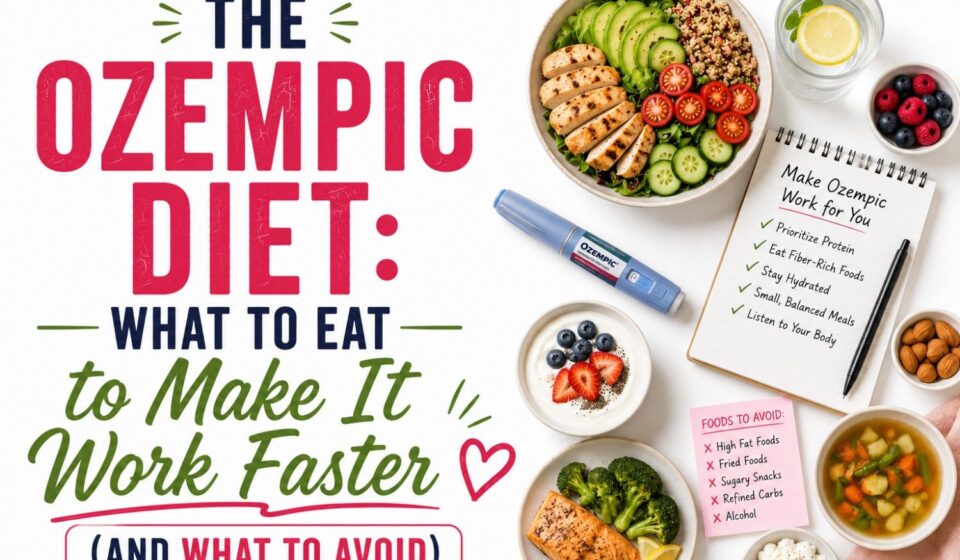
The Ozempic diet that maximizes results:
Eat:
- High protein at every meal (0.8–1.2g per pound of bodyweight)
- Soft, easy-to-digest proteins (eggs, fish, Greek yogurt, cottage cheese)
- Cooked vegetables (softer than raw, easier on slowed digestion)
- Low-glycemic whole food carbohydrates
- Small, frequent portions rather than large meals
- 2.5–3.5 liters of water daily
Avoid or minimize:
- Fried and high-fat foods (primary nausea trigger)
- High-sugar foods and beverages
- Alcohol (amplified effects, blood sugar risk)
- Large portions (gastric discomfort)
- Raw vegetables in large amounts
Add:
- Strength training 3x per week (muscle preservation)
- Daily walking (gut motility, fat loss, mental health)
The medications reduce appetite — the dietary choices determine what you do with that reduced appetite. Optimize those choices and the results can be remarkable.
For the foundational fat loss framework that works alongside Ozempic, our guide to how to get rid of belly fat covers everything in one place.
Are you on Ozempic and have found specific foods that work well or trigger side effects? Share in the comments — real experience from people on GLP-1 medications is invaluable for others starting their journey.