

Tracking macronutrients instead of just calories — here’s what it is, how it works, and who it’s actually for

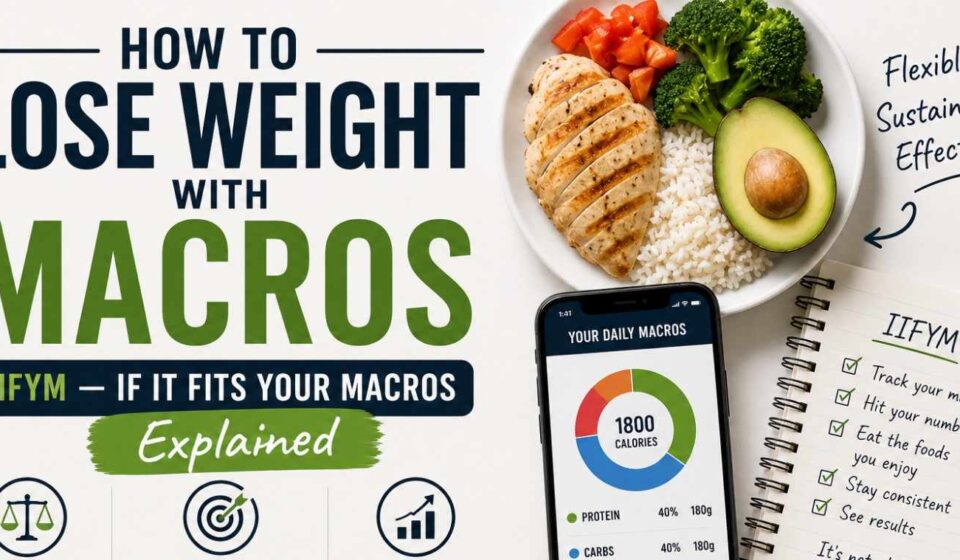
Macro tracking — short for macronutrient tracking — has become one of the most popular dietary approaches in fitness communities. The philosophy, often called IIFYM (“If It Fits Your Macros”), is straightforward: hit your daily targets for protein, carbohydrates, and fat, and the specific foods you eat matter less than meeting those numbers.
It’s more flexible than traditional calorie counting, more structured than intuitive eating, and has genuine evidence behind it for both fat loss and muscle building when done well.
Here’s the complete, honest guide.
What Are Macronutrients?
Macronutrients are the three main categories of nutrients that provide calories:
Protein — 4 calories per gram. Supports muscle building and repair, is the most satiating macronutrient, and has the highest thermic effect (your body burns more calories digesting it than any other macronutrient).
Carbohydrates — 4 calories per gram. The body’s preferred energy source. Includes sugars, starches, and fiber.
Fat — 9 calories per gram. Supports hormone production, vitamin absorption, and provides long-lasting satiety.
Every food you eat contains some combination of these three macronutrients — and every calorie comes from one of them. Alcohol contains 7 calories per gram but is not a macronutrient in the nutritional sense.
How Macro Tracking Differs From Calorie Counting
Traditional calorie counting tracks only total calories — it treats 200 calories of chicken identically to 200 calories of cookies.
Macro tracking tracks how those calories are distributed between protein, carbohydrates, and fat. It recognizes that the same total calorie intake produces very different body composition outcomes depending on the macronutrient breakdown.
Why this matters:
A diet where most calories come from protein and fiber-rich carbohydrates produces:
- Better hunger management (protein is most satiating)
- More fat loss relative to muscle loss during a deficit
- Better insulin sensitivity
- Higher thermic effect (more calories burned through digestion)
A diet where most calories come from fat and refined carbohydrates — at the same total calorie count — produces worse outcomes across all these measures.
Macro tracking optimizes for body composition, not just weight loss.
Setting Your Macros for Fat Loss
This is where macro tracking gets specific — and where most guides either oversimplify or overcomplicate.
Step 1: Set your calorie target
As covered in our guide to how to lose weight with a calorie deficit, start with your TDEE (total daily energy expenditure) and subtract a moderate amount for fat loss. This total becomes your daily calorie budget.
Step 2: Set protein first
Protein is the most important macronutrient for fat loss — it deserves to be set first and treated as non-negotiable.
Target: 0.7–1g per pound of bodyweight. For a 160 lb person: 112–160g per day.
Protein calories = protein grams × 4
Step 3: Set fat
Fat supports hormone production, vitamin absorption, and satiety. Too little fat impairs these functions.
A reasonable starting point: 25–35% of total calories from fat.
Fat calories = total calories × 0.30 (approximately) Fat grams = fat calories ÷ 9
Step 4: Fill remaining calories with carbohydrates
Remaining calories after protein and fat are accounted for go to carbohydrates.
Carb calories = total calories – protein calories – fat calories Carb grams = carb calories ÷ 4
Example for a 160 lb person targeting fat loss:
- Calorie target: 1,800 calories
- Protein: 140g (560 calories)
- Fat: 60g (540 calories)
- Carbohydrates: 175g (700 calories)
These are approximate starting targets — individual adjustment based on results, preferences, and activity level is normal and expected.
The IIFYM Philosophy
IIFYM — If It Fits Your Macros — emerged as a response to the rigid “clean eating” culture that labeled specific foods as good or bad.
The core idea: any food can fit into a fat loss diet if it fits within your macro targets for the day. A small portion of ice cream that fits your carbohydrate and fat targets is nutritionally equivalent to the same number of macro grams from sweet potato or oats.
This flexibility is genuinely appealing — no food is permanently off-limits, social situations become navigable, and the psychological deprivation of rigid dieting is reduced.
The legitimate appeal of IIFYM:
- Greater dietary flexibility and sustainability
- No food-based guilt or moral weight attached to eating choices
- Compatible with social eating, travel, and real life
The important caveats:
IIFYM taken literally — eating anything as long as the numbers add up — ignores food quality factors that matter beyond macros:
Fiber: A macro breakdown achieved through processed food will typically have far less fiber than one achieved through whole foods. Less fiber means less satiety, worse gut health, and faster return of hunger.
Micronutrients: Vitamins, minerals, and phytonutrients are not tracked in macro counting. A diet that hits macro targets through processed food can be deficient in nutrients that matter for metabolic health.
Satiety per calorie: The same macro numbers from different food sources produce very different hunger outcomes. A portion of processed carbohydrates and a portion of oats might contribute the same carb grams, but oats’ higher fiber content produces significantly greater and longer-lasting satiety.
The balanced approach: Use IIFYM’s flexibility as a framework for 80–90% of eating, built primarily around whole foods that happen to fit macro targets — with genuine flexibility for the remaining meals.
Who Macro Tracking Works Best For
Macro tracking is particularly well-suited for:
People who are already comfortable with calorie tracking and want more nuance than just total calories.
People who want to simultaneously lose fat and build or maintain muscle — where protein targets specifically matter.
People who enjoy data and find tracking motivating rather than stressful.
Athletes and people who train seriously and want to optimize performance alongside body composition.
People who’ve tried strict diets and found the food restrictions unsustainable — IIFYM’s flexibility genuinely helps here.
Macro tracking may not be the best fit for:
People who find food tracking stressful or anxiety-inducing. For these individuals, the intuitive approaches in our guide to how to lose weight without counting calories will produce better outcomes.
People with a history of disordered eating — the focus on numbers can be counterproductive in this context.
People who want a simple approach without calculations.
Complete beginners — starting with simpler habits (protein first, more vegetables, less sugar) often makes more sense before adding the complexity of macro targets.
Practical Macro Tracking Tips
Use a tracking app. MyFitnessPal and Cronometer both track macros automatically once foods are logged. The database covers most foods and has barcode scanning for packaged items.
Pre-log your day in the morning. Logging meals before eating rather than after gives you the ability to adjust — if you’re over on carbs at lunch, you can compensate at dinner. After-the-fact logging is just recording, not managing.
Weigh food, at least initially. Eyeballing portions introduces significant error — particularly for calorie-dense foods like nuts, oils, and cheese. A kitchen scale eliminates this error and calibrates your visual estimates over time.
Prioritize protein targets above all else. On days when hitting all three targets precisely isn’t possible, hitting the protein target is the non-negotiable. Carbs and fat can be somewhat flexible; protein shouldn’t be.
Plan for social eating. Before a restaurant meal or social event, look at the menu in advance and estimate macros where possible. Build buffer into the day’s other meals. Imperfect estimation is fine — perfect shouldn’t be the goal.
Track for adherence, not perfection. Being within 5–10g of your targets is success. Spending significant time trying to hit exact numbers down to the gram is unnecessary and counterproductive.
Macro Tracking vs Other Approaches
vs Calorie counting: More information, more nuance, better body composition outcomes, more setup required.
vs Intuitive eating: More structured, better for people who benefit from data, less flexible, requires more ongoing effort.
vs Keto: IIFYM allows any macronutrient distribution — people can do low-carb IIFYM or higher-carb IIFYM depending on preference.
vs The plate method: Less precise but far simpler. The plate method approximates good macro distribution without any counting.
The right approach is the one you’ll actually maintain consistently over months. As covered in our article on how to lose weight with a calorie deficit, any approach that creates a sustainable deficit produces fat loss — the question is which approach you can sustain.
Common Macro Tracking Mistakes
Setting protein too low. The most consequential macro error. Protein should be set first and treated as the priority target.
Obsessing over hitting exact numbers. Close is good enough. Perfect is the enemy of consistent.
Ignoring food quality entirely. Hitting macro targets through predominantly processed food ignores fiber, micronutrients, and satiety factors that matter for health and sustainable fat loss.
Not adjusting targets as weight changes. As weight decreases, calorie and macro targets need updating — recalculate every 10–15 lbs.
Tracking only on “good” days. Like any dietary approach, selective tracking produces selective data. Tracking consistently — including difficult days — provides the honest information needed to make good adjustments.
The Bottom Line
Macro tracking is a more sophisticated and more flexible approach to dietary management than simple calorie counting — and for the right person, it produces excellent fat loss results alongside better muscle preservation and body composition outcomes.
It works best when built around whole foods that happen to fit macro targets, with flexibility built in for real life. It works worst when taken as license to eat any food as long as the numbers add up — ignoring food quality factors that matter beyond macros.
For the complete fat loss framework that macro tracking sits within — including exercise, sleep, and stress management alongside dietary approach — our guide to how to get rid of belly fat covers everything in one place.
Do you track macros — and have you found it more or less sustainable than simple calorie counting? Share your experience in the comments.