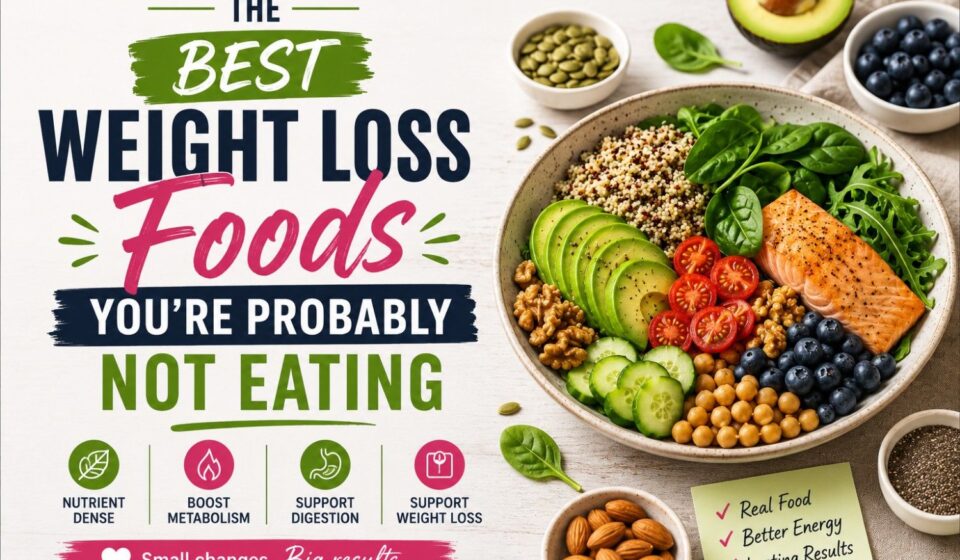

Everyone knows about chicken breast and broccoli. Here are the underrated foods that actually make fat loss easier.

Weight loss food lists are all the same. Chicken breast. Broccoli. Brown rice. Egg whites. Spinach. The usual suspects repeated endlessly.
These are fine foods. But they’re not the most interesting, the most effective, or the most underrated options available. This guide covers the genuinely underrated weight loss foods — the ones that provide exceptional satiety, outstanding nutrition, or specific metabolic benefits that most people are completely missing.
1. Cottage Cheese
Why it’s underrated: Cottage cheese fell out of fashion somewhere in the 1990s and never fully recovered. Most people associate it with dated diet culture rather than a genuinely exceptional food.
Why it’s exceptional for fat loss:
- 25g of protein per cup at only 180–200 calories
- Casein protein (slow-digesting) — keeps you full for hours
- Very low calorie density — large volume, minimal calories
- Extremely versatile — sweet (with berries and honey), savory (with salt and pepper), or as a recipe ingredient
A cup of cottage cheese as a late-night snack before bed provides casein protein that supports overnight muscle protein synthesis — relevant for people doing strength training.
How to eat it: With berries and a drizzle of honey. With diced cucumber, cherry tomatoes, and black pepper. Blended smooth as a base for dips. Mixed into scrambled eggs for extra protein.
2. Sardines
Why they’re underrated: Sardines are unfairly maligned. Most people who haven’t eaten them in adulthood have a childhood aversion that was never re-evaluated.
Why they’re exceptional for fat loss:
- 25g of protein per can at approximately 190 calories
- Omega-3 fatty acids (EPA and DHA) that reduce inflammation and directly support fat metabolism
- No cooking required — pull the tab and eat
- One of the cheapest high-protein foods available ($1–2 per can)
- High in calcium, vitamin D, and B12
Sardines in olive oil or tomato sauce are less intensely flavored than most people expect. On whole grain crackers with a squeeze of lemon, they’re genuinely good.
How to eat them: On crackers with mustard. Mashed with avocado on toast. In pasta with olive oil and capers. Straight from the can as a snack.
3. Lentils
Why they’re underrated: Lentils are often seen as health food for vegans — not something for people who eat meat and care about protein.
Why they’re exceptional for fat loss:
- 18g of protein per cooked cup at approximately 230 calories
- 16g of fiber per cup — one of the highest fiber foods available
- Extremely high satiety per calorie — multiple studies find lentils among the most filling foods tested
- Cook in 20 minutes without soaking
- Extraordinarily cheap ($0.10–0.15 per serving)
- Stabilize blood sugar for hours after eating
The combination of protein + fiber in lentils produces satiety that persists for 4–6 hours — significantly longer than most other meals at equivalent calories.
How to eat them: Red lentil soup (20 minutes to make). Green lentil salad with olive oil and lemon. Mixed into ground meat dishes. As a base for Buddha bowls.
4. Greek Yogurt (Full Fat, Plain)
Why it’s underrated: Most people eat flavored low-fat Greek yogurt — which has added sugar that undermines the benefits. Plain full-fat Greek yogurt is significantly more satisfying and nutritious.
Why it’s exceptional for fat loss:
- 17–20g of protein per cup
- Probiotics that support gut health and may directly influence weight management through the gut-brain axis
- High calcium content associated with reduced fat absorption
- Full fat version provides greater satiety and better hormonal profile than low fat
- Extremely versatile
The fat content in full-fat Greek yogurt is not the enemy — it’s what makes it genuinely satisfying and what prevents the need to add significant amounts of other food afterward.
How to eat it: With berries and a small amount of honey. As a base for dips (mixed with garlic and herbs). As a substitute for sour cream. With a handful of walnuts.
5. Edamame
Why it’s underrated: Most people think of edamame as a sushi restaurant appetizer, not a regular part of their diet.
Why it’s exceptional for fat loss:
- 17g of protein per cup (shelled) at 190 calories
- 8g of fiber per cup
- Complete plant protein (all essential amino acids)
- Available frozen — microwave in bag in 3 minutes
- Genuinely satisfying to eat (the pod-popping ritual slows eating down)
Edamame is one of the most convenient high-protein snacks available — buy frozen in the shell, microwave, add salt, eat. No preparation beyond that.
How to eat it: As a snack with sea salt. Added to salads. Mixed into stir-fries. As a side dish.
6. Kimchi and Fermented Vegetables
Why they’re underrated: Kimchi and other fermented vegetables (sauerkraut, pickles in brine) are often dismissed as condiments rather than recognized as functionally significant foods.
Why they’re exceptional for fat loss:
- Contain live bacteria that support gut microbiome diversity
- Emerging research links gut microbiome composition to body weight regulation and fat storage
- Extremely low calorie (20–30 calories per serving) while providing significant flavor and volume
- Reduce the glycemic response of meals they’re eaten with
- May directly reduce fat accumulation through microbiome effects
Kimchi consumption has been associated with reduced body weight in multiple Korean population studies — though whether this is causal or cultural is debated.
How to eat it: With eggs at breakfast. As a side dish with any protein. On rice bowls. In quesadillas. Mixed into fried rice.
7. Tart Cherry Juice
Why it’s underrated: Juice is generally off-limits on weight loss — but tart cherry juice is a specific exception with meaningful evidence.
Why it’s exceptional for fat loss:
- Reduces muscle soreness and speeds recovery after exercise — allowing more consistent training
- Improves sleep quality through natural melatonin content — and better sleep directly supports fat loss
- Anti-inflammatory effects that reduce the cortisol environment that promotes belly fat
The key: tart cherry juice specifically (not regular cherry juice), unsweetened, in small amounts (4–8oz). Roughly 70–100 calories — but the sleep and recovery benefits may produce fat loss benefits that outweigh the calorie cost.
How to use it: 4–8oz before bed for sleep improvement. Before intense training sessions for recovery support.
8. Psyllium Husk
Why it’s underrated: Psyllium husk is a supplement — a fiber supplement — not a food. But its effects on weight loss are so significant it deserves inclusion.
Why it’s exceptional for fat loss:
- 1 tablespoon (5g) provides 4g of soluble fiber — more than most foods
- Mixed with water before meals, it creates a gel that significantly reduces hunger
- Reduces post-meal blood sugar spikes by 20–30%
- Reduces LDL cholesterol
- Contains almost no calories (15–20 per tablespoon)
Taking psyllium husk before meals — 1 tablespoon in a large glass of water, 15–20 minutes before eating — is one of the most effective hunger management strategies available. As covered in our guide to how to stop hunger while dieting, soluble fiber is one of the most powerful dietary tools for appetite control.
How to use it: Mixed with water (drink immediately before it gels). Added to smoothies. Mixed into oatmeal.
9. Bone Broth
Why it’s underrated: Bone broth is often dismissed as a wellness trend.
Why it’s exceptional for fat loss:
- 9–10g of protein per cup at only 35–50 calories
- Extremely filling for its calorie content — the protein + warmth combination produces significant satiety
- High collagen content supports skin health during fat loss (relevant for people losing significant amounts)
- Essentially zero carbohydrates or fat
A cup of bone broth as a late afternoon snack or between-meal hunger management tool provides meaningful protein and genuine satiety at essentially no caloric cost.
How to use it: As a snack between meals. As a base for soups. In place of water when cooking grains.
10. Canned Salmon
Why it’s underrated: Most people know salmon is healthy but think of it as expensive and requiring cooking. Canned salmon changes both equations.
Why it’s exceptional for fat loss:
- 22–25g of protein per can at approximately 150–180 calories
- Higher omega-3 content than most other canned fish
- Wild-caught salmon in cans is significantly cheaper than fresh
- No cooking required
- Contains bones (soft, edible) that provide significant calcium
Canned salmon with the bones mashed in is one of the most nutritionally complete convenience foods available — high protein, omega-3 fatty acids, calcium, vitamin D, and B vitamins in one package.
How to eat it: Mixed with lemon juice and capers on crackers. As a salmon patty (mixed with egg and pan-fried). In salads. In pasta.
11. Tempeh
Why it’s underrated: Tempeh is tofu’s less popular cousin — and significantly more nutritious for weight loss.
Why it’s exceptional for fat loss:
- 31g of protein per cup — higher protein density than most animal foods per calorie
- 15g of fiber per cup
- Fermented — provides probiotic benefits alongside protein
- More satisfying texture than tofu — can be sliced and pan-fried to a meaty consistency
- Complete protein with all essential amino acids
Tempeh has a nutty, slightly earthy flavor that takes seasoning well. Marinated in soy sauce and garlic, pan-fried until crispy — it’s genuinely good and provides the protein density of meat at a fraction of the cost.
How to eat it: Pan-fried in thin slices with soy sauce and garlic. Crumbled as a ground meat substitute. In stir-fries. In grain bowls.
12. Frozen Edamame, Peas, and Mixed Vegetables
Why they’re underrated: Fresh vegetables get all the attention, but frozen vegetables are nutritionally equivalent — and dramatically more convenient.
Why they’re exceptional for fat loss:
- Frozen at peak ripeness — nutritionally equivalent to or better than “fresh” produce that’s been sitting for days
- No washing, chopping, or preparation — microwave in the bag
- Available year-round at consistent prices
- Almost impossible to overeat — extremely low calorie density
- Reduce the friction of eating vegetables to near-zero
The biggest barrier to eating enough vegetables is preparation friction. Frozen vegetables eliminate this barrier entirely. A bag of frozen edamame, peas, or stir-fry vegetables microwaved in 3 minutes has zero friction — and dramatically increases daily vegetable and fiber intake.
The Bottom Line
The most effective weight loss foods aren’t necessarily the ones that appear on every weight loss list. The foods that genuinely make fat loss easier are the ones that combine:
- High protein per calorie (cottage cheese, sardines, lentils, tempeh)
- High fiber for satiety (lentils, psyllium husk, edamame)
- Genuine convenience (canned salmon, sardines, frozen vegetables, Greek yogurt)
- Specific metabolic benefits (fermented foods, tart cherry juice, omega-3 sources)
Incorporating even 3–4 of these consistently changes the dietary experience of fat loss — from a constant battle against hunger to a genuinely manageable daily eating pattern.
For the complete dietary framework that maximizes fat loss while minimizing hunger, our guide to how to get rid of belly fat covers everything in one place.
Which of these do you already eat — and which one are you going to try? Share in the comments.