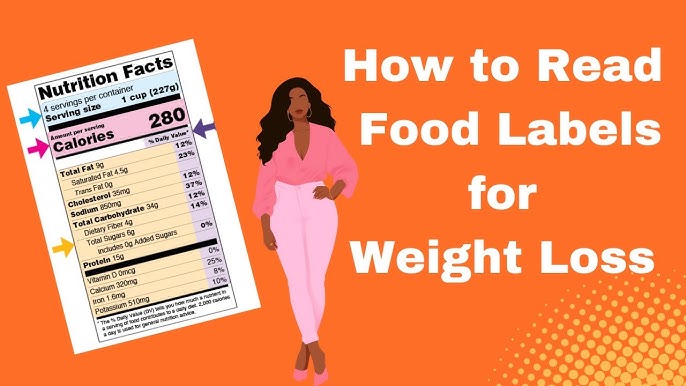
How to Read Nutrition Labels for Weight Loss (What to Look for and What to Ignore)

Most people look at the wrong numbers. Here’s what actually matters.

Nutrition labels are one of the most useful tools available for making better food choices — and one of the most misused. Most people glance at calories, maybe check the fat content, and move on. Meanwhile the numbers that actually matter for weight loss — protein, fiber, added sugar, serving size — go largely unread.
Understanding what to look for on a nutrition label takes about five minutes to learn and changes how you shop, eat, and make food decisions permanently. Here’s the complete guide.
Why Nutrition Labels Matter for Weight Loss
The food industry is extraordinarily good at making products look healthier than they are. “Low fat,” “natural,” “whole grain,” “high protein,” “sugar free” — these front-of-package claims are marketing, not nutrition guidance. The actual nutrition information is on the back, in the label.
Learning to read that label means you can see through the marketing and make decisions based on what the food actually contains — not what the manufacturer wants you to think it contains.
The Nutrition Label: A Section-by-Section Breakdown
Serving Size — Read This First, Every Time
The serving size is the most important number on the label — because every other number on the label is based on it.
Food manufacturers set serving sizes, and they are frequently unrealistically small. A bag of chips might list a serving as 1 oz (about 15 chips) — but most people eat two or three times that amount in one sitting. A bottle of juice might be labeled as 2.5 servings — meaning you need to multiply everything by 2.5 to know what’s actually in the bottle.
What to do: Before reading anything else, check the serving size and compare it to how much you’d actually eat. If you’d eat twice the serving size, mentally double every number on the label.
This single habit change — actually accounting for how much you eat relative to the serving size — reveals that many foods people consider reasonable are actually contributing far more calories, sugar, and sodium than assumed.
Calories
Calories matter for fat loss — a calorie deficit is the mechanism of fat loss regardless of dietary approach. But calories alone tell you almost nothing about whether a food is a good choice.

400 calories of lentils and vegetables produces a completely different physiological response than 400 calories of cookies. One keeps you full for hours, supports muscle, and stabilizes blood sugar. The other spikes insulin, crashes blood sugar, and leaves you hungry within an hour.
What to look for: Calories per serving in the context of what you’d actually eat, relative to the protein and fiber the food provides. A calorie-dense food with high protein and fiber can be an excellent choice. A calorie-light food with no protein or fiber can be a poor one.
The calorie density question: Ask how much food you get for the calories. 200 calories of Greek yogurt is a cup of filling, protein-rich food. 200 calories of pretzels is a small handful that does nothing for hunger.
Total Fat, Saturated Fat, and Trans Fat
Total fat is largely irrelevant as a standalone number. Dietary fat is not the enemy it was portrayed as in the low-fat diet era — it’s an essential macronutrient that supports hormone production, nutrient absorption, and satiety.
Saturated fat — the guidance here has evolved. Current research suggests that saturated fat from whole food sources (meat, dairy, eggs) has a different effect than saturated fat from processed foods. The number on the label doesn’t tell you which kind you’re getting.
Trans fat — this is the one to pay close attention to. Artificial trans fats (partially hydrogenated oils) increase cardiovascular risk and should be avoided. However, a label can claim “0g trans fat” even if the product contains up to 0.5g per serving due to rounding rules — so also check the ingredients list for “partially hydrogenated oil” even when the label says zero.
What to do: Don’t obsess over total fat. Check for trans fat and look for “partially hydrogenated oil” in the ingredients if you’re concerned.
Sodium
Sodium is worth checking — particularly for people prone to water retention, high blood pressure, or those eating a lot of processed food.
The daily recommended maximum is 2,300mg. Many processed foods deliver 500–800mg per serving — meaning two or three servings of processed food can put you at or over the daily limit before dinner.
High sodium intake directly causes water retention that shows up on the scale and creates the bloated feeling that many people experience regularly. As we cover in our article on how to lose water weight fast, reducing sodium is one of the fastest ways to drop water retention and reduce bloating.
What to look for: Under 300mg per serving for most packaged foods is reasonable. Over 600mg per serving warrants caution, particularly if you’re eating multiple servings or multiple high-sodium foods throughout the day.
Total Carbohydrates, Dietary Fiber, and Added Sugars
This section is where most of the weight loss-relevant information lives — and where most people spend the least time.
Total carbohydrates includes everything — fiber, natural sugars, added sugars, and starch. By itself it’s not very informative.
Dietary fiber is the number to look for. Fiber slows digestion, extends satiety, feeds beneficial gut bacteria, and stabilizes blood sugar. Most people eat 10–15g per day when 25–38g is recommended.
A food with 5g+ of fiber per serving is a high-fiber food worth prioritizing. As we cover throughout this blog — particularly in our article on why you’re always hungry — fiber is one of the two most powerful dietary tools for managing hunger naturally.
What to look for in fiber: Aim for foods that provide at least 3g of fiber per serving. Anything over 5g per serving is excellent.
Added sugars — this is the most important number in this section for weight loss. Added sugars are sugars that weren’t present in the original ingredients — they were added during processing.
The WHO recommends under 25g of added sugar per day. Many single food products — a flavored yogurt, a granola bar, a bottle of juice — contain more than this in one serving.
What to look for: Under 5g of added sugar per serving is good. Over 10g per serving in a snack or packaged food is worth reconsidering. Zero added sugar is ideal for most everyday foods.
This single number — added sugar — is more predictive of a food’s impact on fat loss than almost any other on the label. Our article on what happens when you cut sugar for 30 days explains exactly why added sugar is such a significant driver of belly fat and hunger.
Protein
Protein is arguably the most important macronutrient for fat loss — and its presence on the label is one of the clearest signals of whether a food will support your goals.
What to look for: For a snack, 5g+ of protein per serving is decent, 10g+ is good. For a meal, 20g+ is a strong contribution to your daily target. For a supposed “high protein” product making that claim on the front of the package, check whether the actual protein content justifies the marketing.
Many products labeled “high protein” contain 6–8g of protein — respectable, but not the 20–25g that actually moves the needle. Compare to Greek yogurt (15–20g per cup) or a can of tuna (25g) to calibrate your expectations.
The protein-to-calorie ratio is a useful quick calculation: divide protein grams by total calories. A ratio above 0.15 (15g protein per 100 calories) indicates a protein-dense food worth prioritizing.
The Ingredients List: What the Label Doesn’t Show
The nutrition label tells you how much of each nutrient is present. The ingredients list tells you what the food is actually made of — and sometimes that’s more revealing.
Ingredients are listed in order of quantity — from most to least by weight. If sugar (in any form) is in the first three ingredients of a supposedly healthy food, it’s primarily a sugar delivery vehicle regardless of what the front of the package says.
Watch for sugar aliases. Food manufacturers sometimes use multiple forms of sugar to push each one lower on the ingredients list — making it appear that less sugar is present. Common sugar aliases include: high fructose corn syrup, dextrose, maltose, sucrose, corn syrup, cane juice, agave nectar, honey, brown rice syrup, and dozens more. If several of these appear in the ingredients, the total sugar content is higher than any single one suggests.
Shorter ingredient lists are generally better. A food with five recognizable ingredients is almost always a better choice than one with thirty ingredients, half of which require a chemistry degree to pronounce.
“Whole grain” positioning matters. If “whole wheat flour” appears third on the list and “enriched wheat flour” (refined) appears first, the product is primarily made from refined grain despite the whole grain claim on the front.
Front-of-Package Claims: What They Mean and Don’t Mean
Food marketing uses specific regulated terms — but understanding what they actually mean reveals how limited they are as health signals:
“Low fat” — contains 3g or less of fat per serving. Says nothing about sugar, calories, or overall nutritional quality. Many low-fat products are high in added sugar to compensate for lost flavor.
“Reduced fat” — contains at least 25% less fat than the regular version. Again, says nothing about sugar or overall quality.
“Light” or “lite” — contains either 50% less fat or 33% fewer calories than the regular version. Can still be high in sugar or sodium.
“Natural” — has almost no regulated meaning in food labeling. Does not mean organic, additive-free, or nutritious.
“Whole grain” — the product contains some whole grain, but doesn’t specify how much. “Made with whole grain” can legally appear on a product that’s primarily refined grain.
“High protein” — no standardized definition. Check the actual protein content on the label.
“No added sugar” — genuinely useful — means no sugar was added during processing. However, the food may still contain significant natural sugars (as in fruit juice) or artificial sweeteners.
“Sugar free” — contains less than 0.5g of sugar per serving. May contain artificial sweeteners. Not necessarily a healthier choice.
A Practical Label-Reading Checklist
When evaluating any packaged food for fat loss, run through this quick checklist:
- Check serving size first — adjust all numbers based on how much you’d actually eat
- Check protein — is it meaningful (5g+ for snack, 15g+ for meal)?
- Check fiber — is it meaningful (3g+ per serving)?
- Check added sugar — is it under 5g per serving?
- Check sodium — is it under 400mg per serving?
- Scan the ingredients list — are there multiple sugar aliases? Is the list excessively long?
A food that passes all six checks is almost certainly a good choice regardless of what the front of the package claims. A food that fails several of them is probably not serving your fat loss goals regardless of how healthy it looks.
Applying This at the Grocery Store
The label-reading habit is most valuable at the grocery store — when you’re making purchasing decisions that affect the entire week’s eating.
Compare products in the same category. Put two granola bars side by side and compare their added sugar, protein, and fiber. The difference is often dramatic. Apply this to yogurts, breads, cereals, sauces, and snacks — almost always revealing that the “healthy” marketing option isn’t meaningfully better than the cheaper alternative.
Check sauces and condiments. These are where hidden sugar and sodium accumulate silently. Ketchup, BBQ sauce, teriyaki sauce, and many salad dressings are essentially sugar and sodium delivery vehicles. Checking the label once changes your purchasing decisions permanently.
The time investment pays off quickly. The first few shopping trips with active label reading take longer. After a few weeks, you’ve memorized which products are good choices and which aren’t, and the habit becomes fast and automatic.
The Bottom Line
Reading nutrition labels is one of the simplest, most effective skills for weight loss — and it takes minutes to learn. The numbers that matter most are serving size, protein, fiber, and added sugar. Everything else is secondary.
The food industry invests billions in making products look healthier than they are on the front of the package. The nutrition label on the back tells the actual story — and once you know how to read it, you can’t be fooled by the marketing.
For the complete dietary framework that this label-reading skill supports — including which foods to prioritize, what protein targets to aim for, and how to structure meals for fat loss — our guide to how to get rid of belly fat pulls everything together.
Has reading nutrition labels ever revealed something surprising about a food you thought was healthy? Share in the comments — you’re almost certainly not alone.