
Eating out doesn’t have to derail your progress — if you know what to order and what to avoid
One of the most common reasons people struggle to lose weight is that they eat well at home but fall apart when eating out. And given that the average person eats out multiple times per week, that’s a significant problem.
Restaurant meals are designed to taste extraordinary — which means generous portions, significant amounts of fat, salt, and sugar, and calorie counts that would shock most people if they knew them. A single restaurant meal can easily contain 1,500–2,000 calories, often more than a full day’s target for someone trying to lose weight.
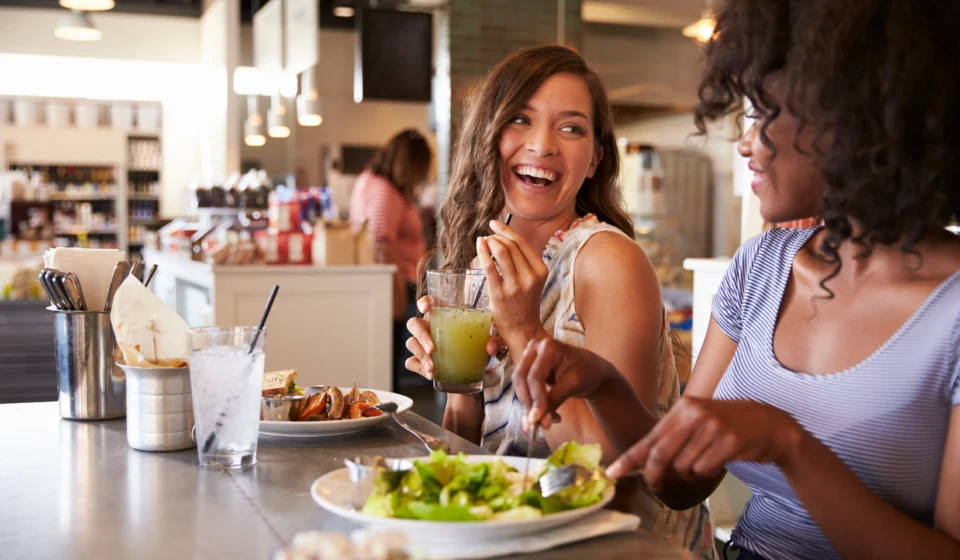
But eating out doesn’t have to derail your progress. With the right approach — which takes almost no extra effort once you understand it — you can enjoy restaurant meals regularly and still lose fat consistently.
Why Restaurant Meals Are So Calorie-Dense
Understanding the problem makes the solution clearer.
Portion sizes are enormous. Restaurant portions are typically 2–3 times larger than a home-cooked serving. The visual cue of a full plate signals “this is one meal’s worth of food” regardless of how many calories it actually contains.
Hidden fats and oils are everywhere. Restaurants cook generously with butter and oil in ways that home cooks rarely replicate. A “simple” grilled chicken dish might be basted in butter before serving. Vegetables are often sautéed in far more oil than necessary. Sauces are cream or butter-based. These additions add hundreds of invisible calories.
Bread baskets and appetizers add up before the main course arrives. Most people eat 200–400 calories of bread before their meal even comes — often without consciously registering it.
Liquid calories are everywhere. Cocktails, wine, sugary mocktails, sweetened iced tea — restaurant drinks can add 300–600 calories to a meal before food arrives.
Portions are designed for satisfaction, not health. Restaurants optimize for a satisfying, indulgent experience that keeps customers coming back — not for supporting your fat loss goals. The two objectives are not the same.
The Golden Rules for Eating Out While Losing Weight
Rule 1: Protein First
Whatever restaurant, whatever cuisine — identify the protein source on the menu and make it the anchor of your order.
Grilled fish, chicken, shrimp, lean steak, eggs, beans and legumes, tofu — these are the options that provide the satiety and muscle-preserving protein that keep you on track. Build your order around one of these and let everything else be secondary.
This single rule — protein first — restructures your restaurant ordering without requiring you to memorize calorie counts or avoid entire food categories. As we cover in our guide to how much protein you actually need per day, protein is the most important dietary variable for fat loss, and maintaining that priority at restaurants is the simplest way to stay consistent.
Rule 2: Ask for Sauces and Dressings on the Side
This is one of the highest-leverage single habits for reducing restaurant calorie intake — and it costs nothing in terms of enjoyment.
Sauces, dressings, and condiments are where restaurants hide enormous amounts of calories. A salad dressing can add 300–400 calories to an otherwise low-calorie meal. A cream sauce on pasta can double its calorie content. Ranch, caesar, honey mustard, and most creamy dressings are calorie-dense and typically applied far more generously by restaurant staff than you’d apply yourself.
Asking for them on the side lets you control the amount — dipping rather than dressing typically uses 25–30% of the amount that would otherwise be poured on.
What to order instead: Vinaigrette or olive oil and lemon as dressings. Mustard, hot sauce, or salsa as condiments. Tomato-based sauces over cream-based ones for pasta dishes.
Rule 3: Swap Sides Strategically
Most restaurant meals come with default sides — fries, white rice, mashed potato, bread — that add 300–500 calories of refined carbohydrates with minimal nutritional value.
Most restaurants will substitute these without issue:
- Fries → side salad, steamed vegetables, or roasted vegetables
- White rice → extra vegetables or a side salad
- Garlic bread → skip it or ask for it to not be brought
One side swap removes 200–400 calories from a meal while adding fiber and nutrition. It takes five seconds to ask. It’s one of the most effective restaurant fat loss habits available.
Rule 4: Skip the Bread Basket
The bread basket is automatic, free, and right in front of you while you wait for your meal — making it one of the most reliably overeaten sources of restaurant calories.
Eating 300–400 calories of bread before your main course arrives is extremely common and almost entirely mindless. The simplest solution: ask the server not to bring it, or move it to the other end of the table so it’s out of arm’s reach.
This is not about rigid dietary restriction — it’s about not passively consuming hundreds of calories before you’ve even made a conscious food choice.
Rule 5: Manage Liquid Calories
Restaurant drinks are where calorie counts can quietly become enormous.
A cocktail: 200–350 calories. A glass of wine: 120–150 calories (and most restaurant pours are generous). A sweetened iced tea: 150–250 calories. A soda: 150–200 calories.
Two drinks with a meal can add 400–700 calories before a bite of food has been eaten. For people eating out multiple times per week, liquid calories from restaurants alone can easily exceed 2,000 extra calories per week — enough to completely offset a dietary deficit.
Better options: Sparkling water with lemon. Still water. Black coffee after the meal. If you want alcohol, one drink of something lower-calorie (dry wine, spirits with soda water) rather than multiple cocktails.
As we cover in our guide to how to lose weight without counting calories, eliminating liquid calories is one of the fastest, easiest calorie reductions available — and it applies with full force in restaurant settings.
Rule 6: Don’t Arrive Hungry
Eating at a restaurant when ravenous is one of the most reliable ways to overeat — you’ll order more food, eat it faster, and have significantly less ability to make deliberate choices.
Have a small, protein-rich snack 30–60 minutes before going out to take the edge off hunger. A hard-boiled egg, some cottage cheese, a small handful of nuts — anything that reduces the urgent hunger that drives poor ordering decisions and eating the entire bread basket before the food arrives.
This is particularly useful before social events where food will be present — arriving with managed hunger rather than desperate hunger changes the entire experience.
How to Order at Different Types of Restaurants
Italian
Good choices: Grilled fish or chicken, tomato-based pasta (in a smaller portion), minestrone soup, bruschetta (in moderation), caprese salad.
Be cautious: Cream sauces (alfredo, carbonara), large pasta portions, garlic bread, antipasto plates heavy in cheese and cured meats.
Strategy: Ask for pasta dishes with less pasta and extra vegetables. Order a protein main and a side salad rather than a pasta dish as the centerpiece.
Asian (Chinese, Thai, Japanese)
Good choices: Sashimi and sushi rolls (avoid tempura and cream cheese rolls), miso soup, steamed dumplings over fried, stir-fries with protein and vegetables (ask for sauce on the side or less sauce), Thai salads.
Be cautious: Fried rice and noodle dishes (calorie-dense and typically large), heavy sauce dishes, spring rolls and egg rolls (fried), anything described as “crispy.”
Strategy: Sashimi is one of the best restaurant fat loss options available — pure protein, minimal calories. White rice in moderation is fine; fried rice is not worth the calorie cost.
Mexican
Good choices: Grilled protein (fajitas without the tortillas, grilled chicken or fish), black beans and pinto beans, salsa and pico de gallo, guacamole (in moderation — calorie-dense but nutritious), lettuce-wrap versions of tacos.
Be cautious: Chips and salsa (mindless eating — the chips add up fast), sour cream, cheese, large burritos, fried tortilla shells, loaded nachos.
Strategy: Order fajita protein over rice or in a bowl rather than wrapped in tortillas. Ask for salsa instead of sour cream. Limit chips to a small, defined portion rather than eating mindlessly from the basket.
American / Burgers and Grills
Good choices: Grilled proteins (chicken, fish, lean steak), side salads, steamed or roasted vegetables, lettuce-wrap burgers (skip the bun — most places will do this), broth-based soups.
Be cautious: Fried options (fried chicken, onion rings, fried fish), loaded burgers with multiple toppings, large portions of fries, creamy soups, oversized portions in general.
Strategy: The “half and half” approach — eat half the portion and box the rest immediately when it arrives. Restaurant portions are often designed for two meals worth of food. Eating half keeps calories reasonable and you have lunch for tomorrow.
Indian
Good choices: Tandoori proteins (chicken, fish, paneer) — grilled in the tandoor with minimal added fat, lentil-based dishes (dal — very high protein and fiber), raita, vegetable-based curries.
Be cautious: Cream-based curries (butter chicken, korma, tikka masala in their rich versions), large amounts of naan and rice, fried starters (samosas, bhajis).
Strategy: Tandoori dishes are some of the best restaurant fat loss options anywhere — lean protein cooked with spices and minimal fat. Pair with dal and a small amount of rice rather than naan for a nutritionally excellent restaurant meal.
The Half Portion Strategy
This deserves its own section because it’s one of the most universally applicable restaurant fat loss tactics.
Restaurant portions are designed for satisfaction — and typically contain 1.5–2x what you actually need to feel full. Deciding before the food arrives to eat half and box the rest removes the social pressure of a full plate in front of you and automatically reduces calorie intake without any food restriction.
Practical application:
- Ask for a to-go box when your food arrives and immediately box half
- Share a main course with someone
- Order an appetizer as your main course
- Ask if smaller/half portions are available — many restaurants offer this
The visual cue of an empty plate drives eating beyond fullness. Removing half the food removes that cue entirely.
What About Tracking Restaurant Calories?
For people who track calories, restaurant meals are notoriously difficult to estimate accurately — studies show that people underestimate restaurant meal calories by an average of 175–300 calories, even trained dietitians.
A few practical approaches:
Use the restaurant’s nutrition information if available — many chain restaurants publish calorie counts online or on their menu. These are available in MyFitnessPal for most chains.
For independent restaurants: Estimate based on the components — protein source, cooking method, sides — rather than trying to guess the whole dish.
Use a conservative estimate — assume a restaurant meal has 20% more calories than you think. If you think a dish is 600 calories, log 720.
Don’t stress the precision. As we cover in our article on how to break a weight loss plateau, imprecision in tracking is normal and manageable — the key is consistent habits over time, not perfect calorie accounting on any single meal.
Mindset: Progress Over Perfection
Eating out is part of a normal, enjoyable life — and any fat loss approach that requires you to avoid restaurants, bring your own food, or eat nothing social occasions isn’t sustainable.
The goal isn’t to make every restaurant meal perfect. It’s to make it significantly better than it would have been without any thought — and to not let one imperfect meal turn into a week of abandoning good habits.
A restaurant meal where you chose grilled salmon over pasta, water over cocktails, and vegetables over fries isn’t a diet meal — it’s a regular meal that supports your goals without feeling restrictive. That’s the target.
For the complete approach to eating well consistently in all contexts — not just restaurants — our guide to how to get rid of belly fat covers the full dietary and lifestyle framework.
The Bottom Line
Eating at restaurants while losing weight is absolutely achievable — it requires strategy, not restriction.
Protein first. Sauces on the side. Strategic side swaps. Skip the bread basket. Manage liquid calories. Don’t arrive starving. Eat half and box the rest.
These habits take seconds to apply and require no sacrifice of enjoyment. Over weeks and months of eating out regularly, they represent hundreds of calories per meal saved — without ever feeling like you’re dieting.
What’s your best strategy for eating out while trying to lose weight? Share in the comments — restaurant tips from real people are often the most practical ones.
Stop Wondering What to Eat This Week
Get my free 7-Day High-Protein Weight Loss Meal Plan delivered straight to your inbox — a simple week of satisfying, protein-focused meals designed to make healthy eating easier without complicated calorie tracking.
- 7 full days of breakfast, lunch, dinner & snacks
- One complete shopping list for the whole week
- A quick high-protein food cheat sheet
- Simple daily tips to help you stay on track
Free PDF • Delivered by email • Unsubscribe anytime
Check your inbox 💜
Your free 7-day high-protein meal plan is on its way.