
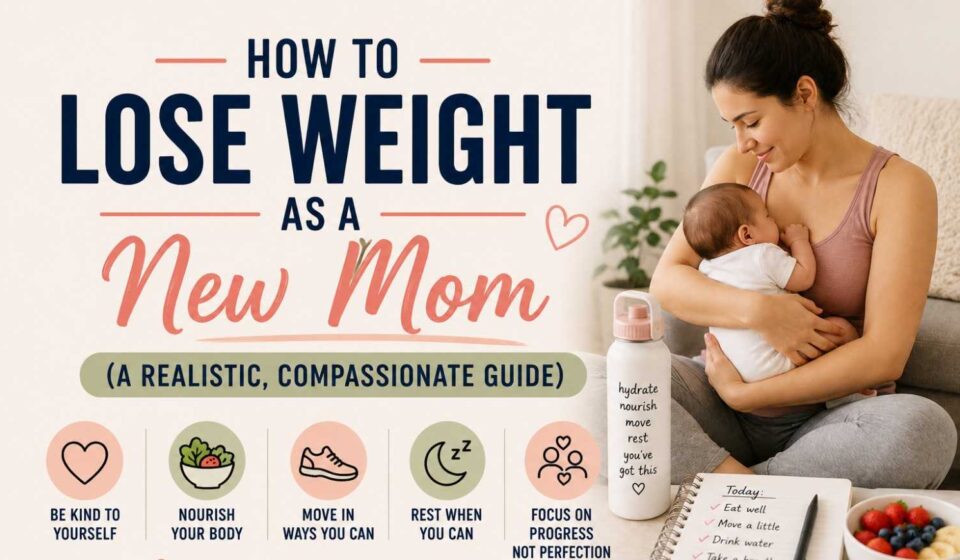
How to Lose Weight as a New Mom (A Realistic, Compassionate Guide)

The postpartum body deserves patience, not pressure. Here’s what’s actually safe and effective.

The pressure on new mothers to “get their body back” starts almost immediately — from social media, celebrity culture, and sometimes even well-meaning friends and family. It’s a pressure built on completely unrealistic timelines and a fundamental misunderstanding of what the postpartum body has just been through.
This guide takes a different approach. It’s built on realistic timelines, genuine compassion for what new motherhood involves, and evidence-based strategies that support health without adding unnecessary pressure during one of life’s most demanding periods.
The Important Context First
Your body just did something extraordinary. Growing a human being for 40 weeks, delivering that person into the world (through any method), and now sustaining that person through breastfeeding (if you’re breastfeeding) — these are metabolically and physically demanding beyond almost anything else the body does in a lifetime.
The “snap back” expectation is harmful and unrealistic. The uterus takes 6 weeks to return to its pre-pregnancy size. Hormonal normalization takes months. Postpartum hair loss, changed body composition, and altered fat distribution are all normal physiological responses that take time.
The timeline is longer than social media suggests. Most health organizations recommend waiting until at least the 6-week postpartum appointment before beginning any intentional weight loss effort — and for C-section deliveries, often longer. As covered in our article on how to lose weight after a C-section, surgical recovery requires specific attention to timing.
What’s Actually Happening in Your Body Postpartum
Hormonal Transition
Estrogen and progesterone drop dramatically after delivery — one of the sharpest hormonal shifts the body experiences in any context. This affects:
- Mood and emotional regulation
- Fluid retention patterns
- Metabolism
- Sleep quality
- Milk production hormones (if breastfeeding)
These hormones take months to normalize. The body composition changes of this period are not primarily about diet and exercise — they’re largely hormonal and time-dependent.
The Natural Early Weight Loss
Most new mothers lose 10–15 lbs in the first 1–2 weeks postpartum without any effort — from the baby’s weight, placenta, amniotic fluid, and initial fluid loss. This is physiological normalization, not fat loss.
Beyond this initial loss, further weight loss rate depends on breastfeeding status, activity level, dietary quality, sleep (profoundly disrupted in the newborn phase), and individual hormonal recovery.
Breastfeeding and Weight
Breastfeeding burns approximately 400–500 calories per day — a significant caloric expenditure that supports weight loss for many mothers without any deliberate restriction.
However, breastfeeding also increases appetite substantially (the body tries to replace the calories being used for milk production), and the hormonal environment of breastfeeding (elevated prolactin, lower estrogen) promotes fat retention in some women, particularly in the hip and thigh area, as an evolutionary reserve for continued milk production.
Some mothers lose weight easily while breastfeeding. Others maintain or even gain weight despite breastfeeding. Both are normal and individual responses.
Important: Aggressive calorie restriction while breastfeeding can reduce milk supply. The minimum recommendation is typically 1,800 calories per day for breastfeeding mothers — and many need more to maintain supply.
When to Start: A Safe Timeline
Weeks 1–6: Recovery only. Not a time for dietary restriction or intentional exercise. Focus on healing, adequate nutrition, rest when possible, and establishing breastfeeding if applicable.
6-week appointment: Discuss with your healthcare provider when exercise is appropriate for your specific delivery and recovery. This appointment is the minimum threshold — not a mandatory starting gun.
Weeks 6–12: Gentle reintroduction of movement. Walking is appropriate for most women. Core and pelvic floor rehabilitation should begin — prioritized over any other exercise.
Months 3–6: For most women with uncomplicated recovery, moderate exercise and gentle dietary attention are appropriate. This is when intentional fat loss can begin in earnest for many women.
Month 6 and beyond: The full approach applies. Standard fat loss strategies work. The body has had time to recover, hormones are more normalized, and the exhaustion of the very early weeks has (hopefully) become more manageable.
The Foundational Priorities Before Weight Loss
Sleep — The Most Important Factor
This is the piece of advice most new mothers receive and most find maddening: “sleep when the baby sleeps.” But it’s maddening because it’s true.
Sleep deprivation in the newborn period is almost total and its metabolic consequences are significant. As covered in our article on why sleep is the most underrated weight loss tool, poor sleep disrupts hunger hormones, worsens insulin sensitivity, raises cortisol, and directly impairs fat loss.
Practically: Prioritize sleep above almost everything else in the first months. Not above baby care — but above housework, social media, entertainment, and non-essential tasks. The phrase “the housework can wait” exists for good reason.
Accept help when offered. Sleep in shifts with a partner or support person if possible. This isn’t laziness — it’s a legitimate health priority that directly affects your ability to lose weight when the time comes.
Mental Health
Postpartum depression affects 10–15% of new mothers and postpartum anxiety is equally common. Sleep deprivation, hormonal shifts, identity changes, and the overwhelming demands of new parenthood create conditions where mental health challenges are common and normal.
If you’re experiencing persistent low mood, anxiety, intrusive thoughts, difficulty bonding with your baby, or feeling unable to cope — please seek support from your healthcare provider. Postpartum mental health conditions are treatable and reaching out is a sign of strength.
Weight loss efforts are secondary to mental health. Please address both, but don’t let weight concerns delay seeking support for mental health challenges.
Pelvic Floor Rehabilitation
This is the most important physical priority before conventional exercise — and the one most commonly skipped.
Pregnancy and delivery (vaginal and C-section) affect the pelvic floor profoundly. Weakness, tension, or coordination problems in the pelvic floor can cause leaking, prolapse, pelvic pain, and dysfunction that makes exercise both uncomfortable and potentially harmful.
Working with a pelvic floor physiotherapist before resuming conventional exercise is the standard of care in many countries and the most valuable physical health investment for new mothers. It shouldn’t be optional.
Dietary Strategy for New Mothers
Prioritize Nutrition Over Restriction
The postpartum period — particularly during breastfeeding — has significant nutritional demands. Cutting calories aggressively while meeting the nutritional needs of recovery and milk production is a difficult balance that generally shouldn’t be attempted in the first months.
The dietary priority in the early months is nutritional quality, not caloric restriction:
- Adequate protein for tissue healing and milk production
- Iron-rich foods to replace blood loss from delivery
- Calcium for bone health (breastfeeding draws calcium from bones if intake is insufficient)
- Omega-3 fatty acids for both mother’s health and infant brain development
- Adequate hydration — breastfeeding increases fluid needs significantly
When Gentle Caloric Management Is Appropriate
For breastfeeding mothers: a modest deficit of 200–300 calories per day (below the breastfeeding calorie requirement) is generally safe after the initial 6–8 weeks without affecting milk supply. More aggressive restriction risks supply and maternal nutritional status.
For non-breastfeeding mothers: a moderate deficit of 400–500 calories per day can be appropriate from around 6–12 weeks postpartum with medical clearance.
High Protein Is the Most Important Dietary Change
Protein:
- Supports healing and tissue repair
- Preserves muscle mass during any calorie deficit
- Is the most satiating macronutrient — managing the significant postpartum hunger
- Provides building blocks for milk production if breastfeeding
Target 0.7–1g per pound of bodyweight. As covered in our guide to how much protein you actually need per day, this is the most important dietary variable for body composition — and postpartum needs are at the higher end of this range.
Simple, Nourishing Food
New motherhood leaves almost no time for elaborate food preparation. The most practical dietary approach is simple, high-protein food that requires minimal preparation:
- Rotisserie chicken
- Greek yogurt and cottage cheese
- Eggs (boiled, scrambled)
- Canned fish
- Nuts and nut butter
- Pre-cut vegetables
- Fruit
Accepting meal train offers, freezer meals prepared before the birth, or family help with food is not weakness — it’s intelligent resource management during an overwhelming period.
Exercise as a New Mom
Walking First
Walking is the most appropriate starting exercise for new mothers — it can be done with the baby (in a carrier or stroller), scales from gentle to brisk as fitness returns, and provides cardiovascular benefit without stressing healing tissues.
Start with whatever distance is comfortable, even if that’s just around the block. Build gradually over weeks and months as energy and recovery allow.
As covered in our guide to how to lose weight by walking, consistent daily walking produces meaningful fat loss over time — and it’s uniquely compatible with new motherhood.
Pelvic Floor and Core First
Before any conventional abdominal or core exercise, pelvic floor rehabilitation addresses the foundation. Diastasis recti (abdominal separation) — extremely common postpartum — means conventional core exercises like crunches and sit-ups can worsen rather than improve core function.
Work with a pelvic floor physiotherapist, or at minimum follow a postpartum-specific rehabilitation program before conventional exercise.
Returning to Full Exercise
Most women can return to full exercise — including running, HIIT, and lifting — by 3–6 months postpartum, depending on the type of delivery and recovery. C-section recovery typically takes longer.
The return should be gradual: walking → postpartum yoga → bodyweight exercises → resistance training → higher impact activities.
Signs that a return to exercise is premature: leaking (urine or gas) during exercise, pelvic pressure or heaviness, pelvic pain, significant pain at the incision site (for C-sections). These are signals to slow down and seek pelvic floor support.
Managing Realistic Expectations
The timelines that new mothers see on social media — celebrities “bouncing back” in weeks — are the result of professional fitness support, chef-prepared nutrition, childcare that allows uninterrupted sleep and exercise, and sometimes medical procedures, presented as normal postpartum recovery.
Realistic postpartum weight loss timelines:
- Most women haven’t returned to pre-pregnancy weight by 6 weeks (and shouldn’t be trying to)
- The 12-month mark is a more realistic goal for significant fat loss
- Body shape may genuinely differ from pre-pregnancy — and that’s a normal, acceptable outcome of having carried a human life
- Some women find their body composition never fully returns to pre-pregnancy baseline — this is normal and not a failure
The Support That Actually Helps
Partner support: The most impactful thing a partner can do for a new mother’s health is take on nighttime duties, enabling sleep, and creating time for movement. If this is available to you, asking for and accepting it is appropriate.
Community: Connecting with other new mothers — through postnatal groups, apps, or in-person communities — provides both emotional support and practical information from people navigating the same challenges.
Healthcare team: Your GP, midwife, health visitor, and pelvic floor physiotherapist are all part of postpartum recovery. Use these resources without guilt.
The Bottom Line
Postpartum weight loss is possible — but it happens on a longer timeline, with more gentleness, and with more respect for the body’s recovery needs than the cultural pressure around “bouncing back” suggests.
The priorities in order:
- Recovery and healing (weeks 1–6)
- Pelvic floor rehabilitation
- Sleep — as much as possible
- Mental health support if needed
- Walking and gentle movement
- Nutritional quality with adequate protein
- Gradual return to exercise (months 3–6)
- Gentle caloric management when appropriate
The body that grew and delivered a child deserves patience, nourishment, and care — not punishment or pressure.
For the complete fat loss framework that applies when you’re ready for a more active approach, our guide to how to get rid of belly fat covers everything in one place.
Are you a new mom navigating postpartum weight loss — and what’s helped you most? Share in the comments. This community has enormous compassion and practical wisdom for this specific season of life.