
IBS complicates eating in ways that make standard dietary advice almost impossible to follow — here’s what actually works

Irritable Bowel Syndrome (IBS) affects approximately 10–15% of the global population, making it one of the most common gastrointestinal conditions. For people with IBS trying to lose weight, the challenge is uniquely frustrating: many of the foods most commonly recommended for fat loss — vegetables, legumes, whole grains, fruit — are also among the most common IBS triggers.
High-fiber diets cause bloating and pain. High-protein diets can trigger symptoms. Meal timing changes disrupt gut patterns established around managing IBS. And the bloating that IBS produces can make weight and abdominal size difficult to interpret.
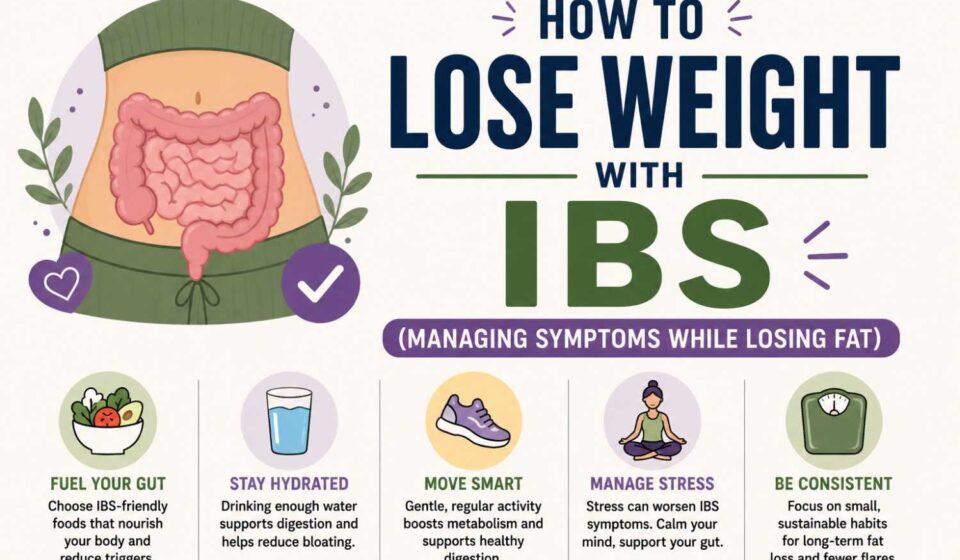
This guide addresses the specific intersection of IBS and fat loss — with strategies that manage symptoms while still creating the calorie deficit and dietary quality that produce results.
Understanding IBS and Its Relationship to Weight
What IBS Actually Is
IBS is a functional gastrointestinal disorder — it involves abnormal gut function (hypersensitivity, altered motility, dysregulated gut-brain communication) without structural damage. It’s characterized by abdominal pain, bloating, and altered bowel habits (diarrhea-predominant IBS-D, constipation-predominant IBS-C, or mixed IBS-M).
The cause involves a complex interaction of gut microbiome disruption, gut-brain axis dysregulation, visceral hypersensitivity, and often psychological factors (stress, anxiety, depression — which both cause and are caused by IBS).
IBS and Weight: The Complex Relationship
IBS doesn’t directly cause weight gain through metabolic means — but it affects weight management in several indirect ways:
Bloating and water retention — IBS bloating can add significant apparent abdominal size without representing fat. For many IBS sufferers, the abdomen that looks significantly larger by evening than morning is primarily bloating, not fat. Weight can fluctuate by 3–5 lbs on any given day based on bloating and bowel status.
Fear of eating — many IBS sufferers develop food anxiety, eating less than needed to avoid triggering symptoms. This can paradoxically cause nutritional deficiency, muscle loss, and metabolic disruption.
Dietary restriction creates nutritional gaps — following multiple elimination diets simultaneously or long-term can create deficiencies that impair metabolic health.

Medications — some IBS medications affect weight. Antispasmodics and antidepressants used for IBS have variable weight effects.
The bloating misinterpretation — many people with IBS believe they have more abdominal fat than they do, because bloating mimics the visual appearance of abdominal fat. Addressing bloating through appropriate IBS management is part of addressing abdominal appearance.
The Low-FODMAP Diet: The Most Evidence-Backed IBS Approach
The low-FODMAP diet — developed by Monash University — is currently the most evidence-backed dietary intervention for IBS. Approximately 70% of IBS patients experience significant symptom reduction on a properly implemented low-FODMAP diet.
What FODMAPs are: Fermentable Oligosaccharides, Disaccharides, Monosaccharides, And Polyols — types of fermentable carbohydrates that are poorly absorbed in the small intestine and fermented by gut bacteria, producing gas, bloating, and altered motility.
High-FODMAP foods to eliminate initially:
- Wheat and rye (fructans)
- Onion and garlic (fructans — the most common IBS triggers)
- Legumes (beans, lentils, chickpeas)
- Lactose (milk, soft cheese, yogurt — in significant amounts)
- Fructose in excess (apples, pears, mangoes, honey, high-fructose corn syrup)
- Polyols (stone fruits like peaches, plums, apricots; artificial sweeteners ending in -ol)
- Certain vegetables (cauliflower, mushrooms, asparagus)
Low-FODMAP foods that are well-tolerated:
- Most proteins (meat, fish, eggs, tofu, tempeh)
- Lactose-free dairy and hard cheeses
- Many vegetables (carrots, cucumber, zucchini, eggplant, green beans, spinach, kale)
- Low-FODMAP fruits (strawberries, blueberries, oranges, grapes, kiwi, banana in small amounts)
- Gluten-free grains (rice, oats, quinoa, gluten-free pasta)
- Garlic-infused oil (fructans don’t transfer to oil — provides garlic flavor without the FODMAP)
The low-FODMAP approach is three phases:
- Elimination (2–6 weeks): All high-FODMAP foods removed to establish a symptom baseline.
- Reintroduction: FODMAP groups are reintroduced one at a time to identify individual triggers. Not all FODMAP groups trigger symptoms in all people.
- Personalization: A modified diet is established based on individual tolerance, avoiding only the specific FODMAP groups that trigger your symptoms.
The critical point: Low-FODMAP is not a permanent elimination diet. It’s a diagnostic and therapeutic tool. Long-term avoidance of all FODMAPs significantly reduces gut microbiome diversity. The goal is identifying personal triggers and eating as broadly as possible within your individual tolerance.
Making Low-FODMAP Compatible With Fat Loss
Here’s where the specific intersection of IBS management and fat loss requires careful navigation.
The Legume Challenge
Legumes (beans, lentils, chickpeas) are among the best protein and fiber sources for fat loss — and they’re high-FODMAP. For IBS sufferers following low-FODMAP, this removes one of the most useful food groups.
Workarounds:
- Canned legumes (drained and rinsed) are lower in FODMAPs than dried and cooked
- Lentils (specifically red and green lentils in small portions — 1/4 cup) are lower-FODMAP than other legumes
- Reintroduction testing may show that you tolerate legumes better than expected, or in smaller portions
- Tofu and tempeh are low-FODMAP plant proteins that replace legumes
The Onion and Garlic Challenge
Onion and garlic are in virtually every savory dish — and they’re among the highest-FODMAP foods. This makes eating out and following standard recipes genuinely difficult.
The workaround: Garlic-infused olive oil provides garlic flavor. The fructans that cause IBS symptoms don’t transfer to oil — so garlic flavor is available without the FODMAP trigger. Spring onion (green tops only, not the white bulb) provides mild onion flavor.
The Whole Grain Challenge
Wheat is high-FODMAP. Many whole grain recommendations include wheat. The solution: rice, oats, quinoa, and gluten-free options provide whole grain nutrition without the wheat FODMAP content.
The Vegetable Challenge
Many recommended vegetables are high-FODMAP (cauliflower, mushrooms, asparagus). The low-FODMAP vegetable list still provides excellent options: carrots, zucchini, cucumber, eggplant, green beans, spinach, kale, tomatoes, bell peppers. Focus on these during the elimination phase.
Building a Fat Loss Diet That Works for IBS
Protein First — The Most IBS-Compatible Macronutrient
All standard protein sources are low-FODMAP: meat, fish, eggs, lactose-free dairy, hard cheese, tofu, and tempeh. Building meals around protein provides the satiety and body composition benefits of high protein intake without triggering IBS symptoms.
As covered in our guide to how much protein you actually need per day, 0.7–1g per pound of bodyweight is the target — achievable entirely through IBS-safe protein sources.
The Low-FODMAP High-Fiber Strategy
Fiber is important for fat loss — it provides satiety, feeds beneficial gut bacteria, and supports metabolic health. The challenge: many high-fiber foods are high-FODMAP.
Low-FODMAP high-fiber foods:
- Oats (up to 1/2 cup dry — moderate portion to stay within FODMAP limits)
- Carrots, zucchini, eggplant, green beans
- Brown rice
- Strawberries, blueberries, oranges
- Psyllium husk (low-FODMAP fiber supplement that also helps both IBS-C and IBS-D)
- Chia seeds (in small amounts — 2 tablespoons)
- Walnuts and almonds (in portions of 10 almonds or 10 walnuts — larger portions become high-FODMAP)
The Calorie Deficit Approach
A moderate calorie deficit of 400–500 calories per day produces fat loss regardless of IBS status. As covered in our guide to how to lose weight with a calorie deficit, the same deficit principles apply — just applied to a lower-FODMAP food selection.
Gut Health Strategies That Support Both IBS and Fat Loss
Gut Microbiome Support
IBS often involves gut microbiome dysbiosis — imbalanced gut bacteria. Supporting microbiome health improves IBS symptoms and metabolic health simultaneously.
After the reintroduction phase (once triggers are identified): reintroduce as many diverse plant foods as your individual tolerance allows. A varied microbiome requires varied plant food intake.
Probiotic supplements: Specific probiotic strains have evidence for IBS symptom reduction. Lactobacillus rhamnosus GG and Bifidobacterium infantis have the most research support. Discuss with your gastroenterologist.
Fermented foods (if tolerated): Lactose-free yogurt, hard cheeses, and properly fermented foods may provide probiotic benefit for some IBS patients. Individual tolerance varies significantly.
Stress Management — Essential for IBS and Fat Loss
The gut-brain axis is central to IBS — psychological stress directly triggers gut symptoms through the enteric nervous system. Managing stress reduces both IBS symptoms and the cortisol-driven fat storage that impairs fat loss.
As covered in our guide to how to stop stress eating, stress management is both IBS management and fat loss management simultaneously.
Gut-directed hypnotherapy and CBT have specific evidence for IBS symptom reduction beyond general stress management.
Eating Habits That Reduce IBS Symptoms
Eat slowly and without rushing. Rushed eating introduces more air into the gut, worsens digestion, and triggers motility responses in IBS.
Eat regular meals at consistent times. The gut responds to consistent timing. Irregular meal patterns disrupt the motility patterns that IBS patients need to maintain.
Avoid large meals. Smaller, more frequent meals produce less gastric distension and less motility response than large infrequent meals.
Chew thoroughly. Adequate chewing begins starch digestion in the mouth, reducing fermentation in the colon.
Reduce carbonated drinks. These introduce significant gas into the gut, worsening bloating.
Exercise With IBS
Exercise is beneficial for IBS — it reduces stress, improves gut motility (particularly helpful for IBS-C), and supports the fat loss and metabolic health that benefits gut health indirectly.
Timing considerations:
- Avoid vigorous exercise immediately after eating — wait at least 1–2 hours
- High-intensity exercise during active flares may worsen symptoms
- Walking after meals (as covered throughout this blog) can improve motility for IBS-C and supports fat loss simultaneously
Exercise types that are generally well-tolerated:
- Walking and light jogging
- Cycling
- Swimming
- Yoga — specific evidence for IBS symptom reduction through stress reduction and gentle abdominal movement
- Strength training
Vigorous running during active IBS flares can trigger symptoms through gut motility effects and mechanical jostling — modify to walking or cycling during symptomatic periods.
When to Seek Professional Dietary Support
A registered dietitian specializing in IBS and the low-FODMAP protocol is the most valuable resource for people with IBS trying to lose weight. Navigating the specific balance of IBS management and fat loss is genuinely complex — and individually variable enough that generic guidance has limitations.
Many countries have dietitians who specifically specialize in the low-FODMAP protocol, and this investment produces significantly better symptom control and dietary quality than self-directed elimination.
When Medical Weight Loss Support Is Appropriate
For IBS patients who have implemented dietary and lifestyle changes and still struggle with meaningful weight loss, medical evaluation is appropriate. GLP-1 compounded medications have shown emerging evidence for beneficial effects on gut motility and IBS symptoms — some patients report improved bowel regularity and reduced symptoms.
Gala offers telehealth medical evaluations to assess whether prescription weight loss treatment is appropriate for your specific situation — including people with IBS where the dietary complexity of fat loss is particularly challenging.
[Check if you qualify at Gala →]
This is a paid partnership. Gala is a licensed telehealth provider. Medication is only prescribed following a medical consultation and is not guaranteed.
The Bottom Line
Losing weight with IBS requires navigating the specific dietary landscape of your individual triggers while still creating the calorie deficit and nutritional quality that produce fat loss.
The approach that works:
- Low-FODMAP elimination and reintroduction to identify individual triggers
- Protein-first at every meal from IBS-safe sources
- Low-FODMAP high-fiber foods for satiety and gut health
- Moderate calorie deficit within your IBS-safe food selection
- Stress management as both IBS and fat loss strategy
- Regular mealtimes and eating habits that reduce symptom triggers
- Work with a FODMAP-trained dietitian for individualized guidance
For the foundational fat loss framework that applies alongside IBS management, our guide to how to get rid of belly fat covers everything in one place.
Are you managing IBS alongside weight loss goals? Share your experience in the comments — particularly any low-FODMAP foods or strategies that have become staples in your routine.