
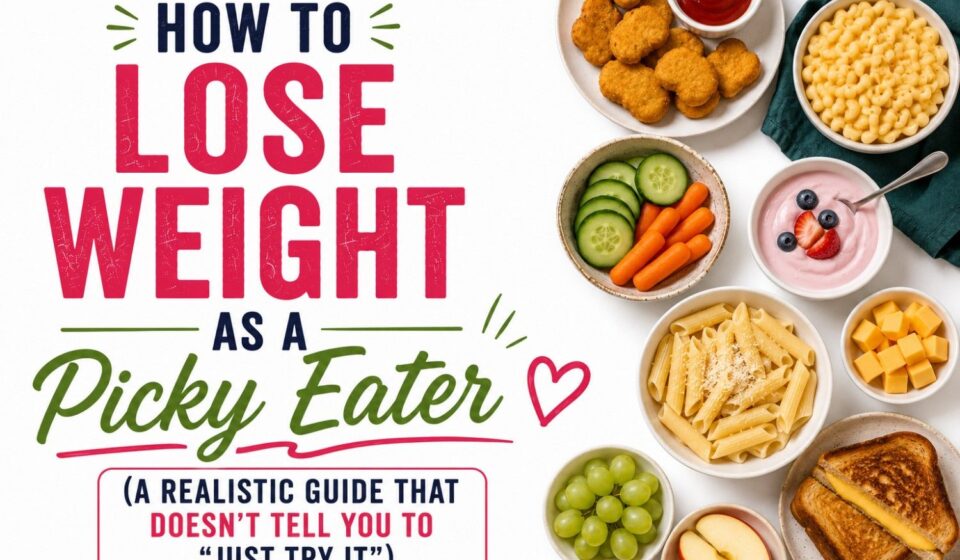
How to Lose Weight as a Picky Eater (A Realistic Guide That Doesn’t Tell You to “Just Try It”)

For people with a limited list of foods they’ll actually eat — here’s how to lose weight without forcing yourself to eat things you hate

Standard weight loss advice assumes you’ll eat anything. Salmon with roasted vegetables. Lentil soup. Kale smoothies. A rainbow of colorful produce at every meal.
If you’re a picky eater, this advice isn’t just unhelpful — it’s actively discouraging. Trying to follow meal plans full of foods you genuinely can’t stomach is a reliable path to quitting entirely.
This guide takes picky eating seriously as a real constraint — and builds a fat loss approach around what you’ll actually eat, not what you theoretically should.
First: Picky Eating Is More Common Than You Think
Picky eating exists on a spectrum — from mild preferences to genuine sensory sensitivity or ARFID (Avoidant/Restrictive Food Intake Disorder). Some people have texture aversions so strong that certain foods genuinely trigger a gag reflex. Others simply have strong preferences formed over decades that don’t respond to “just try it.”
Neither is a moral failing. Both require working within the reality of what you’ll actually eat — not the foods a nutritionist wishes you’d eat.
The good news: you don’t need a wide variety of foods to lose weight. You need enough acceptable foods to build a diet that creates a calorie deficit with adequate protein. For most picky eaters, that’s more achievable than it sounds.
Step 1: Map Your Acceptable Foods Honestly
Before building any dietary approach, make a comprehensive list of foods you’ll actually eat without significant distress. Be honest — this isn’t the time to include foods you eat only under social pressure or begrudgingly.
Categories to map:
Proteins you’ll eat:
- Which meats? (chicken, beef, pork, turkey, fish — if so, which preparation methods?)
- Eggs? (scrambled, fried, hard-boiled — texture matters)
- Dairy? (milk, cheese, yogurt — which types?)
- Plant proteins? (lentils, beans, tofu — most picky eaters have strong feelings about these)
- Processed proteins? (deli meat, hot dogs, chicken nuggets — these count)
Carbohydrates you’ll eat:
- Bread? (which types — white, whole grain, sourdough?)
- Pasta? (plain, with specific sauces?)
- Rice? (white, brown?)
- Potatoes? (which preparations?)
- Cereals or oats?
Vegetables you’ll eat:
- Even one or two? Most picky eaters tolerate at least some vegetables in some preparation
- Raw vs. cooked matters — many picky eaters who won’t eat cooked vegetables tolerate raw ones, or vice versa
- Hidden in sauces, soups, or mixed dishes sometimes works when standalone doesn’t
Fruits you’ll eat:
- Most picky eaters tolerate at least a few fruits
Snacks and other foods:
- What do you reach for when hungry?
Once mapped, you have your ingredient list. The goal is building a fat loss diet from these ingredients — not changing the list.
Step 2: Find Your Protein Anchors
Protein is the most important dietary variable for fat loss — as covered in our guide to how much protein you actually need per day. Without adequate protein, more of the weight lost comes from muscle rather than fat.
For picky eaters, the challenge is finding protein sources from the acceptable list. Most picky eaters have at least a few protein options:
Common protein sources picky eaters often accept:
- Plain chicken (grilled, baked, or fried) — one of the most commonly accepted proteins even among very picky eaters
- Eggs (particularly scrambled or fried — texture is often the issue with other preparations)
- Beef (burgers, ground beef — familiar, widely accepted)
- Cheese (not a primary protein source but contributes meaningfully)
- Milk and yogurt (if dairy is acceptable)
- Deli meat (ham, turkey, chicken — widely accepted, though high sodium)
- Protein shakes — many picky eaters find protein powder in milk or water acceptable when whole food options are limited
Even 2–3 acceptable protein sources is enough to build adequate daily protein around. Repetition is fine — eating the same proteins daily is completely compatible with fat loss.
As covered in our guide to the best protein powders for weight loss, a good protein powder can be a practical solution when whole food protein options are very limited.
Step 3: Work With Your Carbohydrate Preferences
Most picky eaters have a relatively wide range of acceptable carbohydrates — bread, pasta, rice, potatoes, and certain cereals are among the most universally accepted foods.
The challenge: these are often calorie-dense and easy to over-consume without adequate protein alongside them.
The strategy: Keep eating the carbohydrates you accept — but:
- Pair them with protein at every meal (even a small amount)
- Be conscious of portion sizes of the densest options
- Choose whole grain versions where acceptable (whole wheat bread, oats) — they provide more fiber and better satiety
You don’t have to give up pasta or white bread. You have to eat them in portions that fit your calorie target alongside adequate protein.
Step 4: Vegetable Strategies for Picky Eaters
Most picky eaters struggle most with vegetables. But complete vegetable avoidance makes calorie management significantly harder — vegetables are the most filling, lowest-calorie foods available.
Strategies for getting some vegetables in:
Hidden vegetables: Blending spinach into a smoothie you’d drink anyway (banana + milk + protein powder + spinach — the spinach is invisible in taste and contributes minimal flavor). Blending cauliflower into mashed potato. Grating zucchini into ground meat dishes where it disappears.
The one tolerable vegetable approach: Most picky eaters have at least one vegetable they’ll eat — often carrots, corn, peas, or cucumber. Eating more of that one tolerable vegetable provides some of the volume and satiety benefits without requiring variety.
Raw vs. cooked: Many picky eaters who won’t eat cooked vegetables will eat raw ones — or vice versa. If cooked broccoli is intolerable but raw carrots are fine, eat raw carrots. Preparation method matters more than people realize.
Texture modification: Pureeing vegetables into soups removes the texture that often drives picky eating rejection. A smooth tomato soup, butternut squash soup, or pea soup provides vegetable nutrition without the textures that make solid vegetables difficult.
Not required: If vegetables are genuinely not happening, fat loss is still possible. Adequate protein, managed calorie intake, and a reasonable amount of fruit can provide sufficient nutrition for the duration of a fat loss effort. Vegetables are strongly recommended but not strictly required.
Step 5: Calorie Management Without Complex Meals
The calorie deficit required for fat loss doesn’t require complex, varied meals. Simple, repetitive eating patterns can create the same deficit as elaborate meal plans.
The simple picky eater meal structure:
Breakfast: Whatever you’ll eat (eggs, toast, cereal, yogurt) Lunch: A protein + a carbohydrate you accept (chicken sandwich, ground beef with rice, tuna on bread) Dinner: Same structure — protein + acceptable carbohydrate + whatever vegetable is tolerable Snacks: Whatever protein-containing snack you’ll eat (cheese, deli meat, protein bar, yogurt)
Repetition is not a problem. Eating the same 5–7 meals repeatedly is completely healthy and completely compatible with fat loss. The variety that nutritionists recommend serves nutritional completeness over years — not weight loss over months.
Step 6: The Calorie Target Still Applies
Regardless of food variety, fat loss requires a calorie deficit. As covered in our guide to how many calories should I eat to lose weight, the calculation is the same regardless of dietary variety:
TDEE minus 400–600 calories = daily fat loss target
The foods within that target can be whatever you’ll actually eat — as long as protein is adequate (0.7–1g per pound of bodyweight) and total calories are managed.
Practical calorie awareness for picky eaters:
Many of the foods picky eaters typically eat — plain chicken, white bread, pasta, eggs, cheese — have well-known calorie counts that are easy to track. Simple diets are often easier to track than complex ones precisely because there’s less variety to measure.
What to Do When Your Acceptable Food List Is Very Small
For people with genuinely very restricted diets (5–10 acceptable foods), a conversation with a doctor or registered dietitian is worth having — both to ensure nutritional adequacy and to explore whether any underlying sensory processing factors are contributing.
For weight loss specifically with a very restricted list:
- Focus on protein within what’s acceptable
- Manage total portion sizes of the calorie-dense foods you eat
- Consider a multivitamin to address potential micronutrient gaps
- A protein shake can fill significant protein gaps if whole food options are limited
The Gentle Expansion Approach (For Those Who Want It)
For picky eaters who want to gradually expand their food range — not required, but potentially helpful for nutritional variety:
The exposure approach (not “just try it”):
- Choose one new food to explore per month — low pressure
- Start with the least threatening version (raw rather than cooked, familiar sauce on new food)
- Exposure without pressure to eat it — having it on the plate, smelling it, touching it are valid first steps
- No forced eating, no shame for rejection
This isn’t about forcing yourself to like things you don’t. It’s about occasionally expanding the acceptable list without pressure — knowing that some explorations will produce new acceptable foods and some won’t.
The Bottom Line
Losing weight as a picky eater is entirely possible — it just requires building the approach around your actual acceptable food list rather than an ideal list.
The framework:
- Map your acceptable foods honestly
- Find 2–3 protein anchors from that list and build meals around them
- Keep the carbohydrates you accept, in managed portions alongside protein
- Get whatever vegetables you’ll actually eat — hidden, raw, or pureed if needed
- Apply the calorie deficit to whatever foods you’ll eat
- Embrace repetition — the same 5–7 meals daily is fine
You don’t have to become an adventurous eater to lose weight. You have to eat less of what you already eat — or more protein-dense versions of it — while maintaining a calorie deficit.
For the complete fat loss framework that works regardless of dietary variety, our guide to how to get rid of belly fat covers everything in one place.
What foods do you eat repeatedly as a picky eater — and have you found ways to make them work for weight loss? Share in the comments. Picky eaters helping picky eaters is some of the most practically useful content on this blog.