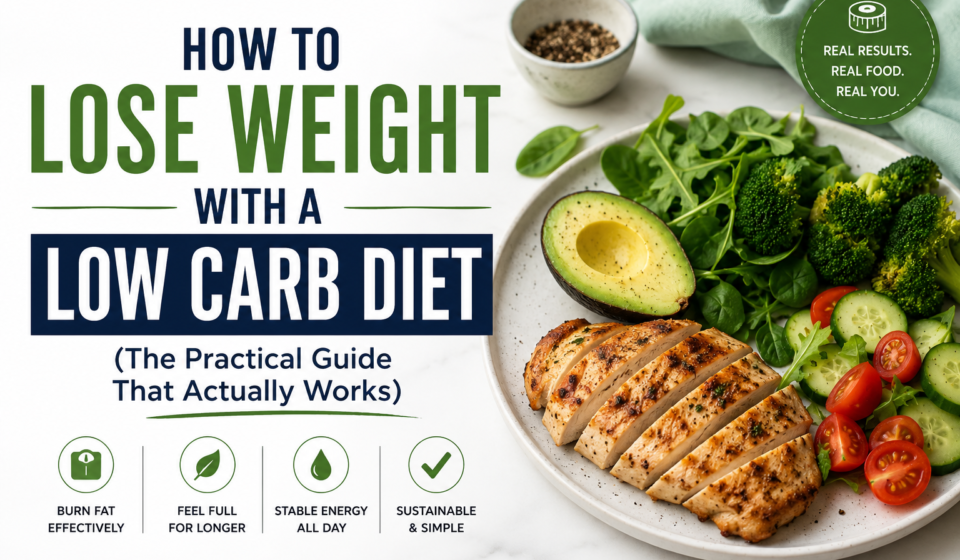

Low carb is one of the most effective dietary approaches for fat loss — if you do it right
Low carb eating sits in a sweet spot that keto doesn’t occupy: it’s restrictive enough to drive meaningful fat loss through improved insulin sensitivity and appetite suppression, but flexible enough to be genuinely sustainable long-term.
Unlike keto — which requires staying under 20–50g of carbs daily and entering ketosis — low carb simply means reducing carbohydrate intake significantly below the typical Western diet without necessarily eliminating carbs entirely. This makes it compatible with a much wider range of lifestyles, food preferences, and social situations.

Here’s the complete practical guide.
What “Low Carb” Actually Means
“Low carb” doesn’t have a single definition — different sources use different thresholds. For practical fat loss purposes, three tiers are useful:
Moderate low carb (100–150g per day): Significantly below the average Western intake (250–300g) but allows most vegetables, some fruit, legumes, and small amounts of whole grains. This is accessible, sustainable for almost anyone, and produces meaningful fat loss for most people.
Low carb (50–100g per day): Eliminates most grains, limits fruit, and significantly reduces legumes. Most calories come from protein, fat, and non-starchy vegetables. More restrictive but produces faster results. The approach used in most low-carb diet research.
Very low carb / near-keto (20–50g per day): Approaches ketogenic territory. May or may not produce full ketosis. The most restrictive non-keto approach.
For most people new to low carb, starting at 100–130g per day is the most practical entry point — enough carbohydrate restriction to produce meaningful metabolic benefits without the severity that produces the keto flu and compliance challenges of stricter approaches.
Why Low Carb Works for Fat Loss
Reduces Insulin Levels
Carbohydrates — particularly refined carbohydrates and added sugar — produce the largest insulin responses of any macronutrient. Chronically high insulin promotes fat storage (particularly visceral belly fat) and suppresses fat mobilization.
Reducing carbohydrate intake lowers insulin levels significantly, creating a hormonal environment that favors fat burning over fat storage. This is one of the most direct dietary interventions for visceral belly fat — as covered in our guide to how to get rid of belly fat.
Powerful Appetite Suppression
Low carb diets consistently produce greater appetite suppression than low-fat diets in research — even when total calories aren’t explicitly restricted. The combination of higher protein (which satiates powerfully), higher fat (which slows gastric emptying), and eliminated blood sugar crashes produces genuine hunger reduction that makes maintaining a calorie deficit feel easier.
Many low-carb dieters report eating significantly fewer calories than before without deliberately restricting — the improved hormonal environment naturally reduces intake.
Eliminates the Blood Sugar Rollercoaster
Refined carbohydrates and sugar cause blood sugar spikes followed by crashes that drive hunger, cravings, and the compulsive eating that undermines fat loss. Low carb eating eliminates this cycle — blood sugar stays stable throughout the day, energy is consistent, and the mid-morning and mid-afternoon hunger crises that derail many dieters simply don’t happen.
Higher Protein Naturally
Low carb diets almost always result in higher protein intake — when carbs are reduced, protein and fat fill the gap. This natural protein increase supports muscle preservation, raises the thermic effect of food, and produces the superior fat loss quality (more fat, less muscle lost) that high-protein diets consistently demonstrate.
Rapid Early Results for Motivation
Like keto, low carb produces rapid early weight loss — primarily from glycogen and water reduction. Seeing the scale drop quickly in the first 1–2 weeks provides the motivational momentum that helps people stay consistent through the harder middle phase of any fat loss approach.
What to Eat on a Low Carb Diet
Eat Freely
Proteins:
- All meat and poultry (chicken, beef, pork, lamb, turkey)
- All fish and seafood
- Eggs — one of the best low-carb foods
- Hard and semi-hard cheeses
Non-starchy vegetables (these should fill most of your plate):
- Leafy greens (spinach, kale, arugula, romaine)
- Broccoli and cauliflower
- Zucchini and cucumber
- Bell peppers
- Mushrooms
- Asparagus
- Green beans
- Celery
Healthy fats:
- Olive oil and avocado oil
- Avocados
- Nuts (almonds, walnuts, macadamia — in moderation due to calorie density)
- Butter and ghee
Eat in Moderation
Low-carb fruits:
- Berries (strawberries, blueberries, raspberries, blackberries) — relatively low sugar
- Small amounts of other fruits
Some dairy:
- Full-fat Greek yogurt (contains some carbs but protein is high)
- Cottage cheese
- Milk in modest amounts
Legumes (if targeting moderate low carb):
- Lentils, chickpeas, black beans in controlled portions
- High in fiber and protein, moderate in carbs
Some whole grains (moderate low carb only):
- Small portions of oats, quinoa, brown rice
- Whole grain bread in single slice servings
Minimize or Eliminate
Refined carbohydrates:
- White bread, white rice, white pasta
- Most breakfast cereals
- Crackers and most packaged snacks
- Pastries, cakes, cookies
Added sugar:

- Sodas and juice
- Sweetened coffee drinks
- Candy and chocolate
- Most condiments and sauces (check labels)
Starchy vegetables (in strict low carb):
- Potatoes and sweet potatoes (limit portions in stricter approaches)
- Corn
- Peas
As covered in our article on what happens when you cut sugar for 30 days, reducing added sugar and refined carbs specifically — even without complete low carb adoption — produces significant metabolic improvements.
How to Start a Low Carb Diet
Step 1: Calculate Your Starting Carb Target
For most beginners: 100–130g of net carbs per day (total carbs minus fiber).
Track for the first 2–4 weeks to understand which foods contain how many carbs. Most people are surprised — some “healthy” foods (oats, fruit, legumes) contain more carbs than expected, while many vegetables are essentially carb-free.
After the first month, most people develop sufficient intuition to manage without constant tracking.
Step 2: Clean Out and Restock Your Kitchen
Remove the highest-carb items — bread, pasta, rice, cereals, juice, soda, and most packaged snacks. These are the items that will derail low carb eating when willpower is low.
Stock with low-carb staples: eggs, meat, fish, leafy greens, non-starchy vegetables, olive oil, avocados, nuts, Greek yogurt, berries.
Step 3: Plan Your Meals Around Protein First
Build every meal around a protein source — eggs, chicken, fish, beef, seafood, or plant-based proteins for vegetarians. Add non-starchy vegetables as the bulk of the meal. Add healthy fat for satiety and flavor.
The simple formula for low-carb meals: Protein + non-starchy vegetables + healthy fat = complete meal
This structure naturally keeps carbs low without requiring complicated planning.
Step 4: Manage the Transition Period
The first 3–7 days of low carb can feel rough — fatigue, headaches, and carb cravings as the body transitions from glucose-burning to fat-burning. This is milder than keto flu but real.
Staying well hydrated, maintaining electrolyte intake (salt food adequately, eat potassium-rich vegetables), and having adequate protein and fat prevents the worst of this transition.
Most people feel noticeably better — more energy, less brain fog, fewer hunger spikes — by the end of week 2.
Low Carb Meal Ideas for Every Day
Breakfast options:
- Scrambled eggs with spinach and feta
- Greek yogurt with berries and almonds
- Omelette with mushrooms, peppers, and cheese
- Smoked salmon with cucumber and cream cheese
- Cottage cheese with berries and chia seeds
Lunch options:
- Large salad with grilled chicken, avocado, olive oil dressing
- Tuna with mixed greens and low-carb vegetables
- Lettuce-wrapped turkey burger
- Cauliflower rice stir-fry with beef and vegetables
- Lentil soup (moderate low carb)
Dinner options:
- Salmon with asparagus and lemon butter
- Chicken thighs with roasted broccoli and cauliflower
- Beef stir-fry with zucchini noodles
- Baked cod with green beans and olive oil
- Turkey meatballs with zucchini noodles and tomato sauce
Snacks:
- Hard-boiled eggs
- Nuts (small handful)
- Celery with almond butter
- Greek yogurt
- Cheese with cucumber
Low Carb vs Keto: Which Should You Choose?
This comes up constantly — and the honest answer depends on the individual.
Choose low carb if:
- You want meaningful results without extreme restriction
- You value flexibility and social eating compatibility
- You’re active and want to maintain exercise performance
- You eat carbohydrate-containing foods you’d miss on keto (fruit, some grains, legumes)
- This is your first major dietary change
Choose keto if:
- You have insulin resistance or type 2 diabetes and want maximum carb reduction
- You respond strongly to hunger suppression and find low-level ketosis helpful
- You genuinely don’t miss carbohydrate-containing foods
- You’ve tried moderate low carb and want more aggressive results
As covered in our article on how to lose weight with keto, both approaches produce similar long-term results when adherence is matched — the best one is the one you can actually sustain.
Low Carb and Exercise
Low carb is generally compatible with most exercise forms — particularly strength training, walking, yoga, and moderate cardio.
High-intensity exercise (HIIT, sprint training, heavy lifting) uses glycogen as primary fuel. Very low carb dieters may notice reduced performance in these activities — particularly in the first 2–4 weeks before fat adaptation occurs.
Practical approach for active people:
- If doing moderate exercise: standard low carb (50–130g) typically maintains performance well
- If doing high-intensity training: keep carbs slightly higher (100–150g) and time them around workouts — eat most daily carbs before and after training sessions
- Protein remains critical for muscle preservation regardless of carb level — maintain 0.7–1g per pound of bodyweight as covered in our guide to how much protein you actually need per day
What Realistic Low Carb Results Look Like
First 1–2 weeks: 3–7 lbs lost — primarily water and glycogen. Real but not all fat.
Weeks 2–8: 0.5–1.5 lbs per week of genuine fat loss for most people maintaining a modest calorie deficit. Energy stabilizing, hunger reduced, blood sugar more stable.
Months 2–6: Continued steady fat loss. Body adapting to fat as primary fuel. The appetite suppression that makes low carb sustainable becoming established.
Beyond 6 months: For people who’ve genuinely adopted low carb as a lifestyle rather than a temporary diet, results continue — this is where low carb genuinely outperforms approaches that get abandoned.
Common Low Carb Mistakes
Not eating enough fat. Low carb without adequate fat intake leaves you hungry and miserable. Fat is the satiety and energy source that replaces carbohydrates — don’t be afraid of it.
Not eating enough protein. Low carb eating should be high in protein, not just high in fat. As covered throughout this blog, adequate protein is essential for muscle preservation, satiety, and fat loss quality.
Eating too many “low carb” processed products. Low carb bars, low carb bread, low carb pasta — many of these products are highly processed, calorie-dense, and maintain the pattern of eating processed food rather than whole foods. Whole food low carb is more effective than processed food low carb.
Giving up during the transition period. The first week of low carb is the hardest. The fatigue and cravings are temporary. Most people who push through the first 10 days find the approach significantly easier afterward.
Not accounting for calories entirely. Low carb suppresses appetite effectively — but eating unlimited amounts of calorie-dense low carb foods (nuts, cheese, avocado) can still produce a calorie surplus. Calorie awareness matters even on low carb.
The Bottom Line
Low carb is one of the most effective, evidence-backed dietary approaches for fat loss — producing powerful appetite suppression, improved insulin sensitivity, stable blood sugar, and natural calorie reduction for most people who follow it consistently.
Its advantages over keto: significantly more sustainable, compatible with more lifestyles and food preferences, and comparable long-term results for most people.
Its advantages over low-fat diets: better appetite control, more direct impact on insulin-driven fat storage, and typically better initial results that drive the motivation to continue.
For the complete framework that combines low carb eating with exercise, sleep, and stress management for maximum fat loss results, our guide to how to get rid of belly fat covers everything in one place.
Have you tried low carb eating? Share what your experience has been — and any tips that made it more sustainable for you in the long run.
Stop Wondering What to Eat This Week
Get my free 7-Day High-Protein Weight Loss Meal Plan delivered straight to your inbox — a simple week of satisfying, protein-focused meals designed to make healthy eating easier without complicated calorie tracking.
- 7 full days of breakfast, lunch, dinner & snacks
- One complete shopping list for the whole week
- A quick high-protein food cheat sheet
- Simple daily tips to help you stay on track
Free PDF • Delivered by email • Unsubscribe anytime
Check your inbox 💜
Your free 7-day high-protein meal plan is on its way.