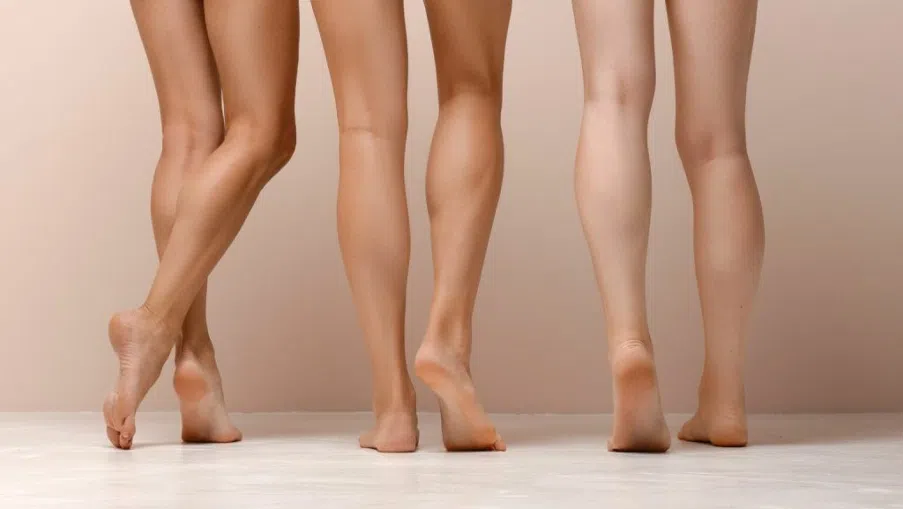

Bulky or fatty calves — here’s the honest breakdown of what’s causing it and how to fix it

Calf fat is one of the most searched body-specific fat loss topics — and one of the least well-understood. Many people find that their calves seem disproportionately large, resist slimming even during significant overall fat loss, and don’t respond to conventional exercise advice.
The reason: calf size is determined by a combination of factors that most people never consider — and fat is often the smallest contributor.
Here’s the complete, honest guide.
What’s Actually Making Your Calves Look Large
Actual Fat Deposits
Genuine fat stored in the calves is subcutaneous fat — stored directly under the skin of the lower leg. For most people, calf fat is a relatively minor contributor to calf size compared to the other factors below — which is why fat loss often produces disappointing results for calf slimming while dramatically improving other areas.
Muscle Size (Gastrocnemius and Soleus)
The calf muscles are among the most genetically variable muscles in the human body. Some people are born with large, prominent calf muscles regardless of training — determined by the ratio of fast-twitch to slow-twitch fibers, the length of the muscle belly relative to the Achilles tendon, and overall gastrocnemius size.
This is critical: if your calves are large primarily due to muscle genetics, fat loss and exercises will not significantly change their size — and may actually make them look more defined (larger appearing) as fat reduces and muscle becomes more visible.
Fluid Retention and Edema
The lower legs are particularly prone to fluid accumulation — gravity pulls fluid downward throughout the day. People who stand or sit for long periods, have poor circulation, or eat high-sodium diets often carry significant fluid in their lower legs by evening.
If your calves look significantly larger in the evening than morning, fluid retention is a major component of what you’re seeing.
Bone Structure
The width of the tibia and fibula bones determines the minimum width of the lower leg regardless of muscle or fat content. No amount of fat loss or training changes bone width.
The Honest Truth About Spot Reducing Calf Fat
As with every body-specific fat concern — thighs, hips, arms, back, love handles — you cannot specifically target calf fat through calf exercises. Spot reduction doesn’t exist.
Calf fat reduces through overall fat loss. And if your calves are primarily large due to genetics or muscle size rather than fat, even significant overall fat loss may produce minimal change in their appearance.
What Actually Helps With Calf Size
1. Overall Fat Loss
If fat is a significant contributor to calf size, overall fat loss will eventually reach the lower legs. The calves typically respond after upper body fat has reduced significantly — they’re not among the first areas to slim down.
The complete fat loss approach is covered in our guide to how to get rid of belly fat.
2. Reduce Fluid Retention in the Lower Legs
For people whose calf size is significantly affected by end-of-day fluid accumulation, addressing the fluid component produces dramatic visible results:
Reduce sodium intake — the most direct intervention. Reducing sodium to under 1,500mg per day reduces lower leg fluid retention within 24–48 hours.
Increase potassium — counteracts sodium’s fluid-retaining effects. Lentils, avocado, sweet potatoes, spinach, and bananas are excellent sources.
Move more throughout the day — regular movement pumps fluid back into circulation. A walk every hour prevents the pooling that comes from prolonged sitting or standing.
Elevate legs when resting — lying with feet above heart level for 15–20 minutes in the evening dramatically accelerates fluid drainage from the lower legs.
Compression socks — prevent fluid accumulation throughout the day, particularly useful for people who stand all day.
As covered in our article on how to lose water weight fast, hydration and sodium management are the fastest interventions for fluid-related size in any body area.
3. Avoid Exercises That Build Calf Muscle (If Muscle Size Is the Issue)
This is counterintuitive — but if your calves are primarily large due to muscle size, calf-specific exercises like calf raises, jump rope, and running hills will make them larger, not smaller.
If your goal is slimmer calves and they’re primarily muscular:
- Avoid heavy calf raises and calf-specific exercises
- Reduce high-impact activities (sprinting, hill running, stair climbing)
- Focus on lower-intensity activities that don’t maximally stimulate the calf muscles
Activities that minimize calf muscle stimulation:
- Flat walking (not incline)
- Swimming
- Cycling
- Yoga and stretching
4. Stretch the Calves Regularly
Tight, shortened calf muscles create a bunched appearance that makes them look bulkier. Regular stretching elongates the muscle and improves its resting appearance.
Effective calf stretches:
- Standing calf stretch — foot back, heel flat, lean forward. Hold 30–60 seconds per side.
- Downward dog — press heels toward the floor, alternately pedaling feet.
- Seated towel stretch — loop a towel around the ball of your foot and gently pull.
Consistent daily stretching over 4–6 weeks produces visible change in calf appearance for many people.
5. Dietary Approaches That Help
High protein intake — supports overall fat loss while preserving muscle tone. As covered in our guide to how much protein you actually need per day, adequate protein is the foundation of fat loss.
Reduce alcohol — promotes fluid retention throughout the body, particularly visible in the lower legs. Regular drinkers often see significant lower leg slimming when reducing alcohol.
Anti-inflammatory eating — reducing processed food, sugar, and alcohol while increasing vegetables and whole foods reduces the inflammatory component of lower leg puffiness.
6. Lean Leg Training Approach
If you want to maintain lower body fitness while minimizing calf muscle hypertrophy:
Do: Low-intensity steady-state cardio (flat walking, swimming), yoga, pilates, light resistance training for thighs and glutes that doesn’t heavily load the calves.
Minimize: Heavy calf raises, hill running, stair climbing, HIIT with jumping, jump rope, sprinting.
As covered in our article on best exercises to lose belly fat for beginners, flat walking is the most accessible low-impact activity that burns calories without building calf bulk.
The Genetics Reality
For many people, calf size is substantially determined by genetics and bone structure that no intervention will significantly change.
If your calves are large primarily because of large gastrocnemius muscle bellies, wide tibial bones, or genetic fat distribution favoring the lower leg — the realistic expectation is modest improvement from fat loss and fluid reduction, but the fundamental calf structure will remain.
This is not a failure — it’s anatomy. Many people who are frustrated by calf size eventually find peace with accepting their natural lower leg structure while optimizing what they can control.
What Realistic Progress Looks Like
Days 1–7: Reduction in fluid retention from sodium reduction. Visible reduction in evening puffiness. Immediate improvement in morning calf appearance.
Weeks 2–6: Overall fat loss beginning to reach the lower legs. Calf stretching improving muscle appearance.
Weeks 6–16: Meaningful changes for people whose calves had significant fat and fluid components. For primarily muscular calves, changes are more subtle.
Months 4–6+: Continued fat loss. Maximum achievable improvement through lifestyle means typically reached in this timeframe for most people.
Clothing Tips for Calf-Conscious People
While not a fat loss strategy, clothing choices affect how calves appear immediately:
- Bootcut and flared trousers balance wider calves better than skinny jeans
- Midi skirts that end below the widest part of the calf create a more elongated appearance
- Vertical stripes on tights or leggings create a visually slimming effect
- Avoid ankle straps which visually cut the leg at its widest point
The Bottom Line
Calf size is determined by fat, muscle genetics, fluid retention, and bone structure — and the solution depends on which is dominant for you.
For the fat component: overall fat loss eventually reaches the calves. For the fluid component: reduced sodium, increased movement, leg elevation, and adequate hydration produce fast visible results. For the muscle component: avoiding calf-specific exercises and stretching regularly. For the structural component: accepting bone structure and focusing on what’s controllable.
For most people, addressing fluid retention and continuing overall fat loss produces the most meaningful results. For the complete fat loss framework, our guide to how to get rid of belly fat covers all the foundational strategies.
Are your calves primarily a fat issue, muscle issue, or fluid issue? Share in the comments — and any tips that have worked for you.