
Chest fat is frustrating but fixable. Here’s the complete honest guide.

Chest fat is one of the most confidence-affecting fat deposits for both men and women — visible under clothing, prominent in photos, and for men in particular, a source of significant self-consciousness. The condition known as “man boobs” (gynecomastia or pseudogynecomastia) affects a significant proportion of men and is one of the most searched body fat concerns online.
For women, chest fat is part of the overall breast and upper body composition that changes with weight — and understanding what’s fat versus what’s glandular tissue matters for setting realistic expectations.
This guide covers both men and women with the specific causes and solutions for each.
Understanding Chest Fat: What’s Actually There
For Men
Male chest fat exists in two distinct forms — and the distinction matters enormously for how you approach it:
Pseudogynecomastia — excess fat deposits in the chest area without any glandular tissue involvement. This is purely a fat loss issue — it responds to overall fat loss and chest muscle development like any other fat deposit. It’s soft, pinchable, and distributed across the chest.
Gynecomastia — actual glandular breast tissue development in men, driven by hormonal imbalances (typically elevated estrogen relative to testosterone). This is firm, often centered directly behind the nipple, and does NOT respond to fat loss or exercise — because it’s glandular tissue, not fat.
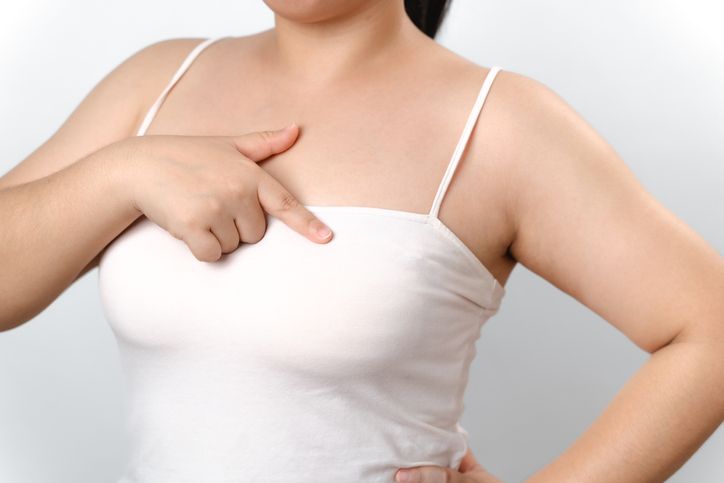
How to distinguish them: Press firmly with two fingers directly behind the nipple. If you feel a firm, rubbery disc of tissue, this suggests gynecomastia with a glandular component. If the tissue is uniformly soft throughout the chest, it’s more likely pseudogynecomastia (fat).
Gynecomastia with significant glandular component typically requires medical evaluation and potentially surgical intervention. Fat loss and exercise will improve the surrounding area but won’t reduce true glandular tissue.
If you suspect gynecomastia: See a doctor. Hormonal testing can identify underlying causes (low testosterone, elevated estrogen, certain medications, or underlying conditions). Some cases resolve with hormonal correction; others require surgery.
For Women
The female chest is composed of glandular breast tissue, fat, and connective tissue. The proportion of fat versus glandular tissue varies significantly between individuals and changes with hormonal states, weight, and age.
For women, “losing chest fat” means reducing the fat component of the breast — which reduces breast size alongside overall fat loss from the chest and upper body. The glandular component remains regardless of fat loss.
Women tend to lose breast fat relatively early in a fat loss journey — the chest and upper body typically respond before the lower body. This is worth knowing as a set of expectations.
What Actually Reduces Chest Fat
1. Overall Fat Loss — The Only Real Solution
This cannot be said often enough: you cannot spot-reduce chest fat. Chest exercises build the pectoral muscles underneath the fat, but they do not specifically burn the fat overlying them.
The only way to reduce chest fat is overall fat loss — creating a sustained calorie deficit through diet, exercise, sleep, and stress management. As the body loses fat overall, the chest will eventually respond.
The complete fat loss framework is covered in our guide to how to get rid of belly fat — every principle applies equally to chest fat reduction.
For men, the chest often responds in the middle stages of fat loss — after the face and arms but sometimes before the lower abdomen. For women, the chest tends to respond early and sometimes more dramatically than desired.
2. Chest Muscle Development — The Game Changer for Men
For men specifically, building the pectoral muscles is the most important exercise strategy for chest appearance — even before significant fat loss has occurred.
Well-developed pectoral muscles change the shape of the chest dramatically — creating a more defined, masculine appearance even at higher body fat percentages. As fat reduces through overall fat loss, developed chest muscles create the flat, defined chest most men are aiming for.
Without developing the underlying muscle, fat loss from the chest can produce a deflated, saggy appearance rather than the toned look most people want.
The best chest exercises for men:
Push-ups — the foundational chest exercise. No equipment required. Three variations target different portions of the chest:
- Standard push-ups: full chest and triceps
- Wide-grip push-ups: more chest emphasis
- Close-grip push-ups: more tricep emphasis, inner chest
Start with 3 sets of as many as possible and progressively increase reps and difficulty over weeks.
Dumbbell press (flat and incline) — the gym standard for chest development. Flat press targets the main pectoral body; incline press targets the upper chest that creates the defined “shelf” appearance.
Dumbbell flyes — isolation movement that stretches and contracts the pectoral muscles through a wider range of motion than pressing movements. Excellent complement to pressing exercises.
Decline push-ups (feet elevated) — shifts emphasis to the lower chest, creating the lower chest definition that gives the chest its full, well-developed appearance.
Cable crossovers or resistance band crossovers — crossing the hands past midline at the end of the movement creates peak contraction in the pectorals that pressing movements don’t fully achieve.
Frequency: Train chest 2x per week. Each session: 3–4 exercises, 3–4 sets of 8–15 reps. Progressive overload — increase weight or reps every 1–2 weeks.
3. Hormonal Optimization for Men
For men, hormonal balance directly affects chest fat accumulation and distribution — particularly the testosterone-to-estrogen ratio.
Factors that lower testosterone and increase relative estrogen (promoting chest fat):
- Excess body fat (fat tissue converts testosterone to estrogen)
- Chronic stress and sleep deprivation (both lower testosterone)
- Alcohol consumption (impairs testosterone production)
- Certain medications (some antidepressants, antipsychotics, and blood pressure medications)
- Aging (testosterone naturally declines with age)
- Plastic-derived compounds (BPA in food containers affects hormonal balance)
What supports healthy testosterone levels:
- Adequate sleep (testosterone is primarily produced during deep sleep)
- Strength training (compound movements like squats and deadlifts acutely and chronically raise testosterone)
- Reducing body fat (less fat tissue = less testosterone-to-estrogen conversion)
- Reducing alcohol
- Adequate zinc and vitamin D (both support testosterone production)
- Managing stress and cortisol
For men with persistent gynecomastia despite good body fat levels, hormonal testing is worth pursuing — testosterone therapy or anti-estrogen medications (prescribed by a physician) can address the hormonal root cause in some cases.
4. For Women: Accept That Chest Responds to Fat Loss
Women often find that the chest is one of the first places to slim down during fat loss — which can be frustrating for those who want to lose fat elsewhere without losing breast size.
There is no exercise or dietary approach that selectively reduces chest fat in women while preserving breast size — this is a physiological reality of how fat loss works.
What’s within control:
- Rate of fat loss: Slower, more gradual fat loss produces less dramatic breast size change than rapid loss
- Chest muscle development: Building the pectoral muscles underneath the breast tissue provides support and lift that improves appearance as fat reduces
- Posture: Improving posture through back strengthening dramatically changes how the chest appears — even without fat loss
5. Diet — The Primary Driver
Diet is responsible for 70–80% of fat loss results regardless of area. For chest fat specifically, the dietary priorities are the same as for any fat loss:
High protein — preserves the chest muscle development while fat reduces. Prevents the deflated appearance that fat loss without adequate protein can produce. As covered in our guide to how much protein you actually need per day, 0.7–1g per pound of bodyweight is the target.
Calorie deficit — moderate (400–500 calories below maintenance), not aggressive. Rapid fat loss increases the likelihood of skin laxity issues in the chest area.
Reduce alcohol — for men especially, alcohol impairs testosterone production and promotes the estrogen dominance that drives chest fat accumulation. Reducing alcohol is one of the most targeted interventions for male chest fat.
Reduce estrogen-promoting foods — while the evidence is modest, reducing processed soy in large amounts and minimizing exposure to BPA-containing plastics is reasonable for men concerned about hormonal chest fat.
6. Cardio for Accelerating Results
Cardio accelerates overall fat loss that eventually reaches the chest. The most effective cardio for fat loss — as covered in our article on does cardio actually burn belly fat — is a combination of HIIT for intensity and daily walking for sustainable additional calorie burn.
Running, cycling, swimming, and any other cardio form all contribute to the overall deficit that drives chest fat loss. No cardio specifically targets the chest.
When Surgery Is the Answer
For men with true gynecomastia (confirmed glandular tissue), surgery (male breast reduction/mastectomy) is often the most effective solution. Fat loss and exercise will improve the surrounding area but cannot remove glandular tissue.
Modern gynecomastia surgery is a relatively minor procedure — typically day surgery with 1–2 weeks recovery — with high satisfaction rates.
For men who have achieved a healthy body weight and still have significant chest tissue that prevents the flat chest appearance they want, surgical consultation is worth pursuing rather than continuing to expect fat loss to solve a glandular tissue problem.
For women who have lost significant weight and have excess skin in the chest area rather than fat, surgical consultation for breast lift or reduction may similarly be more appropriate than continued fat loss attempts.
The Complete Chest Fat Reduction Plan
Diet:
- Moderate calorie deficit (400–500 below maintenance)
- High protein (0.7–1g per pound of bodyweight)
- Reduce alcohol — particularly important for men
- Minimize processed foods and added sugar
Exercise:
- Chest-focused strength training 2x per week (push-ups, press, flyes)
- Full body compound training 3x per week (raises overall metabolic rate)
- Daily walking 8,000–10,000 steps
- 1–2 cardio sessions per week for additional calorie burn
Lifestyle:
- 7–9 hours sleep (critical for testosterone in men)
- Manage stress (cortisol impairs fat loss and testosterone)
- Posture improvement — makes the chest look better immediately
For men with suspected gynecomastia:
- Medical evaluation and hormonal testing
- Address identified hormonal imbalances
- Consider surgical consultation if glandular tissue confirmed
What to Expect and When
Weeks 1–4: Dietary changes producing early fat loss. Chest strength training beginning to build muscle. For men, possible early improvement in chest firmness as muscle develops.
Weeks 4–8: Fat loss becoming visible in chest area (particularly for men in whom chest fat responds mid-journey). Chest muscles becoming noticeably more developed.
Weeks 8–16: Meaningful chest fat reduction with consistent overall fat loss. Muscle development creating defined chest appearance as fat reduces.
Months 4–6: Continued improvement. For men with purely pseudogynecomastia (no glandular component), results can be dramatic with significant overall fat loss.
The Bottom Line
Chest fat reduces through overall fat loss — there’s no shortcut and no spot reduction. For men, building the pectoral muscles alongside fat loss is essential for the appearance outcome most are aiming for. For women, understanding that the chest responds early to fat loss sets appropriate expectations.
For men with suspected true gynecomastia (firm tissue behind the nipple), medical evaluation is the appropriate first step — fat loss and exercise are valuable but cannot address a glandular tissue component.
The foundational strategies — calorie deficit, high protein, strength training, sleep, stress management — all covered in our guide to how to get rid of belly fat — apply equally and completely to chest fat reduction.
For men: have you found chest-specific training has made a noticeable difference in chest appearance? Share in the comments — this is one of the most common concerns and real experience helps others.