
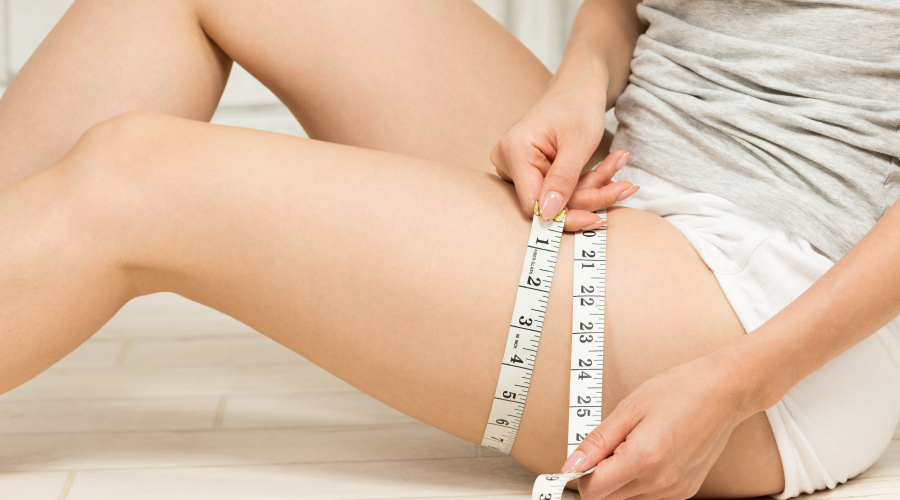

The most stubborn lower body fat — here’s the honest science and what to do about it
Inner thigh fat is one of the most searched body-specific fat loss topics — and one of the most frustrating. People do inner thigh exercises religiously, try special diets, and still find this area clinging on long after other parts of the body have slimmed down.
There are specific biological reasons for this — and understanding them changes what you actually do about it.

Why Inner Thigh Fat Is So Stubborn
Estrogen and Lower Body Fat Storage
Inner thigh fat is primarily subcutaneous fat that accumulates under direct influence of estrogen. In women, estrogen actively directs fat storage to the inner thighs, hips, and buttocks — an evolutionary adaptation that provides energy reserves for pregnancy and breastfeeding.
Estrogen receptors in inner thigh fat cells are particularly dense, keeping these cells in “storage mode” and resisting the hormonal signals that would otherwise trigger fat release. This is why inner thigh fat tends to be the last to respond to fat loss — it’s biologically protected.
Alpha-2 Adrenergic Receptors
Like hip and thigh fat generally, inner thigh fat has a high concentration of alpha-2 adrenergic receptors — receptors that respond to adrenaline by inhibiting fat breakdown rather than promoting it. This receptor imbalance makes inner thigh fat physiologically more resistant to mobilization than fat in other areas.
The Spot Reduction Myth
Before anything else: inner thigh exercises — leg lifts, inner thigh squeezes, adductor machine work — build the muscles in the inner thigh area but do absolutely nothing to burn the fat overlying those muscles. Spot reduction doesn’t exist. It has been studied repeatedly and consistently disproven.
The only way to reduce inner thigh fat is through overall fat loss — a sustained calorie deficit that eventually draws from inner thigh stores after other areas have responded. Inner thigh exercises have value for shaping the area — but not for fat removal.
What Actually Works for Inner Thigh Fat
1. Overall Fat Loss — The Non-Negotiable Foundation
Inner thigh fat responds to the same overall fat loss approach that reduces fat everywhere — just later and more slowly than most other areas.
Most people need to reach a relatively low overall body fat percentage before inner thigh fat begins responding noticeably:
- Women: Inner thigh fat often persists until body fat reaches 22–26% or lower, depending on genetics
- Men: Inner thigh fat is less common but typically responds at body fat below 18–20%
This means the approach has to be long-term and consistent — not a 4-week fix. The complete fat loss framework is in our guide to how to get rid of belly fat.
2. Targeted Inner Thigh Muscle Development
While you can’t spot-reduce inner thigh fat, building the adductor muscles (the inner thigh muscle group) creates definition and shape that dramatically improves how the inner thigh looks as fat reduces.
Well-developed adductors alongside reduced fat produce the “toned” inner thigh appearance most people are aiming for. Underdeveloped adductors with reduced fat can look flat and undefined.
The best exercises for inner thigh muscle development:
Sumo Squats (Wide Stance Squats) — feet positioned wider than shoulder width, toes turned out to approximately 45 degrees. This foot position specifically activates the adductors (inner thigh muscles) more than standard squats. Lower slowly, press through heels. One of the most effective inner thigh exercises available.
Lateral Lunges (Side Lunges) — step directly to the side into a lunge, keeping the stepping foot flat and the opposite leg straight. The lateral movement specifically loads the adductors of the stepping leg through a range of motion standard lunges don’t reach.
Sumo Deadlifts — similar wide stance to sumo squats but with a hip hinge rather than a squat pattern. Develops the inner thighs alongside the glutes and hamstrings.
Adductor Machine (gym) — sitting in the machine with legs spread, press knees together against resistance. The most direct inner thigh isolation exercise available in a gym.
Cable Hip Adduction — standing with a cable attached to the ankle, pull the leg across the body against resistance. More functional than the machine and develops the adductors through a standing movement pattern.
Resistance Band Squats with Adduction — place a resistance band around the ankles, perform a squat, then squeeze knees together at the top against the band resistance. Adds adductor activation to a fundamental movement.
Pilates Inner Thigh Series — lying on your side, lift and lower the bottom leg (inner thigh lift) through a controlled range. Less intense than weighted exercises but genuinely effective for developing adductor endurance and tone.
Perform inner thigh-focused exercises 2–3 times per week. As with all muscle development, progressive overload — gradually increasing resistance, reps, or sets over time — is essential for continued improvement.
3. Reduce Lower Body Fluid Retention
The inner thighs are particularly prone to fluid retention — especially in women. Hormonal fluctuations throughout the menstrual cycle cause significant water retention in the lower body, which can make inner thighs appear substantially larger than their actual fat content.
What reduces inner thigh fluid retention quickly:
- Reduce sodium — to under 1,500mg per day for a week. The fastest visible intervention for lower body puffiness.
- Increase potassium — bananas, avocado, leafy greens, lentils. Counteracts sodium’s fluid-retaining effects.
- Stay hydrated — adequate water intake signals the body to release retained fluid.
- Elevate legs — lying with legs elevated above heart level for 15–20 minutes promotes fluid drainage from the lower extremities.
- Move regularly throughout the day — prolonged sitting allows fluid to pool in the lower body. Regular movement pumps it back into circulation.
As covered in our article on how to lose water weight fast, addressing fluid retention can produce visible changes in days — sometimes appearing as significant fat loss when it’s actually fluid reduction.
4. High Protein Diet for Muscle Preservation and Fat Loss
The same protein targets that support fat loss throughout the body apply to inner thigh fat reduction — with the additional importance of supporting the adductor muscle development that shapes the area.
Without adequate protein, fat loss from the inner thighs produces a flat, undefined result rather than the toned appearance most people are aiming for.
Aim for 0.7–1g per pound of bodyweight daily. Our guide to how much protein you actually need per day covers practical food sources and strategies.
5. Cardio That Engages the Inner Thighs
While no cardio specifically burns inner thigh fat (no spot reduction), certain cardio activities provide greater adductor activation that contributes to muscle development in this area:
Lateral movement activities — side shuffles, lateral band walks, agility drills, and side-to-side exercises engage the adductors more than straight-ahead running or cycling.
Swimming — the breaststroke kick specifically activates the inner thighs and provides excellent adductor development alongside cardiovascular fat burning.
Skating and rollerskating — the pushing motion of skating strongly activates the inner thighs.
Horse riding — gripping the horse activates the adductors constantly throughout a session.
These activities develop the inner thigh muscles alongside calorie-burning cardio — a useful combination even though neither specifically targets inner thigh fat.
6. Manage Estrogen and Hormonal Health
Since estrogen directly drives inner thigh fat storage, factors that improve hormonal balance can make inner thigh fat slightly more responsive:
Reduce alcohol — alcohol impairs liver function and hormone metabolism, contributing to estrogen dominance.
Maintain healthy gut bacteria — the gut microbiome plays a role in estrogen metabolism. A diet rich in fiber and fermented foods supports better estrogen processing.
Cruciferous vegetables — broccoli, cauliflower, and Brussels sprouts contain compounds (DIM, indole-3-carbinol) that support healthy estrogen metabolism.
Manage body fat overall — fat tissue produces estrogen. Lower overall body fat reduces the estrogen production that drives lower body fat storage.
These interventions have modest effects but address a root cause of inner thigh fat stubbornness.
The Inner Thigh Gap Question
The “thigh gap” — space between the inner thighs when standing with feet together — has become a widely discussed aesthetic goal.
The honest reality: whether you can achieve a thigh gap depends primarily on hip width and bone structure, not just on fat or muscle. People with wider hip bones have a natural separation between the thighs when standing. People with narrower hip bones may never have a thigh gap regardless of body fat percentage.
This is important to understand because:
- Pursuing a thigh gap at unhealthy body fat levels is not worth the health cost
- Some people will achieve a thigh gap at healthy body fat percentages due to their structure
- Others will not, regardless of how lean they become
- Toned, strong inner thighs without a gap are equally healthy and aesthetically appealing
Set goals around health, strength, and realistic body composition — not gaps that may not be achievable with your bone structure.
A Practical Inner Thigh Fat Loss Plan
3x per week strength training:
- Sumo squats: 4 sets of 12–15
- Lateral lunges: 3 sets of 10 per side
- Sumo deadlifts: 3 sets of 10
- Resistance band adduction squats: 3 sets of 15
- Pilates inner thigh lifts: 3 sets of 15 per side
Daily:
- 8,000–10,000 steps
- Post-meal walks (10–15 minutes after dinner minimum)
Diet:
- Moderate calorie deficit (400–500 below maintenance)
- High protein (0.7–1g per pound of bodyweight)
- Reduced sodium to manage fluid retention
- Minimal added sugar and alcohol
Sleep and stress:
- 7–9 hours sleep
- Active daily stress management
Timeline expectations:
- Weeks 1–2: Fluid reduction producing early visual improvement
- Weeks 4–8: Overall fat loss beginning. Adductor muscle development visible
- Weeks 8–16: Meaningful combination of fat loss and muscle development improving inner thigh appearance
- Months 4–6+: Inner thigh fat beginning to respond as overall body fat decreases
What to Expect Honestly
Inner thigh fat is among the most stubborn fat deposits in the body — particularly for women. Even with consistent, well-executed fat loss efforts, inner thigh fat often persists until overall body fat has decreased significantly.
This requires patience that goes beyond what most fat loss programs encourage. Six months to a year of consistent effort is a realistic expectation for meaningful inner thigh fat reduction — not four weeks.
Progress tracking should include measurements, progress photos, and strength improvements — not just scale weight, which fluctuates significantly due to the fluid retention that’s common in this area.
For the broader context of lower body fat loss and the typical order in which fat responds, our article on how to lose thigh fat covers the full picture.
The Bottom Line
Inner thigh fat is biologically stubborn — more so than most other fat deposits — due to estrogen receptor density, alpha-2 receptor concentration, and the evolutionary protective function of lower body fat.
The strategies that work:
- Overall fat loss through a sustained calorie deficit — the essential foundation
- Targeted adductor muscle development (sumo squats, lateral lunges, adductor exercises) to shape the area
- Sodium reduction and fluid management for faster visible improvement
- Adequate protein to support muscle development alongside fat loss
- Patience with a longer timeline than abdominal fat
Inner thigh fat does respond — it just requires consistent effort over a longer period and a realistic understanding of the biological obstacles.
Is the inner thigh your most frustrating fat storage area? Share in the comments — you’re in very good company, and hearing others’ experiences and timelines can be genuinely reassuring.
Stop Wondering What to Eat This Week
Get my free 7-Day High-Protein Weight Loss Meal Plan delivered straight to your inbox — a simple week of satisfying, protein-focused meals designed to make healthy eating easier without complicated calorie tracking.
- 7 full days of breakfast, lunch, dinner & snacks
- One complete shopping list for the whole week
- A quick high-protein food cheat sheet
- Simple daily tips to help you stay on track
Free PDF • Delivered by email • Unsubscribe anytime
Check your inbox 💜
Your free 7-day high-protein meal plan is on its way.