
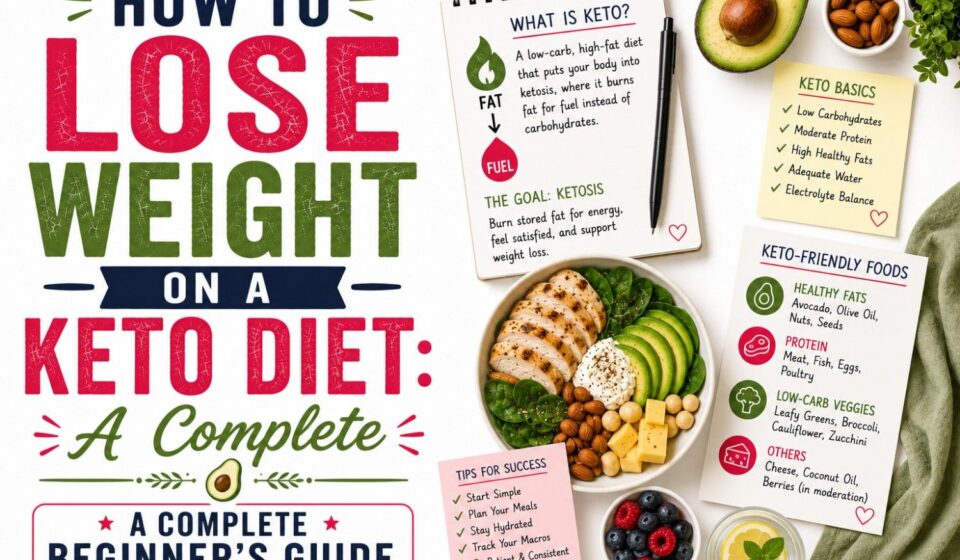

Everything you need to start keto correctly — what to eat, what to avoid, how to get into ketosis, and what to expect

The ketogenic diet is one of the most effective approaches for rapid initial fat loss — and one of the most misunderstood. Done correctly, keto produces significant results, particularly for people with insulin resistance or metabolic syndrome. Done incorrectly, it produces the “keto flu,” stalled results, and unnecessary frustration.
This guide covers everything a beginner needs to start keto correctly.
What Is the Keto Diet?
The ketogenic diet dramatically reduces carbohydrate intake and replaces it with fat, putting the body into a metabolic state called ketosis.
Standard keto macros:
- Carbohydrates: under 50g per day (ideally under 20–30g for reliable ketosis)
- Fat: 65–75% of total calories
- Protein: 20–25% of total calories
In ketosis, the liver converts fat into ketone bodies — an alternative fuel source that the brain and body can use instead of glucose. This shift from glucose to fat/ketone metabolism is what drives keto’s distinctive effects.
Why keto works for weight loss:
- Dramatically reduces insulin levels — the primary fat-storage hormone
- Significantly suppresses appetite in most people (ketones have appetite-suppressing effects)
- Forces the body to burn fat for fuel
- Eliminates many of the calorie-dense processed foods that drive weight gain
- Produces rapid initial scale results (partly from glycogen and water loss — more on this below)
The Keto Carb Limit: Getting Into Ketosis
The most important number in keto: net carbs per day.
Net carbs = total carbohydrates minus fiber (fiber doesn’t spike blood glucose)
To achieve ketosis:
- Under 50g net carbs per day: most people reach ketosis
- Under 30g net carbs per day: more reliable ketosis for most people
- Under 20g net carbs per day: virtually guaranteed ketosis
For beginners, targeting under 30g net carbs per day is a reliable starting point.
How long to reach ketosis: 2–7 days of strict carb restriction, depending on activity level and individual metabolism. Exercise speeds the transition by depleting glycogen faster.
How to know you’re in ketosis:
- Ketone breath (fruity or acetone smell) — most people notice this
- Increased urination (ketosis produces diuresis)
- Metallic taste in mouth
- Initial fatigue followed by increased mental clarity
- Reduced hunger
- Testing: urine ketone strips (cheap, accessible), blood ketone meters (more accurate)
What to Eat on Keto
Yes Foods (Eat Freely)
Protein:
- Beef, pork, lamb, chicken, turkey (all cuts)
- Fish and seafood (salmon, tuna, sardines, shrimp, cod)
- Eggs (unlimited — extremely keto-friendly)
- Bacon and sausage (check labels for added sugar)
Fats:
- Butter and ghee
- Olive oil, avocado oil, coconut oil
- Heavy cream
- Avocado
- Cheese (all varieties)
- Nuts and nut butters (in moderation — see below)
Vegetables (non-starchy only):
- Leafy greens (spinach, kale, arugula, lettuce)
- Zucchini, cucumber, celery
- Broccoli, cauliflower, Brussels sprouts
- Peppers, mushrooms, asparagus
- Onion and garlic (in small amounts — moderate carbs)
Dairy:
- Cheese (all types)
- Heavy cream
- Greek yogurt (plain, full fat — in small amounts, has some carbs)
- Butter
Eat in Moderation
Nuts and seeds: Healthy but carb-containing. Best options: macadamia nuts (lowest carb), pecans, walnuts, almonds. Limit to a small handful per day.
Berries: The lowest-carb fruit. Half a cup of raspberries or strawberries fits in a keto day. Avoid most other fruits.
Full-fat dairy: Small amounts of whole milk, Greek yogurt — track the carbs.
No Foods (Avoid Completely)
Grains and starches:
- Bread, pasta, rice, oats, cereal
- Potatoes, sweet potatoes, corn
- Crackers, chips, pretzels
Sugar and sweeteners:
- Table sugar, honey, maple syrup, agave
- Candy, chocolate (except 85%+ dark chocolate in small amounts)
- Soda and sweetened beverages
- Fruit juice
Most fruit:
- Bananas, apples, oranges, grapes, mangoes — too high in carbs
- Berries are the exception in small amounts
Legumes:
- Beans, lentils, chickpeas — surprisingly high in carbs for keto
“Low-fat” and “diet” products:
- Often replace fat with sugar and starch — the opposite of keto
Setting Up Your Keto Macros
To calculate your keto targets:
Step 1: Calculate TDEE (as covered in our guide to how many calories should I eat to lose weight)
Step 2: Create a calorie deficit (500–750 calories for fat loss)
Step 3: Set macros:
- Carbs: 20–30g net carbs per day (non-negotiable)
- Protein: 0.7–1g per pound of bodyweight (critical — don’t neglect this)
- Fat: fill remaining calories with fat
Example for a 160 lb person with a 1,600 calorie target:
- Carbs: 25g net (100 calories)
- Protein: 130g (520 calories)
- Fat: 109g (980 calories)
Important: Protein on keto is often under-emphasized because “keto is high fat.” But adequate protein is essential for muscle preservation. Don’t sacrifice protein for fat.
As covered in our guide to how much protein you actually need per day, protein targets don’t change on keto — they’re as important as ever.
The Keto Flu: What It Is and How to Manage It
The “keto flu” is the most common reason beginners quit before reaching ketosis. Understanding it in advance makes it manageable.
What it is: In the first 3–7 days of carb restriction, the body excretes significant electrolytes (sodium, potassium, magnesium) alongside the glycogen and water it’s releasing. This electrolyte depletion produces flu-like symptoms.
Symptoms:
- Headache
- Fatigue and brain fog
- Nausea
- Muscle cramps
- Irritability
- Dizziness
How to prevent and manage it:
Salt aggressively: Add extra salt to food. Drink broth (bone broth or regular). The sodium loss is the primary driver of most keto flu symptoms.
Supplement magnesium: 300–400mg of magnesium glycinate or magnesium citrate at bedtime. Reduces muscle cramps and improves sleep during adaptation.
Eat potassium-rich keto foods: Avocado, leafy greens, salmon.
Stay very well hydrated: Keto is diuretic — you need significantly more water than usual.
Don’t restrict calories too aggressively at first: The transition is harder when simultaneously restricting calories significantly. Some people benefit from eating to satiety in the first 1–2 weeks before adding a calorie deficit.
Most keto flu symptoms resolve completely within 3–7 days once electrolyte balance is restored.
What to Expect: The First Month
Week 1: Rapid Weight Loss and Adaptation
Scale: Drops 3–8 lbs rapidly — mostly from glycogen and water release as carbohydrate stores are depleted. This is real scale change, not fat — as covered in our article on why weight loss stops after the first week.
Days 1–3: Possible keto flu symptoms (manage with electrolytes) Days 3–7: Symptoms typically resolve, early signs of ketosis appear End of week 1: Most people are in ketosis, hunger beginning to reduce
Week 2–3: Adaptation and Appetite Suppression
The distinctive keto experience emerges in weeks 2–3:
- Appetite reduces significantly — ketones suppress hunger
- Energy stabilizes (the initial fatigue resolves)
- Mental clarity often improves
- Cravings for carbohydrates and sugar reduce
Week 3–4: Genuine Fat Loss
After the initial glycogen/water loss, ongoing fat loss at 0.5–1.5 lbs per week (depending on deficit size) continues. The scale moves more slowly than week 1 but represents actual fat reduction.
Month 1 total: 8–15 lbs on scale (mostly fluid early + fat ongoing), 3–6 lbs actual fat
Common Keto Mistakes
Not tracking carbs carefully enough: Hidden carbs in sauces, dressings, processed meats, and restaurant food can kick you out of ketosis without you realizing. Track everything, at least initially.
Eating too little protein: “Keto is high fat” leads many people to eat too little protein — the most important macronutrient for muscle preservation.
Not managing electrolytes: The most common cause of keto flu and early dropout. Salt everything, supplement magnesium.
Eating too many calories from fat: Fat is calorie-dense. “Eating keto” without managing total calories can produce zero calorie deficit and zero fat loss. Keto still requires a deficit.
Giving up during the keto flu: Days 2–4 are the hardest. Most people who push through to day 7 find it dramatically easier.
Adding dairy without tracking: Cheese and cream have minimal carbs — but “minimal” multiplied by large amounts adds up. Track dairy.
Eating “keto products”: Many packaged keto foods (bars, cookies, bread) are ultra-processed with hidden carbs and poor satiety. Whole food keto produces better results.
Keto vs. Other Approaches: Who Should Do It?
Keto is particularly well-suited for:
- People with insulin resistance or metabolic syndrome
- People who find appetite suppression from ketosis a significant advantage
- People who don’t miss carbohydrates much
- People with type 2 diabetes (under medical supervision)
- People who want clear, simple food rules
As covered in our article on what is the best diet for weight loss, no dietary approach is universally superior — adherence determines outcomes more than any specific macronutrient ratio. Keto works exceptionally well for the people who can maintain it.
Keto is less suitable for:
- People who love carbohydrates and find restriction miserable
- Endurance athletes (carbohydrates support high-intensity performance)
- People with certain kidney conditions (higher protein and fat intake)
- Pregnant women (without medical supervision)
Maintaining Ketosis Long-Term
For people who find keto sustainable:
Stay under 30g net carbs daily — this is the non-negotiable maintenance requirement
Continue tracking — at least until the carb content of your regular foods is automatic knowledge
Refeed strategically if needed — some people do well with 1 higher-carb day per week (cyclical keto) once fat loss goals are reached
Monitor electrolytes indefinitely — keto’s diuretic effect continues beyond the adaptation period
The Bottom Line
Starting keto correctly requires:
- Carbs under 30g net per day — the non-negotiable foundation
- Adequate protein (0.7–1g per pound) — don’t neglect this
- Aggressive electrolyte management — salt, magnesium, potassium
- Tracking carefully initially — hidden carbs are everywhere
- Pushing through the keto flu — it resolves within a week
Expect 3–8 lbs rapid scale loss in week 1 (glycogen/water), then 0.5–1.5 lbs of ongoing fat loss per week. Appetite suppression typically arrives in weeks 2–3 and is the defining advantage of keto for many people.
For the foundational fat loss principles that apply regardless of dietary approach, our guide to how to get rid of belly fat covers everything in one place.
Have you tried keto — and did you push through the keto flu to experience the benefits? Share your experience in the comments.