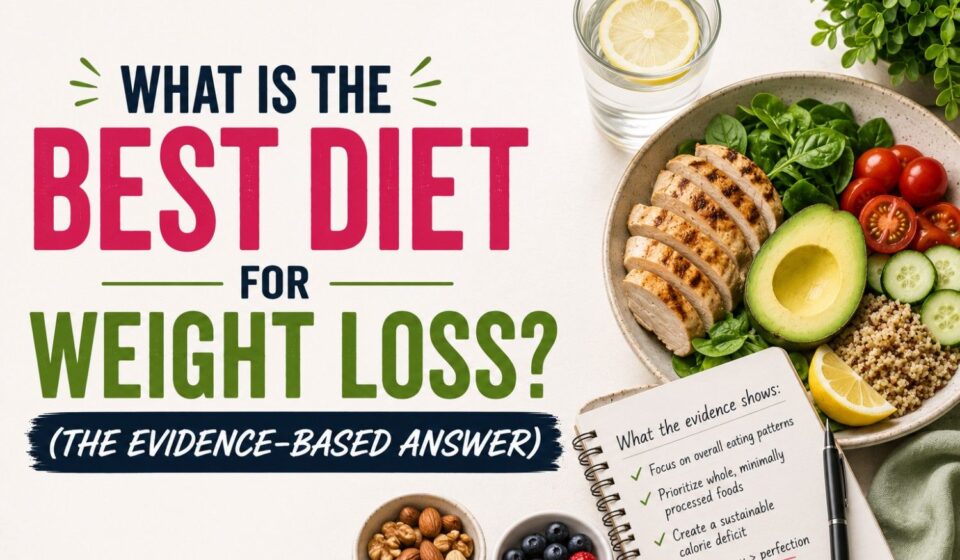

The best diet for weight loss is one that helps you consistently reduce calorie intake, provides adequate nutrition, and fits your lifestyle well enough to maintain over time. For most adults, a Mediterranean-style eating pattern is a strong starting point, but low-carb, plant-based, DASH, and other approaches can also work.
That’s probably less exciting than being told one particular diet is the secret to losing weight.
But after decades of research comparing low-fat diets, low-carbohydrate diets, intermittent fasting, and other popular approaches, the evidence doesn’t support a single winner for everyone.

What makes the decision interesting is that diets can produce similar weight-loss results while offering different advantages for heart health, blood sugar management, convenience, and personal preferences.
Someone who enjoys rice, beans, fruit, and whole grains may find a ketogenic diet unnecessarily restrictive. Another person might find that reducing carbohydrates makes managing hunger easier.
Neither person necessarily needs to eat like the other.
Here’s what the research actually tells us about the most popular diets—and how to choose an approach that’s worth following.
What Does the Research Say About the Best Diet?
One of the most revealing weight-loss studies was the DIETFITS trial, published in JAMA in 2018.
Researchers randomly assigned 609 adults with overweight to either a healthy low-fat diet or a healthy low-carbohydrate diet for 12 months.
Both groups received guidance emphasizing nutritious foods and dietary quality.
At the end of the study:
- The healthy low-fat group lost an average of approximately 11.7 pounds.
- The healthy low-carb group lost an average of approximately 13.2 pounds.
- The difference between groups was not statistically significant.
The study also found that the genetic patterns and baseline insulin measurements examined by researchers did not reliably identify which diet would produce better results.
This matters because many diet programs claim your genetics, metabolism, or insulin levels automatically determine the ideal way for you to eat.
The evidence is considerably less certain.
A larger 2020 systematic review published in The BMJ analyzed 121 randomized trials involving more than 21,000 participants.
It found that several popular dietary approaches produced modest improvements in weight and certain cardiovascular risk factors over six months.
Differences between diets were generally small, and weight-loss benefits tended to diminish by 12 months.
That doesn’t mean every diet is identical or that food choices don’t matter.
It means the evidence doesn’t justify claiming that keto, low-fat eating, or another popular diet is universally superior for weight loss.
Why Consistency Matters So Much
A dietary pattern can be effective in a clinical trial and still be impractical for someone in everyday life.
Consider two approaches:
One asks you to eliminate most carbohydrates, prepare separate meals from your family, and avoid many foods you enjoy.
The other allows familiar meals with adjustments to portions, protein, and vegetables.
Either might work physiologically.
But if you can comfortably follow the second approach for six months while abandoning the first after two weeks, the second is likely to be more useful for you.

Consistency isn’t the only determinant of weight loss. Health conditions, medications, energy intake, behavioral support, and biological differences also matter.
But an eating plan you can maintain has a major practical advantage over one you repeatedly abandon.
The Best Diets for Weight Loss Compared
Here’s how six popular approaches compare based on research, nutritional considerations, and everyday practicality.
| Diet | Weight-loss evidence | Main advantage | Main drawback |
|---|---|---|---|
| Mediterranean | Strong | Good overall nutritional quality and cardiovascular benefits | Portions still matter for weight loss |
| Low-carb / keto | Effective, especially short term | Some people find carbohydrate restriction helpful for appetite management | Restrictive; nutritional quality can vary |
| Intermittent fasting | Can work, but generally not superior to standard dietary advice | Simple eating schedule | Hunger and scheduling difficulties |
| Plant-based / vegan | Effective when appropriately planned | Can provide substantial fiber and plant-food variety | Strict vegan diets require nutritional planning |
| DASH | Strong as a healthful eating pattern | Particularly useful for blood pressure management | Doesn’t automatically create a calorie deficit |
| Calorie counting / flexible eating | Effective behavioral strategy | No required food exclusions | Tracking can be tedious or stressful |
There’s no need to rank them by imagined fat-burning power.
Instead, let’s look at what each actually offers.
1. Mediterranean Diet: A Strong Overall Starting Point
The Mediterranean diet emphasizes vegetables, fruit, legumes, whole grains, nuts, olive oil, and fish.
It typically includes moderate amounts of dairy and poultry, while limiting processed meats and foods high in saturated fat.
Unlike highly restrictive diets, it doesn’t require eliminating entire food groups.
Why It Can Work for Weight Loss
Mediterranean-style meals can be rich in fiber, protein, and satisfying foods.
For example, a lunch of grilled chicken, chickpeas, vegetables, and olive oil can provide a combination of nutrients that helps you stay satisfied.
However, the Mediterranean diet isn’t automatically low in calories.
Olive oil, nuts, cheese, and other nutritious foods can contribute substantial energy in large portions.
If weight loss is your goal, overall intake still matters.
Its Biggest Advantage Goes Beyond Weight Loss
The Mediterranean dietary pattern has substantial evidence supporting cardiovascular health.
That makes it a particularly appealing option for people who want to improve their overall diet rather than focus exclusively on a scale number.
However, some frequently cited studies, including PREDIMED, primarily investigated cardiovascular outcomes rather than demonstrating that the Mediterranean diet produces the greatest weight loss.
That’s an important distinction.
Best suited to: People who enjoy varied meals, prefer flexibility, and want an eating pattern with strong evidence for cardiovascular health.
For practical meal ideas, see our guide to losing weight with a Mediterranean diet.
2. Low-Carb and Keto Diets: Effective, but Not Essential
Low-carbohydrate diets reduce carbohydrate intake while generally increasing the relative contribution of protein, fat, or both.
There isn’t one universally accepted definition of low-carb eating.
Ketogenic diets are more restrictive, often limiting carbohydrates to approximately 20–50 grams daily to encourage nutritional ketosis.
Why Some People Like Them
Reducing refined carbohydrates and carbohydrate-rich snack foods may simplify food choices.
Some people also report greater fullness or fewer cravings when following a higher-protein, lower-carbohydrate eating pattern.
Early scale changes can be substantial, partly because changes in glycogen stores affect water weight.
That initial loss isn’t necessarily all body fat.
Are Low-Carb Diets Better for Fat Loss?
Not consistently over the long term.
Research has found that low-carbohydrate and low-fat dietary approaches can both produce meaningful weight loss.
Certain low-carb approaches may improve triglycerides or blood glucose measurements, particularly in people with type 2 diabetes.
But that doesn’t establish keto as the best choice for everyone with insulin resistance or diabetes.
Some versions of keto are high in saturated fat and may increase LDL cholesterol. Highly restrictive carbohydrate limits can also make adequate fiber intake more challenging.
People using insulin or medications that can cause hypoglycemia should seek medical guidance before substantially reducing carbohydrate intake.
Best suited to: Adults who genuinely prefer lower-carbohydrate meals and can maintain good nutritional quality without feeling overly restricted.
Our low-carb weight-loss guide explains how to approach carbohydrate reduction without assuming you need to eliminate every starch or piece of fruit.
3. Intermittent Fasting: More About Timing Than Food Choices
Intermittent fasting changes when you eat rather than prescribing a particular combination of foods.
Common approaches include:
- 12:12: A 12-hour eating window and a 12-hour overnight fast.
- 16:8: Eating within an eight-hour window.
- 5:2: Eating normally on five days and substantially restricting calories on two.
For someone who isn’t hungry in the morning, delaying breakfast may feel perfectly natural.
For someone else, skipping breakfast might lead to discomfort, difficulty concentrating, or overeating later.
What the Latest Research Says
A 2026 Cochrane systematic review examined 22 randomized trials involving 1,995 adults with overweight or obesity.
It concluded that intermittent fasting may make little to no difference in weight loss compared with traditional dietary advice.
The review also noted limitations in the evidence, particularly regarding long-term outcomes.
This doesn’t mean intermittent fasting cannot help.
It means restricting your eating window isn’t a proven shortcut around the usual principles of weight management.
Some people find the structure convenient because it reduces opportunities for unplanned snacking.
Others find the schedule disruptive or restrictive.
Best suited to: Adults who naturally prefer fewer eating occasions and can meet their nutritional needs within a comfortable schedule.
Read our detailed breakdown of whether intermittent fasting is worth it before committing to a strict fasting routine.
Fasting may be inappropriate for people with eating disorders, during pregnancy, or with certain medical conditions or medications without professional supervision.
4. Plant-Based and Vegan Diets: Fiber-Rich and Flexible
Plant-based eating emphasizes foods such as vegetables, fruit, beans, lentils, whole grains, nuts, seeds, and soy products.
A strictly vegan diet excludes animal products entirely.
These approaches overlap, but they’re not identical.
Someone can eat mostly plant-based meals while occasionally consuming eggs or fish. A vegan diet has a stricter definition.
Why Plant-Based Diets Can Help
Many plant foods contain substantial fiber and water, which can make meals satisfying relative to their calorie content.
Consider a bowl containing lentils, roasted vegetables, brown rice, and a yogurt-free tahini dressing.
It provides protein, fiber, carbohydrates, and fats without requiring highly specialized ingredients.
But a vegan diet doesn’t automatically cause weight loss.
Vegan cookies, chips, sweetened beverages, and many other foods can still be calorie-dense.
Nutritional Considerations
A well-planned plant-based diet can be nutritionally adequate, but stricter patterns require more attention.
People following a fully vegan diet need a reliable source of vitamin B12 through fortified foods or supplements.
Iron, calcium, vitamin D, iodine, omega-3 fats, and protein may also require planning depending on food choices.
Best suited to: People who enjoy plant foods or have ethical, environmental, or personal reasons for reducing animal products.
Our plant-based weight-loss guide covers how to build satisfying meals while paying attention to important nutrients.
5. DASH Diet: Particularly Valuable for Blood Pressure
DASH stands for Dietary Approaches to Stop Hypertension.
It emphasizes vegetables, fruit, whole grains, beans, nuts, lean proteins, and low-fat or fat-free dairy products.
The eating plan also encourages reducing sodium and limiting foods high in saturated fat.
What Makes DASH Different?
DASH was developed primarily to improve blood pressure, not to win a weight-loss competition.
Clinical research has shown that DASH-style eating can lower blood pressure, and reducing sodium can provide additional benefits.
Weight loss is also possible when the plan is adapted to meet appropriate calorie needs.
For example, a DASH-style dinner might include baked fish, brown rice, steamed vegetables, and fruit.
There’s no complicated food combination or special supplement involved.
The emphasis is on overall nutritional quality.
Best suited to: Adults with elevated blood pressure or those who want a structured, heart-conscious eating pattern.
If hypertension is part of your weight-management picture, our guide to losing weight with high blood pressure explains additional considerations.
6. Flexible Eating and Calorie Counting: A Different Kind of Approach
Calorie counting isn’t technically a distinct dietary pattern.
It’s a method of monitoring energy intake that can be combined with Mediterranean, low-carb, vegetarian, or other eating styles.
It allows considerable food flexibility.
You can eat pasta, bread, fruit, dairy, or dessert while still working toward an appropriate calorie target.
Why It Can Be Useful
Tracking can help reveal patterns that aren’t immediately obvious.
For example, you might discover that your meals are fairly balanced but that frequent drinks, sauces, or snacks contribute more calories than expected.
That information can guide relatively small changes.
But calorie tracking has limitations.
Food labels and databases are estimates, restaurant portions vary, and logging every ingredient can become burdensome.
For some people, tracking also increases anxiety or food preoccupation.
You don’t need to count calories forever—or at all—to successfully manage your weight.
Best suited to: People who enjoy numerical feedback and find tracking informative rather than stressful.
So Which Diet Should You Actually Choose?
If you don’t have a medical reason to follow a specific dietary pattern, I’d generally start with a flexible Mediterranean-style approach.
Not because it guarantees the fastest fat loss, but because it offers a useful combination of food variety, nutritional quality, and cardiovascular benefits without requiring extreme restrictions.
You can also borrow practical ideas from other approaches.
For example, you might eat Mediterranean-style meals, prioritize protein, and use simple calorie awareness without weighing every ingredient.
You don’t need to pledge allegiance to a named diet to benefit from its useful features.
A Simple Decision Guide
| Your main concern | A reasonable starting approach |
|---|---|
| I want balanced eating without complicated rules | Mediterranean-style eating |
| I enjoy meat, vegetables, and fewer starches | Moderately low-carb |
| I dislike eating breakfast and prefer fewer meals | Time-restricted eating, if appropriate |
| I enjoy beans, grains, vegetables, and plant proteins | Plant-based |
| I have high blood pressure | DASH, with individualized care |
| I prefer numbers and structured targets | Flexible calorie tracking |
| I hate restrictive dieting | Balanced meals and gradual portion changes |
Your health conditions can change the recommendation.
For example, someone with chronic kidney disease may need individualized protein or mineral targets, while someone taking glucose-lowering medication may need adjustments before fasting or substantially reducing carbohydrates.
A registered dietitian can help tailor the eating pattern to those requirements.
What Actually Makes a Weight-Loss Diet Work?
The strongest diet isn’t necessarily the one with the most restrictions.
Several practical features matter across different approaches.
1. An Appropriate Calorie Deficit
For most adults intentionally losing body fat, energy intake needs to be lower than energy expenditure over time.
Different diets may help accomplish this by changing food choices, portions, hunger, or eating opportunities.
However, the body adapts during weight loss, and calorie needs can change.
Our free daily calorie needs calculator can help estimate your starting energy requirements.
You can then explore an individualized target with the calorie deficit calculator.
These tools provide estimates rather than medical prescriptions or guarantees of weight loss.
2. Enough Protein
Protein supports muscle maintenance, recovery, and fullness.
It’s especially relevant when you’re losing weight and performing resistance training.
You don’t need enormous quantities, though.
Protein requirements depend on body size, activity, age, and health conditions. Extremely high-protein diets aren’t necessary for everyone and may be unsuitable for some people.
Use our protein calculator to explore a starting estimate, then adjust with professional guidance when appropriate.
3. Fiber and Nutrient-Dense Foods
A nutritious eating pattern should make room for vegetables, fruit, legumes, whole grains, and other sources of fiber.
These foods support digestive health and contribute vitamins and minerals.
They can also make meals more satisfying.
That doesn’t mean every food must be fresh or minimally processed.
Frozen vegetables, canned beans, plain yogurt, and whole-grain bread are convenient examples of processed foods that can fit into a healthy diet.
The important distinction is overall nutritional quality, not whether a food comes in packaging.
4. Flexibility
A diet that forbids every food you enjoy may be difficult to maintain.
A more flexible approach leaves room for family dinners, restaurants, celebrations, and occasional desserts.
One higher-calorie meal doesn’t automatically erase several weeks of progress.
You should be able to return to your regular routine without feeling that you’ve failed.
5. A Maintenance Plan
Weight loss and weight maintenance are related but different challenges.
As body weight decreases, energy requirements often change. Appetite, daily routines, and other factors can also make long-term maintenance difficult.
A realistic diet should help you develop habits you can continue after reaching your goal.
Our guide to maintaining weight loss long-term explains why this phase deserves as much attention as the initial weight-loss process.
How to Build a Weight-Loss Diet Without Following a Named Plan
If Mediterranean, keto, DASH, and intermittent fasting all sound too complicated, you can start with a simpler approach.
Build meals around a few basic components.
A Practical Meal-Building Formula
For a typical lunch or dinner, consider:
- A substantial serving of vegetables.
- A protein source such as chicken, fish, eggs, tofu, or beans.
- A suitable portion of carbohydrates such as rice, potatoes, or whole grains.
- Some dietary fat, such as olive oil, nuts, seeds, or avocado.
A familiar plate-based starting point is approximately half vegetables or fruit, one-quarter protein-rich foods, and one-quarter grains or starchy vegetables.
This is a visual planning aid, not an exact requirement for every person or meal.
Your portions should reflect your needs, preferences, and health circumstances.
Three Different Diets, Three Normal Dinners
| Eating style | Example dinner |
|---|---|
| Mediterranean | Baked salmon, roasted potatoes, Greek-style salad |
| Moderate low-carb | Grilled chicken, sautéed vegetables, avocado |
| Plant-based | Lentil chili, brown rice, mixed vegetables |
All three can contribute to weight loss if overall intake is appropriate.
None needs a special detox, metabolic booster, or expensive ingredient.
That’s one of the most useful lessons from comparative diet research: you have genuine flexibility.
How to Tell Whether Your Chosen Diet Is Working
You don’t need to change diets every time the scale stops moving for a few days.
Body weight fluctuates because of hydration, digestion, sodium intake, and many other factors.
Instead, evaluate your approach over several weeks.
Consider these questions:
Are your weight trends moving in the intended direction? If weight loss is appropriate for you, compare measurements taken under similar conditions rather than individual days.
Are you consistently hungry or exhausted? Persistent hunger, fatigue, or dizziness may indicate that the plan is too restrictive or otherwise unsuitable.
Are you meeting your nutritional needs? A diet shouldn’t routinely leave you struggling to eat enough protein, fiber, vitamins, or minerals.
Can you eat with other people? Social flexibility matters more than many diet programs acknowledge.
Could you follow this for another three months? If the thought feels unbearable, consider making the plan less restrictive.
You may need to adjust food portions, activity, meal composition, or tracking habits.
That doesn’t necessarily mean you chose the wrong diet.
The best diet isn’t the one with the strictest rules or the fastest first-week results. It’s the one that supports your health and still fits your life when the initial motivation wears off.
When a Popular Diet May Not Be the Right Answer
Dietary changes aren’t always sufficient or appropriate on their own.
If you have diabetes, kidney disease, cardiovascular disease, an eating disorder, or another condition affecting nutritional needs, your eating plan may require medical or dietitian guidance.
Pregnant and breastfeeding people, children and teenagers, and those who are underweight also have different nutritional considerations.
If you have obesity or weight-related medical complications, evidence-based treatment may involve structured behavioral support, medications, or bariatric surgery in addition to nutritional changes.
That isn’t a failure of dietary discipline.
Weight regulation is influenced by biology, environment, health conditions, medications, and many other factors.
And if weight loss isn’t medically appropriate for you, a nutritious eating pattern can still offer meaningful health benefits without pursuing a lower number on the scale.
The Bottom Line: What Is the Best Diet for Weight Loss?
There is no single diet that consistently produces the greatest long-term weight loss for everyone.
Research comparing low-fat, low-carb, and other popular approaches generally finds modest differences, with long-term results influenced by many factors.
For most adults, a flexible Mediterranean-style eating pattern is a sensible starting point because it emphasizes nutritious foods, offers considerable variety, and has strong evidence supporting cardiovascular health.
But that doesn’t mean keto, plant-based eating, DASH, intermittent fasting, or flexible calorie tracking cannot work.
The right choice depends on your preferences, nutritional needs, medical conditions, and ability to maintain the plan.
Choose a dietary pattern that supports an appropriate energy intake, provides enough protein and fiber, allows foods you enjoy, and remains practical beyond the first few weeks.
You don’t need to discover the perfect diet. You need an effective, nutritious approach that you can realistically live with.
Stop Wondering What to Eat This Week
Get my free 7-Day High-Protein Weight Loss Meal Plan delivered straight to your inbox — a simple week of satisfying, protein-focused meals designed to make healthy eating easier without complicated calorie tracking.
- 7 full days of breakfast, lunch, dinner & snacks
- One complete shopping list for the whole week
- A quick high-protein food cheat sheet
- Simple daily tips to help you stay on track
Free PDF • Delivered by email • Unsubscribe anytime
Check your inbox 💜
Your free 7-day high-protein meal plan is on its way.