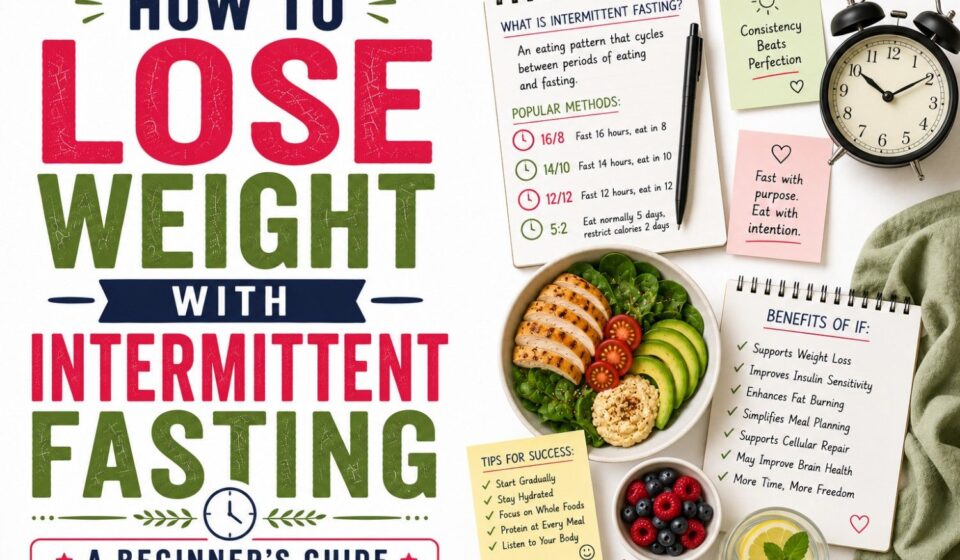

Everything you need to start — the methods, the schedule, what to eat, and what to expect
Intermittent fasting has become one of the most popular weight loss approaches in the world — and for good reason. It’s simple, flexible, doesn’t require tracking every calorie, and works well for people who aren’t hungry in the morning or who find time-restricted eating easier to maintain than constant calorie counting.
This guide covers everything a beginner needs to know to start intermittent fasting correctly — the different methods, how to choose the right one, what to eat, common mistakes, and what to realistically expect.

What Is Intermittent Fasting?
Intermittent fasting (IF) is not a diet — it’s an eating pattern. It doesn’t specify what to eat, only when to eat. The core principle: compress your eating into a defined window and fast outside of it.
The fasting periods produce weight loss primarily by reducing eating opportunities — which naturally reduces total calorie intake for most people. The metabolic benefits (improved insulin sensitivity, increased fat oxidation, cellular repair processes) are additional advantages beyond the calorie reduction effect.
The Main Intermittent Fasting Methods
16:8 — The Most Popular Method
What it is: Fast for 16 hours, eat within an 8-hour window.
Example schedules:
- Eat noon–8pm (skip breakfast, stop eating after dinner)
- Eat 10am–6pm (light late morning start, early finish)
- Eat 1pm–9pm (later start, accommodates evening social eating)
Why it works for beginners: Most of the fasting period happens during sleep. If you stop eating at 8pm and wake at 7am, you’ve already fasted for 11 hours — only 5 more hours until your eating window opens.
Best for: People who aren’t hungry in the morning, people who want a simple rule without calorie counting, people with social eating in the evenings.
14:10 — The Gentler Start
What it is: Fast for 14 hours, eat within a 10-hour window.
Example: Eat 9am–7pm
Why it works for beginners: More flexible than 16:8, easier to maintain socially, still provides meaningful benefits. A good starting point before progressing to 16:8 if desired.
5:2 — The Twice-Weekly Approach
What it is: Eat normally 5 days per week. On 2 non-consecutive days, eat only 500–600 calories.
Example: Normal eating Monday, Tuesday, Thursday, Friday, Saturday. Restricted eating (500 calories) Wednesday and Sunday.
Why it works: Doesn’t require daily restriction — most days are completely normal. The two restricted days create the weekly calorie deficit.
Best for: People who find daily restriction difficult but can manage 2 tough days per week.
OMAD — One Meal a Day (Advanced)
What it is: Eat all daily calories in a single meal, fast for the remaining 23 hours.
Not recommended for beginners: Difficult to get adequate nutrition in one meal. Not suitable for most people starting out.
Alternate Day Fasting
What it is: Alternate between normal eating days and very low calorie (500 calories) or complete fasting days.
Not recommended for beginners: Very demanding. Better suited to experienced fasters with medical supervision.
Which Method Should You Start With?
Start with 14:10 or 16:8 — these are the most evidence-backed, most sustainable, and most beginner-friendly approaches.
Choose 14:10 if:
- You’re currently eating from early morning to late evening
- You have breakfast regularly and enjoy it
- You want a gentle introduction
Choose 16:8 if:
- You’re already not hungry in the morning
- You want a clear, simple rule
- You tend to eat later in the day anyway
Choose 5:2 if:
- You find daily restriction harder than periodic restriction
- Your schedule varies significantly week to week
- You want to maintain normal eating most days
What Can You Have During the Fasting Window?
During your fasting hours, the goal is to keep insulin low and avoid stimulating hunger unnecessarily.

Allowed (won’t break the fast meaningfully):
- Water — drink plenty
- Black coffee — no milk, cream, or sweeteners
- Plain tea — green, black, herbal, without additions
- Sparkling water — plain only
Will break the fast (avoid during fasting hours):
- Any food
- Milk, cream, or any calorie-containing additions to coffee or tea
- Sweetened beverages
- Fruit juice
- Bone broth (contains calories and protein)
- Supplements with calories
Gray area:
- Black coffee with a tiny splash of milk: technically breaks the fast but the impact is minimal for most people. Purists avoid it; pragmatists tolerate it.
- Artificial sweeteners: technically calorie-free but may stimulate insulin in some people. Best avoided if possible, especially initially.
What to Eat During Your Eating Window
Intermittent fasting doesn’t specify what to eat — but what you eat significantly affects results.
Prioritize protein: As covered in our guide to how much protein you actually need per day, 0.7–1g per pound of bodyweight maintains muscle and maximizes satiety. This is especially important with IF because you have fewer eating hours to hit protein targets — each meal needs to be protein-focused.
Don’t compensate with overeating: The most common IF mistake. The fasting window reduces eating opportunities — but if you eat significantly more during the eating window than you were eating before, the calorie deficit disappears. IF works because it naturally reduces total intake — but it requires not deliberately compensating.
Eat whole, filling foods: The eating window should contain foods that genuinely satisfy — protein, vegetables, healthy fats, fiber-rich carbohydrates. Ultra-processed, calorie-dense foods are easier to overeat in a compressed eating window.
Time your eating for your life: If you work out, try to schedule the majority of your eating around your training — protein after strength training is particularly important for muscle maintenance.
A Sample 16:8 Day
Morning (fasting window):
- Wake up: large glass of water
- 8am: black coffee
- 10am: green tea
Noon (eating window opens):
- Lunch: large salad with grilled chicken, avocado, olive oil dressing + a piece of fruit
3pm:
- Snack: Greek yogurt with berries + a handful of almonds
6:30pm:
- Dinner: salmon with roasted vegetables and a small portion of rice
8pm (eating window closes):
- Herbal tea if desired
8pm–noon next day: Fasting window (16 hours, most of it during sleep)
What to Expect: The First 2 Weeks
Days 1–3: The Adjustment Period
The first few days of intermittent fasting are often the hardest. Common experiences:
Hunger at usual meal times: Your body is used to eating at certain times. When those times come and you’re fasting, hunger arrives. This is largely habitual hunger — triggered by meal timing cues rather than genuine caloric need. It typically passes within 20–30 minutes.
Headaches: Common on days 1–3, usually from reduced caffeine or lower blood sugar. Adequate water, electrolytes (salt), and black coffee help.
Low energy: The body is adapting to using fat for fuel during the fasting period. This typically improves significantly after week 1.
Irritability: The “hangry” experience is real in the adjustment period. Plan demanding social or professional situations for later in the adaptation.
Week 2: Adaptation
Most people find week 2 significantly easier. The hunger at skipped meal times diminishes as the body adapts to the new eating schedule. Energy levels often improve as fat oxidation increases.
What You’ll Notice:
Scale: Often drops 2–4 lbs in the first week — mostly from reduced glycogen and sodium-driven fluid retention, as covered in our article on why weight loss stops after the first week. Ongoing fat loss of 0.5–1 lb per week follows.
Energy: Many people report clearer mental energy during the fasting window after adaptation — attributed to more stable blood glucose and ketone availability.
Simplified eating: The reduced number of daily food decisions is reported as genuinely liberating by many IF practitioners.
Common Mistakes Beginners Make
Overeating During the Eating Window
IF creates a calorie deficit by reducing eating time. If you eat significantly more during those hours to compensate, the benefit disappears. Eat until satisfied — not to make up for the fasting hours.
Eating the Wrong Foods
The eating window isn’t a license for calorie-dense, low-satiety food. Ultra-processed food eaten in a compressed window doesn’t provide adequate satiety and often leads to overeating.
Not Drinking Enough Water
Fasting periods require active hydration. Many people mistake hunger signals for thirst during the fast. Drinking water throughout the fasting window manages both hydration and appetite.
Starting Too Aggressively
Jumping from eating all day to 16:8 or OMAD immediately is harder than necessary. Start with 12:12 or 14:10 and work toward 16:8 over 2–3 weeks.
Choosing an Incompatible Schedule
The best fasting schedule is one that fits your actual life. If you have breakfast meetings regularly, a morning eating window works better than skipping breakfast. If evenings are your social eating time, an earlier close to the eating window is harder to maintain.
Breaking the Fast With a Large High-Carbohydrate Meal
Breaking a fast with a large spike of refined carbohydrates produces rapid blood sugar rise followed by a crash — the opposite of the stable energy most IF practitioners enjoy. Break the fast with protein first.
Who Should NOT Try Intermittent Fasting
Consult a doctor before starting IF if:
- You have type 1 diabetes or take insulin
- You have a history of eating disorders
- You are pregnant or breastfeeding
- You take medications that require food
- You have a history of hypoglycemia
IF is generally not recommended for:
- Children and teenagers
- People who are underweight
- People with active eating disorders
Does IF Work Better Than Regular Calorie Restriction?
The honest answer: as covered in our article on is intermittent fasting worth it, when calories are matched, IF produces similar results to continuous calorie restriction. The advantage of IF is not metabolic magic — it’s that many people find time restriction easier to maintain than calorie counting.
If you’re someone who naturally isn’t hungry in the morning, finds food decisions exhausting, and eats more because food is available rather than because you’re hungry — IF may be significantly easier to maintain than traditional calorie restriction and produce better real-world results because of that adherence advantage.
The Bottom Line
Intermittent fasting is a powerful tool for the right person. For beginners:
Start with: 14:10 or 16:8 During the fast: Water, black coffee, plain tea only During eating window: Protein first, whole foods, don’t compensate by overeating Expect: A tough first 3 days, significant improvement by week 2, 0.5–1 lb fat loss per week ongoing Avoid: Starting too aggressively, overeating in the eating window, breaking the fast with high-carbohydrate foods
For the complete dietary framework that complements intermittent fasting, our guide to how to get rid of belly fat covers everything in one place.
Have you tried intermittent fasting — and which method worked best for your lifestyle? Share in the comments.
Stop Wondering What to Eat This Week
Get my free 7-Day High-Protein Weight Loss Meal Plan delivered straight to your inbox — a simple week of satisfying, protein-focused meals designed to make healthy eating easier without complicated calorie tracking.
- 7 full days of breakfast, lunch, dinner & snacks
- One complete shopping list for the whole week
- A quick high-protein food cheat sheet
- Simple daily tips to help you stay on track
Free PDF • Delivered by email • Unsubscribe anytime
Check your inbox 💜
Your free 7-day high-protein meal plan is on its way.