
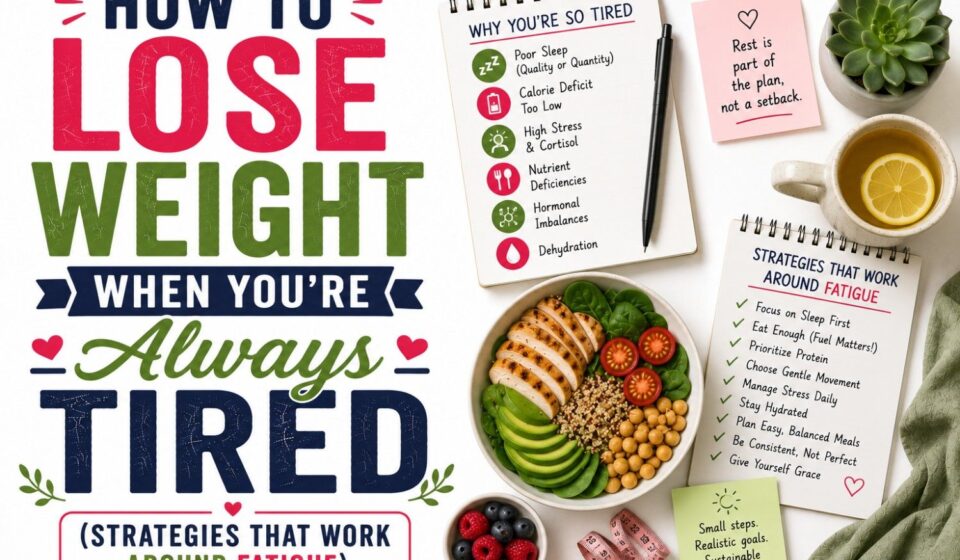
How to Lose Weight When You’re Always Tired (Strategies That Work Around Fatigue)

When exhaustion is your constant companion — here’s how to lose weight without running on empty
Standard weight loss advice assumes you have energy. Cook fresh meals. Hit the gym regularly. Walk 10,000 steps. Meal prep on Sundays.
When you’re always tired — genuinely, persistently exhausted — this advice isn’t just unhelpful, it’s demoralizing. The gap between what you’re supposed to do and what you’re actually capable of feels insurmountable.

This guide is built for people who are tired — not lazy, not unmotivated, but genuinely fatigued in ways that affect every aspect of daily life. Here’s how to lose weight within those real constraints.
First: Why Are You Always Tired?
Persistent fatigue isn’t one thing — it has specific causes that point toward specific solutions. Understanding yours changes what you do about it.
The most common causes of persistent fatigue:
Poor sleep quality or insufficient sleep: The most common cause. As covered in our article on why sleep is the most underrated weight loss tool, poor sleep produces a cascade of hormonal changes that make everything — including weight loss — harder.
Iron deficiency anemia: Extremely common, particularly in women. Iron is essential for oxygen transport; deficiency produces profound fatigue that doesn’t respond to rest.
Hypothyroidism: An underactive thyroid reduces metabolic rate and causes persistent fatigue. Very common and often underdiagnosed. As covered in our article on how to lose weight with Hashimoto’s disease, thyroid conditions require medical treatment alongside lifestyle changes.
Insulin resistance and blood sugar instability: The energy crashes that follow high-carbohydrate meals are a form of reactive fatigue — the blood sugar spike and subsequent crash leaves people exhausted 1–2 hours after eating.
Chronic stress and adrenal dysregulation: Sustained high cortisol followed by adrenal exhaustion produces characteristic afternoon energy crashes and morning difficulty.
Sleep apnea: Undiagnosed sleep apnea produces fragmented sleep and severe daytime fatigue even after what appears to be adequate sleep duration.
Depression or anxiety: Both produce profound fatigue independently of sleep quality.
Nutritional deficiencies: B12, vitamin D, magnesium, and folate deficiencies all produce significant fatigue.
Chronic illness: Conditions like ME/CFS, fibromyalgia, autoimmune conditions, and others produce fatigue as a primary symptom.
If you haven’t had a basic blood panel recently — thyroid function, iron and ferritin, B12, vitamin D, fasting glucose — it’s worth having. Several of the most common fatigue causes are identified and treated through simple blood tests.
How Fatigue Specifically Affects Weight Loss
Persistent fatigue doesn’t just make exercise harder. It affects every aspect of weight management:
Decision fatigue is amplified: Making good food choices requires cognitive effort. Exhausted people make worse food choices — the brain’s prefrontal cortex (responsible for impulse control) is significantly impaired by fatigue, making calorie-dense comfort food harder to resist.
Food preparation becomes overwhelming: Cooking healthy meals requires energy. When you’re exhausted, the path of least resistance — takeout, processed convenience food — wins more often.
Exercise feels impossible: Even low-intensity exercise that’s genuinely manageable when rested can feel insurmountable when fatigued.
Hunger hormones are disrupted: Fatigue elevates ghrelin and reduces leptin — the same hormonal pattern as sleep deprivation — producing genuine increased hunger independent of calorie intake.
Emotional eating increases: Exhaustion impairs emotional regulation, making food more appealing as a coping mechanism for tiredness and frustration.
The Diet-First Approach for Tired People
For people with fatigue, diet does more of the heavy lifting — not because exercise is optional, but because the energy required for dietary management is significantly lower than the energy required for intense exercise.
Minimize Food Preparation Energy
The most important practical adaptation: reduce the cognitive and physical effort of eating well to near zero.
Zero-preparation protein sources:

- Greek yogurt (open and eat)
- Cottage cheese (open and eat)
- Canned tuna or salmon (pull-tab, fork)
- Hard-boiled eggs (batch cook once, eat all week)
- Rotisserie chicken (purchase from grocery store deli)
- Protein shakes (scoop + water, 30 seconds)
- String cheese
Zero-preparation vegetables and fruit:
- Pre-washed salad bags
- Baby carrots and hummus
- Cherry tomatoes
- Berries (rinse and eat)
- Frozen vegetables (microwave in bag, 3 minutes)
The strategy: Stock the house with these zero-preparation options. On low-energy days, eating becomes: open container, eat, done. No cooking required, no decisions required, no energy required.
As covered in our article on how to lose weight without a kitchen, genuinely nutritious eating is possible without any cooking at all — which is essentially the situation on a severe fatigue day.
Protein First at Every Meal
Protein is the most important macronutrient for both fatigue and fat loss:
- It stabilizes blood sugar — reducing the energy crashes that compound existing fatigue
- It’s the most satiating macronutrient — reducing the increased hunger that fatigue produces
- It preserves muscle when exercise is limited
- It provides the amino acids for neurotransmitter production that supports mood and energy
As covered in our guide to how much protein you actually need per day, targeting 0.7–1g per pound of bodyweight is the most important dietary intervention — and it’s especially important when fatigue limits exercise.
Stabilize Blood Sugar
For tired people, blood sugar stability is essential — the energy crashes from high-glycemic food compound existing fatigue into incapacitating exhaustion.
Blood sugar stabilization strategies:
- Eat protein and fat alongside any carbohydrates — never carbohydrates alone
- Reduce refined carbohydrates and added sugar
- Choose low-glycemic carbohydrates (oats, legumes, sweet potato) over high-glycemic ones
- Don’t skip meals — hypoglycemia from meal-skipping produces severe fatigue
Batch Cook on Better Days
Most people with chronic fatigue have better and worse days. Batch cooking on better days — preparing protein sources and other components that last the week — creates ready food for worse days without requiring daily cooking.
Even one batch cooking session per week (a pot of lentil soup, hard-boiled eggs, cooked chicken) transforms the week’s eating without requiring daily effort.
Movement That Works With Fatigue
“Exercise” for tired people doesn’t mean the gym. It means the movement that’s possible within current energy limits — and building from there.
Walking Is Your Primary Tool
Walking is the most fatigue-friendly fat loss exercise available:
- Adjustable intensity — walk at whatever pace is manageable
- No recovery required — unlike intense exercise, walking doesn’t create additional fatigue
- Can be done in small increments — 3 × 10-minute walks produces nearly identical benefits to 1 × 30-minute walk
- Reduces cortisol — directly addressing one driver of both fatigue and belly fat
As covered in our guide to how to lose weight by walking, consistent daily walking produces meaningful fat loss results — and it’s the exercise most compatible with fatigue.
Start with whatever you can manage — even 5–10 minutes after meals. This simple habit provides meaningful calorie burn, improves insulin sensitivity, and gently builds aerobic capacity over time.
The Post-Meal Walk Strategy
10–15 minutes of gentle walking after meals:
- Reduces post-meal blood sugar spikes (which cause the energy crashes that worsen fatigue)
- Requires minimal energy — it’s a gentle stroll, not a workout
- Contributes to daily step count
- Improves digestion
This is the highest-return, lowest-energy movement available and specifically helps with the blood sugar instability that worsens fatigue.
Exercise on Good Days Only
For people with conditions like ME/CFS, fibromyalgia, or severe chronic fatigue — exercise on bad days can trigger crashes that last days. The pacing approach — exercising only when energy allows, resting when it doesn’t — produces better outcomes than pushing through on bad days.
As covered in our article on how to lose weight with chronic fatigue syndrome, pacing is the non-negotiable principle for anyone with post-exertional malaise.
Addressing the Fatigue Itself
The most impactful thing for weight loss when you’re always tired isn’t a dietary strategy — it’s addressing the fatigue.
Sleep optimization:
- Consistent sleep and wake times
- Cool, dark, quiet sleeping environment
- No screens 1 hour before bed
- Address sleep apnea if suspected (loud snoring, waking unrefreshed despite adequate hours)
Medical evaluation:
- Thyroid function (TSH, free T3, free T4)
- Iron and ferritin (low ferritin causes fatigue even with normal hemoglobin)
- Vitamin B12 and D
- Fasting glucose and insulin
- If these are normal and fatigue persists: further investigation is warranted
Nutritional support for energy:
- Iron-rich foods (red meat, lentils, spinach) + vitamin C for absorption
- B12 (meat, fish, eggs, dairy — or supplements for plant-based eaters)
- Vitamin D (supplement if deficient — very common)
- Magnesium (supports energy production, sleep quality — leafy greens, pumpkin seeds)
- Adequate calories — undereating worsens fatigue significantly
Caffeine management:
- Caffeine masks fatigue temporarily but disrupts sleep — worsening the underlying problem
- Limiting caffeine to the morning avoids the sleep disruption that perpetuates fatigue
- Gradual reduction often improves baseline energy over weeks
What to Do on the Most Exhausted Days
On days when functioning is minimal, the goal is maintenance — not progress. Preventing the overeating that typically happens on exhausted days is success.
The minimum viable approach for exhausted days:
- Eat protein at every meal — even if it’s just Greek yogurt and a protein shake
- Drink water — dehydration amplifies fatigue
- Take the shortest possible walk — even around the block
- Sleep as much as possible — recovery is the priority
These are not fat loss days. They are maintenance days. And preventing the exhaustion-driven overeating that often leads to significant dietary damage on bad days is a genuine achievement.
When to Seek Medical Support
If fatigue is severe, persistent, and unresponsive to sleep improvement and nutritional optimization — medical evaluation is appropriate. Several treatable conditions produce the fatigue that makes weight loss feel impossible:
- Thyroid conditions (very treatable with medication)
- Iron deficiency (very treatable)
- Sleep apnea (very treatable)
- Vitamin deficiencies (very treatable)
- Depression (very treatable)
For people whose fatigue is limiting their ability to lose weight despite genuine effort, addressing the fatigue medically opens up capacity for the lifestyle changes that produce fat loss.
Breeze Meds offers telehealth medical evaluations accessible from home — for people whose fatigue makes getting to appointments difficult.
Check eligibility & pricing at Breeze Meds →Affiliate disclosure: We may earn a commission if you use this link. Breeze Meds provides telehealth weight-loss services. Prescription medication is only provided following an evaluation by a licensed healthcare professional and is not guaranteed.
The Bottom Line
Losing weight when you’re always tired requires adapting the approach to the energy reality:
- Minimize food preparation through zero-effort protein sources and pre-prepared foods
- Protein first at every meal — most important single dietary habit
- Stabilize blood sugar through low-glycemic eating — reduces fatigue-worsening energy crashes
- Walk as primary movement — adjustable intensity, no recovery required
- Post-meal walks for blood sugar and energy management
- Batch cook on better days for worse days
- Address the fatigue medically — thyroid, iron, B12, sleep apnea
And above all: investigate the fatigue itself. The most impactful weight loss intervention for a chronically tired person may not be dietary — it may be treating the condition causing the fatigue.
For the foundational fat loss framework that works within energy constraints, our guide to how to get rid of belly fat covers everything in one place.
What’s helped you manage weight loss when fatigue is a constant factor — and what was the most impactful change you made? Share in the comments.
Stop Wondering What to Eat This Week
Get my free 7-Day High-Protein Weight Loss Meal Plan delivered straight to your inbox — a simple week of satisfying, protein-focused meals designed to make healthy eating easier without complicated calorie tracking.
- 7 full days of breakfast, lunch, dinner & snacks
- One complete shopping list for the whole week
- A quick high-protein food cheat sheet
- Simple daily tips to help you stay on track
Free PDF • Delivered by email • Unsubscribe anytime
Check your inbox 💜
Your free 7-day high-protein meal plan is on its way.