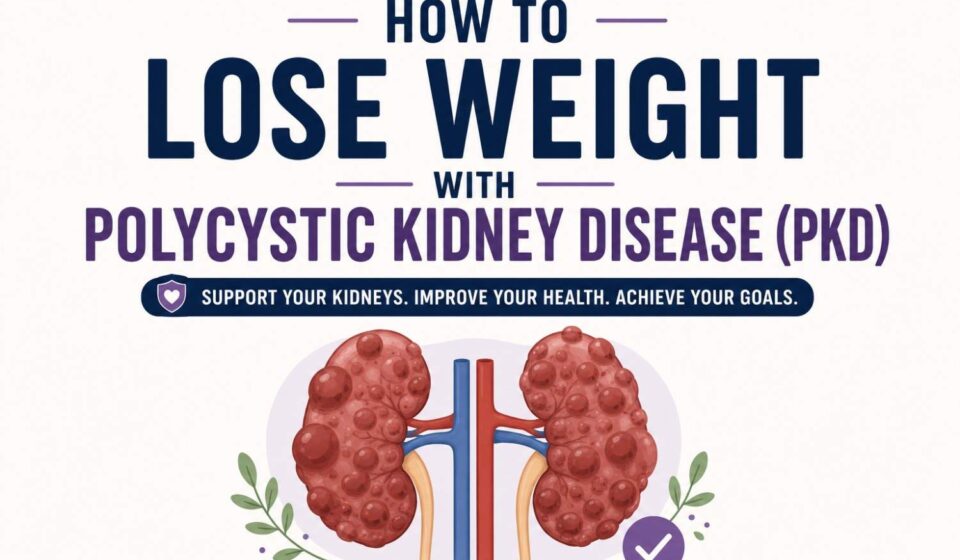

PKD creates specific dietary and exercise considerations — here’s a medically informed guide

Important note: Polycystic kidney disease affects kidney function in ways that require specific dietary modifications that differ significantly from general weight loss advice. This article provides general information — not a substitute for individualized guidance from your nephrologist or renal dietitian. Always work with your medical team before making significant dietary changes when you have PKD.
Polycystic kidney disease (PKD) is a genetic condition in which cysts develop in the kidneys, progressively enlarging the kidneys and potentially impairing kidney function over time. Managing weight with PKD requires balancing fat loss goals with the specific kidney-protective dietary considerations that PKD demands.
The relationship between weight and PKD is real: excess body weight worsens blood pressure (elevated in 75% of PKD patients), promotes faster kidney function decline, and increases cardiovascular risk — making weight management genuinely medically important, not just cosmetic.
How PKD Affects Weight Management
The Enlarged Kidneys Phenomenon
One of the most important — and least recognized — aspects of PKD weight is that the kidneys themselves can become dramatically enlarged. In advanced PKD, kidneys can grow from their normal 150g each to several kilograms each, with total kidney volume sometimes exceeding 5–10 liters.
This means PKD patients often weigh more on the scale than their body fat would suggest — not from excess fat but from organ mass. And the visibly enlarged abdomen that many PKD patients develop reflects enlarged kidneys and cyst volume, not primarily subcutaneous or visceral fat.
This matters for realistic expectations: weight loss on the scale may be less than actual fat loss suggests, and abdominal size may not reduce even with significant fat loss, due to the kidney component.
Blood Pressure Challenges
Hypertension affects the majority of PKD patients and is both a consequence and a driver of PKD progression. As covered in our article on how to lose weight with high blood pressure, managing blood pressure alongside weight loss requires specific dietary attention — particularly sodium restriction that is even more important with PKD than with hypertension alone.
Kidney Function and Dietary Considerations
Depending on the stage of kidney disease, specific dietary modifications may be required:
- Protein: High protein intake (recommended for fat loss and muscle preservation) must be balanced against kidney function. For people with normal or mildly reduced kidney function (eGFR above 60), standard protein recommendations generally apply. For more significant kidney impairment, protein restriction may be recommended by your nephrologist.
- Potassium: If kidney function is impaired, potassium may accumulate in the blood (hyperkalemia). Potassium-rich foods (often recommended for health) may need limiting.
- Phosphorus: Impaired kidneys may not adequately clear phosphorus, requiring restriction.
- Sodium: Restriction is important for blood pressure management in PKD.
- Fluid: In some stages of PKD, fluid intake may need to be managed.
These requirements vary significantly by disease stage and individual kidney function — which is why a renal dietitian is invaluable for people with PKD trying to manage their weight.

General Weight Loss Principles That Apply to PKD
Calorie Management
A moderate calorie deficit of 300–500 calories per day produces fat loss regardless of kidney disease status. This is less aggressive than some general recommendations but appropriate given the additional stressors of managing a chronic condition.
Sodium Restriction — Particularly Important With PKD
Sodium restriction is one of the most important dietary interventions for PKD — independent of weight loss. It:
- Directly reduces blood pressure
- Reduces the rate of kidney volume growth in PKD (strong evidence from clinical trials — the HALT-PKD trial found sodium restriction significantly reduced kidney growth rate)
- Reduces fluid retention that contributes to weight and edema
Target under 2,000mg of sodium per day — stricter than the general 2,300mg recommendation. As covered in our guide to how to lose weight with high blood pressure, sodium restriction also directly supports blood pressure management.
Practical sodium reduction:
- Cook from whole ingredients — 70% of sodium comes from processed food
- Read labels carefully — target under 400mg per serving
- Use herbs, lemon, and vinegar for flavor instead of salt
- Request sauces on the side at restaurants
- Avoid processed meats, canned soups, and most fast food
Anti-Inflammatory Eating for PKD
Several dietary patterns have evidence specifically for PKD management:
Higher water intake: One of the most studied interventions for PKD — drinking 3–4 liters of water per day (unless fluid restriction is required) has evidence for reducing cyst growth by suppressing vasopressin (a hormone that promotes cyst enlargement). Discuss appropriate fluid intake with your nephrologist.
Plant-based protein emphasis: Plant proteins are generally easier on the kidneys than animal proteins. Shifting toward plant-based protein sources (legumes, tofu, tempeh) where possible supports both weight management and kidney health. This doesn’t require eliminating animal protein — just shifting the balance.
Reduced sugar and refined carbohydrates: mTOR pathway activation by insulin and IGF-1 promotes cyst growth in PKD. Reducing the insulin spikes from refined carbohydrates may slow cyst growth independently of weight effects. This is consistent with general fat loss recommendations.
Adequate fiber: Supports gut health and may reduce the production of uremic toxins from gut bacteria. High-fiber plant foods (vegetables, legumes, whole grains) support both weight management and kidney health.
Limit caffeine (with caution): Some PKD research suggests caffeine may promote cyst growth through cAMP pathway activation. The evidence is not definitive, but some PKD specialists recommend moderation or avoidance.
Exercise for PKD
Exercise is beneficial for PKD patients for multiple reasons:
- Reduces blood pressure (directly protective for kidney function)
- Supports weight management
- Reduces cardiovascular risk
- Improves quality of life and fatigue
Exercise considerations for PKD:
For most PKD patients with normal to mildly reduced kidney function: standard exercise recommendations apply. Regular moderate aerobic exercise (walking, cycling, swimming) and strength training are appropriate and beneficial.
Contact sports and activities with collision risk are generally avoided with significantly enlarged kidneys due to rupture risk — discuss with your nephrologist.
High-intensity exercise and dehydration risk: Adequate hydration during exercise is important in PKD. Avoid exercising in extreme heat without excellent hydration.
Walking is the safest and most consistently accessible exercise for PKD — as covered in our guide to how to lose weight by walking, consistent daily walking provides meaningful fat loss and cardiovascular benefits.
Swimming is particularly appropriate — the non-impact nature protects against any abdominal contact risk while providing full cardiovascular benefit. As covered in our guide to how to lose weight swimming, swimming provides exceptional cardiovascular benefit with zero impact.
The Tolvaptan Consideration
Tolvaptan (Jynarque/Jinarc) is a medication specifically approved for slowing PKD progression in adults at risk of rapid disease progression. It works by blocking vasopressin receptors — reducing the hormonal signal that promotes cyst growth.
Tolvaptan causes significant thirst and increased urine output (by design — it promotes water excretion to suppress vasopressin). Managing adequate hydration while on tolvaptan requires attention and may affect exercise planning.
If you’re on tolvaptan, discuss exercise hydration strategies with your nephrologist.
Blood Pressure Management as a Weight Loss Complement
Hypertension management is one of the most important aspects of PKD care — and weight loss directly supports it. As covered in our article on how to lose weight with high blood pressure, even modest weight loss (5–10% of body weight) produces meaningful blood pressure reduction.
The combination of:
- Sodium restriction
- Weight loss
- Regular aerobic exercise
- Adequate sleep
- Stress management
…produces the most significant blood pressure improvements and directly protects kidney function in PKD.
Working With Your Healthcare Team
Weight management with PKD should be coordinated with:
Nephrologist: Monitors kidney function, guides disease-specific dietary restrictions based on your current eGFR, manages blood pressure and disease progression.
Renal dietitian: Provides individualized dietary guidance based on your specific kidney function, electrolyte levels, and nutritional status. Far more valuable for PKD than general nutrition advice.
General practitioner / cardiologist: Manages cardiovascular risk factors that are elevated in PKD.
When Medical Weight Loss Support Is Appropriate
For PKD patients who struggle with weight despite dietary effort, medical weight loss support may be appropriate — with careful attention to medication choices.
GLP-1 compounded medications and kidney disease: GLP-1 receptor agonists have shown kidney-protective effects in people with diabetes and chronic kidney disease in clinical trials. Their use in PKD specifically is less studied — but they are not contraindicated in most PKD patients with adequate kidney function. Discuss with your nephrologist.
Gala offers telehealth medical evaluations to assess whether prescription weight loss treatment is appropriate for your specific situation — including people with complex medical conditions like PKD. A licensed physician will review your full health picture including kidney function before making any recommendations.
[Check if you qualify at Gala →]
This is a paid partnership. Gala is a licensed telehealth provider. Medication is only prescribed following a medical consultation and is not guaranteed.
Realistic Expectations With PKD
Weight loss expectations with PKD require accounting for the kidney component:
- Scale weight may underestimate fat loss due to enlarged kidneys
- Abdominal girth may not reduce as much as expected even with significant fat loss, because enlarged kidneys contribute to abdominal volume
- Progress is best measured by blood pressure reduction, energy levels, and lab values (kidney function markers, blood pressure) alongside scale weight
- Kidney function decline rate is one of the most important outcomes — slowing progression through sodium restriction, blood pressure management, and weight loss is a meaningful success even when scale changes feel modest
The Bottom Line
Weight loss with PKD is both more important (excess weight accelerates disease progression) and more complex (specific dietary considerations differ from general recommendations) than standard fat loss.
The approach that works:
- Sodium restriction as the single most important dietary intervention — for both weight and kidney protection
- Work with a renal dietitian for individualized guidance based on your kidney function
- Moderate calorie deficit with adequate nutrition
- Plant protein emphasis over animal protein where possible
- Reduced refined carbohydrates and sugar (mTOR/insulin consideration)
- Adequate hydration (unless restricted by your nephrologist)
- Regular low-impact exercise — walking, swimming, cycling
- Blood pressure management through all available means
- Coordinate all changes with your nephrology team
For the foundational fat loss strategies that apply alongside PKD-specific considerations, our guide to how to get rid of belly fat covers everything in one place.
Are you managing PKD alongside weight loss goals? Share your experience in the comments — particularly any dietary strategies that have worked within the PKD-specific constraints.