
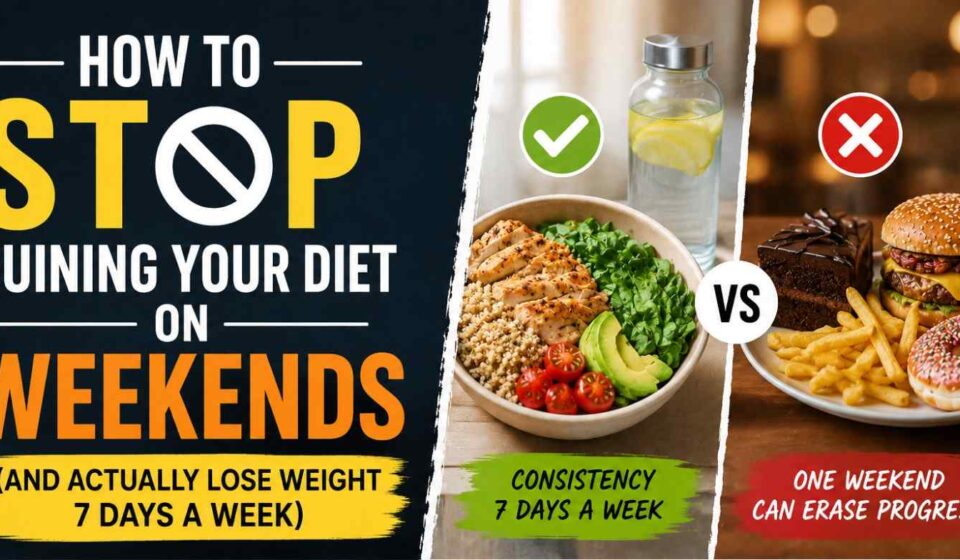

You eat perfectly Monday through Friday. Then the weekend happens. Here’s how to fix it.

Weekend eating is the most common reason people track carefully, exercise consistently, and still don’t lose weight. The pattern is so universal it has a name among nutritionists: “social jet lag eating” — the dramatic dietary shift between weekday structure and weekend freedom.
The math is unforgiving: five days of a 500-calorie deficit followed by two days of a 500-calorie surplus produces zero net deficit and zero fat loss for the week — regardless of how disciplined the weekdays were.
This guide is about breaking that pattern without making weekends miserable.
Why Weekends Derail Weight Loss
Understanding the specific mechanisms helps fix the right problems.
Structure Disappears
Weekdays have built-in structure — work schedules, commute routines, lunch breaks — that organizes eating into predictable patterns. Weekends remove that structure. Without external scaffolding, meals become irregular, snacking increases, and the environmental cues that normally trigger mindful eating disappear.
Social Eating Increases
Most social events — dinners out, parties, family gatherings, brunches — cluster on weekends. As research consistently shows, people eat more in social settings — the presence of others increases consumption, alcohol lowers inhibitions around food choices, and the social norm of enjoying food together makes restraint feel antisocial.
Alcohol Enters the Picture
For many people, alcohol is essentially absent during weekdays and present on Friday and Saturday nights. Alcohol contributes significant calories, lowers food-choice inhibitions, increases appetite (particularly for calorie-dense foods), and impairs the quality of sleep that follows — creating a two-day metabolic disruption from a single evening of drinking.
The “I Earned It” Mindset
Five days of disciplined eating creates a psychological sense of credit — “I’ve been so good all week, I deserve to relax.” This is human and understandable. But it consistently leads to a degree of “relaxing” that eliminates the week’s deficit entirely.
Boredom Eating
Weekdays have task demands that occupy attention and prevent mindless eating. Weekends — particularly quiet ones — involve more unstructured time where boredom and restlessness are often addressed with food.
The Solution: Structure Without Restriction
The goal isn’t to make weekends feel like weekdays — it’s to maintain enough structure that the deficit survives without eliminating the enjoyment that makes weekends worth having.
Strategy 1: Keep Breakfast the Same
The first meal of the day sets the tone for everything that follows. A protein-rich weekday breakfast — eggs, Greek yogurt, cottage cheese — produces better hunger management for the rest of the day than sleeping in and having brunch at noon.
Keeping breakfast consistent on weekends — even if everything else is more relaxed — provides one anchor that maintains dietary momentum and prevents the mid-morning hunger that drives overeating at brunch.
The practical version: You can still have a slightly later, more leisurely breakfast on weekends. Just keep the protein content similar to weekdays.
Strategy 2: Plan Your Indulgences Rather Than Having Unlimited Ones
The difference between planned flexibility and unlimited freedom is significant.
“I’m going to enjoy dinner out on Saturday with a glass of wine” is a planned indulgence. The day’s other meals are normal; the evening is enjoyable and intentional.
“The weekend is off” is unlimited freedom — and it consistently produces a caloric impact that eliminates the week’s progress.
Planning specific enjoyable meals or occasions rather than writing off entire days allows genuine pleasure while maintaining enough of the weekly deficit to produce real progress.
Strategy 3: Keep Protein High Even on Relaxed Days
This is the single most protective dietary strategy for weekends. Maintaining protein targets — 0.7–1g per pound of bodyweight — even when everything else is more relaxed:
- Keeps hunger better managed throughout the day
- Reduces the likelihood of the ravenous hunger that drives large overeats at meals
- Ensures that higher weekend calorie intakes are less likely to result in fat storage (protein has the lowest tendency of any macronutrient to be stored as fat)
As covered in our guide to how much protein you actually need per day, protein is the most protective dietary variable for body composition — and this applies with particular force on the days when everything else is less controlled.
Strategy 4: Eat Before Social Events
Arriving at a party, dinner, or social gathering genuinely hungry is the most reliable way to overeat at it. The combination of hungry + social context + available food + possible alcohol produces consumption that’s very difficult to moderate in the moment.
Eating a protein-rich snack — Greek yogurt, cottage cheese, hard-boiled eggs, a protein shake — 60–90 minutes before a social event significantly reduces the hunger that drives overeating there.
This isn’t about eating less at the event. It’s about arriving in a state where you can enjoy the food without being driven by hunger to eat past the point that feels good.
Strategy 5: Manage Alcohol Strategically
This is often the highest-calorie weekend variable — and the one with the most knock-on effects (reduced inhibition, disturbed sleep, next-day appetite dysregulation).
Options:
- Reduce total drinks per weekend — 1–2 drinks rather than 3–5 produces dramatically different caloric and next-day impacts
- Choose lower-calorie options — spirits with soda water rather than cocktails, dry wine rather than sweet, light beer rather than craft IPA
- Alternate alcoholic drinks with water — reduces total consumption naturally
- Eat before drinking — significantly slows alcohol absorption and reduces the appetite-stimulating effects
- Decide your limit in advance — deciding at the beginning of the evening how much you’ll drink is far more effective than deciding drink by drink as the evening progresses
The goal isn’t eliminating alcohol entirely if you enjoy it — it’s being intentional rather than letting it happen to you.
Strategy 6: Keep Moving on Weekends
Weekday NEAT (non-exercise activity thermogenesis) — the incidental movement of work, commuting, and daily tasks — is often significantly higher than weekend NEAT for desk workers who spend weekends resting.
This NEAT gap can represent several hundred calories per day of reduced calorie expenditure on weekends — contributing to the deficit collapse.
Practical weekend movement:
- Morning walk before the day gets busy — sets activity tone for the whole day
- Active social plans — hiking, cycling, sports, walking around markets or parks rather than purely sedentary socializing
- Basic movement throughout the day — don’t spend the entire weekend on the couch
- The step count check — if you hit 10,000 steps on weekdays, aim for at least 7,000 on weekends
As covered in our guide to how to lose weight by walking, daily walking is one of the highest-leverage calorie-burning activities available — and weekends actually offer more time for it than weekdays.
Strategy 7: Don’t Skip Meals to “Save Calories” for Later
“I’ll eat lightly today because we have a big dinner tonight” — skipping breakfast or lunch to bank calories for an evening event — consistently backfires.
Arriving at a dinner extremely hungry after an underfed day produces:
- More food consumed at the dinner than the skipped meals would have contained
- Poorer food choices under hunger pressure
- More alcohol consumed (hunger amplifies alcohol’s effects)
Eating normally throughout the day and having a moderately larger or less controlled dinner produces better total calorie outcomes than skipping earlier meals and bingeing at dinner.
Strategy 8: Track on Weekends (Even Loosely)
Many people who track food intake rigorously during the week stop entirely on weekends. This removes the awareness that was doing much of the dietary moderation work.
Even loose tracking — not precise calorie counting but awareness of approximately what you’re eating — maintains the consciousness that prevents the fully untracked eating that does the most damage.
Low-effort weekend tracking options:
- Take a photo of everything you eat (review at end of day)
- Quick mental estimate of main meals without precise calculation
- Track only protein and leave everything else unmonitored — maintaining protein targets does much of the protective work automatically
Strategy 9: Have a “Good Enough” Weekend Standard
Perfection on weekends is neither necessary nor realistic. The goal isn’t maintaining a weekday deficit on weekends — it’s preventing the surplus that eliminates the week’s work.
A realistic weekend standard:
- Maintenance calories on one day (no deficit but no surplus)
- Moderate surplus (200–300 calories above maintenance) on the other day
- Net weekly deficit still exists — about half what it would be with perfect weekday and weekend adherence
This produces slower fat loss than perfect 7-day adherence — but dramatically faster than the zero net deficit of the unmanaged weekend pattern. And it’s realistic enough to sustain indefinitely.
Making the Shift Gradually
For people whose weekends have been completely unstructured, trying to implement every strategy above simultaneously is likely to fail — too many changes at once produces overwhelm and abandonment.
A gradual approach:
Week 1–2: Keep breakfast consistent on weekends only. Everything else stays the same.
Week 3–4: Add the “eat before social events” strategy. Two changes now.
Week 5–6: Bring one alcoholic drink limit into one weekend evening.
Week 7–8: Add morning weekend walk.
Building gradually produces strategies that stick because each has time to become habitual before the next is added.
What to Do After a Bad Weekend
This deserves mention because bad weekends happen — and how you respond determines whether one bad weekend becomes two, three, or a month.
Don’t compensate with severe restriction on Monday. Eating very little on Monday to “make up” for the weekend deepens the deprivation that makes the next weekend harder to manage.
Return to normal healthy eating at Monday breakfast. No drama, no punishment, no extended recovery period. Just the next meal, made well.
As covered in our article on how to lose weight after a setback, the speed of recovery from difficult periods — not the absence of difficult periods — is what determines long-term success.
The Bottom Line
Weekend eating is the most common reason consistent weekday efforts don’t produce expected fat loss results. The solution isn’t making weekends feel like weekdays — it’s adding enough structure to maintain a net weekly deficit while still genuinely enjoying the flexibility that weekends offer.
Keep protein high. Plan indulgences rather than having unlimited ones. Move on weekends. Manage alcohol intentionally. Don’t skip meals before social events.
These strategies don’t require willpower in the moment — they’re decisions made in advance that make good outcomes the natural result rather than a constant battle.
For the complete fat loss framework that weekends support rather than undermine, our guide to how to get rid of belly fat covers all the foundational strategies in one place.
What’s your biggest weekend dietary challenge — social eating, alcohol, boredom, or something else? Share in the comments — weekend strategies are some of the most useful practical advice in this space.