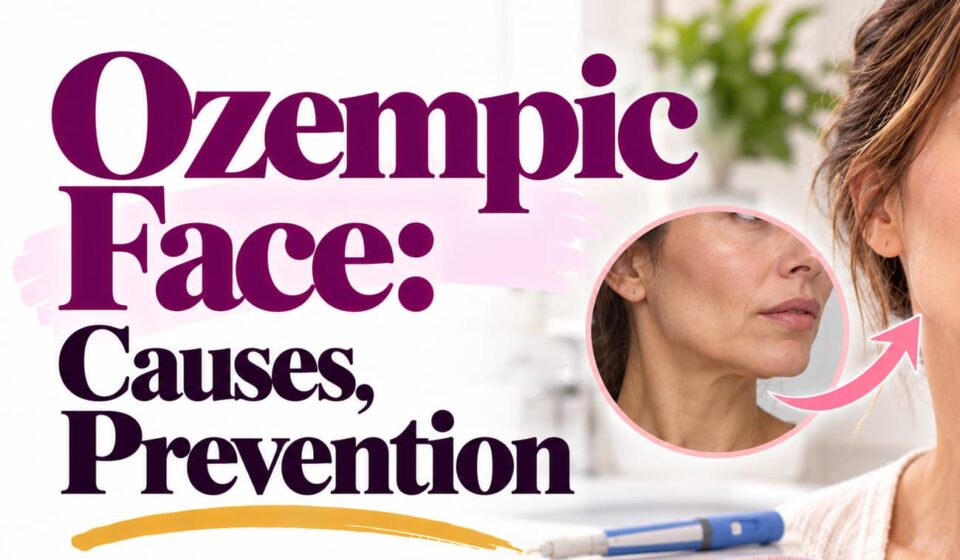

If you’ve lost a significant amount of weight while taking Ozempic, Wegovy, or another weight-loss medication, you might notice something unexpected when you look in the mirror.
Your cheeks may appear less full. Lines around your mouth might look deeper, or the skin around your jawline may seem looser than before.
These changes are often called “Ozempic face.”

Despite the name, Ozempic face isn’t a formal medical diagnosis, and it doesn’t happen to everyone taking semaglutide. It’s a popular term for facial changes that can accompany substantial weight loss, regardless of how that weight was lost.
The good news is that there are ways to support your skin and overall health during weight loss. Some cosmetic treatments can also address specific concerns afterward.
But it’s important to separate what actually works from claims about collagen supplements, facial exercises, or special skincare products that supposedly restore lost facial fat.
Here’s what causes Ozempic face, whether you can prevent it, and which options may help if you’ve already noticed changes.
What Is Ozempic Face?
Ozempic face describes changes in facial appearance that may become noticeable after substantial weight loss.
Commonly reported changes include:
- Less fullness in the cheeks.
- More prominent cheekbones or facial contours.
- Hollowing beneath the eyes.
- Deeper-looking smile lines.
- Looser skin around the cheeks, jawline, or neck.
- Wrinkles that appear more noticeable after facial volume decreases.
These changes aren’t necessarily signs of poor health or abnormal aging.
Facial fat contributes to the natural shape of the face. When overall body fat decreases, the face can become slimmer too.
Some people welcome these changes. Others find them unexpected or feel that their facial appearance no longer matches how they want to look.
Both reactions are understandable.
Is Ozempic Face an Official Medication Side Effect?
Not in the way nausea, vomiting, or constipation are recognized medication adverse reactions.
The term “Ozempic face” isn’t a formal medical diagnosis. It generally describes an appearance change associated with weight loss.
Ozempic contains semaglutide, a GLP-1 receptor agonist used primarily in the management of type 2 diabetes and certain related health risks.
Wegovy also contains semaglutide but has different approved indications and dosing regimens, including chronic weight management.
Similar facial changes may occur in people losing substantial weight through other medications, dietary changes, or bariatric surgery.
There isn’t convincing evidence that semaglutide selectively removes fat from the face.
For a comparison of the medications, see our guide to Ozempic vs. Wegovy.
Why Does Ozempic Face Happen?
Several factors can influence how your face changes during weight loss.
The most important is the reduction of facial fat, but your age, skin characteristics, and overall amount of weight lost can also matter.
1. Loss of Facial Fat
Your face contains fat in different areas, including the cheeks and around deeper facial structures.
These fat compartments contribute to facial shape and volume.
When you lose body fat, some of that loss may occur in your face.
For example, cheeks that were previously fuller may appear flatter, making the cheekbones more prominent.
The skin above those areas may also look looser because there’s less underlying volume.
This is the main explanation for the hollowed appearance associated with Ozempic face.
2. Natural Changes in Skin Elasticity
Skin contains collagen, elastin, and other structural components that influence its firmness and flexibility.
As people age, their skin changes.
Collagen production and organization change over time, while repeated sun exposure can contribute to loss of elasticity and wrinkles.
After substantial weight loss, the skin may not completely adjust to the reduction in underlying volume.
The result can be more noticeable folds or loose skin.
However, age doesn’t determine exactly how your face will respond. Genetics, previous weight changes, sun exposure, and individual skin characteristics all influence the outcome.
3. The Amount and Speed of Weight Loss
People who lose larger amounts of weight may notice more pronounced facial changes.
Rapid weight loss can also make those differences appear more sudden.
However, there’s an important distinction between what seems plausible and what research has established.
We don’t have strong clinical evidence showing that losing the same amount of weight more slowly reliably prevents Ozempic face.
Gradual, well-supported weight loss may be preferable for some individuals, particularly when it helps maintain adequate nutrition and muscle.
But it can’t guarantee that facial fat will be preserved.
4. Changes in Body Composition
Weight loss doesn’t involve only body fat.
Some loss of fat-free mass can also occur, particularly when overall food intake is inadequate or physical activity is limited.
Preserving skeletal muscle is important for strength, mobility, and long-term physical health.
But the claim that resistance training specifically prevents facial muscle loss or restores cheek volume hasn’t been established.
Strength training supports overall body composition. It isn’t a targeted facial-volume treatment.
5. Dehydration and Dry Skin
GLP-1 medications can sometimes cause nausea, vomiting, or reduced food and fluid intake.
These effects may contribute to dehydration, particularly if someone struggles to drink enough.
Dry or dehydrated skin can look less smooth, and fine lines may become more noticeable.
However, drinking extra water won’t replace facial fat or tighten significantly loose skin.
Hydration supports normal skin function and general health, but it isn’t a cure for facial volume loss.
If you’re experiencing persistent vomiting, dizziness, very little urine, or difficulty keeping fluids down, contact your healthcare professional promptly.
For a broader discussion of medication-related symptoms, see our article on Ozempic side effects.
Who Is More Likely to Notice Facial Changes?
Not everyone experiences visible facial hollowing after weight loss.
The following factors may influence its appearance.
| Factor | Why it may matter |
|---|---|
| Larger weight reduction | More substantial fat loss may affect facial volume |
| Older age | Skin may have less elasticity and different underlying structure |
| Natural facial shape | Some people have less facial fullness to begin with |
| Previous weight changes | Skin may have experienced earlier changes in volume |
| Sun exposure | Long-term UV damage can contribute to visible skin aging |
| Individual genetics | Facial fat distribution and skin characteristics vary |
There’s no established cutoff at which someone suddenly develops Ozempic face.
For example, losing 15% of your body weight doesn’t guarantee it, and being younger than 35 doesn’t make you immune.
The appearance also can’t reliably be predicted from weight-loss rate alone.
Can You Prevent Ozempic Face?
You may be able to support skin health and reduce problems associated with inadequate nutrition during weight loss.
However, no strategy has been proven to prevent all facial volume changes.
The most useful approach is to protect your health without compromising appropriate medical treatment simply to preserve facial fullness.
1. Discuss Your Weight-Loss Pace With Your Prescriber
If you’re losing weight very rapidly or struggling to eat enough, let your prescribing clinician know.
They can review your nutritional intake, side effects, treatment response, and whether your current medication plan remains appropriate.
GLP-1 medications have specific dosing schedules designed around effectiveness and tolerability.
Don’t lower doses, skip injections, or change your treatment schedule independently to prevent facial changes.
Slower weight loss may make appearance changes feel less sudden, but it isn’t a proven way to preserve facial fat when the final amount of weight lost is the same.
2. Eat Enough Protein
Protein supports muscle maintenance and repair during weight loss.
This is particularly important for people using medications that substantially reduce appetite, since it may become difficult to eat enough food.
A 2025 joint advisory from major obesity and nutrition organizations emphasized the importance of adequate nutrition, including protein, during GLP-1 treatment.
Practical protein sources include:
- Eggs and Greek yogurt.
- Fish and poultry.
- Beans, lentils, and tofu.
- Cottage cheese.
- Other protein-rich foods you enjoy and tolerate.
There’s no universal requirement to consume 0.8–1 gram of protein per pound of body weight to prevent Ozempic face.
Your protein needs depend on your body size, activity, medical conditions, and nutritional status.
Our protein calculator can help you explore an initial estimate, although individualized medical advice is important for people with conditions such as kidney disease.
Adequate protein helps protect your nutritional health. It doesn’t guarantee that your cheeks will retain their original volume.
3. Include Regular Strength Training
Resistance training is one of the most useful ways to support muscle maintenance during weight loss.
The goal isn’t to force yourself through difficult workouts while eating less.
It’s to preserve strength and physical function as your body weight changes.
Depending on your health and experience, you might begin with:
- Chair squats.
- Wall push-ups.
- Resistance-band rows.
- Light dumbbell exercises.
- Other movements suited to your abilities.
Two or more strength-training days per week can be an appropriate starting point for many adults.
If you’re new to exercise, build up gradually.
Our guide to telling fat loss from muscle loss explains why body composition matters beyond the number on the scale.
4. Stay Adequately Hydrated
Water supports normal skin function, circulation, digestion, and many other processes.
If a GLP-1 medication reduces your appetite or makes you feel nauseated, staying adequately hydrated may require more attention.
Try drinking regularly throughout the day and including fluids with meals.
There isn’t one mandatory two-liter target for everyone.
Fluid needs vary according to body size, activity, climate, and medical circumstances.
Our guide to water intake during weight loss provides further context.
Remember that hydration can help dry skin look and feel better, but it can’t recreate lost facial fat.
5. Protect Your Skin From the Sun
Daily sun protection is one of the most evidence-supported skincare habits for reducing additional photoaging.
Ultraviolet exposure contributes to wrinkles, pigment changes, and loss of skin elasticity over time.
The American Academy of Dermatology recommends broad-spectrum, water-resistant sunscreen with SPF 30 or higher, together with shade and protective clothing.
Sun protection won’t prevent weight-related facial fat loss.
But it can help protect your skin from avoidable damage that may make visible aging more pronounced.
6. Keep Your Skincare Routine Simple
You don’t need an expensive collection of serums.
A practical routine might include:
| Product | What it can help with | What it cannot do |
|---|---|---|
| Gentle cleanser | Removes dirt without excessive irritation | Restore facial fat |
| Moisturizer | Improves dryness and skin-barrier comfort | Replace lost cheek volume |
| Broad-spectrum SPF 30+ | Helps protect against UV-related skin damage | Prevent all skin laxity |
| Retinoid, when appropriate | May improve fine lines and photoaging over time | Reverse significant hollowing |
| Hyaluronic acid moisturizer | Temporarily improves surface hydration | Act like an injected dermal filler |
Retinoids can cause irritation and aren’t appropriate during pregnancy or when planning pregnancy.
If you’re interested in prescription tretinoin or another stronger product, consult a dermatologist.
The biggest limitation of topical skincare is anatomical: creams act primarily on the skin, while Ozempic face often involves changes in deeper facial volume.
Do Collagen Supplements Help Prevent Ozempic Face?
Collagen supplements are frequently advertised as a solution for sagging skin after weight loss.
The evidence isn’t strong enough to support that promise.
A 2025 systematic review and meta-analysis published in The American Journal of Medicine examined 23 randomized trials involving 1,474 participants.
The overall results initially suggested improvements in certain skin-aging measurements.
However, when researchers examined higher-quality trials and studies without pharmaceutical-industry funding, they found no significant improvements in skin hydration, elasticity, or wrinkles.
The authors concluded that there wasn’t sufficient clinical evidence to support collagen supplements for preventing or treating skin aging.
More importantly, collagen supplements haven’t been shown to replace lost facial fat after weight loss.
There’s no established collagen dosage that prevents Ozempic face.
If you’re considering supplements, prioritize meeting your general nutritional needs rather than expecting them to reconstruct facial volume.
How to Fix Ozempic Face After Weight Loss
If you’ve already noticed hollow cheeks, loose skin, or more prominent wrinkles, the best approach depends on what has changed.
Someone with mild skin dryness needs a very different intervention from someone with substantial loss of facial volume.
Not everyone needs treatment.
But if the changes bother you, a board-certified dermatologist or appropriately qualified plastic surgeon can help explain your options.
Treatment Options at a Glance
| Concern | Potential option | Main limitation |
|---|---|---|
| Dryness and fine lines | Moisturizers and appropriate skincare | Won’t restore deep volume |
| Photoaging and skin texture | Retinoids or professional skin treatments | Limited effect on hollow cheeks |
| Loss of cheek fullness | Dermal fillers or fat transfer | Medical procedures with risks |
| Mild skin laxity | Selected energy-based treatments | Results vary and may be modest |
| Significant loose skin | Surgical consultation | Invasive treatment and recovery |
| Changes during ongoing weight loss | Monitoring and reassessment | Final appearance may continue changing |
1. Dermal Fillers
Dermal fillers can replace volume in selected facial areas.
Hyaluronic acid fillers are commonly used for concerns such as cheek volume loss and certain facial folds.
Unlike moisturizing products containing hyaluronic acid, injectable fillers are medical devices placed beneath the skin.
They may produce visible changes relatively quickly.
However, they aren’t risk-free.
Possible complications include bruising, swelling, infection, lumps, and uneven results.
Rare but serious complications can occur if filler is accidentally injected into a blood vessel. These include tissue death, vision loss, blindness, and stroke.
For this reason, choose a properly qualified, experienced medical professional who understands facial anatomy and manages complications.
Avoid unlicensed injectors, unapproved products, and do-it-yourself filler devices.
2. Collagen-Stimulating Injectables
Certain injectable products are designed to stimulate collagen production or improve structural support.
Examples include treatments using poly-L-lactic acid or calcium hydroxylapatite.
These treatments differ in their properties, approved uses, and expected results.
They may be considered for some facial volume concerns, but they don’t recreate your original facial fat compartments.
Results take time and vary among individuals.
Like other injectable cosmetic procedures, they carry risks and require professional assessment.
3. Energy-Based Skin Treatments
Some dermatologists offer radiofrequency, ultrasound, or laser-based procedures for skin texture and laxity.
These treatments may stimulate tissue remodeling or improve certain signs of skin aging.
However, evidence and effectiveness vary by device, technique, and patient characteristics.
They generally cannot replace substantial fat loss.
Certain procedures can also cause burns, pigment changes, scarring, or unwanted effects on underlying tissue.
A consultation should explain the likely benefit, risks, cost, and realistic alternatives.
4. Facial Fat Transfer
Facial fat transfer involves removing fat from another part of the body and injecting it into selected facial areas.
It may be considered when lost volume is a primary concern.
Some transferred fat can survive long-term, although retention is variable, and additional procedures may sometimes be needed.
Fat transfer is a surgical procedure with its own risks.
It’s not guaranteed to restore the exact facial appearance you had before losing weight.
5. Facelift or Other Surgical Procedures
For people with substantial loose skin, cosmetic surgery may address concerns that noninvasive treatments cannot.
A facelift can reposition certain facial tissues and remove excess skin.
However, surgery isn’t simply a replacement for facial fat, and it may need to be combined with other approaches when volume loss is significant.
Risks, scars, recovery time, cost, and individual expectations all need careful consideration.
Surgery is elective, and many people choose not to pursue it.
Do Facial Exercises, Gua Sha, or Red Light Therapy Work?
These options appear frequently in social media discussions about Ozempic face.
The evidence is limited.
Facial Exercises
Small studies have explored whether repeated facial exercises influence facial appearance.
However, there isn’t convincing evidence that facial yoga restores lost fat compartments or reliably reverses hollow cheeks following substantial weight loss.
It shouldn’t be presented as a proven alternative to treatments that physically restore volume.
Gua Sha and Facial Massage
Gentle massage may temporarily affect puffiness or how the face feels.
But it doesn’t replace fat or provide a lasting solution for significant skin laxity.
Avoid aggressive scraping, especially if you have sensitive skin, bruising, or a skin condition.
Red Light Therapy
Some light-based treatments have been investigated for skin aging and texture.
However, evidence varies considerably between devices and treatment protocols.
There’s no strong evidence that home red light devices can restore facial fat lost during GLP-1 treatment.
Be cautious about products promising a complete facial transformation.
Should You Wait Until Your Weight Stabilizes Before Cosmetic Treatment?
This is worth discussing with your dermatologist.
If you’re still losing weight, your facial contours may continue changing.
That can make it more difficult to predict the final cosmetic result or how much treatment you may need.
For some people, waiting until their weight and facial appearance are more stable may allow for better planning.
But there isn’t a universal rule requiring everyone to wait a specific number of months.
The appropriate timing depends on the procedure, your medical health, and the stability of your weight.
Don’t stop prescribed medication or intentionally regain weight simply to prepare for cosmetic treatment without discussing your options with your healthcare team.
Will Ozempic Face Go Away if You Stop Taking Ozempic?
Not necessarily.
Stopping a GLP-1 medication doesn’t automatically restore facial volume.
If someone regains weight, some fat may return to the face, but the amount and distribution are unpredictable.
Skin elasticity and natural aging also influence appearance.
There isn’t a reliable way to predict whether the face will return to its previous contours.
Importantly, intentionally regaining weight is not a recommended treatment for Ozempic face.
Weight regain can affect health outcomes and may reverse some benefits achieved during treatment.
If you’re thinking about stopping a medication because of appearance changes, discuss the decision with your prescriber.
They can help weigh the benefits, side effects, alternatives, and your personal priorities.
Are the Health Benefits of GLP-1 Treatment Worth the Facial Changes?
This is a personal question, and the answer depends on why you’re taking the medication.
For eligible patients, GLP-1-based treatments can provide meaningful health benefits beyond the number on the scale.
For example, the SELECT trial studied semaglutide 2.4 mg in adults with overweight or obesity and established cardiovascular disease who did not have diabetes.
During the trial, major cardiovascular events occurred in approximately 6.5% of participants receiving semaglutide compared with 8.0% receiving placebo.
That represented a 20% relative reduction in the composite cardiovascular outcome studied.
However, that result applies to the specific population and treatment examined. It shouldn’t be interpreted as a universal cardiovascular benefit for every person taking Ozempic.
Medication decisions should consider the condition being treated, established benefits, potential adverse effects, and individual circumstances.
It’s also reasonable to care about appearance changes.
You don’t have to dismiss a concern simply because someone else considers weight loss beneficial.
If you’re weighing long-term treatment decisions, see our guide to whether Ozempic is safe long-term.
When Facial Changes Deserve Medical Attention
Gradual changes in facial fullness during significant weight loss are usually not an emergency.
But not every facial change should automatically be labeled Ozempic face.
Speak with a healthcare professional if you notice:
- Rapid, unexplained weight loss beyond what your treatment team expects.
- Persistent inability to eat or drink adequately.
- Significant weakness, dizziness, or signs of dehydration.
- New swelling or a sudden change affecting one side of the face.
- Other unexplained or concerning symptoms.
Sudden facial drooping, especially with weakness, speech changes, or vision problems, requires emergency evaluation.
And if you’re experiencing severe digestive side effects from a GLP-1 medication, contact your prescribing clinician rather than trying to manage everything through skincare or supplements.
Frequently Asked Questions
Does Everyone Who Takes Ozempic Get Ozempic Face?
No.
Some people notice substantial facial changes, while others notice little difference.
Factors such as the amount of weight lost, age, facial structure, and skin characteristics may influence appearance.
There isn’t a reliable test that predicts who will develop visible facial hollowing.
Is Ozempic Face Permanent?
Not always, but complete reversal isn’t guaranteed.
Some changes in skin appearance may become less noticeable over time.
Loss of facial fat may persist unless body composition changes, and more significant volume loss or skin laxity may require cosmetic treatment if someone wants to address it.
Can You Prevent Ozempic Face by Losing Weight Slowly?
There’s no strong evidence that slower weight loss guarantees preservation of facial volume.
A medically appropriate pace can help support nutrition and overall health, but facial fat loss may still occur.
What Is the Best Cream for Ozempic Face?
No cream can replace lost cheek fat.
Moisturizers can improve dryness, and retinoids may improve certain fine lines over time.
For pronounced hollowing, a cosmetic medical consultation may be more informative than buying increasingly expensive skincare products.
Can Ozempic Face Happen Without Ozempic?
Yes.
Similar changes can occur after substantial weight loss from dietary changes, other weight-loss medications, or bariatric surgery.
Ozempic face is a popular name for a broader phenomenon, not a condition exclusive to semaglutide.
The Bottom Line: What Really Helps With Ozempic Face?
Ozempic face is primarily associated with facial volume loss during substantial weight reduction. It’s not evidence that semaglutide selectively damages facial fat or that everyone using the medication will look older.
The most useful steps during weight loss are to maintain adequate nutrition, preserve muscle through appropriate exercise, stay hydrated, protect your skin from the sun, and discuss rapid weight changes or troublesome side effects with your prescribing clinician.
These habits support your health, but they cannot guarantee that your face will retain its original fullness.
If facial changes have already occurred, skincare may help with dryness and fine lines. More pronounced volume loss or loose skin may be addressed through selected cosmetic treatments, each with limitations, costs, and potential risks.
You can support your skin during weight loss, but preserving facial fullness and protecting your overall health are not always the same goal. The right approach respects both.
There’s no need to stop effective medical treatment, intentionally regain weight, or purchase expensive supplements because of an appearance change.
If you’re concerned about your face, talk with your healthcare team and, when appropriate, a qualified dermatologist about what can realistically be improved.
For more context about how these medications work and what to expect during treatment, read our guide to what weight-loss injections actually do.
The goal is to make informed decisions about your health and appearance without relying on exaggerated promises or unnecessary fear.
Stop Wondering What to Eat This Week
Get my free 7-Day High-Protein Weight Loss Meal Plan delivered straight to your inbox — a simple week of satisfying, protein-focused meals designed to make healthy eating easier without complicated calorie tracking.
- 7 full days of breakfast, lunch, dinner & snacks
- One complete shopping list for the whole week
- A quick high-protein food cheat sheet
- Simple daily tips to help you stay on track
Free PDF • Delivered by email • Unsubscribe anytime
Check your inbox 💜
Your free 7-day high-protein meal plan is on its way.