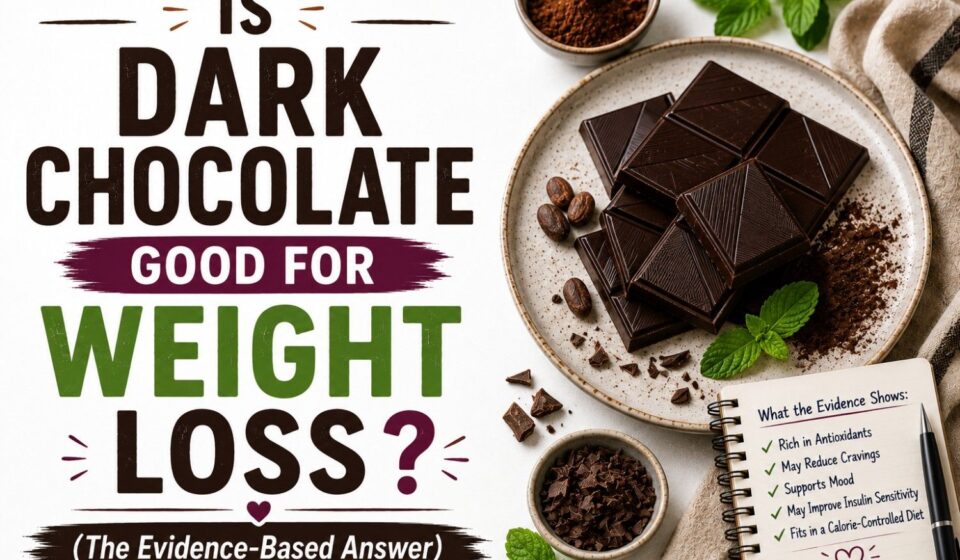

The best news in weight loss nutrition — here’s what the science actually shows

If there’s one food that weight loss enthusiasts desperately want to be healthy, it’s dark chocolate. And for once, the science is reasonably cooperative. Dark chocolate genuinely has properties that support weight loss — with important caveats about type, amount, and what “dark” actually means.
Dark Chocolate vs. Milk Chocolate: A Critical Distinction
Before anything else: “dark chocolate” covers an enormous range of products. The distinction that matters:
| Chocolate Type | Cocoa % | Sugar | Flavanols | Verdict |
|---|---|---|---|---|
| Milk chocolate | 10–50% | High | Low | Not recommended |
| Dark chocolate 50–60% | 50–60% | Moderate-high | Moderate | Borderline |
| Dark chocolate 70–75% | 70–75% | Moderate | Good | Acceptable |
| Dark chocolate 80–85% | 80–85% | Low | High | Best choice |
| Raw cacao / 90%+ | 90%+ | Very low | Very high | Best but very bitter |
The health and weight loss benefits of chocolate come primarily from flavanols — bioactive compounds concentrated in cocoa solids. The higher the cocoa percentage, the more flavanols and the less sugar.
A “dark chocolate” bar at 55% cocoa may contain more sugar than health benefits justify. The sweet spot for weight loss: 70% cocoa minimum, 85% preferred.
The Nutritional Profile of Dark Chocolate
70% dark chocolate (30g / 1oz serving):
- Calories: 170
- Fat: 12g (mostly oleic acid — same healthy fat as olive oil)
- Carbohydrates: 13g
- Sugar: 7g
- Fiber: 3g
- Protein: 2g
- Iron: 19% DV
- Magnesium: 16% DV
- Copper: 25% DV
- Manganese: 25% DV
- Flavanols: 200–400mg
85% dark chocolate (30g serving):
- Calories: 165
- Sugar: 4g (significantly less)
- Fiber: 4g
- Flavanols: 400–600mg
The fat profile of dark chocolate is favorable — primarily oleic acid (monounsaturated, same as olive oil) and stearic acid (saturated fat that doesn’t raise LDL cholesterol).
Why Dark Chocolate Supports Weight Loss
Reduces Cravings — Particularly for Sweet and Salty Foods
This is one of the most practically significant findings: a small amount of dark chocolate (around 30g) consumed deliberately has been shown to reduce subsequent cravings for sweet, salty, and fatty foods.
The mechanism appears to involve flavanols influencing dopamine pathways — producing satisfaction that reduces the drive to seek other rewarding foods. A planned piece of dark chocolate that satisfies and reduces subsequent junk food cravings is a net caloric benefit despite its own calories.

Improves Insulin Sensitivity
Dark chocolate’s flavanols improve insulin sensitivity — the ability of cells to respond to insulin and use glucose efficiently rather than storing it as fat.
Multiple studies have found that regular consumption of high-flavanol dark chocolate improves insulin sensitivity markers, potentially reducing the fat-storage hormonal environment that makes weight loss harder. As covered in our article on how to lose weight with insulin resistance, improving insulin sensitivity is one of the most impactful metabolic interventions available.
Reduces Cortisol
This is particularly relevant for stress-driven weight gain: dark chocolate consumption has been shown to reduce cortisol levels in chronically stressed individuals.
As covered in our article on does stress cause weight gain, cortisol directly promotes visceral belly fat accumulation. A food that genuinely reduces cortisol has direct fat loss implications — not just psychological ones.
Suppresses Appetite
Dark chocolate’s combination of fat, fiber, and flavanols produces meaningful satiety. Studies comparing dark chocolate to milk chocolate or white chocolate find that dark chocolate produces greater fullness and reduced calorie intake at subsequent meals.
One notable study found that people who ate dark chocolate before a meal consumed 17% fewer calories at that meal than those who ate milk chocolate — despite identical calorie content in the chocolate itself.
High in Magnesium
Dark chocolate is one of the better dietary sources of magnesium — 16% DV per 30g serving. Magnesium deficiency is extremely common and is associated with:
- Poor insulin sensitivity
- Elevated cortisol
- Poor sleep quality
- Increased inflammation
All of these factors impair fat loss. Adequate magnesium supports the metabolic conditions that make weight loss easier.
Improves Gut Microbiome
Dark chocolate’s fiber and polyphenols are fermented by gut bacteria — feeding beneficial Lactobacillus and Bifidobacterium species. As discussed in several articles throughout this blog, gut microbiome health increasingly appears to influence appetite hormones, fat storage, and metabolic efficiency.
The Case For Caution
Still Calorie Dense
30g of dark chocolate at 170 calories is a meaningful calorie contribution. Two or three servings — entirely possible when eating from a large bar — adds 340–510 calories.
The benefits of dark chocolate apply to the appropriate amount (1–2 squares, 15–30g). A 100g bar of dark chocolate contains 550+ calories — the benefits don’t scale proportionally with the quantity.
Easy to Rationalize Overconsumption
“Dark chocolate is healthy” is one of the most common dietary rationalizations. The health benefits exist at 15–30g per day. They don’t justify eating 100g per day.
Sugar Content Varies Significantly
Some 70% dark chocolate bars still contain 8–12g of sugar per 30g serving — meaningful for people managing blood sugar. Checking the nutrition label matters. Higher cocoa percentage = less sugar.
Caffeine Content
Dark chocolate contains caffeine (approximately 12–25mg per 30g serving) and theobromine (a milder stimulant). For people who are caffeine-sensitive or eat dark chocolate in the evening, this may affect sleep quality. As covered in our article on the best foods to eat before bed for weight loss, caffeine close to bedtime impairs sleep — which directly impairs fat loss.
How Much Dark Chocolate Per Day for Weight Loss?
The evidence-based sweet spot: 15–30g per day (1–2 squares)
- At 15g: approximately 85 calories, meaningful flavanol dose, very manageable within any calorie target
- At 30g: approximately 170 calories, significant flavanol dose, still fits within most fat loss calorie budgets
- Beyond 30g daily: calories accumulate without proportional increase in benefits
When to eat it:
- As a planned afternoon treat — satisfies sweet cravings, reduces subsequent cravings
- After lunch — may reduce afternoon snacking
- Not immediately before bed (caffeine)
How to Choose the Right Dark Chocolate
Look for:
- 70% cocoa minimum — 80–85% preferred
- Short ingredient list: cocoa mass, cocoa butter, sugar, vanilla (possibly soy lecithin)
- Low sugar: under 10g per 30g serving
- No milk solids (which reduce flavanol bioavailability)
Avoid:
- “Dark” chocolate under 60% cocoa
- Chocolate with milk added (even some “dark” bars contain milk)
- Chocolate with many additives, fillings, or caramel
- Dutch-processed cocoa (alkalization destroys most flavanols)
Best commercial options tend to be: Lindt 85% and 90%, Green & Black’s 85%, Endangered Species 88% — brands that produce genuinely high-cocoa products with minimal additives.
Dark Chocolate vs. Milk Chocolate: Not Even Close
For weight loss specifically:
Dark chocolate (85%):
- 4g sugar per 30g
- 400–600mg flavanols
- Reduces cravings, improves insulin sensitivity, reduces cortisol
- Genuine metabolic benefits
Milk chocolate:
- 15–17g sugar per 30g
- Minimal flavanols (milk proteins bind to flavanols reducing absorption)
- Spikes blood sugar, triggers further cravings
- No meaningful metabolic benefit
They are fundamentally different foods despite both being called “chocolate.”
The Bottom Line
Is dark chocolate good for weight loss?
Yes — with the right type and appropriate portions. 70%+ dark chocolate in 15–30g daily amounts:
- Reduces cravings for sweet and junk food
- Improves insulin sensitivity
- Reduces cortisol
- Provides meaningful satiety
- Contributes magnesium and beneficial gut bacteria feeding
The critical rules:
- 70% minimum, 85% preferred
- 15–30g per day maximum
- Break off squares rather than eating from the bar (portion control)
- Check sugar content — varies significantly between brands
- Not immediately before bed (caffeine)
- This applies to dark chocolate specifically — not milk chocolate
For the complete framework for including genuinely satisfying foods within a fat loss diet, our guide to how to get rid of belly fat covers everything in one place.
Do you include dark chocolate in your weight loss diet — and has it helped manage sweet cravings? Share in the comments.