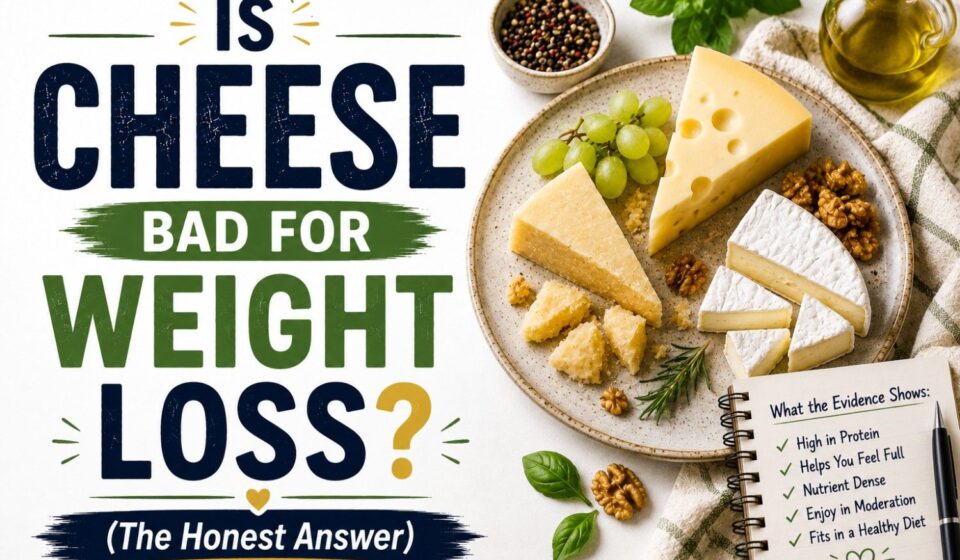

One of the most beloved foods in existence — here’s what the evidence actually shows about cheese and fat loss

Cheese is one of the first foods people eliminate when trying to lose weight. High in fat, calorie-dense, easy to overeat — the case against it seems obvious. But the evidence on cheese and weight loss is more interesting than the standard “avoid dairy fat” advice suggests.
Here’s the complete, honest picture.
The Nutritional Profile of Common Cheeses
| Cheese (30g / 1oz serving) | Calories | Protein | Fat | Calcium |
|---|---|---|---|---|
| Cheddar | 113 | 7g | 9g | 20% DV |
| Mozzarella (part-skim) | 72 | 7g | 4.5g | 18% DV |
| Parmesan | 111 | 10g | 7g | 26% DV |
| Feta | 75 | 4g | 6g | 14% DV |
| Brie | 95 | 6g | 8g | 5% DV |
| Cottage cheese (100g) | 98 | 11g | 4g | 8% DV |
| Cream cheese (30g) | 99 | 2g | 10g | 2% DV |
Cheese varies significantly in nutrition depending on type. Hard aged cheeses (parmesan, cheddar) are higher in protein per gram. Softer cheeses (mozzarella, feta) are often lower in calories. Cream cheese is essentially fat with minimal protein — a very different food from aged cheddar.
The Case Against Cheese for Weight Loss
Calorie Dense
Cheese packs a lot of calories into a small volume. 30g of cheddar (roughly 3–4 small cubes) is 113 calories. This small amount is easy to underestimate — and very easy to exceed when cutting cheese from a block, grating generously over pasta, or adding to a sandwich without measuring.
Most people who eat cheese “in moderation” are eating 2–3 times a standard serving without realizing it.
High in Saturated Fat
Cheese is high in saturated fat — 4–6g per serving depending on type. The relationship between saturated fat and cardiovascular health has been debated extensively, but current guidelines still recommend limiting saturated fat intake.
For people with elevated LDL cholesterol or cardiovascular disease, cheese consumption warrants specific attention and possibly medical guidance.
Easy to Overeat
Cheese is palatable, convenient, and has no clear stopping signal. Unlike an apple (which you finish when it’s gone) or a chicken breast (which requires preparation that creates natural portion awareness), cheese can be eaten continuously in small amounts that add up to significant calorie intake without feeling like a meal.
The Case For Cheese in a Weight Loss Diet
Significant Protein Content
Hard cheeses provide 7–10g of protein per 30g serving — a meaningful contribution toward daily protein targets. As covered in our guide to how much protein you actually need per day, protein is the most important dietary variable for fat loss quality.

Parmesan specifically (10g protein per 30g serving) is one of the higher protein-per-calorie cheeses available — and its intense flavor means a small amount goes a long way.
High Calcium — Which May Support Fat Loss
Cheese is one of the best dietary sources of calcium. Beyond bone health, calcium has specific metabolic interest for weight loss:
Research has found associations between higher calcium intake and reduced fat absorption from meals — calcium may bind to some dietary fat in the digestive tract and reduce its absorption.
Additionally, adequate calcium appears to support healthy leptin function (the fullness hormone) — potentially influencing appetite regulation.
While the evidence isn’t definitive enough to call calcium a “fat loss nutrient,” adequate calcium intake is associated with better weight management outcomes in several population studies.
Very Low in Carbohydrates
Most cheeses contain essentially zero carbohydrates — making them compatible with ketogenic, low-carb, and any other low-carbohydrate approach. As covered in our guide to how to lose weight on a keto diet, cheese is one of the most keto-friendly foods available.
High Satiety
The combination of protein and fat in cheese produces meaningful satiety. A small amount of cheese added to a meal extends fullness and reduces subsequent snacking — the fat slows digestion and the protein suppresses hunger hormones.
Fermented — Potential Gut Benefits
Aged cheeses (cheddar, parmesan, gouda, Swiss) contain live bacteria and beneficial compounds from the fermentation process. Some research suggests fermented dairy specifically may have favorable effects on gut microbiome composition — which increasingly appears to influence metabolism and fat storage.
The Counterintuitive Research
Multiple population studies have found that higher cheese consumption is not associated with increased body weight — and some studies find the opposite relationship. A large European study found that people who ate more cheese had lower rates of obesity.
This doesn’t mean cheese causes weight loss. But it strongly contradicts the idea that cheese is inherently fattening. The relationship between food quality, satiety, and overall dietary patterns is more complex than simple calorie counting suggests.
The Type of Cheese Matters
Not all cheese is equally useful for weight loss:
Best choices for weight loss:
Parmesan — highest protein per gram of common cheeses, intense flavor means small amounts satisfy. Use as a flavor enhancer rather than a bulk ingredient.
Part-skim mozzarella — lower in calories than full-fat versions, good protein, melts well. Excellent on salads and as a pizza topping in controlled amounts.
Feta — lower calorie than most hard cheeses, strong flavor, crumbles easily (natural portion control). Works well in salads and Mediterranean dishes.
Cottage cheese — technically a fresh cheese. Highest protein per calorie of any cheese, very low fat version available. As covered in our article on the best low-calorie high-protein snacks, cottage cheese is one of the best weight loss foods available.
Ricotta (part-skim) — moderate calories, good protein, versatile. Works in both sweet and savory preparations.
Less ideal for weight loss:
Cream cheese — very high in fat, minimal protein. Essentially a fat delivery vehicle with little nutritional benefit beyond calories.
Processed cheese slices — lower quality protein, often high in sodium and additives, poor nutritional value relative to calorie content.
Brie and camembert — high in calories and saturated fat with relatively low protein. Best as an occasional treat rather than a regular inclusion.
The Portion Problem
This is the core issue with cheese for weight loss — not the food itself but the portion reality.
What a serving looks like:
- 30g of hard cheese = roughly the size of 4 dice
- Most people who think they’re having “a bit of cheese” are having 60–90g (2–3 servings)
- A cheese board at a dinner party: easily 150–200g = 400–600 calories
The solution: Weigh cheese rather than eyeballing it — at least initially. The gap between estimated and actual cheese portions is one of the most common hidden calorie sources for people who believe they’re eating healthily.
This is especially true for:
- Grated cheese on pasta (easy to add 60–80g without noticing)
- Cheese in sandwiches (often 40–60g per sandwich)
- Cheese on pizza (restaurant pizza often has 100g+ of cheese)
- Snacking from a block of cheese in the fridge
How to Include Cheese in a Weight Loss Diet
Use as a flavor enhancer, not a main ingredient: A tablespoon of grated parmesan over pasta adds 20 calories and significant flavor. 80g of cheddar melted into the pasta adds 360 calories. Same ingredient, completely different caloric impact.
Choose strongly flavored cheeses: Aged parmesan, sharp cheddar, pecorino, blue cheese, feta — their intense flavors mean smaller amounts provide full satisfaction. Mild cheeses require more volume to provide the same flavor satisfaction.
Measure before eating: Particularly for block cheese and grated cheese — measure 30g and see what it looks like. This creates portion awareness that prevents unconscious overconsumption.
Pair with protein and vegetables: Cheese with crackers or bread provides fat and carbohydrates but limited protein and satiety. Cheese with vegetables, eggs, or lean protein creates a more complete, filling combination.
Don’t eliminate it entirely: Cutting out cheese completely if you love it creates deprivation that eventually leads to overconsumption. A planned, measured amount of good cheese included regularly is more sustainable than eliminating it and binge-eating it later.
Dairy-Free and Vegan Options
For people who avoid dairy, vegan cheese alternatives vary significantly:
Most commercial vegan cheeses are made from cashews, coconut oil, or starch — and are often lower in protein and similar in calories to regular cheese. They don’t provide the same calcium or protein benefits.
For dairy-free protein alternatives with similar satiety to cheese: nutritional yeast provides a cheesy flavor at very low calorie cost, and tofu-based ricotta or cottage cheese alternatives can provide meaningful protein.
The Bottom Line
Is cheese bad for weight loss?
Not inherently — but portion control is essential. Cheese provides genuine nutritional value (protein, calcium, satiety) in a small, calorie-dense package. The problem isn’t the food itself but how easily its portions scale up without notice.
Key rules:
- Measure cheese rather than eyeballing
- Choose strongly flavored varieties (parmesan, feta, sharp cheddar) — more flavor per gram
- Use as a flavor enhancer rather than a main ingredient
- Prioritize cottage cheese and part-skim mozzarella for highest protein-to-calorie efficiency
- Avoid cream cheese as a regular dietary staple — high calories, minimal protein
- Include it deliberately rather than eliminating it — sustainable moderation beats deprivation
For the complete dietary framework that includes real food — including cheese — within a fat loss approach, our guide to how to get rid of belly fat covers everything in one place.
Do you include cheese in your weight loss diet — and have you found a way to manage portions that actually works? Share in the comments.