
Finding low-calorie snacks for weight loss sounds simple until you eat something that’s supposed to be healthy and feel hungry again 20 minutes later.
A few rice cakes, a tiny bag of crackers, or a handful of vegetables might fit your calorie target. But if the portion doesn’t satisfy you, it may not be the most useful choice.
The best snacks aren’t necessarily the ones with the fewest calories. They’re the ones that provide enough food, enjoyment, and nutrition to help you feel comfortable until your next meal.

Protein, fiber, and food volume can all contribute to fullness, which is why foods such as Greek yogurt, edamame, fruit, popcorn, and hummus are worth considering.
But you don’t need to force every snack into a strict calorie limit or eliminate your favorite treats.
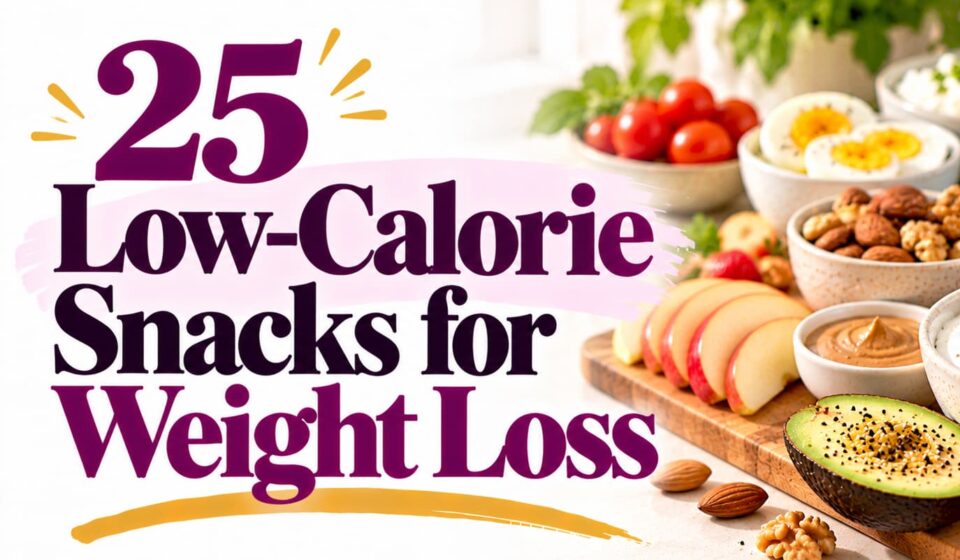
Here are 25 practical low-calorie snack ideas, including high-protein options, fiber-rich foods, crunchy snacks, and warm choices for evenings.
What Makes a Good Low-Calorie Snack for Weight Loss?
A snack can support weight management when it fits your overall eating pattern.
That doesn’t mean snacking automatically helps you lose weight. Some people prefer three satisfying meals without snacks, while others feel better including something between meals.
Research suggests that the relationship between snacking and weight depends on factors such as what you eat, how much you eat, and why you’re snacking.
Three characteristics are especially useful when choosing something satisfying.
1. Protein
Protein contributes to fullness and helps maintain muscle during weight loss.
Research suggests that higher-protein meals can influence short-term appetite, although responses vary and long-term effects are less certain.
Greek yogurt, cottage cheese, eggs, tuna, and edamame are convenient sources.
You don’t need to eat a specific amount of protein at every snack. A piece of fruit can still be a perfectly reasonable choice.
For more information about daily requirements, read our guide to how much protein you need.
2. Fiber
Fiber supports digestion and may help make food more satisfying.
Fruit, vegetables, legumes, oats, and whole grains are useful sources.
Some fiber-rich foods also contain plenty of water, allowing you to eat a relatively generous portion without consuming a large number of calories.
3. Enough Food to Satisfy You
Food volume and portion size can influence how filling a snack feels.
For example, three cups of air-popped popcorn provide a much larger portion than a small amount of nuts at a similar calorie level.
But volume isn’t everything.
A snack that tastes good and satisfies your particular appetite may work better than a much larger portion of something you don’t enjoy.
A good snack doesn’t have to be the lowest-calorie option. It should be satisfying enough that you don’t spend the next hour thinking about food.
25 Best Low-Calorie Snacks for Weight Loss
The calorie estimates below are approximate and refer to the portions described.
Exact values vary by brand, preparation, and ingredient quantities. Use package labels when you need more precise numbers.
High-Protein Snacks
These choices are useful when you want something relatively small but rich in protein.

1. Plain Greek Yogurt With Berries
Approximately 120–180 calories
Combine 150 grams of plain Greek yogurt with a small handful of berries.
Depending on the yogurt, this can provide roughly 14–17 grams of protein, along with fiber and natural sweetness from the fruit.
It’s especially convenient because there’s no cooking involved.
Choose a yogurt with a texture and fat content you enjoy. Nonfat Greek yogurt generally has fewer calories, but lower-fat doesn’t automatically mean it will be more satisfying for everyone.
Our guide to Greek yogurt for weight loss explores its nutritional benefits.
2. Cottage Cheese With Cucumber
Approximately 110–170 calories
Try 150 grams of cottage cheese with cucumber slices, black pepper, and fresh herbs.
Cottage cheese provides substantial protein, while cucumber adds freshness and crunch.
The calorie total depends on the cheese’s fat content.
For a sweeter alternative, replace the cucumber with a few strawberries or pineapple pieces.
3. Two Hard-Boiled Eggs With Cherry Tomatoes
Approximately 170–200 calories
Two large hard-boiled eggs provide around 12–13 grams of protein.
Add cherry tomatoes for extra volume and flavor.
Eggs are inexpensive, easy to prepare in advance, and naturally portioned.
If you’re batch-cooking them, keep them refrigerated and use within one week.
For more information, see are eggs good for weight loss?.
4. Canned Tuna With Cucumber
Approximately 100–150 calories
Combine approximately 85 grams of drained canned light tuna in water with cucumber slices, lemon juice, and pepper.
This provides a substantial amount of protein without requiring cooking.
You can also add a little plain yogurt or mustard to make a simple tuna salad.
Tuna contains mercury, so variety matters. Canned light tuna is generally lower in mercury than albacore tuna. People who are pregnant, breastfeeding, or may become pregnant should follow FDA advice about seafood choices and frequency.
5. Shelled Edamame
Approximately 120–140 calories per 100 grams
Edamame are young soybeans that provide both protein and fiber.
A 100-gram serving of cooked, shelled edamame contains approximately 12 grams of protein and 5 grams of fiber.
They’re available frozen and can be heated quickly.
Add a little salt, chili powder, or lemon juice for flavor.
Remember that packages sold in pods include the weight of the inedible pods, so the edible portion may be smaller than the package weight suggests.
6. Reduced-Fat String Cheese With a Clementine
Approximately 85–120 calories
Pair one reduced-fat mozzarella string cheese stick with a small clementine.
The cheese provides protein and calcium, while the fruit contributes sweetness and some fiber.
It’s particularly useful when you want a snack that requires almost no preparation.
You can also swap the clementine for grapes, strawberries, or another fruit.
7. Lean Biltong
Approximately 80–130 calories per 25–30 grams
Biltong is dried, seasoned meat that can provide a concentrated source of protein.
It’s portable and doesn’t usually require refrigeration until the package is opened, although storage instructions vary.
Check the label because the amount of fat and sodium differs substantially between products.
If you’re limiting sodium or processed meat intake, this may be better as an occasional option rather than an everyday snack.
8. Smoked Salmon With Cucumber
Approximately 80–140 calories
Serve 50–60 grams of smoked salmon on cucumber slices with a little lemon juice or a small amount of light cream cheese.
Smoked salmon provides protein and some omega-3 fatty acids.
However, it’s often high in sodium, and cold-smoked fish requires additional food-safety consideration for pregnant or immunocompromised people.
Choose a suitable alternative, such as cooked salmon, if those precautions apply.
High-Fiber and Fruit-Based Snacks
These options are useful when you want natural sweetness, crunch, or a combination of fiber and healthy fats.
9. Apple With Almond Butter
Approximately 170–210 calories
Slice a medium apple and serve it with one tablespoon of almond butter.
The apple provides water and fiber, while almond butter contributes fat and a little protein.
The combination creates a snack with different textures and flavors.
If calories matter to your meal plan, measure the almond butter occasionally. Nut butters are nutritious but concentrated sources of energy.
10. Carrots With Hummus
Approximately 130–190 calories
Pair a generous portion of carrot sticks with around 50 grams of hummus.
Carrots offer crunch and fiber, while hummus adds protein, fiber, and fat from its chickpea and tahini ingredients.
This is an easy option to pack for work.
Hummus calories vary depending on how much oil or tahini is used, so homemade and store-bought versions can differ.
11. Celery With Peanut Butter
Approximately 100–130 calories
Spread one tablespoon of peanut butter across a few celery stalks.
Celery provides crunch and water, while the peanut butter adds flavor and fat.
This is useful when you’re craving something creamy and crunchy.
The peanut butter isn’t a particularly large protein serving at this portion size, but that doesn’t make the combination a poor snack.
12. Mixed Berries
Approximately 55–95 calories per 150 grams
Strawberries, raspberries, blackberries, and blueberries can all make refreshing snacks.
The exact calorie and fiber content depends on the mixture.
Raspberries and blackberries are particularly fiber-rich.
If fruit alone doesn’t satisfy you, add plain yogurt, cottage cheese, or a few nuts.
Frozen berries are also convenient and can be more economical than fresh varieties.
13. Air-Popped Popcorn
Approximately 90–110 calories for 3 cups
Popcorn is a whole grain that provides volume and some dietary fiber.
Three cups of plain air-popped popcorn can make a substantial-looking snack for approximately 100 calories.
Try seasoning it with paprika, garlic powder, nutritional yeast, or a small amount of salt.
Butter, oil, caramel, and flavored coatings can increase the calorie total, but that doesn’t mean all microwave popcorn is automatically unhealthy.
Read the label and choose the kind you enjoy.
Our guide to popcorn for weight loss explains how different varieties compare.
14. A Whole Orange
Approximately 60–85 calories
A medium orange provides vitamin C, water, and dietary fiber.
It’s easy to carry and naturally sweet.
Whole fruit generally provides more fiber than the equivalent serving of juice.
An orange doesn’t contain much protein, but you don’t need to add protein to every piece of fruit you eat.
15. Two Kiwis
Approximately 85–110 calories
Two medium kiwis provide natural sweetness, vitamin C, and fiber.
They’re a useful alternative when you’re tired of apples or bananas.
You can slice them into a bowl or add them to plain yogurt.
Kiwis have also been studied for digestive and sleep-related outcomes, but those findings don’t mean eating them causes fat loss.
High-Volume Vegetable and Fruit Snacks
These choices are particularly appealing when you want to spend a little more time eating or enjoy a larger-looking portion.
16. Cucumber With Tzatziki
Approximately 80–150 calories
Slice a large cucumber and serve it with a small bowl of tzatziki.
Tzatziki is usually made with yogurt, cucumber, garlic, and herbs.
The cucumber provides crunch and volume, while the dip adds creaminess and some protein.
Calories vary depending on the yogurt and oil used in the tzatziki.
17. Cherry Tomatoes With Mozzarella
Approximately 110–170 calories
Combine a handful of cherry tomatoes with approximately 40–50 grams of reduced-fat mozzarella.
Add basil, pepper, and a little balsamic vinegar if you enjoy those flavors.
This creates a simple Caprese-inspired snack.
If you use olive oil, include it in the calorie estimate rather than assuming dressings contribute nothing.
18. Bell Pepper Strips With Yogurt Dip
Approximately 80–140 calories
Slice a large bell pepper and serve it with a small portion of Greek yogurt mixed with herbs and lemon juice.
Bell peppers are naturally sweet and provide vitamin C.
The yogurt contributes protein and makes the snack more substantial.
You can prepare the dip in advance and store it according to food-safety guidance.
19. Broccoli Florets With Hummus
Approximately 100–160 calories
Serve raw or lightly steamed broccoli with a few tablespoons of hummus.
Broccoli provides fiber and vitamin C, while hummus adds flavor and makes the vegetables more appealing.
If raw broccoli causes bloating, try steaming it briefly and allowing it to cool.
You can also substitute cauliflower or another vegetable.
20. Fresh Watermelon
Approximately 85–100 calories for 2 cups diced
Watermelon contains a large amount of water, making it refreshing and relatively low in calories for its volume.
A bowl of diced watermelon is a convenient sweet snack, particularly in warm weather.
It contains less fiber than some other fruits, but it still contributes fluid, vitamins, and enjoyment.
For readers who prefer a more substantial snack, a small serving of yogurt alongside the watermelon is an option.
Warm, Comforting Snacks
Sometimes you want something savory and warm rather than fruit or a cold yogurt cup.
These options can be particularly appealing in the evening.
21. Bone Broth
Approximately 30–80 calories per cup
A warm cup of bone broth can be comforting when you’re craving something savory.
Some products provide protein, although the amount varies considerably and much of it may come from collagen.
Bone broth isn’t a complete replacement for a protein-rich meal, and its nutritional benefits are sometimes exaggerated.
Check sodium content, especially if you drink it regularly.
22. Miso Soup With Tofu
Approximately 70–130 calories for a small bowl
Prepare a small bowl of miso soup with tofu, mushrooms, and green onions.
The tofu contributes protein, while the broth provides a savory flavor.
This can be a useful choice when you’re more interested in a warm, light snack than something sweet.
Miso paste contains sodium, so portions and product choices matter if you’re watching salt intake.
23. A Small Bowl of Oatmeal
Approximately 110–170 calories
Cook approximately 30 grams of dry oats with water or another suitable liquid.
Add cinnamon or a small amount of fruit for flavor.
Oats contain beta-glucan, a soluble fiber associated with several digestive and cardiovascular benefits.
For extra protein, you can stir in a little Greek yogurt after cooking.
A small bowl of oatmeal can also be a sensible evening snack. Eating carbohydrates at night doesn’t automatically cause weight gain.
Convenient Packaged Snacks
Packaged snacks aren’t inherently bad. Sometimes convenience is what makes a healthier eating pattern realistic.
The key is to compare the actual serving size and ingredients.
24. Roasted Chickpeas
Approximately 110–150 calories per 25–30 grams
Roasted chickpeas are crunchy, portable, and provide some plant protein and fiber.
You can buy them ready-made or prepare them at home.
Different brands use different amounts of oil and seasoning, which changes calories and sodium.
They make a useful alternative to traditional crackers when you want something with a little more fiber.
25. Roasted Fava Beans
Approximately 110–140 calories per 25–30 grams
Roasted fava beans, also called broad beans, are another convenient crunchy legume snack.
Depending on the product, they can provide a useful combination of protein and fiber.
Look at the serving size, added oils, and sodium on the package.
People with G6PD deficiency should avoid fava beans because they can trigger serious hemolytic reactions.
For everyone else who tolerates them, they’re an interesting option to add variety to snack choices.
Quick Comparison: Which Snack Should You Choose?
You don’t need to memorize all 25 options.
Start with what you actually want to eat.
| What you’re craving | Good choices |
|---|---|
| Something creamy | Greek yogurt, cottage cheese, hummus |
| Something sweet | Berries, orange, kiwi, watermelon |
| Something crunchy | Popcorn, roasted chickpeas, bell peppers |
| Something savory | Eggs, tuna, edamame, smoked salmon |
| Something warm | Oatmeal, miso soup, bone broth |
| Something portable | String cheese, fruit, biltong, roasted fava beans |
| More protein | Greek yogurt, tuna, edamame, cottage cheese |
These are practical preferences, not guaranteed rankings of how long each snack will keep you full.
How Many Calories Should a Weight-Loss Snack Have?
There isn’t one calorie target suitable for everyone.
A snack of approximately 100–200 calories may be sufficient for some people, while others need a larger portion depending on their overall diet, activity, and appetite.
Harvard’s Nutrition Source offers approximately 150–250 calories as a general snack-planning reference, while emphasizing that needs vary.
What’s more important is how the snack fits into your day.
For example, a person who eats an early lunch and a late dinner might benefit from a more substantial afternoon snack.
Someone who has just eaten a satisfying meal may not need a snack at all.
Is a 100-Calorie Snack Better Than a 200-Calorie Snack?
Not necessarily.
Imagine choosing between a tiny portion of crackers and a bowl of yogurt with fruit.
The yogurt might contain more calories, but it also offers protein and other nutrients.
If it helps you feel satisfied, it could be a more useful option.
On the other hand, sometimes a small portion of crackers is exactly what you want.
You don’t need to reject a food simply because it isn’t high in protein or fiber.
If you’re interested in tracking ingredients and portions, our meal calorie calculator can help estimate your snack’s nutritional contribution.
Do Snacks Help Prevent Overeating Later?
Sometimes, but not automatically.
A planned afternoon snack may help when there’s a long gap between meals and you’re genuinely hungry.
However, research doesn’t establish that eating a 150-calorie snack will reliably reduce your dinner intake by more than 150 calories.
Some people compensate for snack calories at later meals. Others don’t.
This is why the overall pattern matters more than making universal rules about snack timing.
Try paying attention to how you feel after different snacks and whether they help you maintain an eating routine that works for you.
What About Snacking at Night?
You can eat a snack in the evening and still lose weight.
The time on the clock doesn’t automatically determine whether food is stored as fat.
If you’re hungry before bed, a small bowl of yogurt, oatmeal, fruit, or another suitable food can be reasonable.
If evening snacking regularly turns into eating much more than you intended, it may be worth reviewing whether your earlier meals are satisfying enough.
Our guide to managing late-night eating offers more practical ideas.
How to Make Healthy Snacking Easier
You don’t need to reorganize your entire kitchen.
A few small preparation habits can reduce the effort involved in choosing snacks.
Keep washed fruit and vegetables where they’re easy to see. Have yogurt, eggs, or cheese available if you eat dairy or eggs. Store frozen edamame and berries for days when fresh produce runs out.
For pantry snacks, consider popcorn kernels, canned chickpeas, or a few varieties of roasted legumes.
You can also keep foods such as chocolate, crackers, or cookies in your routine if you enjoy them.
The goal isn’t to create a kitchen where every food has to pass a nutritional test.
Instead, make satisfying, nutritious choices convenient while leaving room for enjoyment.
A Simple Weekly Snack Prep
| Preparation | What it gives you |
|---|---|
| Wash and cut carrots, peppers, and cucumbers | Ready-to-eat vegetables |
| Cook a few eggs | Portable protein |
| Portion Greek yogurt into containers | Quick creamy snacks |
| Keep frozen berries available | Convenient fruit |
| Prepare hummus or yogurt dip | Easy vegetable pairings |
| Divide popcorn or roasted snacks into containers | Convenient portions |
Refrigerate perishable items promptly and follow appropriate storage times.
Frequently Asked Questions
What Are the Best Low-Calorie Snacks That Keep You Full?
Greek yogurt with berries, cottage cheese, edamame, eggs, and hummus with vegetables are useful options because they contain protein, fiber, or both.
But fullness varies between individuals. A satisfying snack doesn’t have to contain both nutrients.
What Can I Eat for Under 100 Calories?
Depending on portion size, options include a medium orange, a bowl of berries, two cups of diced watermelon, a few cups of plain air-popped popcorn, or bell pepper strips.
You don’t need to stay below 100 calories if that amount leaves you hungry.
Are Rice Cakes Bad for Weight Loss?
No.
Rice cakes can fit into a nutritious eating pattern.
They may not be particularly filling on their own, but you can pair them with nut butter, cottage cheese, or another topping if you prefer.
There’s no reason to label them as a food that automatically makes people hungrier.
Can I Eat Popcorn Every Day?
Plain or lightly seasoned popcorn can be part of a regular eating pattern.
It’s a whole grain, and it provides fiber and volume.
Your overall diet and the amount of oil, butter, sugar, or salt added still matter.
Are Packaged Snacks Always Less Healthy?
No.
Plain yogurt cups, roasted chickpeas, whole-grain crackers, nuts, and many other packaged foods can be nutritious.
Compare serving sizes, fiber, protein, sodium, and added sugar rather than judging food entirely by whether it comes in a package.
Should Every Snack Have at Least 10 Grams of Protein?
No.
Protein can help with fullness, but there’s no mandatory protein threshold for snacks.
Fruit, popcorn, or vegetables can still be useful choices even when they provide relatively little protein.
The Bottom Line: Best Low-Calorie Snacks for Weight Loss
The best low-calorie snacks are the ones that fit your nutritional needs, taste good, and help you feel satisfied.
For higher-protein options, consider Greek yogurt, cottage cheese, eggs, tuna, and edamame.
For fiber and crunch, try fruit, vegetables with hummus, popcorn, and roasted legumes.
And when you want something warm, oatmeal or a simple soup can be a comfortable choice.
You don’t need to snack on a schedule, avoid every processed food, or keep every snack below 100 calories to lose weight.
The overall quality and quantity of your diet matter more than finding a perfect snack.
Choose a few options you enjoy, keep them available, and adjust portions to your appetite and needs.
For more ideas about staying satisfied while managing calorie intake, see our guide to reducing hunger while dieting.
A good weight-loss plan should leave room for food that is nutritious, practical, and enjoyable, including the snacks you look forward to eating.
Stop Wondering What to Eat This Week
Get my free 7-Day High-Protein Weight Loss Meal Plan delivered straight to your inbox — a simple week of satisfying, protein-focused meals designed to make healthy eating easier without complicated calorie tracking.
- 7 full days of breakfast, lunch, dinner & snacks
- One complete shopping list for the whole week
- A quick high-protein food cheat sheet
- Simple daily tips to help you stay on track
Free PDF • Delivered by email • Unsubscribe anytime
Check your inbox 💜
Your free 7-day high-protein meal plan is on its way.