
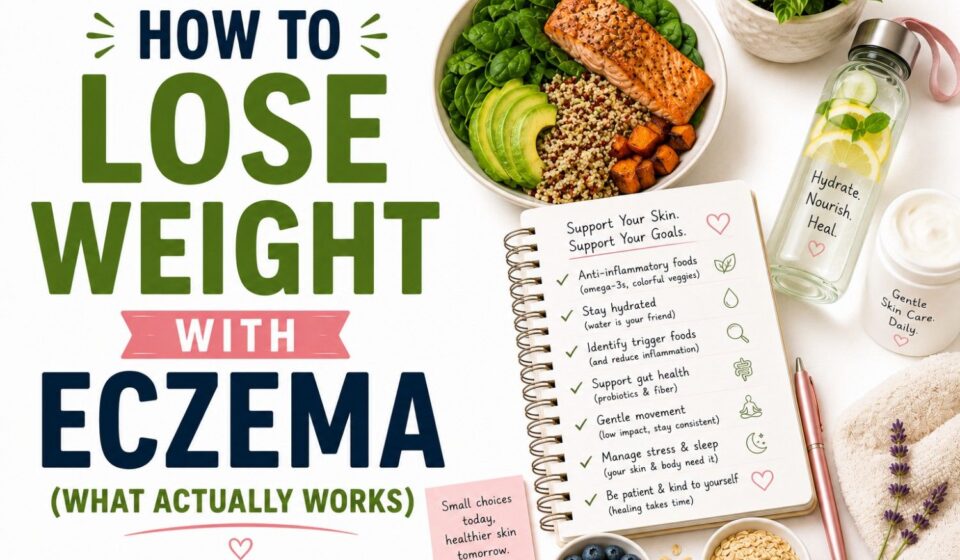

The inflammation-eczema-weight connection is bidirectional — here’s the approach that improves both simultaneously
Eczema (atopic dermatitis) and weight have a more significant relationship than most people realize. Excess weight worsens eczema through multiple mechanisms. Eczema inflammation impairs the metabolic function that supports fat loss. The medications used for eczema affect weight. And the sleep disruption, psychological burden, and physical discomfort of chronic eczema all make consistent dietary and exercise habits harder to maintain.
This guide addresses all of these connections — and the specific approach that supports fat loss while managing eczema rather than worsening it.

How Eczema and Weight Are Connected
How Excess Weight Worsens Eczema
Skin fold irritation: Excess weight creates skin folds — warm, moist environments where eczema develops and worsens. The inner thighs, under the breasts, abdominal folds, and neck creases are particularly prone to eczema flares in overweight individuals.
Systemic inflammation: Adipose tissue — particularly visceral fat — produces pro-inflammatory cytokines that worsen atopic dermatitis systemically. The same inflammatory pathways that drive eczema are amplified by obesity.
Sweat and heat: Excess weight increases body temperature and sweating — both significant eczema triggers. Exercise-induced sweating is a common flare trigger that’s more significant at higher body weights.
Reduced medication effectiveness: Some eczema medications are less effective at higher body weights — both topical treatments (harder to apply comprehensively) and systemic treatments (altered drug distribution).
How Eczema Makes Weight Loss Harder
Sleep disruption: Eczema itch (pruritus) is notoriously worse at night — disrupting sleep significantly. As covered in our article on why sleep is the most underrated weight loss tool, poor sleep directly elevates hunger hormones and impairs fat metabolism. Chronic sleep disruption from eczema itch is a significant metabolic obstacle.
Reduced exercise capacity: Exercise-induced sweating triggers eczema flares in many patients — making the most common weight loss recommendations (cardio, HIIT) directly problematic. The fear of triggering a flare creates a significant psychological barrier to exercise.
Psychological burden: Eczema significantly affects mental health — depression and anxiety are significantly more common in eczema patients, particularly those with severe disease. These conditions independently impair weight management through emotional eating and reduced motivation.
Chronic inflammation: As covered in our guide to how to reduce inflammation to lose weight, systemic inflammation directly impairs fat loss through insulin resistance and metabolic dysfunction. Eczema-driven systemic inflammation contributes to this metabolic obstacle.
Medication effects: Systemic corticosteroids (used for severe eczema flares) cause the same rapid weight gain seen in other conditions — fluid retention, appetite stimulation, and fat redistribution.
The Eczema-Weight Positive Feedback Loop
This is worth understanding clearly — because it provides the motivation for a targeted approach:
Weight loss improves eczema → Improved eczema improves sleep → Better sleep improves metabolism and reduces hunger → Better metabolism supports further weight loss → Further weight loss further improves eczema
Multiple studies confirm that weight loss significantly reduces eczema severity — with each unit of BMI reduction producing measurable improvement in SCORAD (eczema severity scores).
Dietary Approach for Weight Loss With Eczema
1. Identify Personal Food Triggers — First Priority
Before implementing any weight loss dietary approach, identifying personal food triggers is essential — because a “healthy” food for weight loss may be a personal eczema trigger.
Common dietary eczema triggers (highly individual — not universal):
- Dairy (particularly in children, but also adults)
- Eggs (particularly egg whites)
- Gluten and wheat (in some patients)
- Soy
- Tree nuts and peanuts
- Shellfish and fish (in some patients)
- Nightshades (tomatoes, peppers, eggplant)
- High-histamine foods (fermented foods, alcohol, aged cheese, processed meats)
- Citrus fruits
- Added sugar (worsens inflammation broadly)
The elimination approach: A supervised elimination diet — removing the most common triggers for 4-6 weeks, then reintroducing one at a time — identifies personal triggers accurately. Work with an allergist or dietitian for this process.
Important: Don’t eliminate broad food categories without confirmed personal triggers — unnecessary restriction worsens nutritional status and quality of life without guaranteed benefit.
2. Anti-Inflammatory Eating — The Most Important Principle
The anti-inflammatory dietary pattern simultaneously addresses eczema management and fat loss — making it the cornerstone of this approach.
Emphasize:
- Fatty fish (salmon, sardines, mackerel) — omega-3 fatty acids directly reduce the IL-4, IL-13, and IgE pathways central to atopic dermatitis. Multiple studies show omega-3 supplementation reducing eczema severity. Aim for 2-3 servings weekly plus 2-3g EPA+DHA supplementation daily.
- Extra virgin olive oil — oleocanthal reduces inflammatory pathway activity
- Colorful vegetables and fruits (within personal trigger tolerance)
- Turmeric with black pepper — curcumin reduces inflammatory markers relevant to atopic dermatitis
- Probiotic foods — gut microbiome dysbiosis is increasingly implicated in eczema pathogenesis
Reduce or eliminate:
- Added sugar and refined carbohydrates — directly worsen atopic inflammation
- Ultra-processed food — primary dietary inflammation driver
- Alcohol — worsens eczema through multiple mechanisms (histamine content, inflammatory effect, sleep disruption)
- Industrial seed oils — high omega-6 promotes inflammatory prostaglandin production
3. Probiotics and the Gut-Skin Axis
The gut microbiome-eczema connection is one of the most important and underappreciated areas of eczema research. Gut dysbiosis is consistently found in eczema patients and appears to contribute to the atopic immune dysregulation that drives the condition.
Probiotic support:
- Lactobacillus rhamnosus GG has the strongest evidence for eczema — multiple trials showing reduced severity
- Lactobacillus reuteri and Bifidobacterium strains also show benefit
- Fermented foods where tolerated (yogurt, kefir) — check personal trigger status first
Prebiotic fiber: Feeds beneficial gut bacteria — vegetables, legumes, oats (where tolerated).

4. Omega-3 Supplementation — Specific Eczema Evidence
Omega-3 fatty acids deserve special mention beyond general anti-inflammatory eating. Multiple controlled trials specifically in atopic dermatitis show that EPA and DHA supplementation reduces:
- Eczema severity scores
- Itch intensity
- Inflammatory markers (IgE, IL-4)
2-3g EPA+DHA daily — alongside dietary fatty fish — provides meaningful eczema benefit alongside metabolic benefits for fat loss.
5. Adequate Protein
As covered in our guide to how much protein you actually need per day, targeting 0.8-1g of protein per pound of bodyweight:
- Preserves muscle during calorie restriction
- Provides amino acids for skin barrier repair (particularly glycine, proline, and hydroxyproline — collagen components)
- Provides the most powerful satiety of any macronutrient
Protein sources for eczema — choose based on personal triggers:
- If eggs are tolerated: excellent complete protein source
- If dairy is tolerated: Greek yogurt, cottage cheese (protein + probiotics)
- Fish: protein + omega-3s (double benefit — if tolerated)
- Poultry: generally well-tolerated
- Legumes: protein + prebiotic fiber (if tolerated)
6. Hydration — Skin Barrier Support
Adequate hydration supports the skin barrier function that’s compromised in eczema. As covered in our guide to how much water to drink to lose weight, 3+ liters daily supports both fat loss and skin health.
7. Moderate Calorie Deficit
A 400-500 calorie daily deficit is appropriate for eczema — not aggressive restriction, which elevates cortisol and worsens inflammation and sleep disruption.
Exercise With Eczema — Managing Sweat Triggers
Exercise is one of the most common eczema triggers — through sweating, heat, and friction. But exercise is also one of the most powerful tools for weight loss and anti-inflammatory benefit. Managing exercise-induced triggers is therefore a critical skill.
Strategies for Exercising With Eczema
Pre-exercise cooling:
- Exercise in air-conditioned environments
- Use a fan during exercise
- Cool shower immediately before exercise
- Exercise in the coolest part of the day (early morning)
Immediate post-exercise routine:
- Shower within 10 minutes of finishing exercise — remove sweat from skin immediately
- Use lukewarm (not hot) water — hot water strips skin barrier
- Apply emollient immediately after patting dry — within 3 minutes while skin is still slightly damp
- This routine prevents sweat from sitting on skin and triggering inflammation
Clothing:
- Moisture-wicking, seamless fabrics that minimize friction
- Avoid wool and synthetic fabrics that worsen eczema
- Cover affected areas where friction is a concern
Antihistamine timing:
- If antihistamines are part of your eczema management, taking them before exercise may reduce exercise-triggered flare intensity for some patients
Best Exercise Types for Eczema
Swimming: Cooling water prevents overheating and sweat accumulation. However, pool chlorine is an eczema trigger for some patients — shower and moisturize immediately after swimming. Saltwater or low-chlorine pools may be better tolerated.
Walking (outdoors in cool weather or indoors with air conditioning): Low enough intensity to minimize excessive sweating while providing meaningful metabolic benefit. As covered in our guide to how many steps to lose weight, consistent daily walking produces meaningful fat loss without excessive sweat triggering.
Cycling (stationary, indoors): Fan pointed at the body during cycling significantly reduces sweat accumulation. Low-impact, adjustable intensity.
Yoga: Lower intensity than aerobic exercise — less sweat generation. Stress-reducing benefits are particularly valuable for eczema (stress is a significant trigger). Choose breathable, non-irritating clothing.
Strength training: Moderate-intensity strength training with adequate ventilation produces less sweat than cardio — while building the muscle that raises metabolic rate and improves body composition.
Exercise Modifications During Flares
During significant eczema flares — rest affected areas from friction and sweat. Light walking in a cool environment is generally tolerable. Resume fuller exercise program once the flare resolves.
Skincare During Weight Loss
As body fat decreases, eczema severity typically improves — but some specific considerations:
Maintain emollient routine throughout weight loss: Don’t reduce skincare during dietary changes — skin barrier support is particularly important during any period of inflammation change.
Sweat management in skin folds: As weight decreases, skin folds reduce — improving one of the most problematic eczema locations. Keep skin folds dry and apply barrier cream where needed during the weight loss period.
Sleep — The Critical Missing Piece
Eczema-related sleep disruption is one of the most significant but least addressed weight loss obstacles for eczema patients. Improving sleep quality is as important as dietary changes.
Itch management strategies for better sleep:
- Apply emollient immediately before bed — particularly to itchy areas
- Keep bedroom cool (16-19°C optimal)
- Use non-irritating bedding (cotton, bamboo)
- Consider antihistamine timing — discuss with dermatologist
- Wet wrap therapy for severe itch — discuss with dermatologist
- Manage stress before bed — psychological stress amplifies itch perception at night
Better sleep directly improves hunger hormone regulation, metabolic function, and dietary adherence the following day.
When Additional Medical Support Is Appropriate
For eczema patients who have implemented anti-inflammatory dietary changes and appropriate exercise without adequate weight loss — particularly where obesity is clearly worsening eczema severity — additional medical support may be appropriate.
Breeze Meds offers telehealth evaluations to assess whether prescription weight loss support is appropriate alongside eczema management.
Check eligibility & pricing at Breeze Meds →Affiliate disclosure: We may earn a commission if you use this link. Breeze Meds provides telehealth weight-loss services. Prescription medication is only provided following an evaluation by a licensed healthcare professional and is not guaranteed.
The Bottom Line
Losing weight with eczema requires managing the specific triggers and mechanisms that make standard weight loss advice counterproductive:
- Identify personal food triggers — elimination trial with professional guidance
- Anti-inflammatory dietary pattern — omega-3s, olive oil, colorful vegetables
- Omega-3 supplementation (2-3g EPA+DHA daily) — specific eczema evidence
- Probiotic support — gut-skin axis management
- Adequate protein from personally tolerated sources
- Pre and post-exercise routine — cooling before, immediate shower and moisturize after
- Exercise in cool environments — swimming, indoor cycling, walking
- Immediate post-exercise emollient application — within 3 minutes
- Prioritize sleep — treat eczema itch that disrupts sleep
- Moderate calorie deficit — not aggressive
Weight loss directly reduces eczema severity through reduced skin fold friction, lower inflammatory load, and improved sleep — creating the positive feedback loop that makes sustained progress possible.
For the complete anti-inflammatory framework, our guide to how to reduce inflammation to lose weight covers everything in one place.
Do you have eczema and have found specific dietary or exercise approaches that work for managing weight without triggering flares? Share in the comments.
Stop Wondering What to Eat This Week
Get my free 7-Day High-Protein Weight Loss Meal Plan delivered straight to your inbox — a simple week of satisfying, protein-focused meals designed to make healthy eating easier without complicated calorie tracking.
- 7 full days of breakfast, lunch, dinner & snacks
- One complete shopping list for the whole week
- A quick high-protein food cheat sheet
- Simple daily tips to help you stay on track
Free PDF • Delivered by email • Unsubscribe anytime
Check your inbox 💜
Your free 7-day high-protein meal plan is on its way.