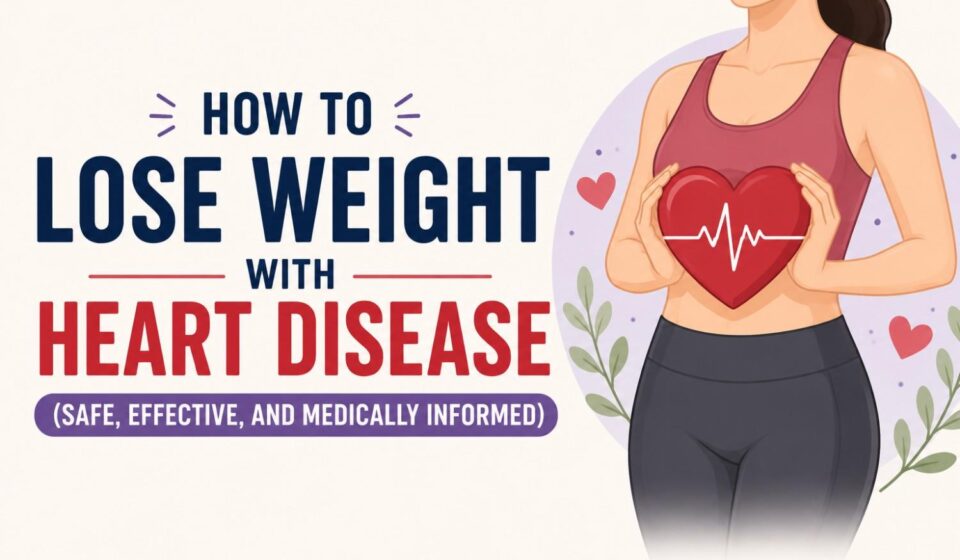
How to Lose Weight With Heart Disease (Safe, Effective, and Medically Informed)

Weight loss is one of the most powerful interventions for heart disease — here’s how to do it safely
Important note: Heart disease encompasses many different conditions — coronary artery disease, heart failure, arrhythmias, valvular disease, and others — each with specific exercise and dietary considerations. This article provides general guidance. Always work with your cardiologist before making significant changes to diet or exercise when you have heart disease.
Heart disease and excess weight are deeply interconnected. Obesity is a major risk factor for coronary artery disease, heart failure, atrial fibrillation, and most other cardiovascular conditions. At the same time, heart disease limits the exercise capacity that’s typically central to weight loss programs.
The good news: weight loss is one of the most powerful non-pharmacological interventions for heart disease management. Even modest weight loss — 5–10% of body weight — produces meaningful improvements in blood pressure, cholesterol, blood sugar, inflammation, and heart function.
This guide covers how to lose weight safely and effectively with heart disease — including what’s safe, what to be cautious about, and how to maximize results.
Why Weight Loss Matters So Much for Heart Disease
The Weight-Heart Disease Connection
Excess body weight affects the heart through multiple mechanisms:
- Increased cardiac workload — a larger body requires more cardiac output; the heart works harder constantly
- Blood pressure elevation — excess weight raises blood pressure through multiple mechanisms
- Dyslipidemia — obesity promotes elevated triglycerides and low HDL (the dangerous lipid combination)
- Insulin resistance and diabetes — both significantly worsen cardiovascular outcomes
- Inflammation — adipose tissue produces inflammatory cytokines that damage arterial walls
- Sleep apnea — very common with obesity, it stresses the cardiovascular system through nocturnal hypoxia
Weight loss reverses or improves all of these — producing more benefit per unit of weight lost than almost any medication available for cardiovascular risk reduction.
The SELECT Trial Finding
A landmark 2023 trial (SELECT) found that semaglutide 2.4mg reduced major adverse cardiovascular events (heart attack, stroke, cardiovascular death) by 20% in people with overweight or obesity and established cardiovascular disease — independent of how much weight was lost. This suggests that GLP-1 medications may have direct cardiovascular benefits beyond their weight loss effects.
Exercise With Heart Disease: Safety First
This is where heart disease most significantly differs from other weight management conditions — exercise intensity must be carefully calibrated to cardiac function.
Cardiac Rehabilitation
If you haven’t participated in cardiac rehabilitation (cardio rehab) — a medically supervised exercise program specifically for people with heart disease — this is the most important first step before any independent exercise program.
Cardiac rehabilitation:
- Provides medically monitored exercise in a setting where emergency response is available
- Establishes safe exercise intensity parameters for your specific cardiac condition
- Educates on heart disease management
- Has strong evidence for improved cardiovascular outcomes
Most people with recent cardiac events (heart attack, cardiac surgery, significant heart failure) qualify for cardiac rehab — discuss with your cardiologist if you haven’t been referred.
Exercise Intensity Guidelines for Heart Disease
The talk test — you should be able to hold a conversation during aerobic exercise. If you can’t, you’re working too hard.
Target heart rate zones — your cardiologist may provide specific heart rate limits based on stress testing results. These are individual and must be followed.
Warning signs to stop exercising immediately:
- Chest pain, pressure, or tightness
- Unusual shortness of breath beyond what’s expected for the activity
- Dizziness or lightheadedness
- Palpitations (rapid or irregular heartbeat)
- Nausea
If any of these occur, stop and seek medical attention.
Safe Exercise Options for Heart Disease
Walking is the most universally recommended exercise for heart disease — it’s low impact, easily intensity-controlled by slowing pace, and safe for most cardiac conditions when started gradually. As covered in our guide to how to lose weight by walking, daily walking produces meaningful fat loss and cardiovascular benefits.
Start with 5–10 minutes at comfortable pace and build very gradually — increasing by 1–2 minutes per session as tolerated.
Cycling (stationary) — excellent cardiovascular exercise with controllable intensity and no fall risk. Recumbent bikes reduce upper body strain and are appropriate for many cardiac patients.
Swimming and water exercise — water’s buoyancy reduces the workload for any given movement, making water exercise often well-tolerated at intensities that would be too demanding on land. Warm water pools provide additional cardiac benefit through vasodilation. As covered in our guide to how to lose weight swimming, swimming provides excellent cardiovascular benefit.
Resistance training — moderate-intensity strength training is appropriate for most stable cardiac conditions and improves multiple cardiovascular risk factors. Key considerations:
- Avoid the Valsalva maneuver (holding breath while straining) — this produces dangerous blood pressure spikes
- Use moderate weights with higher repetitions rather than maximum loads
- Breathe continuously — exhale on exertion
- Stop if any cardiac symptoms occur
Exercise and Heart Failure
Heart failure specifically requires additional caution — the heart’s reduced pumping capacity means exercise tolerance is more limited and the response to overexertion is more serious. Cardiac rehab is particularly important for heart failure patients. Walking and light activity are appropriate; all intensity progressions should be discussed with your cardiologist.
Dietary Strategy for Heart Disease and Weight Loss
The Cardiac Diet Foundation: Mediterranean and DASH
Two dietary patterns have the strongest evidence for both cardiovascular health and weight management:
Mediterranean diet — as covered in our guide to how to lose weight with Mediterranean diet, this pattern emphasizes fatty fish, olive oil, vegetables, whole grains, legumes, and nuts. It reduces LDL cholesterol, raises HDL, lowers blood pressure, reduces inflammation, and produces meaningful weight loss. The landmark PREDIMED trial demonstrated significant cardiovascular event reduction with Mediterranean diet adherence.
DASH diet — specifically designed to reduce blood pressure, with strong evidence for cardiovascular outcomes. Emphasizes fruits, vegetables, whole grains, lean protein, and low-fat dairy with strict sodium limitation.
Both patterns share core principles: whole foods, lean protein, abundant vegetables, healthy fats, minimal processed food, minimal added sugar.
Sodium Restriction
Sodium restriction is particularly important in heart disease:
- For hypertension (extremely common in heart disease): reduces blood pressure directly
- For heart failure: reduces fluid retention and reduces cardiac workload
Target under 1,500–2,000mg per day. As covered in our guide to how to lose weight with high blood pressure, sodium reduction is one of the most direct dietary interventions for cardiovascular health.
Omega-3 Fatty Acids
Fatty fish (salmon, sardines, mackerel) provide EPA and DHA omega-3 fatty acids with direct cardiovascular benefits: reduce triglycerides by 20–30%, reduce inflammation, have mild blood pressure lowering effects, and may reduce arrhythmia risk.
Aim for 2–3 servings per week. Fish oil supplementation (2–4g EPA+DHA per day for triglyceride reduction — discuss dose with your cardiologist) may also be appropriate.
Reduce Saturated and Trans Fats
Saturated fat (primarily from red meat, full-fat dairy, coconut oil) raises LDL cholesterol. Trans fats (partially hydrogenated oils) raise LDL and lower HDL simultaneously — the worst possible lipid effect.
Shift toward lean protein sources (fish, poultry, legumes) and healthy fats (olive oil, avocado, nuts) over saturated fat sources. As covered in our guide to how to lose weight with high cholesterol, this dietary shift directly addresses the cholesterol component of cardiovascular risk.
Increase Soluble Fiber
Soluble fiber (in oats, lentils, beans, apples, psyllium) lowers LDL cholesterol by binding to it in the digestive tract and preventing absorption. 5–10g of soluble fiber daily produces clinically meaningful LDL reduction.
Adequate Protein
High protein intake preserves muscle during a calorie deficit, supports metabolic rate, and is the most satiating macronutrient — making the deficit more manageable. As covered in our guide to how much protein you actually need per day, 0.7–1g per pound of bodyweight is the target.
Alcohol — Important Consideration With Heart Disease
Alcohol has complex cardiovascular effects. Moderate alcohol (1 drink per day) has historically been associated with modest cardiovascular benefit, though recent research has questioned this. Heavy alcohol consumption definitely increases arrhythmia risk (particularly atrial fibrillation) and heart failure risk.
In the context of weight loss, alcohol contributes empty calories and is worth reducing or eliminating. Discuss appropriate alcohol consumption with your cardiologist for your specific condition.
Medications and Weight: Important Interactions
Several heart medications affect weight and metabolism:
Beta-blockers (metoprolol, atenolol, carvedilol) — often prescribed for heart disease and heart failure; can reduce exercise tolerance (blunted heart rate response), promote modest weight gain, and impair fat metabolism in some patients. Discuss with your cardiologist if weight management is particularly difficult.
Statins — generally weight-neutral. May cause muscle symptoms that limit exercise in some patients.
Diuretics — reduce fluid weight (important to distinguish fluid weight from fat weight when monitoring progress).
Aspirin, ACE inhibitors, ARBs — generally no significant direct weight effects.
Warfarin/anticoagulants — dietary vitamin K consistency is important. Significant dietary changes should be discussed with your prescriber.
Cardiac Symptoms During Weight Loss
Several symptoms that can occur during weight loss programs require cardiac attention:
Increased fatigue — expected with significant calorie restriction; excessive fatigue may indicate inadequate nutrition or cardiac decompensation.
Palpitations — electrolyte changes from rapid weight loss or dietary changes can trigger arrhythmias. Report new or worsening palpitations to your cardiologist.
Shortness of breath — any new or worsening shortness of breath should be reported promptly.
Chest pain — always warrants immediate medical attention.
Sleep and Stress — Particularly Important With Heart Disease
Sleep apnea is extremely common in overweight people with heart disease — and it significantly worsens cardiovascular outcomes. If you haven’t been assessed for sleep apnea, discuss this with your doctor. Treating sleep apnea improves blood pressure, arrhythmia burden, and cardiac function — and facilitates weight loss.
As covered in our article on why sleep is the most underrated weight loss tool, adequate quality sleep is both a fat loss strategy and cardiovascular protection.
Chronic stress elevates cortisol and sympathetic nervous system activity — both harmful to cardiovascular function. Active daily stress management is cardiovascular medicine, not just wellness advice.
Medical Weight Loss Support for Heart Disease
For people with heart disease who struggle with weight despite dietary and lifestyle effort, the SELECT trial finding — that semaglutide reduced cardiovascular events by 20% specifically in people with cardiovascular disease — makes GLP-1 compounded medications potentially among the most medically justified weight loss interventions available for this population.
Breeze Meds offers telehealth medical evaluations to assess whether prescription weight loss treatment is appropriate for your specific situation — the assessment includes your cardiac history and current medications to ensure safe, appropriate recommendations.
Check eligibility & pricing at Breeze Meds →Affiliate disclosure: We may earn a commission if you use this link. Breeze Meds provides telehealth weight-loss services. Prescription medication is only provided following an evaluation by a licensed healthcare professional and is not guaranteed.
The Bottom Line
Weight loss with heart disease is both more medically important and more carefully managed than weight loss without it. The approach that works:
- Cardiac rehabilitation as the foundation for exercise
- Walking, cycling, and swimming at safe, monitored intensities
- Mediterranean or DASH dietary pattern as the evidence-backed foundation
- Sodium restriction for blood pressure management
- Omega-3 fatty acids for triglyceride and inflammation reduction
- Soluble fiber for LDL reduction
- Adequate protein for muscle preservation
- Sleep apnea management if present
- Active stress management as cardiovascular protection
- Medical supervision throughout — your cardiologist is your most important partner
For the foundational fat loss framework that applies alongside cardiac considerations, our guide to how to get rid of belly fat covers all the strategies in one place.
Are you managing heart disease alongside weight loss goals? Share what exercise adaptations or dietary changes have worked within your cardiac limitations — real experience from this community is invaluable.
Stop Wondering What to Eat This Week
Get my free 7-Day High-Protein Weight Loss Meal Plan delivered straight to your inbox — a simple week of satisfying, protein-focused meals designed to make healthy eating easier without complicated calorie tracking.
- 7 full days of breakfast, lunch, dinner & snacks
- One complete shopping list for the whole week
- A quick high-protein food cheat sheet
- Simple daily tips to help you stay on track
Free PDF • Delivered by email • Unsubscribe anytime
Check your inbox 💜
Your free 7-day high-protein meal plan is on its way.