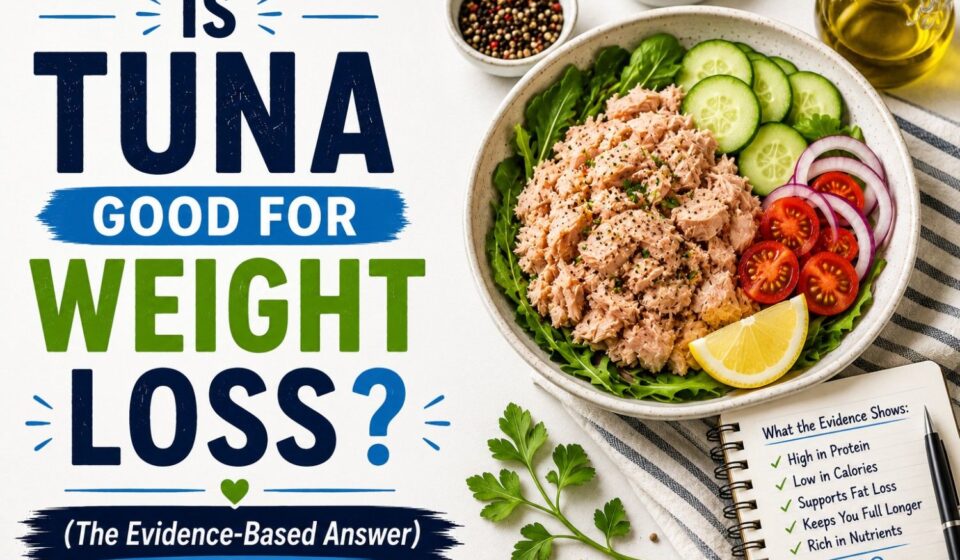

One of the cheapest, most convenient high-protein foods available — here’s what the science shows

Tuna is the ultimate convenience protein. Pull-tab can, fork, done. No cooking, no preparation, minimal cost. For weight loss specifically, it’s hard to find a more practical option. But is it actually as good as it is convenient?
The honest answer: tuna is one of the best foods for weight loss — with one important caveat about mercury that’s worth understanding.
The Nutritional Profile of Tuna
Canned tuna in water (100g, drained):
- Calories: 116
- Protein: 26g
- Fat: 1g
- Carbohydrates: 0g
- Vitamin B12: 82% DV
- Selenium: 64% DV
- Niacin: 53% DV
- Vitamin B6: 18% DV
- Phosphorus: 22% DV
Fresh tuna steak (100g, cooked):
- Calories: 184
- Protein: 30g
- Fat: 6g
- Omega-3s: 1.3g (EPA + DHA)
- Similar micronutrient profile
Canned tuna in water is arguably the highest protein-per-calorie food commonly available — 26g of protein at only 116 calories is extraordinary.
Why Tuna Is Excellent for Weight Loss
Unmatched Protein-to-Calorie Ratio
The numbers speak for themselves:
| Food (100g cooked) | Calories | Protein | Protein per 100 cal |
|---|---|---|---|
| Canned tuna (water) | 116 | 26g | 22.4g |
| Chicken breast | 165 | 31g | 18.8g |
| Turkey breast | 135 | 29g | 21.5g |
| Salmon | 208 | 20g | 9.6g |
| Eggs (2 large) | 140 | 12g | 8.6g |
| Greek yogurt | 59 | 10g | 16.9g |
Canned tuna in water has one of the highest protein-per-calorie ratios of any food — significantly better than chicken breast, salmon, or eggs on this metric.
For someone trying to hit 120g of protein per day within a 1,500 calorie target, tuna is one of the most efficient tools available.
Zero Carbohydrates
Like chicken, tuna contains no carbohydrates — compatible with every dietary approach from standard calorie restriction to strict ketogenic. No blood sugar impact, no insulin spike.

Extremely Low Calorie Density
A standard can of tuna (~140g drained) contains approximately 160 calories and 36g of protein. This is a complete, filling meal component at a calorie cost that leaves significant room for vegetables, a carbohydrate source, and fat within any reasonable daily target.
Powerful Satiety
26g of protein per 100g — combined with zero carbohydrates and minimal fat — produces strong and lasting satiety. A tuna-based meal typically keeps hunger suppressed for 3–4 hours, making the calorie deficit significantly more manageable.
As covered in our guide to how to stop hunger while dieting, adequate protein at each meal is the single most powerful dietary tool for hunger management during fat loss.
Omega-3 Fatty Acids (Particularly in Fresh Tuna)
Canned light tuna contains modest omega-3s (0.2–0.4g per serving). Fresh tuna steak and canned albacore contain more (0.7–1.3g per serving). While not as omega-3 rich as salmon, tuna still provides meaningful EPA and DHA — the specific fatty acids associated with inflammation reduction, insulin sensitivity improvement, and fat loss support.
Virtually Zero Preparation Required
This is tuna’s most practical advantage for weight loss: it requires absolutely nothing to eat. Open the can, drain, season with lemon juice and pepper, eat with a fork. This zero-friction quality means a high-protein option is always available — regardless of cooking energy, time, or kitchen access.
For people who are busy, tired, or simply don’t want to cook, tuna prevents the “nothing is ready so I’ll order food” scenario that undermines fat loss. As covered in our article on how to lose weight when you’re always tired, zero-preparation protein sources are essential for sustainable dietary adherence.
Budget-Friendly
A can of tuna costs $1–2 and provides 26g of protein. This is one of the cheapest protein sources available — cheaper than chicken breast, salmon, beef, or most other animal proteins. As covered in our guide to how to lose weight on a budget, tuna is one of the most cost-effective weight loss foods available.
The Mercury Question: The Important Caveat
Tuna contains mercury — and the amount varies significantly by type:
| Tuna Type | Average Mercury (ppm) | FDA Guideline |
|---|---|---|
| Light tuna (canned) | 0.128 ppm | 2–3 servings/week safe |
| Albacore/white tuna (canned) | 0.350 ppm | 1 serving/week recommended |
| Yellowfin tuna (fresh) | 0.354 ppm | 1 serving/week recommended |
| Bigeye tuna (fresh) | 0.689 ppm | Limit significantly |
| Bluefin tuna (sushi) | 0.470 ppm | Limit significantly |
For most healthy adults: 2–3 servings of canned light tuna per week is considered safe by the FDA and EPA.
For pregnant women, nursing mothers, and young children: More conservative limits apply — 2 servings per week of light tuna maximum, with albacore limited further. The FDA specifically recommends pregnant women avoid high-mercury fish.
The practical implication: Canned light tuna 2–3 times per week is safe for most adults. Eating tuna every single day is not recommended due to mercury accumulation. Rotating with other protein sources (chicken, eggs, salmon, Greek yogurt) is both safer and provides better nutritional variety.
Canned Tuna in Water vs. Oil
This is a common choice at the grocery store:
| Tuna in Water | Tuna in Oil | |
|---|---|---|
| Calories (100g drained) | 116 | 198 |
| Protein | 26g | 25g |
| Fat | 1g | 9g |
| Omega-3s | Low | Slightly higher |
| Texture | Drier | Moister |
For weight loss: tuna in water is the clear choice. Same protein at significantly fewer calories. The oil adds calories without proportional nutritional benefit for weight loss purposes.
If you find tuna in water too dry, adding a small amount of olive oil, lemon juice, or Greek yogurt achieves moisture at controlled calorie addition — better than the inconsistent oil content of oil-packed tuna.
Light Tuna vs. Albacore (White) Tuna
| Light Tuna | Albacore (White) Tuna | |
|---|---|---|
| Mercury | Lower (0.128 ppm) | Higher (0.350 ppm) |
| Omega-3s | Lower | Higher |
| Flavor | Stronger | Milder |
| Texture | Softer, flakier | Firmer |
| Recommended frequency | 2–3x/week | 1x/week |
For regular consumption: Light tuna is the safer choice due to lower mercury, and it’s typically cheaper.
For occasional use: Albacore provides better omega-3s and milder flavor — worth including occasionally within the once-per-week guideline.
How to Make Tuna Less Boring
The most common complaint about tuna for weight loss: eating it plain from the can is monotonous. Solutions that add flavor without significant calories:
Classic tuna salad (lightened): Tuna + Greek yogurt (instead of mayo) + dijon mustard + celery + lemon juice + salt and pepper. Greek yogurt adds protein and creaminess at a fraction of mayo’s calories.
Tuna with avocado: Mashed avocado + tuna + lime juice + salt = high-protein, high-healthy-fat combination with excellent satiety. Naturally creamy without mayo.
Mediterranean tuna: Tuna + cherry tomatoes + cucumber + olives + capers + lemon juice + olive oil. Genuinely delicious, no cooking required.
Tuna on whole grain crackers: 5–6 crackers + one can of tuna + mustard = 300-calorie lunch with 28g protein.
Spicy tuna: Tuna + sriracha + lime juice + sesame oil (small amount) + cucumber = sushi-inspired, genuinely good.
Tuna in lettuce wraps: Tuna salad in large lettuce leaves instead of bread — full sandwich experience at minimal calorie cost.
Tuna for Specific Weight Loss Situations
Pre-workout: A can of tuna 60–90 minutes before training provides high-quality protein for muscle support without the digestive heaviness of fat-rich foods.
Emergency protein: When nothing is prepared and hunger is arriving, a can of tuna from the cupboard prevents impulse food decisions. Every weight loss kitchen should have 6–8 cans at all times.
Post-workout: The high leucine content of tuna makes it an effective post-workout protein source — supporting muscle protein synthesis during the recovery window.
Late night protein: A can of tuna before bed contributes to overnight muscle maintenance at minimal caloric cost — particularly useful for people hitting protein targets.
The Bottom Line
Is tuna good for weight loss?
Yes — one of the best and most practical foods for fat loss. Canned tuna in water provides:
- One of the highest protein-per-calorie ratios of any food (26g protein at 116 calories per 100g)
- Zero carbohydrates
- Zero preparation required
- Exceptional cost-efficiency ($1–2 per serving)
- Meaningful satiety
Key rules:
- Choose canned light tuna in water for regular use
- Limit to 2–3 servings per week (mercury management)
- Rotate with other protein sources for both safety and nutritional variety
- Dress it up with Greek yogurt, avocado, or seasonings — plain tuna is optional suffering
- Always have cans stocked as an emergency protein source
For the complete dietary framework where tuna plays a practical role in hitting daily protein targets, our guide to how to get rid of belly fat covers everything in one place.
What’s your go-to tuna preparation — and do you have a recipe that makes it genuinely enjoyable rather than just tolerable? Share in the comments.