
The most universally recommended weight loss protein — here’s why it actually deserves the reputation
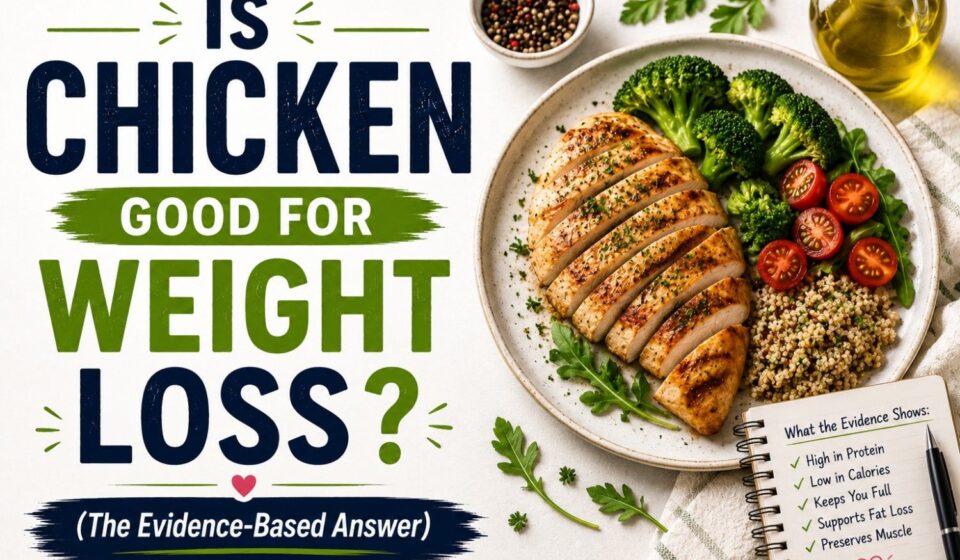
Chicken is the default weight loss protein. Every meal plan, every fitness influencer, every dietitian recommendation seems to include chicken breast. But is it actually as good as its reputation — or is it just the most boring option that everyone defaults to?
The honest answer: chicken is genuinely excellent for weight loss — with some important distinctions between cuts and preparation methods that significantly affect the outcome.
The Nutritional Profile of Chicken
Chicken breast (100g, cooked, skinless):
- Calories: 165
- Protein: 31g
- Fat: 3.6g
- Carbohydrates: 0g
- Vitamin B3 (niacin): 69% DV
- Vitamin B6: 30% DV
- Phosphorus: 22% DV
- Selenium: 27% DV
Chicken thigh (100g, cooked, skinless):
- Calories: 209
- Protein: 26g
- Fat: 11g
- Carbohydrates: 0g
- Similar micronutrient profile to breast
Chicken breast is one of the highest protein-per-calorie foods available — 31g of protein at only 165 calories is exceptional. Chicken thigh provides slightly less protein at more calories but offers more flavor and different nutritional advantages.
Why Chicken Is Excellent for Weight Loss
Highest Protein-to-Calorie Ratio of Common Meats
This is chicken breast’s defining characteristic. At 31g protein per 100g serving and only 165 calories, it provides more protein per calorie than almost any other commonly eaten meat:
| Protein (100g cooked) | Calories | Protein | Protein per 100 cal |
|---|---|---|---|
| Chicken breast | 165 | 31g | 18.8g |
| Turkey breast | 135 | 29g | 21.5g |
| Tuna (canned) | 116 | 26g | 22.4g |
| Salmon | 208 | 20g | 9.6g |
| Lean beef (sirloin) | 207 | 26g | 12.6g |
| Pork tenderloin | 143 | 26g | 18.2g |
| Eggs (2 large) | 140 | 12g | 8.6g |
Chicken breast is among the most protein-efficient foods available — making it ideal for hitting protein targets within a calorie deficit.
Powerful Satiety
As covered in our guide to how much protein you actually need per day, protein is the most satiating macronutrient — suppressing ghrelin (hunger hormone) more powerfully than carbohydrates or fat. A 200g chicken breast provides 62g of protein — essentially hitting a full day’s protein target for a lighter person in a single meal.
The satiety from a chicken-centered meal typically lasts 4–5 hours — significantly longer than equivalent calorie meals centered on carbohydrates.
Zero Carbohydrates
Chicken contains no carbohydrates — making it compatible with virtually every dietary approach: standard calorie restriction, low-carb, ketogenic, paleo, and everything in between. It doesn’t contribute to the carbohydrate load that affects blood sugar and insulin.
Preserves Muscle During Fat Loss
During a calorie deficit, adequate protein from sources like chicken directly preserves muscle mass — ensuring that weight lost is fat rather than muscle. As covered in our article on how to tell if you’re losing fat or muscle, the quality of protein sources matters for body composition outcomes.
Budget-Friendly and Accessible
Chicken breast is one of the most affordable high-protein foods available — typically $3–6 per pound, providing 4–5 servings. It’s available at every grocery store, requires no special sourcing, and stores well in the refrigerator and freezer.
Chicken Breast vs. Chicken Thigh
This is the most common chicken question for weight loss:
| Chicken Breast | Chicken Thigh | |
|---|---|---|
| Calories (100g cooked) | 165 | 209 |
| Protein | 31g | 26g |
| Fat | 3.6g | 11g |
| Flavor | Mild, can be dry | Richer, more flavorful |
| Forgiveness when cooking | Low (dries out easily) | High (fat keeps it moist) |
| Best for weight loss | Slightly better | Still excellent |
Chicken breast wins on protein-to-calorie ratio — it’s the better choice for maximizing protein within a calorie budget.
Chicken thigh wins on flavor and cooking forgiveness — and is still an excellent weight loss food at 26g protein per 100g. The additional calories come from fat, which also improves satiety and flavor.
The honest verdict: Both are excellent. If you’re eating chicken as a main protein source multiple times per week, alternating between breast and thigh provides both nutritional efficiency and the flavor variety that supports dietary adherence.
Skin On vs. Skin Off
Chicken skin adds significant calories and fat:
- 100g chicken breast with skin: ~197 calories, 7.8g fat
- 100g chicken breast without skin: 165 calories, 3.6g fat
The skin adds approximately 20% more calories per serving. For weight loss, skinless is the clear choice — the flavor contribution of skin doesn’t justify the calorie addition when trying to maintain a deficit.
Preparation Method Matters Enormously
The chicken itself is excellent for weight loss. How it’s prepared determines whether it stays that way:
Best preparations for weight loss:
- Grilled: Zero added fat, develops good flavor through Maillard reaction
- Baked: Minimal added fat, convenient, easy to batch cook
- Poached: Extremely tender, zero added fat, produces its own broth
- Air fried: Crispy texture with minimal oil
- Stir-fried with vegetables: Small amount of oil, high volume, excellent meal structure
Higher calorie preparations (account for these):
- Pan-seared with butter: Adds 100–150 calories of butter
- Grilled with olive oil marinade: Adds 100–200 calories depending on amount
Preparations to avoid or limit for weight loss:
- Fried chicken: Breading + deep frying adds 150–300 calories and dramatically changes the nutritional profile
- Chicken in cream sauces: Adds 200–400 calories per serving
- Breaded chicken cutlets: Adds 100–200 calories from breading
- Restaurant rotisserie chicken with skin: Often basted with butter or oil throughout cooking
How to Make Chicken Actually Taste Good
The most common complaint about chicken for weight loss: it’s bland and dry. This is a preparation problem, not an inherent chicken problem. Solutions:
Brine before cooking: Soaking chicken breast in salted water (1 tablespoon salt per cup of water) for 30–60 minutes before cooking produces dramatically juicier results.
Don’t overcook: Chicken breast dries out at internal temperatures above 165°F. Use a meat thermometer and pull it at exactly 165°F.
Marinate: Even 30 minutes in a marinade of olive oil, lemon juice, garlic, and herbs transforms bland chicken into genuinely good food. Most marinade calories are minimal (the chicken absorbs very little of the oil).
Season aggressively: Salt, pepper, garlic powder, paprika, cumin, Italian herbs — spices cost zero calories. Under-seasoned chicken is a choice, not an inevitability.
Butterfly or pound thin: Thin, even chicken breast cooks more evenly and stays juicier than a thick uneven piece.
Use thighs when boredom strikes: Chicken thighs are significantly harder to dry out and have more inherent flavor. Alternating with breast prevents the monotony that causes people to abandon high-protein eating.
The Best Ways to Use Chicken for Weight Loss
Batch cooking: Cook 4–6 chicken breasts at once on Sunday. Slice and refrigerate. Add to salads, grain bowls, wraps, or stir-fries throughout the week. This zero-friction approach means protein is always available without daily cooking.
As a salad protein: Sliced or shredded chicken on a large salad transforms a low-calorie side into a complete, filling meal. 150g chicken + large salad = approximately 350 calories, 45g protein, very high satiety.
In stir-fries: Diced chicken with vegetables and a modest amount of sauce over a small portion of rice = complete, balanced, genuinely satisfying meal at 400–500 calories.
Shredded in soups: Poached and shredded chicken in broth-based soups provides high protein at very low calorie density — one of the most filling meal structures available.
As a standalone protein: A 200g grilled chicken breast as the centerpiece of a plate, accompanied by roasted vegetables and a small portion of carbohydrate = the simplest, most reliable weight loss meal structure.
Organic vs. Conventional Chicken
The nutritional difference between organic and conventional chicken is minimal for weight loss purposes. The primary reasons to choose organic are:
- Antibiotic-free (relevant for antibiotic resistance concerns)
- Better animal welfare
- Potentially different fat composition (though the difference is small)
For weight loss specifically: conventional chicken is nutritionally equivalent to organic. If budget is a concern — and for many people trying to eat healthily on a budget it is — conventional chicken provides identical protein, satiety, and fat loss benefits at lower cost.
How Much Chicken Per Day for Weight Loss?
There’s no upper limit that makes chicken harmful for most healthy people. Practically:
For weight loss: 150–200g of cooked chicken per meal, 1–2 times per day, provides an excellent protein foundation.
As part of a varied diet: Rotating chicken with other protein sources (fish, eggs, legumes, Greek yogurt) provides better nutritional variety and prevents the flavor monotony that undermines dietary adherence.
The Bottom Line
Is chicken good for weight loss?
Yes — one of the best protein sources available for fat loss. Chicken breast specifically offers:
- Among the highest protein-per-calorie ratios of any common food (31g protein at 165 calories per 100g)
- Powerful and sustained satiety
- Zero carbohydrates — compatible with any dietary approach
- Direct muscle preservation during calorie deficit
- Budget-friendly and accessible
Key rules:
- Skinless for maximum calorie efficiency
- Breast for highest protein-to-calorie ratio, thigh for flavor and variety
- Baked, grilled, or poached — avoid frying and heavy cream sauces
- Season well and don’t overcook — dry chicken is a preparation problem, not inevitable
- Batch cook for the week to ensure protein is always available
For the complete dietary framework that puts chicken to work as the foundation of a fat loss diet, our guide to how to get rid of belly fat covers everything in one place.
How do you cook chicken to keep it from getting boring — what’s your go-to preparation that actually makes you look forward to eating it? Share in the comments.
Stop Wondering What to Eat This Week
Get my free 7-Day High-Protein Weight Loss Meal Plan delivered straight to your inbox — a simple week of satisfying, protein-focused meals designed to make healthy eating easier without complicated calorie tracking.
- 7 full days of breakfast, lunch, dinner & snacks
- One complete shopping list for the whole week
- A quick high-protein food cheat sheet
- Simple daily tips to help you stay on track
Free PDF • Delivered by email • Unsubscribe anytime
Check your inbox 💜
Your free 7-day high-protein meal plan is on its way.