
Dietary restrictions, flare management, and the specific approach that supports both gut health and fat loss
Diverticulitis creates a specific set of weight management challenges — the dietary modifications needed to manage the condition often conflict with standard weight loss recommendations, and the pain and fatigue of flares make consistent dietary adherence and exercise extremely difficult.
This guide addresses the specific realities of diverticulitis and weight loss — what the evidence shows about diet, exercise, and the approach that supports both gut health and fat loss simultaneously.

Understanding Diverticulitis and Weight
Diverticulosis refers to small pouches (diverticula) that form in the walls of the colon — extremely common, affecting approximately 50% of people over 60. Most people with diverticulosis have no symptoms.
Diverticulitis occurs when these pouches become inflamed or infected — causing left lower abdominal pain, fever, nausea, and changes in bowel habits. Episodes range from mild (managed at home) to severe (requiring hospitalization).
The weight connection:
Obesity is one of the strongest risk factors for developing diverticulitis and for more frequent, more severe episodes. The mechanisms include:
- Increased intra-abdominal pressure from excess weight pushing against the colon wall
- Visceral fat producing inflammatory cytokines that worsen diverticular inflammation
- Obesity-associated low-fiber dietary patterns that promote diverticula formation
Weight loss is therefore both a weight management goal AND a direct diverticulitis management strategy — reducing episode frequency and severity.
The Outdated “Low Fiber During Diverticulitis” Advice
For decades, people with diverticulosis were told to avoid high-fiber foods — seeds, nuts, popcorn — based on the theory that these could lodge in diverticula and cause inflammation.
The current evidence: This advice has been largely overturned. Multiple large studies have found that higher fiber intake is actually associated with LOWER risk of diverticulitis — not higher. Seeds and nuts specifically are not associated with increased diverticulitis risk in well-designed studies.
Current dietary approach:
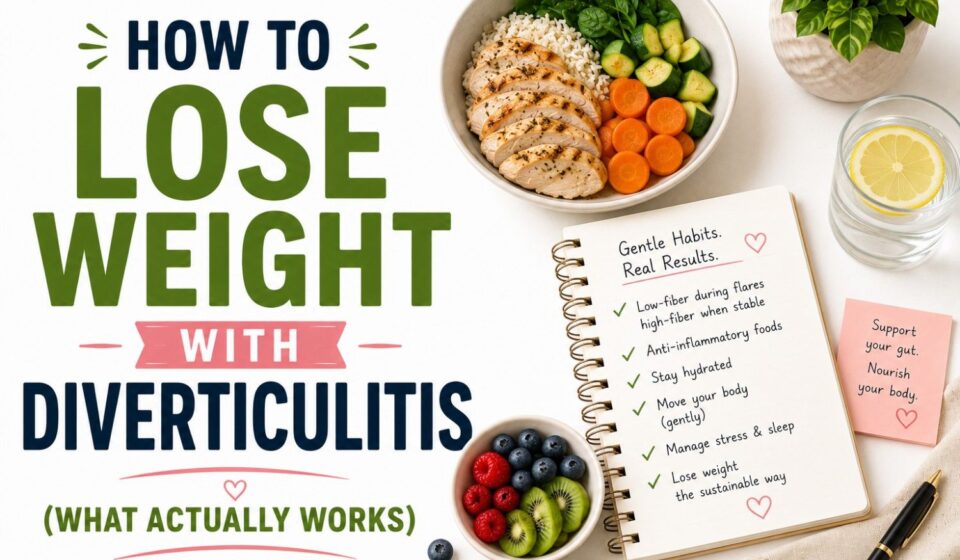
- During active diverticulitis flares: Low-fiber or liquid diet temporarily — to rest the colon
- During remission (between flares): High-fiber diet is recommended and protective
This distinction is critical for weight management — the dietary approach is completely different during flares vs. remission.
Diet During Active Diverticulitis Flares
During an active flare, the goal is resting the colon while maintaining nutrition. Weight loss is not the priority during this phase.
Typical progression:
- Severe flare: Clear liquids only (broth, clear juice, water, popsicles)
- Improving: Low-fiber foods (white rice, white bread, eggs, canned fruits without skin, well-cooked vegetables without seeds or skin)
- Recovering: Gradually reintroduce fiber as tolerated
During flares: Focus on staying nourished and hydrated. Resume weight loss approach during remission.
Diet During Remission — Where Weight Loss Happens
Between flares is when dietary weight loss strategies are appropriate and effective.
1. High Fiber Diet — Protective and Weight-Loss Friendly
This is the most important dietary principle for diverticulitis management during remission — and it aligns perfectly with weight loss goals.
Higher fiber intake:
- Reduces risk of future diverticulitis episodes (primary prevention)
- Promotes satiety — high fiber foods are among the most filling available
- Reduces calorie density of meals
- Supports the gut microbiome health that reduces inflammation
Target: 25–35g of fiber daily during remission.
Best fiber sources for diverticulitis remission:
- Legumes (lentils, chickpeas, black beans) — highest fiber density of common foods
- Oats and whole grains
- Vegetables (cooked rather than raw is often better tolerated)
- Fruits (with skin where tolerated)
- Nuts and seeds (previously restricted — now considered safe during remission)
Build fiber gradually: Increasing fiber too rapidly causes bloating and gas. Add 3–5g per week until reaching target to allow gut bacteria to adapt.
2. Adequate Protein
As covered in our guide to how much protein you actually need per day, targeting 0.8–1g of protein per pound of bodyweight supports muscle preservation during fat loss.
Best protein sources for diverticulitis:
- Eggs (easily digestible, well-tolerated)
- Fish and poultry (lean, easy to digest)
- Greek yogurt (protein + probiotics — gut health benefit)
- Legumes (protein + fiber — dual benefit)
- Tofu (soft, well-tolerated)
3. Anti-Inflammatory Eating Pattern
Diverticulitis is fundamentally an inflammatory condition — reducing dietary inflammation directly supports both gut health and fat loss.
As covered in our guide to the best anti-inflammatory foods for weight loss:

Emphasize:
- Fatty fish (omega-3s reduce gut inflammation)
- Extra virgin olive oil
- Berries and colorful fruits
- Leafy greens and cooked vegetables
- Turmeric with black pepper
Reduce or eliminate:
- Red and processed meat (associated with higher diverticulitis risk)
- Ultra-processed food
- Added sugar and refined carbohydrates
- Alcohol (associated with higher diverticulitis risk)
4. Adequate Hydration
Fiber requires water to work properly — insufficient hydration with high fiber intake causes constipation that worsens diverticular pressure.
As covered in our guide to how much water to drink to lose weight, 3+ liters daily is the target — particularly important when increasing fiber intake.
5. Reduce Red and Processed Meat
Multiple large studies have found that higher red meat consumption is associated with significantly higher diverticulitis risk — while higher fiber and plant-based protein is protective.
For weight loss with diverticulitis, replacing red meat with fish, poultry, and plant proteins serves both goals simultaneously.
6. Moderate Calorie Deficit
A 400–500 calorie daily deficit is appropriate during remission — producing steady fat loss without the nutritional restriction that could compromise gut health.
Aggressive restriction is counterproductive with diverticulitis — the gut needs adequate nutrition to maintain the mucosal lining that protects against inflammation.
Probiotics and Gut Microbiome
Emerging evidence suggests gut microbiome dysbiosis plays a role in diverticulitis development and recurrence. Supporting microbiome health may reduce episode frequency alongside supporting the metabolic function that aids fat loss.
Probiotic foods:
- Greek yogurt and kefir (check tolerance — some people with diverticulitis find dairy problematic)
- Fermented vegetables (kimchi, sauerkraut) — during remission
- Kombucha (check sugar content)
Probiotic supplements: Lactobacillus and Bifidobacterium strains have the most evidence for gut health — look for multi-strain products with 10–50 billion CFU.
Exercise With Diverticulitis
During Flares
During active diverticulitis — rest. Physical activity during a painful flare is counterproductive and potentially worsening. Light walking when comfortable is acceptable; anything more strenuous should wait until the flare resolves.
During Remission
Exercise is both safe and beneficial during diverticulitis remission — and particularly important given that physical activity is independently associated with lower diverticulitis risk.
Walking: The most accessible and consistently beneficial exercise. As covered in our guide to how many steps to lose weight, 8,000–10,000 daily steps provides meaningful metabolic and gut health benefit.
Strength training: Builds muscle that raises metabolic rate — critical for the long-term weight management that reduces diverticulitis risk. 2–3 sessions per week of compound movements.
Cycling and swimming: Low-impact cardiovascular options that don’t create significant intra-abdominal pressure.
High-impact exercise with caution: Running and jumping create more intra-abdominal pressure — fine for most people with diverticulosis but monitor for symptom triggering in those with frequent episodes.
Managing the Flare-Remission Cycle for Weight Loss
The most challenging aspect of weight loss with diverticulitis is the flare-remission cycle — progress made during remission can be interrupted by flares requiring dietary restriction and reduced activity.
Practical strategies:
Don’t try to maintain weight loss during flares — focus on appropriate management and recovery. Resume weight loss approach during remission without guilt about the interruption.
Track remission periods separately — weight loss during remission periods is the meaningful metric, not total time including flares.
Reduce flare triggers proactively:
- Maintain high fiber intake during remission (most protective single factor)
- Stay well hydrated
- Maintain healthy weight (reduces risk of future flares)
- Avoid NSAIDs (aspirin, ibuprofen) — associated with higher diverticulitis risk
- Limit alcohol
- Don’t smoke
The positive feedback loop: Weight loss reduces future flare frequency and severity — so the weight lost during remission directly improves the conditions for further weight loss.
What to Avoid
Very high fat meals: Can trigger digestive symptoms even during remission in some people.
Large meals: Smaller, more frequent meals reduce digestive stress and are better tolerated.
Eating when symptomatic: If you notice certain foods consistently trigger symptoms during remission, eliminate them — triggers are highly individual.
NSAIDs for pain during flares: Associated with worse outcomes in diverticulitis — discuss pain management with your doctor.
When Additional Medical Support Is Appropriate
For people with diverticulitis alongside significant obesity — where excess weight is directly contributing to flare frequency — medical weight loss support may be appropriate to achieve meaningful weight reduction more quickly.
Breeze Meds offers telehealth evaluations to assess whether prescription weight loss support is appropriate alongside diverticulitis management.
Check eligibility & pricing at Breeze Meds →Affiliate disclosure: We may earn a commission if you use this link. Breeze Meds provides telehealth weight-loss services. Prescription medication is only provided following an evaluation by a licensed healthcare professional and is not guaranteed.
The Bottom Line
Losing weight with diverticulitis requires adapting the approach to the flare-remission cycle:
During flares: Rest, appropriate dietary restriction, recovery — not weight loss
During remission:
- High fiber diet (25–35g daily, built gradually) — most protective factor
- Adequate protein (0.8–1g per pound) from fish, poultry, eggs, legumes
- Anti-inflammatory eating — reduce red meat, processed food, alcohol
- Adequate hydration (3+ liters daily) — essential with high fiber
- Moderate calorie deficit (400–500 calories)
- Regular exercise — walking, strength training, cycling
- Probiotic support — yogurt, fermented foods, supplements
- Reduce flare triggers — the weight lost reduces future flare frequency
For the complete anti-inflammatory framework that supports both diverticulitis management and fat loss, our guide to how to reduce inflammation to lose weight covers everything in one place.
Do you have diverticulitis and have found specific dietary approaches that work for managing weight between flares? Share in the comments — real experience from people navigating this is invaluable.
Stop Wondering What to Eat This Week
Get my free 7-Day High-Protein Weight Loss Meal Plan delivered straight to your inbox — a simple week of satisfying, protein-focused meals designed to make healthy eating easier without complicated calorie tracking.
- 7 full days of breakfast, lunch, dinner & snacks
- One complete shopping list for the whole week
- A quick high-protein food cheat sheet
- Simple daily tips to help you stay on track
Free PDF • Delivered by email • Unsubscribe anytime
Check your inbox 💜
Your free 7-day high-protein meal plan is on its way.