
After decades of research comparing every major diet — here’s what the science actually concludes

Keto vs. Mediterranean vs. intermittent fasting vs. low-fat vs. plant-based vs. paleo. The diet wars have been raging for decades, and the marketing for each would have you believe it’s the uniquely superior approach that finally cracks the weight loss code.
The scientific answer is both more definitive and more liberating than any diet camp would like to admit.
What the Research Actually Shows
After decades of randomized controlled trials comparing virtually every dietary approach, the most consistent finding is this:
All diets that produce a calorie deficit produce similar long-term weight loss — when adherence is equivalent.
This is not a cop-out. It’s a remarkably well-replicated finding across multiple high-quality studies. Low-carb vs. low-fat, Mediterranean vs. ketogenic, intermittent fasting vs. continuous restriction — when researchers carefully control for total calorie intake and track adherence, the differences in fat loss outcomes between dietary approaches are small and often disappear entirely.
The landmark DIETFITS trial (Stanford, 2018) randomized 609 adults to either a healthy low-fat or healthy low-carb diet for 12 months. Both groups lost similar amounts of weight. The variation in outcomes within each group — driven by individual adherence — was far larger than the variation between groups.
What this means: The “best diet” is largely the one you can maintain consistently — not the one with the optimal macronutrient ratio.
The Non-Negotiables That All Successful Diets Share
Every dietary approach that produces sustained weight loss shares these characteristics:
Creates a Calorie Deficit
Whether through restriction, food elimination, reduced appetite, or structured eating windows — all effective diets reduce total calorie intake. The mechanism differs; the outcome is the same.

Reduces Ultra-Processed Food
Every dietary approach associated with weight loss — Mediterranean, keto, plant-based, paleo, whole food low-fat — dramatically reduces ultra-processed food consumption. The specific carbohydrate philosophy differs; the departure from processed food is universal.
Increases Protein (or At Least Doesn’t Reduce It)
The diets with the best body composition outcomes maintain or increase protein intake. Diets that reduce protein alongside calories produce worse fat-to-muscle loss ratios regardless of their other characteristics.
Requires Behavioral Change
No diet works without changing what you eat. The sustainability of those behavioral changes — not their theoretical optimality — determines real-world outcomes.
The Major Diets Compared
Mediterranean Diet
What it is: Emphasizes vegetables, fruits, whole grains, legumes, nuts, olive oil, and fish. Moderate dairy and poultry. Limited red meat and processed food.
Evidence for weight loss: Strong. Multiple large trials show consistent weight loss and excellent long-term adherence. The PREDIMED trial found significant cardiovascular event reduction alongside weight loss.
Strengths: Anti-inflammatory, heart-protective, genuinely enjoyable to eat, sustainable long-term, no food group eliminated.
Weaknesses: Doesn’t provide explicit calorie guidance — some people overeat healthy fats (olive oil, nuts) without tracking.
Best for: People who want a whole-lifestyle dietary approach rather than explicit rules. People with cardiovascular risk factors. As covered in our guide to how to lose weight with Mediterranean diet, this is the most broadly evidence-backed dietary pattern available.
Low-Carbohydrate / Ketogenic
What it is: Significantly reduces carbohydrates (under 100–150g/day for low-carb; under 50g/day for keto), replacing them with fat and protein.
Evidence for weight loss: Strong in the short term (6 months), comparable to other approaches long-term. Particularly effective for people with insulin resistance or type 2 diabetes.
Strengths: Rapid initial weight loss, dramatic improvement in insulin sensitivity and triglycerides, reduced appetite for many people (ketosis suppresses hunger).
Weaknesses: Difficult to maintain long-term for most people. Eliminates many foods people enjoy. May reduce fiber intake if not carefully managed.
Best for: People with insulin resistance, metabolic syndrome, or type 2 diabetes. People who respond well to clear rules. As covered in our guides to how to lose weight with low carb and how to lose weight with keto, these approaches produce excellent results for the right people.
Intermittent Fasting
What it is: Time-restricted eating — the most common approach is 16:8 (16 hours fasting, 8-hour eating window). Other approaches include 5:2 (normal eating 5 days, very low calorie 2 days).
Evidence for weight loss: Comparable to continuous calorie restriction when total calories are matched. Primarily works by reducing eating opportunities and thus total calorie intake.
Strengths: Simple rule to follow (eat between noon and 8pm, nothing outside that window). May improve insulin sensitivity independently of weight loss. Works well for people who aren’t hungry in the morning.
Weaknesses: Not superior to other calorie-restricted approaches when calories are matched. May be difficult for people with early morning hunger or those who need to eat socially in the morning.
Best for: People who find time restriction easier to follow than calorie counting. People with busy mornings who aren’t hungry until midday. As covered in our guide to whether intermittent fasting is worth it, it’s a tool that works for some personalities better than others.
Plant-Based / Vegan
What it is: Eliminates all animal products (vegan) or emphasizes plants while minimizing animal products (plant-based).
Evidence for weight loss: Good. Plant-based diets tend to be lower in calorie density and higher in fiber — naturally supporting calorie reduction. Multiple trials show weight loss comparable to other approaches.
Strengths: High fiber, anti-inflammatory, associated with reduced cardiovascular and cancer risk. Naturally reduces calorie density.
Weaknesses: Requires careful attention to protein, B12, iron, zinc, and omega-3 fatty acids. Processed vegan food can be just as calorie-dense as regular processed food.
Best for: People motivated by ethical or environmental reasons alongside health. People who naturally prefer plant foods. As covered in our guides to how to lose weight plant-based and how to lose weight vegan, these approaches produce good results with proper nutritional attention.
DASH Diet
What it is: Developed specifically to reduce blood pressure. Similar to Mediterranean — emphasizes fruits, vegetables, whole grains, lean protein, and low-fat dairy, with strict sodium restriction.
Evidence for weight loss: Good, with additional blood pressure benefits. Particularly valuable for people with hypertension.
Best for: People with high blood pressure alongside weight loss goals. As covered in our guide to how to lose weight with high blood pressure, DASH has the strongest evidence for simultaneous weight loss and blood pressure reduction.
Calorie Counting / Flexible Dieting
What it is: No food groups eliminated — all foods tracked to maintain a calorie deficit, usually with protein targets.
Evidence for weight loss: Strong. Direct calorie management is among the most effective approaches when tracking is accurate and consistent.
Strengths: Maximum food flexibility, scientifically transparent, no forbidden foods, easiest to customize.
Weaknesses: Requires consistent tracking effort that some people find unsustainable. Calorie databases are imperfect.
Best for: People who want maximum food freedom. People who respond well to data and numbers. As covered in our guide to how many calories should I eat to lose weight, understanding your actual calorie needs is foundational regardless of which dietary pattern you choose.
The Verdict: What Is Actually Best?
Given that adherence determines outcomes more than dietary composition, the genuine answer is:
The best diet for weight loss is the one you can maintain consistently for the required timeframe.
This isn’t a non-answer — it’s the most practically useful conclusion from the research. It means:
If you love eating Mediterranean food: The Mediterranean diet is your best diet.
If you find carbohydrate restriction reduces your hunger significantly: Low-carb or keto is your best diet.
If you’re not hungry in the morning and find time restriction easy: Intermittent fasting is your best diet.
If you prefer not to think about food rules: Calorie counting with flexible food choices is your best diet.
If you have insulin resistance or metabolic syndrome: Low-carb approaches produce disproportionate benefits for your condition.
If you have cardiovascular risk: Mediterranean or DASH produces the best combination of weight loss and cardiovascular risk reduction.
The Principles That Transcend All Diets
Regardless of which dietary pattern you choose, these principles apply universally:
Adequate protein — as covered in our guide to how much protein you actually need per day, 0.7–1g per pound of bodyweight is the most important single dietary variable for fat loss quality across all dietary approaches.
Minimal ultra-processed food — the one dietary change that consistently improves outcomes regardless of the overall dietary pattern.
Real calorie deficit — sustainable fat loss requires less energy in than out, by whatever means the chosen dietary pattern achieves this.
Consistency over perfection — the dietary approach maintained 80% of the time over 6 months produces better outcomes than the theoretically optimal approach maintained 40% of the time.
The Bottom Line
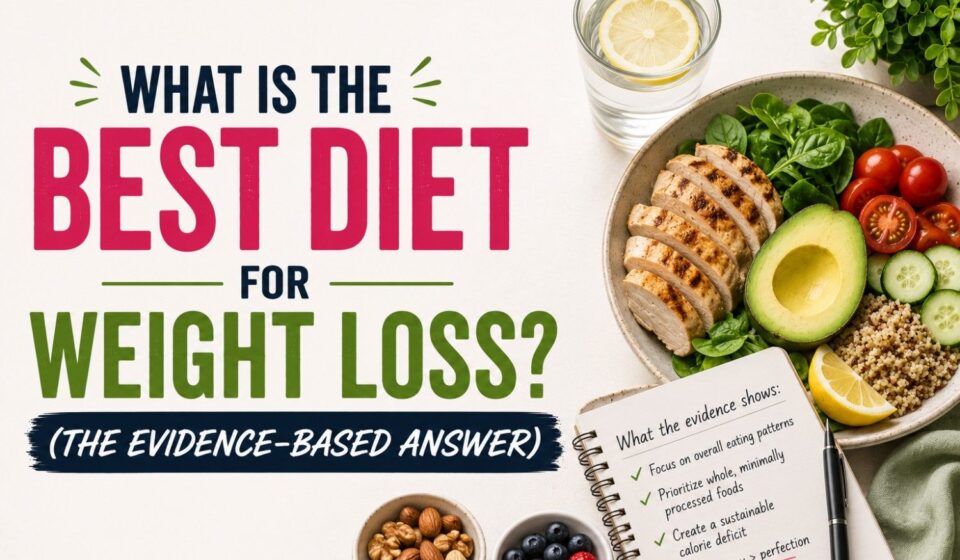
After decades of dietary research, the science is clear: no single dietary approach is dramatically superior to others for weight loss when adherence is equivalent.
The best diet is the one that:
- Creates a genuine calorie deficit
- You can maintain consistently for months
- Includes adequate protein
- Reduces ultra-processed food
- Fits your food preferences, lifestyle, and health conditions
For specific conditions — insulin resistance, cardiovascular disease, type 2 diabetes — certain approaches produce condition-specific benefits beyond weight loss that may make them superior choices.
For general weight loss in otherwise healthy people: choose the approach you’ll actually stick to.
For the foundational principles that apply regardless of dietary approach, our guide to how to get rid of belly fat covers the universal fat loss framework.
Which dietary approach have you found most sustainable long-term — and what made it work for you specifically? Share in the comments.